Japanese greetings aren’t just words—they’re cultural tools that carry nuance, respect, and even social hierarchy. Whether you’re a traveller, language learner, or doing business with Japanese colleagues, using the right greeting can help you leave a good impression and avoid awkward moments.
In this expanded guide, you’ll learn 10 widely used Japanese greetings, when and how to use them, and the cultural meaning behind each phrase.
1. おはようございます (Ohayō gozaimasu) – Good Morning (Formal)
Cultural Context
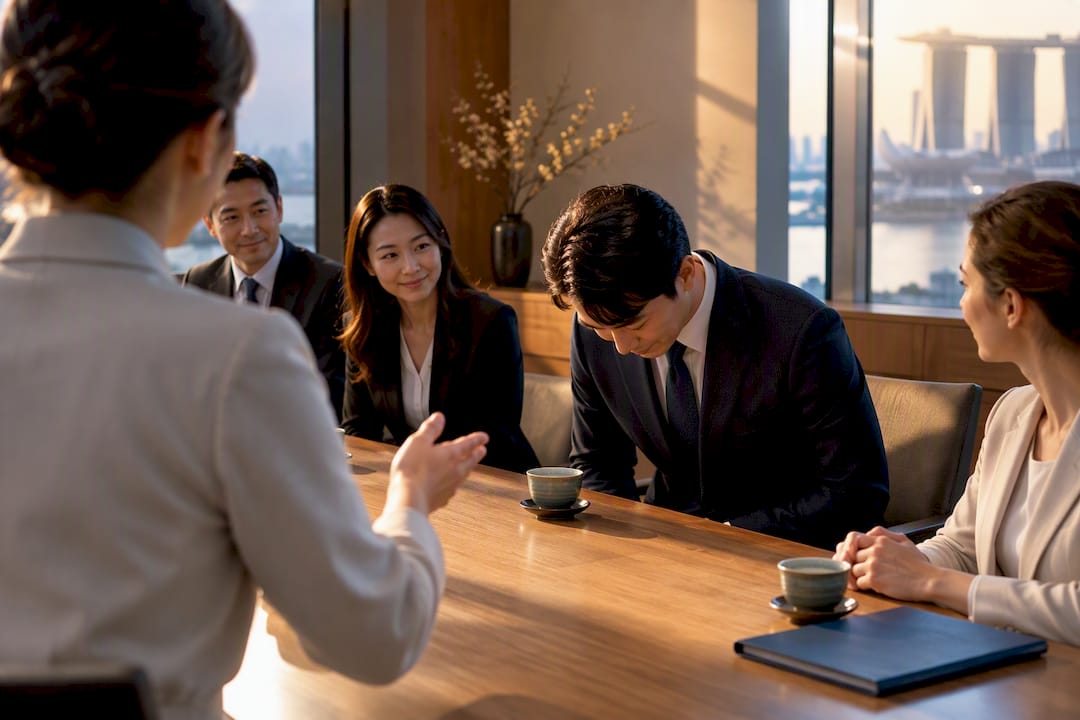
This greeting is deeply embedded in Japanese work and school life. It means “It’s early,” but it’s used as a morning greeting regardless of whether it’s early or not. In many workplaces, especially in service or shift-based jobs, you might hear this even in the afternoon if it’s the first time two coworkers are seeing each other that day. The more casual version, “おはよう,” is common among friends, family, or peers of the same age. Using the full formal version “おはようございます” signals respect—ideal when addressing teachers, elders, or customers. Pairing this greeting with a polite bow is standard practice in formal environments.
Used: Morning greetings in schools, offices, or daily routines.
Level: Polite – appropriate in almost all social or work settings.
Example:
A: おはようございます、田中さん。 (Ohayō gozaimasu, Tanaka-san.)
I hope you’re well this morning, Mr Tanaka.
B: おはようございます。 (Ohayō gozaimasu.)
Good morning.
2. こんにちは (Konnichiwa) – Good Afternoon / Hello
Cultural Context
Although it is often learned early by beginners as a generic “hello,” “こんにちは” is not a one-size-fits-all greeting. It’s appropriate from late morning (around 11 a.m.) through early evening, and while polite, it’s less formal than “おはようございます” or “こんばんは.” It’s commonly used in retail settings when entering shops or speaking to service staff. In customer service, shopkeepers often greet customers with “いらっしゃいませ” instead, which is more transactional. Saying “こんにちは” too early in the morning or late at night might sound awkward or inattentive. Use it for neutral situations, such as meeting an acquaintance, entering a café, or joining a lunchtime meeting.
Used: Midday greeting for casual or semi-formal situations.
Level: Neutral – suitable for general use.
Example:
A: こんにちは!元気ですか? (Konnichiwa! Genki desu ka?)
Hello! How are you?
B: こんにちは、元気ですよ。 (Konnichiwa, genki desu yo.)
Hello, I’m doing well.
3. こんばんは (Konbanwa) – Good Evening
Cultural Context (Expanded):
“こんばんは” is a standard evening greeting used from sunset onwards. It’s polite and suitable in almost all situations—from answering the door at night to starting a conversation in an evening event. You’ll also hear it on TV news broadcasts as a way to formally greet viewers. Unlike English, Japanese has distinct greetings for different times of the day, and failing to follow this convention can feel jarring. For example, saying “こんにちは” at 8 p.m. might feel awkward to a native speaker. While “こんばんは” is friendly and polite, it’s not overly formal, making it versatile for casual or semi-formal contexts.
Used: From sunset to early night-time interactions.
Level: Polite – works in formal and informal settings.
Example:
A: こんばんは、今日は寒いですね。 (Konbanwa, kyō wa samui desu ne.)
Good evening, it’s cold today, isn’t it?
B: こんばんは、本当ですね。 (Konbanwa, hontō desu ne.)
Good evening; yes, it is.
4. もしもし (Moshi-moshi) – Hello (On the Phone)
Cultural Context (Expanded):
“Moshi-moshi” is strictly used for phone conversations. It originated from the humble verb “申す” (mōsu), meaning “to say,” which was used by samurai and later simplified into this standard greeting. It’s considered polite and friendly, yet slightly casual—perfect for personal or informal work calls. In professional settings, it’s common to state your company name and name first before using “moshi-moshi.” For example: “ABC株式会社の田中です。はい、もしもし。” Using “moshi-moshi” face-to-face sounds childish or odd—it’s never appropriate in person. For in-person greetings, stick to time-appropriate expressions like “おはようございます” or “こんにちは.”
Example:
A: もしもし? (Moshi-moshi?)
Hello?
B: はい、もしもし、鈴木です。 (Hai, moshi-moshi, Suzuki desu.)
Yes, hello, this is Suzuki.
5. はじめまして (Hajimemashite) – Nice to meet you
Cultural Context (Expanded):
This phrase is exclusively reserved for first-time encounters. It implies that this is the beginning of a relationship or interaction. It’s almost always used in tandem with a self-introduction and followed by “よろしくお願いします” to express humility and a wish to get along. In business settings, this greeting is often accompanied by a bow, a business card exchange (meishi koukan), and a formal tone. Once you’ve met someone, saying “はじめまして” again is incorrect—it’s strictly a one-time-use greeting per relationship. Overusing or misusing it can create confusion or signal you’ve forgotten a previous meeting, which may come off as disrespectful.
Used: First-time meetings, both personal and professional.
Level: Polite – always used with a self-introduction.
Example:
A: はじめまして、アンナです。よろしくお願いします。
(Hajimemashite, Anna desu. Yoroshiku onegaishimasu.)
Nice to meet you; I’m Anna. I look forward to working with you.
B: はじめまして。田中です。よろしくお願いします。
(Hajimemashite. Tanaka desu. Yoroshiku onegaishimasu.)
Nice to meet you. I’m Tanaka. I look forward to working with you.
6. おつかれさまです (Otsukaresama desu) – Thank you for your hard work
Cultural Context (Expanded):
“Otsukaresama desu” is a uniquely Japanese expression that acknowledges someone’s effort and contribution, often in the workplace. It signals appreciation, solidarity, and respect among team members. This greeting is used when seeing a colleague during the day, ending meetings, or saying goodbye at work. Managers may use it to acknowledge team efforts; subordinates use it to show respect. Outside the office, friends may say the casual “おつかれ” after group activities or events. This greeting reinforces group harmony (wa) and unspoken understanding, which are central to Japanese communication. Not using it in a team setting may come off as cold or dismissive.
Used: Workplace interactions, after tasks or during departures.
Level: Polite – common in all business environments.
Example:
A: 今日もおつかれさまでした。 (Kyō mo otsukaresama deshita.)
Thanks for your hard work today.
B: こちらこそ、おつかれさまでした。 (Kochira koso, otsukaresama deshita.)
Likewise, thank you.
7. ただいま (Tadaima) – I’m home!
Cultural Context (Expanded):
“ただいま” is used when returning to one’s home or place of residence. It’s often said instinctively when entering a home, regardless of whether anyone is inside. The phrase implies a safe return and re-entry into a shared space. The appropriate response, “おかえりなさい” (Welcome back), is typically used by someone who is already at home. This exchange reinforces familial or shared domestic bonds. It’s also used in dorms, shared houses, and even casual office environments where coworkers return after outside meetings. Children are taught to say “ただいま” as part of basic etiquette, reinforcing its place in everyday social rituals.
Used: Returning to your home, office, or team base.
Level: Casual – primarily used with family or close peers.
Example:
A: ただいま! (Tadaima!)
I’m home!
B: おかえりなさい! (Okaerinasai!)
Welcome back!
8. おかえりなさい (Okaerinasai) – Welcome back
Cultural Context (Expanded):
Used in response to “ただいま,” this greeting expresses happiness or acknowledgement that someone has returned safely. It can carry warmth and emotion in a family setting or serve as a polite reflexive response in more formal environments. In casual settings, you’ll hear “おかえり” (Okaeri), especially between close friends or family. In contrast, “おかえりなさい” is more respectful. This phrase highlights how Japanese culture values comings and goings—it’s a way of maintaining social bonds within households, small communities, and even among coworkers.
Used: Responding to “ただいま” when someone returns.
Level: Polite – also used casually as “おかえり”.
Example:
A: おかえりなさい、疲れた? (Okaerinasai, tsukareta?)
Welcome back, are you tired?
B: ちょっとね。 (Chotto ne.)
A bit.
9. よろしくお願いします (Yoroshiku onegaishimasu) – I look forward to working with you / Thank you in advance
Cultural Context (Expanded):
This phrase doesn’t have a direct English translation but is essential in both personal and professional Japanese communication. It’s used at the end of a request or introduction to express goodwill and future cooperation. You’ll hear it during project kick-offs, interviews, favour requests, or when joining a new team. The nuance is a blend of gratitude, humility, and mutual expectation. In casual settings, “よろしく” alone may suffice. Misusing it (e.g., using it alone in formal business) may sound dismissive. It’s also used to close emails or phone calls with clients and colleagues.
Used: Introductions, team projects, favour requests, ongoing cooperation.
Level: Polite – vital in almost all formal Japanese communication.
Example:
A: 明日からよろしくお願いします。 (Ashita kara yoroshiku onegaishimasu.)
I look forward to working with you starting tomorrow.
B: こちらこそ、よろしくお願いします。 (Kochira koso, yoroshiku onegaishimasu.)
Likewise, I look forward to working with you.
10. おやすみなさい (Oyasuminasai) – Good night
Cultural Context
Oyasuminasai is a polite way to wish someone a restful sleep and is commonly used within families, romantic relationships, or among friends. It’s not a greeting but a parting phrase before bed. Parents say it to children, couples exchange it before hanging up, and friends use it after evening hangouts. The casual version, “おやすみ,” is suitable for use with peers or in intimate relationships. In professional or distant social settings, this phrase is usually unnecessary, as most farewells happen earlier in the evening. Using “おやすみなさい” in a formal business context (e.g., when addressing a superior) is uncommon and may be perceived as too intimate.
Used: Before going to bed or parting late at night.
Level: Polite – “おやすみ” is the casual form.
Example:
A: おやすみなさい。 (Oyasuminasai.)
Good night.
B: おやすみ〜 (Oyasumi~)
Night!
Quick FAQ: Common Confusions Explained
| Question | Answer |
|---|---|
| Can I say “Konnichiwa” anytime? | No—use it from late morning to early evening. Mornings = “Ohayō”, nights = “Konbanwa”. |
| Is “Moshi-moshi” okay in person? | No—it’s only used on phone calls. |
| What if I’m unsure of formality? | Use the more polite form. It’s safer to say “おはようございます” than just “おはよう”. |
| Can I use “Otsukaresama” with friends? | Yes. Among friends or juniors, just say “おつかれ”. |
| Should I bow when greeting? | Yes, especially in formal or professional contexts. Even a small bow adds respect. |
In Conclusion
Mastering greetings in Japanese is one of the most effective ways to build rapport and demonstrate cultural sensitivity. These ten expressions cover almost every situation, from the office to casual chats and phone calls. Practice them aloud, pay attention to context, and always lean toward politeness if you’re unsure.
Next up? Discover how to introduce yourself naturally with our comprehensive guide to self-introductions in Japanese. Alternatively, visit Japanese Explorer to explore our Japanese courses, book a trial lesson, or contact our team.