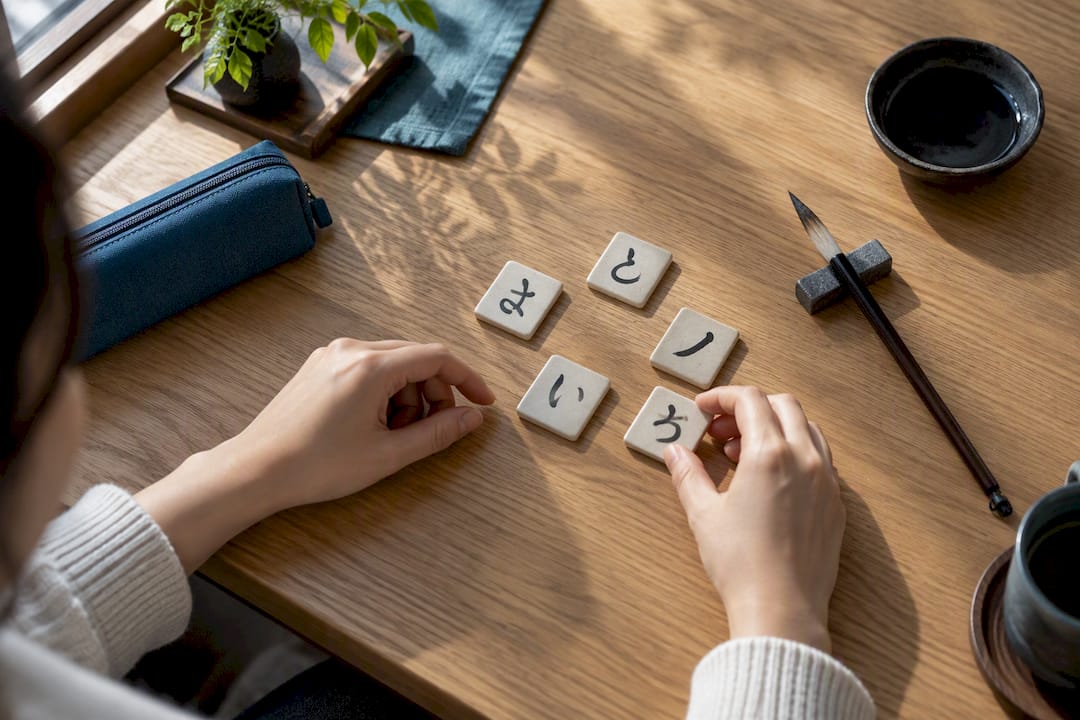
A Japanese proverb, or ことわざ (kotowaza), is a short, familiar saying that makes a point about a situation. 七転び八起き encourages persistence, 猿も木から落ちる reminds us that experts can slip, and 花より団子 puts practical needs ahead of appearances.
Here are ten Japanese proverbs in English with readings and examples, followed by eight more sayings about everyday life.
10 Japanese Proverbs and Their Meanings
1. 相手のない喧嘩はできない (aite no nai kenka wa dekinai)
It takes two to quarrel.
An argument needs another participant. The saying can be a reminder that you can refuse to be drawn into one.
Example: When an online exchange gets heated, step away instead of posting another reply.

2. 七転び八起き (nanakorobi yaoki)
Fall seven times, get up eight.
Keep going after setbacks.
Example: If you stumble during a Japanese introduction, practise the words that tripped you up and try it again.
3. 井の中の蛙大海を知らず (i no naka no kawazu taikai o shirazu)
A frog in a well knows nothing of the sea.
A person can mistake their limited experience for the whole picture.
Example: Someone who has only heard Japanese in class might discover a wider range of speech when they start listening to different speakers.

4. 言わぬが花 (iwanu ga hana)
Some things are better left unsaid.
Leaving something unsaid can preserve its charm or avoid causing offence. The literal image is of what is left unsaid being a flower.
Example: If a friend is about to enjoy a film, keep the ending to yourself.
5. 能ある鷹は爪を隠す (nō aru taka wa tsume o kakusu)
A capable hawk hides its claws.
Someone with real skill need not advertise it.
Example: Think of an experienced teammate who quietly solves a difficult problem without boasting.
6. 猿も木から落ちる (saru mo ki kara ochiru)
Even monkeys fall from trees.
Even someone who is good at a task can make a mistake.
Example: It can be a light way to describe your own slip when you mistype a word you know well.
7. 二兎を追う者は一兎をも得ず (nito o ou mono wa itto o mo ezu)
Chase two hares and catch neither.
Trying to pursue two goals at once can leave you with neither when they compete for the same time or attention.
Example: If two deadlines collide, decide what to finish first instead of switching between both all afternoon.

8. 悪銭身に付かず (akusen mi ni tsukazu)
Ill-gotten gains do not stay with you.
Money acquired dishonestly or with little effort is easily lost or spent. The English “easy come, easy go” can leave out how the money was obtained.
Example: Think of a character who cheats to make quick money and soon loses it.
9. 負けるが勝ち (makeru ga kachi)
Losing can be winning.
Yielding in a small dispute can leave you better off than insisting on winning it.
Example: If two friends disagree over a minor detail, letting it go may be worth more than having the last word.

10. 自業自得 (jigō jitoku)
You reap the consequences of your own actions.
The expression often refers to an unwelcome result someone brought on themselves. Used directly about another person, it can sound harsh.
Example: A character ignores repeated warnings and then faces the predictable result.
Eight more Japanese sayings
- 覆水盆に返らず (fukusui bon ni kaerazu) — Spilt water cannot be put back. Some actions cannot be undone.
- 猫に小判 (neko ni koban) — A gold coin is wasted on a cat. Something valuable can go unappreciated by its recipient.
- 花より団子 (hana yori dango) — Dumplings over flowers. Practical benefits can matter more than appearances.
- 虎穴に入らずんば虎子を得ず (koketsu ni irazunba koji o ezu) — Without entering the tiger’s den, you cannot get the cub. Some rewards require taking a risk.
- 蛙の子は蛙 (kaeru no ko wa kaeru) — A frog’s child is a frog. Children often take after their parents.
- 蓼食う虫も好き好き (tade kuu mushi mo sukizuki) — Some insects like water pepper. People have different tastes.
- 知らぬが仏 (shiranu ga hotoke) — What you do not know may spare you worry. Roughly, ignorance is bliss.
- 豚に真珠 (buta ni shinju) — Pearls before swine. Something valuable may be wasted on someone who does not appreciate it.
Importance of Knowing a Japanese Proverb
A proverb often relies on an image or a shared reference. First learn the image, then ask what point the speaker is making. Pay attention to tone. A saying that sounds encouraging about your own mistake can sound dismissive if you aim it at someone else.
Try it. Pick a saying for each situation, then check the answers below.
- A skilled cook burns the toast.
- A learner tries again after a setback.
- A family chooses the simpler, more useful gift.
Answers: 猿も木から落ちる, 七転び八起き, 花より団子.
Conclusion
Start with one saying and an example you can remember. For everyday conversation, practise introducing yourself in Japanese.
Dictionary references from Shogakukan on Kotobank include 井の中の蛙大海を知らず, 悪銭身に付かず, 虎穴に入らずんば虎子を得ず, 自業自得.