Why learn shopping phrases for Japan
Japan’s tax-free shopping system is changing from 1 November 2026, and if you are planning a trip, knowing how to ask about receipts, refunds and procedures at a shop counter will help you navigate with confidence. These phrases go beyond greetings and give you the specific vocabulary that signs, forms and staff conversations use.
If you have already covered general travel phrases or restaurant survival phrases, this guide adds a focused layer: the language of shopping transactions and tax-free procedures.
What is changing from 1 November 2026
Checked 24 October 2026; change starts 1 November 2026.
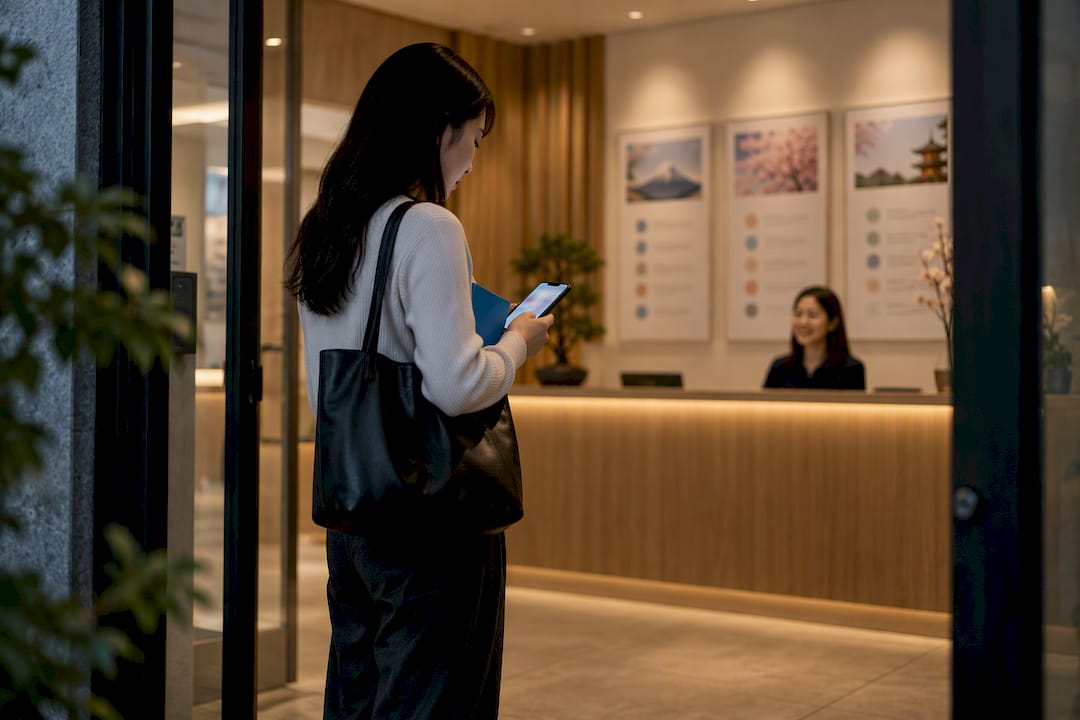
For eligible tax-free purchases made from 1 November 2026, Japan moves from upfront tax exemption to a tax-inclusive purchase followed by a refund after departure customs confirmation. This applies to the purchase date; eligible purchases before 1 November use the previous system. The shop or its delegated operator handles the refund. Goods must be available for customs inspection before you hand over your baggage. Ask the shop about their current process and consult the official Japan Tourism Agency traveller notice for eligibility details and requirements.
Shopping phrases you will need
Each phrase below includes the Japanese, a romaji reading and the English meaning, with a note on when to use it.
-
免税手続きはどこでできますか?
Menzei tetsuzuki wa doko de dekimasu ka?
Where can I do the tax-free procedure?A direct, polite question to find the right counter. This asks where the procedure happens, not whether you are eligible.
-
免税手続きについて聞きたいのですが。
Menzei tetsuzuki ni tsuite kikitai no desu ga.
I would like to ask about the tax-free procedure.A softer opening. The trailing のですが leaves the sentence gently open and invites the listener to respond.
-
パスポートはこちらです。
Pasupōto wa kochira desu.
Here is my passport.Use こちら (kochira, “this here”) when handing something over. It sounds more polite than これ (kore).
-
レシートをいただけますか?
Reshīto o itadakemasu ka?
May I have a receipt?いただけますか is a polite way to make a request. レシート comes from the English word “receipt.”
-
消費税は含まれていますか?
Shōhizei wa fukumarete imasu ka?
Is consumption tax included?消費税 (shōhizei) means consumption tax. Useful when a price tag does not make it clear.
-
この商品は免税対象ですか?
Kono shōhin wa menzei taishō desu ka?
Is this item eligible for tax exemption?商品 (shōhin) means “product.” 対象 (taishō, “applicable”) appears on signs and forms too.
-
返金の手続きについて教えてください。
Henkin no tetsuzuki ni tsuite oshiete kudasai.
Please tell me about the refund procedure.教えてください (oshiete kudasai) is a standard polite request for information or explanation.
-
記入する書類はありますか?
Kinyū suru shorui wa arimasu ka?
Are there any forms to fill in?記入 (kinyū) means “filling in.” 書類 (shorui) means “documents” or “paperwork.”
-
税関で確認が必要ですか?
Zeikan de kakunin ga hitsuyō desu ka?
Is confirmation needed at customs?税関 (zeikan) is “customs.” You will see and hear this word at the airport.
Key vocabulary
- 免税 (menzei): tax exemption. Look for this kanji on shop window signs and counter displays.
- 返金 (henkin): refund. This word concerns money being returned.
- レシート (reshīto): receipt. A receipt is a record of a transaction.
- パスポート (pasupōto): passport. The Japanese loanword for passport.
- 消費税 (shōhizei): consumption tax. The Japanese word for consumption tax.
- 税関 (zeikan): customs. The customs authority.
Practice dialogue: at the department store counter
This conversation is fictional and is for language practice only. It does not represent any specific shop’s process or guarantee a particular outcome.
You: すみません、免税手続きはどこでできますか?
Sumimasen, menzei tetsuzuki wa doko de dekimasu ka?
Excuse me, where can I do the tax-free procedure?
Staff: 2階のカウンターでございます。パスポートとレシートをお持ちください。
Ni-kai no kauntā de gozaimasu. Pasupōto to reshīto o omochi kudasai.
It is at the counter on the second floor. Please bring your passport and receipt.
You: ありがとうございます。記入する書類はありますか?
Arigatō gozaimasu. Kinyū suru shorui wa arimasu ka?
Thank you. Are there any forms to fill in?
Staff: はい、カウンターでご案内いたします。
Hai, kauntā de goannai itashimasu.
Yes, we will guide you at the counter.
Your shopping language checklist
Copy or screenshot this list to review before your trip.
- I can read 免税 (menzei) and 返金 (henkin) on signs
- I can ask where the tax-free counter is
- I know how to hand over my passport politely with こちらです
- I can request a receipt using いただけますか
- I can ask whether consumption tax is included in a price
- I understand that 税関 means customs
- I have read the official traveller notice for current rules
Common language questions
-
What does のですが at the end of a sentence do?
It softens a request, making it sound less direct. When you say 聞きたいのですが (“I would like to ask…”), the trailing が leaves the sentence gently open, as though you are waiting for the listener to respond. -
When should I use いただけますか instead of ください?
Both are polite. いただけますか frames your words as a question (“could I receive…?”) rather than a direction. At a service counter either works, but いただけますか is a step more considerate. -
How do I pronounce the long vowels in romaji?
A macron (the line above ō or ū) means you hold the vowel longer. Shōhizei has a long “o” in shō. Practise by saying the short vowel first, then stretching it slightly. Consistent long-vowel pronunciation helps staff understand you.
Practising these phrases before your trip builds real confidence at the counter. If you would like to work on travel conversations with guidance from a teacher, Japanese Explorer offers group classes and a trial class in Singapore.