Japanese business culture training gives professionals the specific communication habits, meeting protocols, and relationship-building skills that Japanese counterparts expect, usually through a half-day seminar, one or two-day workshop, or online modules built around role-play and real workplace scenarios. It works best for account teams, new hires facing Japan-based clients, and HR or L&D teams rolling out cross-cultural programs before a major deal or market entry.
TL;DR:
- Most Japanese business culture training lasts from a half-day to two days, with customization based on participants’ roles, friction points, and learning needs.
- Key modules focus on high-context communication, meeting protocols, nemawashi, business card rituals, and dining etiquette, enabling immediate application in workplace interactions.
- Practical exercises emphasize reading soft-no signals, rehearsing meetings and email structuring, and practicing meishi exchange and dining protocols for muscle memory.
- Training outcomes improve when managers actively participate, materials are circulated beforehand, and post-session follow-ups reinforce behaviors and track progress.
- Online formats can cover most content effectively, but in-person delivery remains preferable for meishi and seating drills, especially for geographically dispersed teams.
Table of Contents
- What Does Japanese Business Culture Training Cover?
- How Long Does Training Take, and Can It Be Customized?
- Core Skills and Exercises: Meetings, Email, and Meishi
- Preparing Your Team and Measuring What Sticks
- Why a Specialist Provider Makes a Measurable Difference
- When Is Culture Training Actually Worth Booking?
- Ready to Bring Japanese Business Culture Training to Your Team?
- Sources
- FAQ
What Does Japanese Business Culture Training Cover?
Good programs build around a handful of recurring modules, each tied to a specific behavior participants can use the next day. High-context communication comes first: keigo (honorific language), the gap between honne (true feelings) and tatemae (public position), and HoRenSo, the report-contact-consult rhythm that Japanese teams use to keep managers informed without waiting for a formal meeting, according to JETRO’s guidance on workplace communication.
From there, most curricula move into structural topics:
- Meetings and decision-making — participants learn that Japanese meetings typically confirm decisions rather than debate them, and practice building agendas that support consensus before anyone sits down.
- Nemawashi — the informal groundwork of one-on-one conversations that happens before a proposal ever reaches a meeting room.
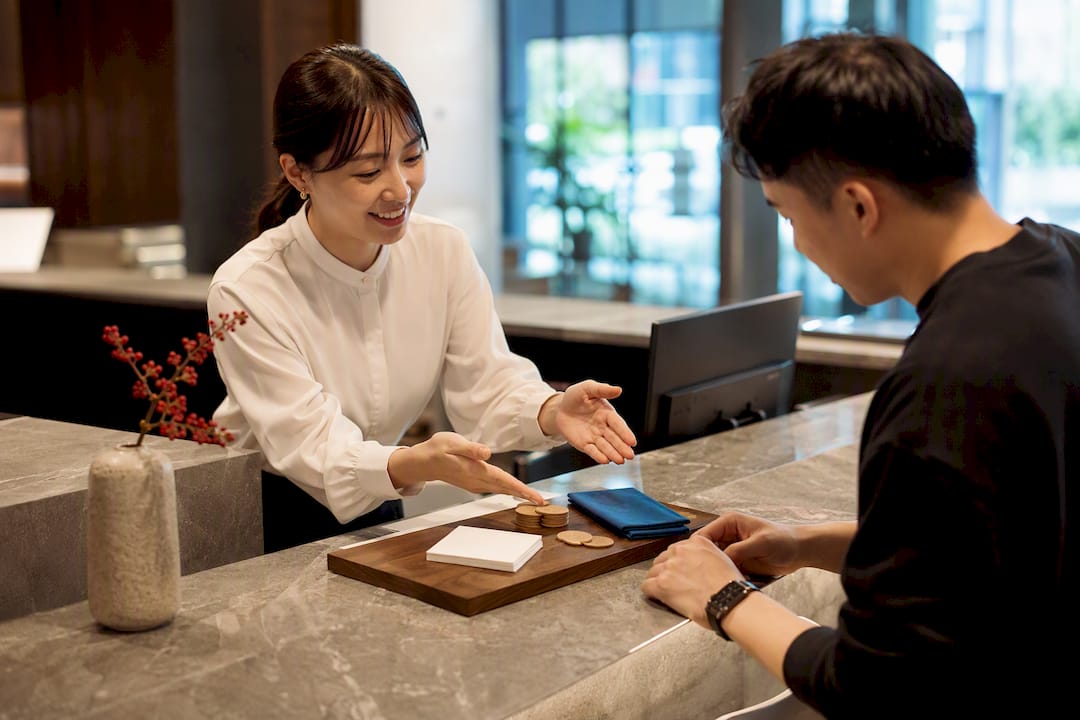
- Business card (meishi) rituals — offering, receiving, and placing cards in a way that respects seniority and seating order.
- Dining and after-hours etiquette — the unwritten rules around drinking invitations, seating at izakaya tables, and small talk that builds trust outside the office.
Programs aimed at managers and account leads often add specialist modules on negotiation with Japanese counterparts or leading mixed Japanese-foreign teams, since those situations carry higher stakes and less room for a misread signal.
How Long Does Training Take, and Can It Be Customized?
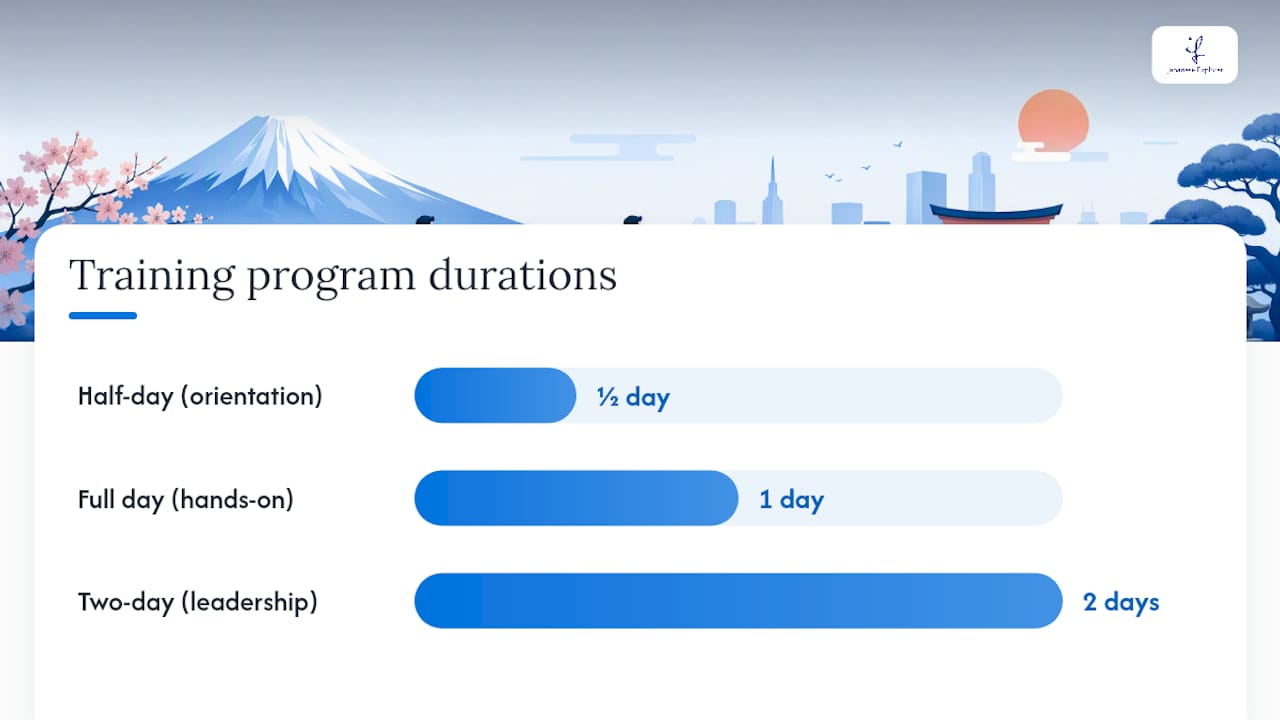
Most providers offer three timeframes: a half-day intensive for teams needing a fast orientation before a trip or client call, a full day for groups that want hands-on practice alongside the theory, and a two-day deep dive for leadership teams preparing for sustained work with Japanese partners. Program length typically runs from a half-day to two full days, with providers adjusting scope based on how much practice time a group needs.
Customization usually starts with a pre-course questionnaire covering participants’ roles, the accounts or partners they work with, and specific friction points they’ve already hit. That input shapes the role-play scenarios and example emails used during the session. It also mirrors a habit the training itself teaches: circulating agendas and materials before a meeting, rather than walking in cold, is standard practice in Japanese offices and it works just as well for the training session that teaches it.
Online delivery has closed the gap with in-person formats for most content, though meishi exchange and seating drills still land better face-to-face.
Core Skills and Exercises: Meetings, Email, and Meishi
The skills that matter most are the ones with an immediate, visible payoff. Training programs typically build them through a set sequence:
- Reading soft-no signals. Participants learn to recognize phrases like “we’ll consider it” or a pause before “that’s a bit difficult” as polite decline, not genuine hesitation. Reading the air (kuuki wo yomu) gets practiced through recorded dialogue clips participants have to interpret before discussing as a group.
- Meeting rehearsal. Since meetings usually ratify decisions already shaped through nemawashi, the highest-value drill is practicing the one-on-one outreach that happens before the meeting, not the meeting itself. Participants also rehearse seating protocol and understand that a meeting’s real purpose is confirming alignment, not generating it.
- Email structure clinics. Japanese business email follows a fairly rigid, multi-part structure, and recipient order in the “to” and “cc” fields signals hierarchy in ways that can undercut a well-written message if ignored. Participants edit real drafts against a template until the structure becomes automatic. Job-aids like Japanese meeting phrases help bridge the gap between classroom drills and live email traffic.
- Meishi and dining rehearsal. Offering a business card with both hands, receiving a counterpart’s card with visible attention, and placing it on the table according to seating order gets practiced until it’s muscle memory, alongside bowing depth and dining protocol.
Corporate programs lean on case studies and manager-led coaching during these drills, since a manager modeling the correct response builds credibility faster than a written rule ever does, a method Japan Intercultural’s training approach uses consistently across its negotiation and meeting modules.
Preparing Your Team and Measuring What Sticks
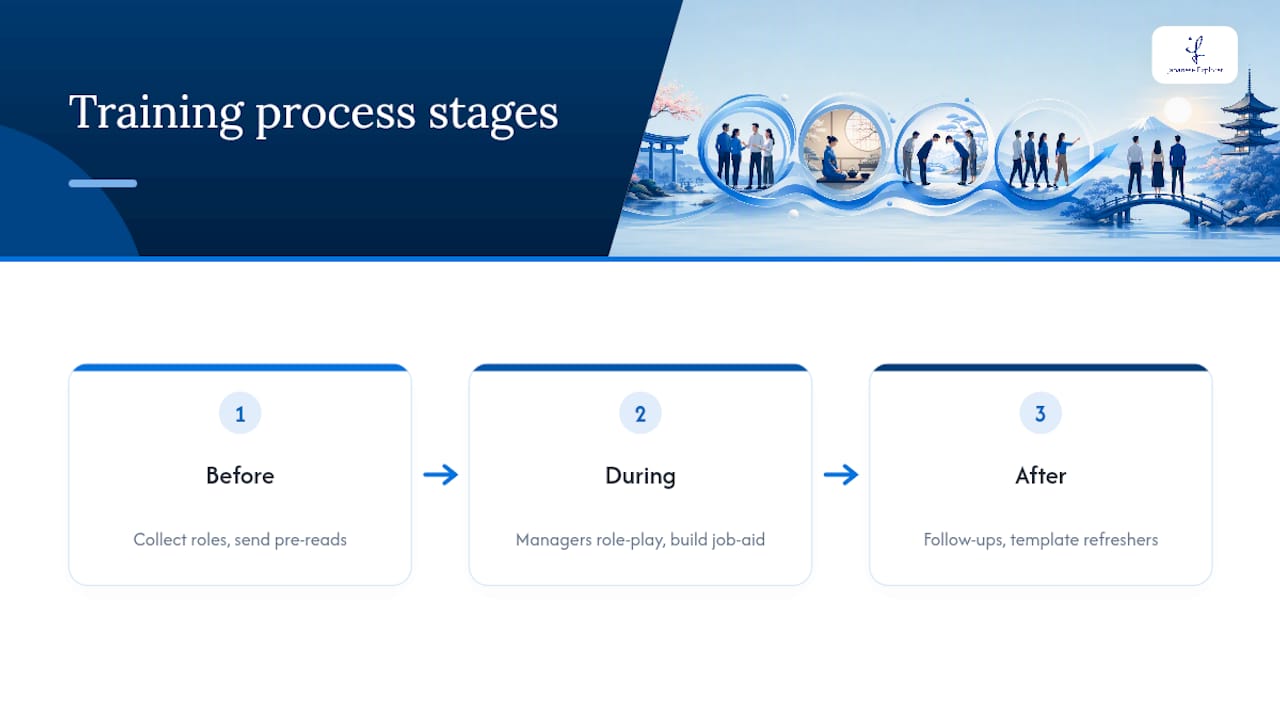
Training pays off when it’s treated as a process, not a single event. Before the session, collect real role examples and known friction points from participants, note their existing language exposure, and circulate the agenda and any pre-reading at least a few days out. Sending materials two to three days ahead mirrors the front-loaded alignment habit that Japanese teams already expect from counterparts.
During the session itself, get managers actively participating rather than observing from the back. Managers who role-play alongside their teams reinforce the behavior faster than a slide deck ever will. Capture concrete action items and build a short language job-aid, a one-page sheet of cushion phrases and email openers people can keep at their desk.
Afterward, reinforcement matters more than the training day itself. Short follow-up sessions, template refreshers, and brief microlearning check-ins keep the material alive. Track impact through participant confidence surveys, a visible drop in email misunderstandings, and clearer turnaround times on decisions that used to stall in translation, literal and cultural.
Why a Specialist Provider Makes a Measurable Difference
Cultural coaching sticks better when it’s paired with real language practice rather than delivered as a standalone briefing, a pattern confirmed by Real World Japanese’s mapping of business Japanese skill areas. That’s the gap a language-focused provider closes that a pure culture consultancy usually can’t.
Some providers of corporate Japanese training offer structured curricula aligned with recognized standards, experienced bilingual instructors, flexible delivery formats including group workshops, private coaching, and online sessions, and practical materials such as meeting phrases, email templates, and scenario scripts that participants can apply in their work.
When Is Culture Training Actually Worth Booking?
The strongest signal to invest is timing: a new Japan-facing account, an onboarding wave, or the weeks before a negotiation. Trained teams tend to hit alignment faster, send fewer emails that get misread, and walk into meetings already knowing what a “yes” and a soft “no” sound like. One honest caveat, fluency itself still takes months or years to build. What a short training program changes immediately is behavior, not vocabulary size, and that distinction should shape what a team expects walking out of a one-day session.
— Paul
Ready to Bring Japanese Business Culture Training to Your Team?
Com is the practical route into workplace-ready Japanese business skills, built for professionals who need results before their next Japan-facing meeting, not months of open-ended study. Corporate clients typically start with a scoping conversation covering team size, existing friction points, and the format that fits, group workshops, private coaching, or a blended online and in-person schedule.
A scoping call usually walks through a short needs survey, a sample agenda built around your team’s actual accounts and counterparts, and a recommended duration with a follow-up plan already built in. The Business Japanese Course covers group and private formats for teams that need workplace Japanese alongside the cultural coaching, while the Conversational Japanese Course page has details on corporate scoping and in-house delivery. Com’s training centre sits at 10 Anson Road, Level 22, International Plaza, Singapore 079903, right above Tanjong Pagar MRT, for teams that want an in-person session close to the Central Business District. Reach out through either landing page to start the scoping conversation.
Sources
- Japanese Business Culture Training
- JETRO communication guidance
- Nemawashi: building consensus in Japan
- Business Japanese: A complete map of the 6 areas (+ 90-day roadmap)
FAQ
How Long Does Japanese Business Culture Training Usually Take?
Programs typically run from a half-day intensive to a full two-day workshop, with the length depending on how much role-play and case-study practice a group needs. Online and blended formats can spread the same content across shorter weekly sessions.
What’s the Difference Between Culture Training and Language Classes?
Culture training focuses on behavior, protocol, and reading unspoken signals, while language classes build vocabulary and grammar. Com pairs both through its Business Japanese Course, since cultural coaching sticks better when practiced with real phrases and templates rather than delivered on its own.
Does Training Cover Email and Written Communication?
Yes. Most programs include email structure clinics, since recipient order and phrasing in Japanese business email can carry as much weight as the message content itself.
Who Should Attend This Kind of Training?
Anyone with regular Japan-facing responsibilities benefits, including account managers, new hires onboarding onto Japanese accounts, and leadership teams preparing for a market entry or negotiation. HR and L&D teams often book it as a standing program rather than a one-off session.
Can Training Be Delivered Online for Distributed Teams?
Yes, most core modules, including meeting mechanics, email structure, and communication style, transfer well to live online sessions. Meishi exchange and seating drills still work better in person, so some providers recommend a blended approach for teams split across locations.