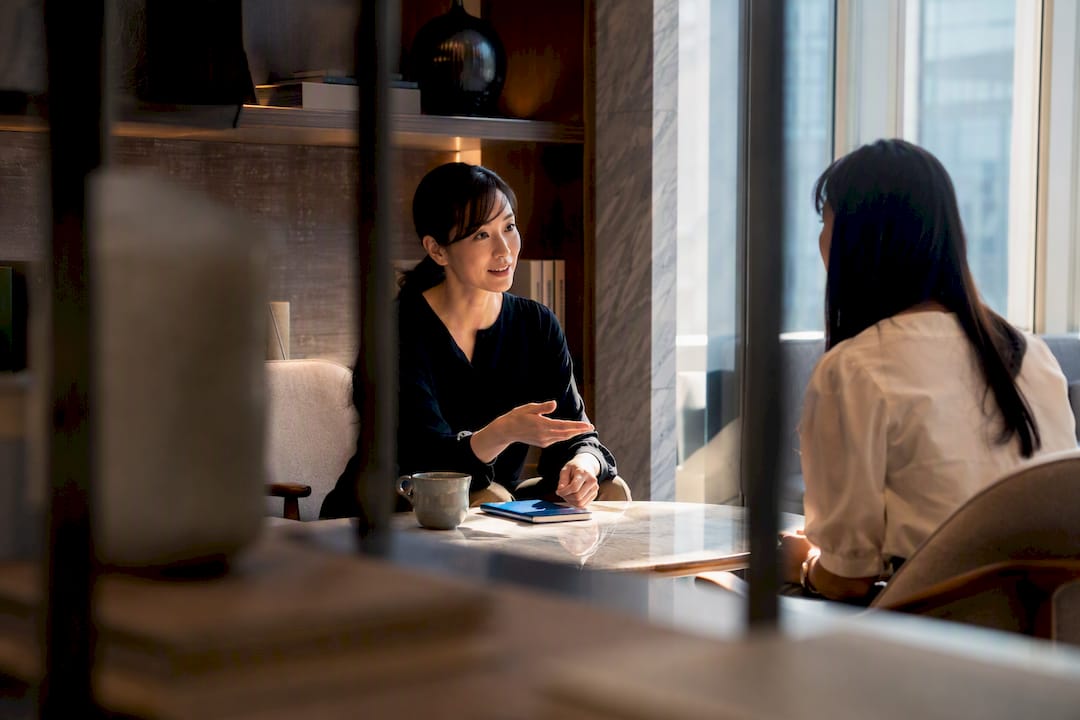
For a Japanese business lunch, arrive on time, let the host lead seating and ordering, wait for kanpai before drinking, and use the meal to build rapport rather than press for an immediate decision. That sequence matters more than mastering every rule. Guidance from JNTO, JETRO, and the Swiss Chamber of Commerce and Industry in Japan all point to the same priority: show consideration, not perfection.
TL;DR:
- Arriving early and notifying your host if delayed is essential, and the host usually pre-arranges seating based on hierarchy, with the most senior seat facing the room.
- The default meal is a set menu or teishoku, with modest ordering and clear communication of dietary restrictions to avoid awkwardness.
- Follow the host’s lead on ordering, use proper sharing etiquette with utensils, and wait for the group kanpai before drinking.
- Saying itadakimasu before eating and gochisōsama deshita afterward demonstrate respect, while chopstick rules and pouring rituals reflect attentiveness and cultural nuance.
- Send a brief follow-up email within 48 hours summarizing discussed points, and accept the bill with humility, avoiding tips and pushing only once to split costs.
Table of Contents
- Quick Checklist for Japanese Business Dining Etiquette
- What Should You Do Before You Go?
- Why Does Seating Order Matter So Much?
- How Does Ordering Work at a Business Lunch?
- What Happens Once Food Arrives?
- How Should You Handle Conversation and Decisions?
- Who Pays, and How Should the Meal End?
- Which Japanese Phrases Actually Help at the Table?
- What I’d Tell Anyone Nervous About This
- Prepare for the Table, Not Just the Meeting
- Sources
- FAQ
Quick Checklist for Japanese Business Dining Etiquette
Print this before your next meeting. It covers the moments that shape a first impression more than any single technical rule.
- Arrive a few minutes early; text or call the host immediately if you’re running late, as SCCIJ recommends.
- Wait to be seated. Hierarchy dictates placement, so don’t grab a chair on your own.
- Accept the host’s ordering choice or a set teishoku menu rather than requesting something off-script.
- Mention any allergy or dietary restriction before the order goes in, not after.
- Say itadakimasu before eating and wait for the host’s cue or a kanpai toast.
- Use serving utensils or the reverse end of your chopsticks for shared dishes.
- Pour drinks for others; never pour your own glass.
- Skip the tip. It isn’t part of Japanese dining customs, and leaving cash can cause confusion.
- Offer once to help with the bill, then accept whatever the host decides.
- Keep the conversation warm and open. Save hard asks for a follow-up email.
What Should You Do Before You Go?
Punctuality is non-negotiable in Japanese business dining etiquette. Plan to arrive early, and if something delays you, message your host right away with an apology and a revised time. The SCCIJ frames this as standard business trip etiquette, not an optional courtesy.
Reservations for business lunches often happen in private rooms with a pre-arranged set menu. Hosts frequently choose a teishoku or, for a more formal occasion, a multi-course kaiseki meal, because both eliminate ordering friction at the table. Dress conservatively. Skip flashy jewelry or anything that could pull attention away from the conversation. If you have dietary restrictions, raise them when the meeting is being arranged, or the moment your host asks about preferences. Waiting until the food arrives to mention a restriction puts everyone in an awkward spot, including your host.
Why Does Seating Order Matter So Much?
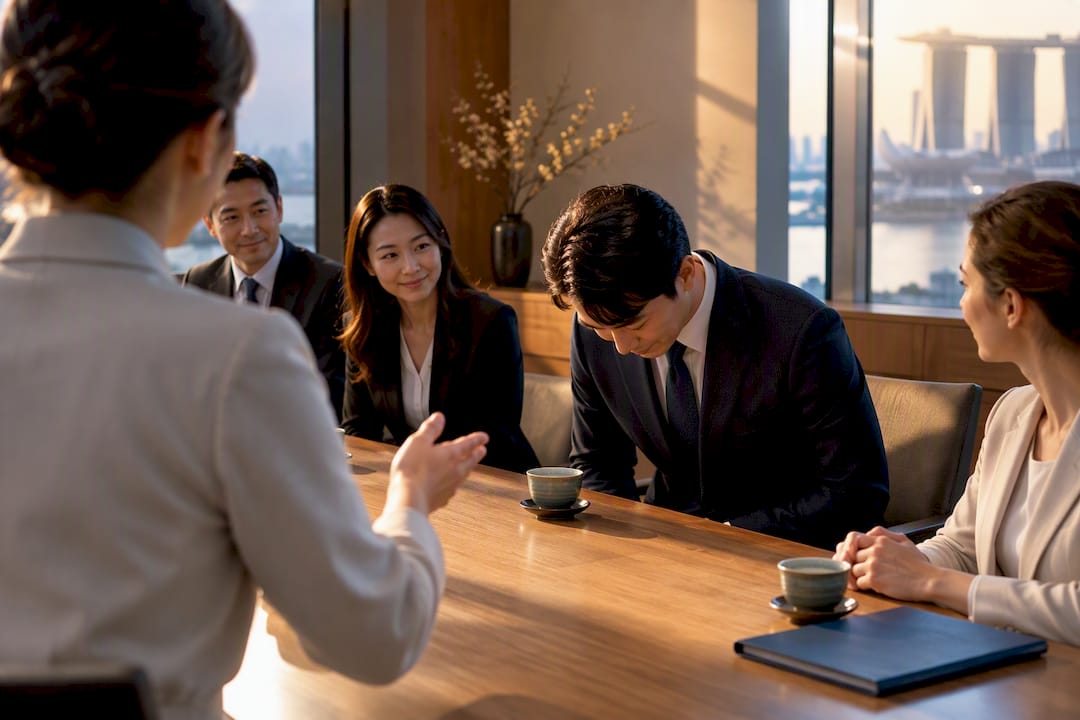
Seating in Japan is a quiet map of rank. The kamiza is the seat of honor, positioned furthest from the entrance, usually facing the room or a scenic feature like a garden view. The shimoza sits nearest the door, typically reserved for the host or the most junior person present. JETRO’s guidance on business communication treats this arrangement as a direct extension of workplace hierarchy, not just restaurant custom.
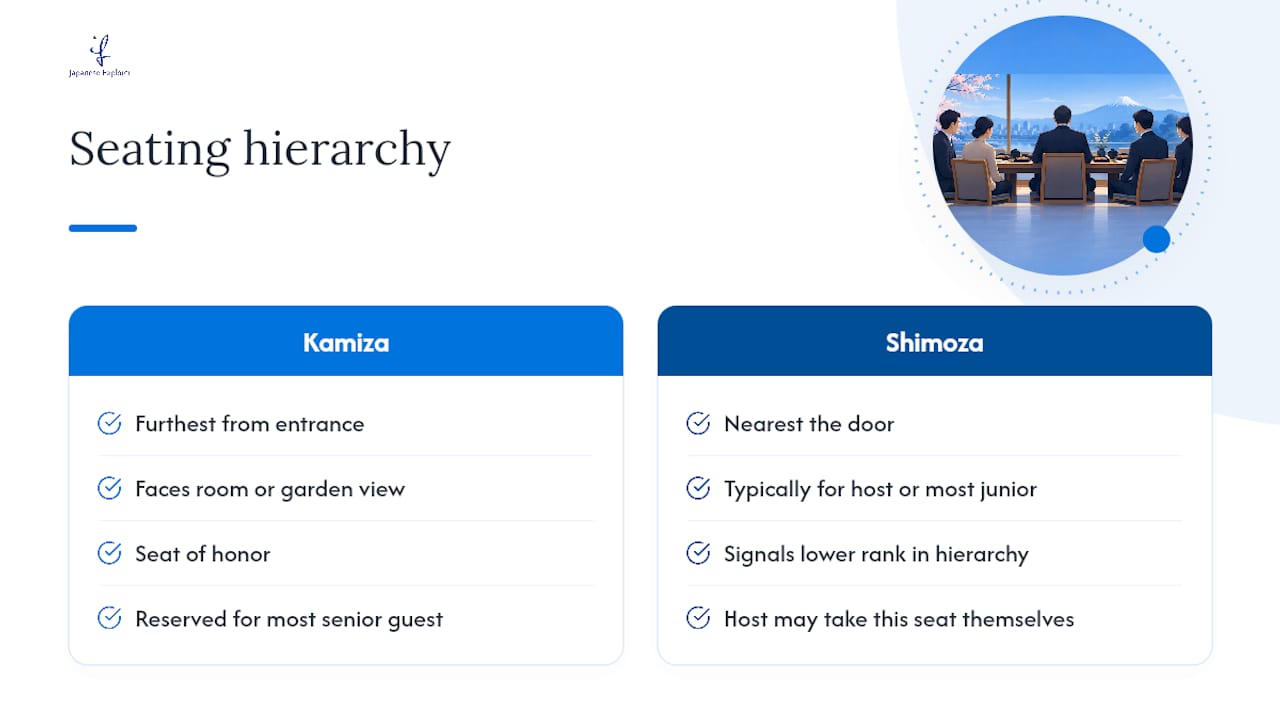
If no one directs you to a seat, don’t guess. A quiet “Dochira ni suwarimashou ka?” (“Where should I sit?”) signals awareness without forcing the issue. In tatami rooms, remove your shoes at the entrance and sit properly on the cushion provided; slouching or stretching your legs out is read as careless. If you’re the one hosting, place your most senior guest at the kamiza and take the shimoza yourself. It’s a small gesture that tells the room you understand the dynamic.
How Does Ordering Work at a Business Lunch?
Let your host steer the menu. A teishoku set typically includes rice, miso soup, a main dish, and pickles. JNTO describes it as the default choice for a reason: it’s efficient, balanced, and removes the awkwardness of everyone ordering something different.
If your host asks what you’d like, name a modest option rather than the most expensive item on the menu. State any allergy plainly and calmly. A simple phrase like “I have a food allergy to shellfish” works fine in English if your Japanese is limited. Restaurants are usually accommodating when told in advance, according to JNTO’s practical guidance.
Shared dishes come with their own etiquette:
- Use the serving utensils provided, never your personal chopsticks.
- If no serving utensils exist, flip your chopsticks and use the opposite end.
- Transfer food to your own small plate first rather than eating directly from the shared dish.
- Take a modest portion so others have enough.
What Happens Once Food Arrives?
Wait for everyone to be served, then follow the host’s lead. Say itadakimasu before the first bite; it’s a phrase of gratitude for the meal, not a formal blessing. When the meal ends, gochisōsama deshita closes it out the same way. Japan-Guide’s etiquette rundown treats both phrases as baseline expectations, and skipping them stands out more than mispronouncing them would.
Chopstick rules trip up more visitors than anything else at the table. Don’t point with them, stab food, or leave them standing upright in a bowl of rice, since that gesture echoes a funeral ritual. Never pass food directly from your chopsticks to someone else’s; that’s another funeral association JNTO flags explicitly. If you’re unsure how to handle something, set the food on your plate and ask for a fork. Nobody will think less of you for it.
Pouring has its own quiet choreography. Support the bottle with both hands when filling someone else’s glass, and when your glass is filled, lift it slightly as a small acknowledgment. Keep an eye on your neighbors’ glasses and top them up before they run low; it’s one of the more visible signs of attentiveness in Japanese business dining etiquette. Don’t drink before the group’s kanpai, even if your glass is already full.
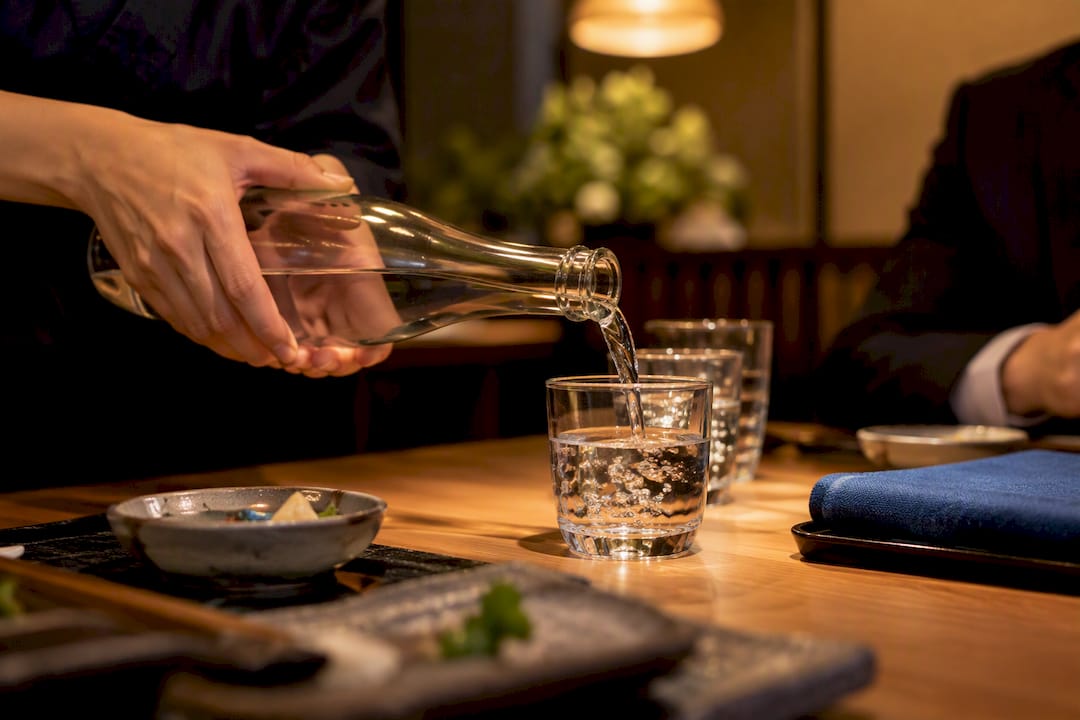
Tipping isn’t part of the equation here. The SCCIJ and Japan-Guide both confirm that tipping is uncommon in Japan, and leaving cash on the table can create more confusion than goodwill.
Pro Tip: Practice the two-hand pour at home with a water bottle before your first Japanese business lunch. The motion feels awkward the first few times, and getting it smooth in advance means you can focus on the conversation instead of the bottle.
How Should You Handle Conversation and Decisions?
Business lunches in Japan rarely end with a signed deal, and that’s by design. The concept of nemawashi, informal groundwork laid before a formal decision, often happens over exactly this kind of meal. SilkDrive’s explainer on Japanese decision-making describes it as a process of quietly aligning stakeholders one conversation at a time, rather than pitching a room and expecting a yes.
Ask open questions. Listen more than you talk. Take mental or written notes on what matters to your counterpart, since that intelligence will matter more later than anything you say over rice and miso soup. If you hear “we will consider this” or “we need to discuss internally,” treat it as a genuine next step, not a soft no. Pushing for a firm answer at the table usually backfires. Understanding how Japanese business communication is structured helps explain why indirect answers carry real weight rather than functioning as polite deflection.
Send a short recap by email within 24 to 48 hours: what you discussed, what you understood, and what you’ll do next. A clear follow-up message does more to move a relationship forward than anything said at the table.
Who Pays, and How Should the Meal End?
The host typically arranges the bill, and this holds whether the lunch is casual or formal. Offer once to split the cost or cover your share, then accept the host’s decision without pushing further. Japan-Guide notes that insisting past a single offer can come across as questioning the host’s role rather than as generosity.
Before leaving the table, return dishes to roughly where they started and rest your chopsticks on their holder or the paper wrapper, not across the bowl. Say gochisōsama deshita and thank your host directly for the invitation. If a tip is somehow offered back to you, don’t press the point. A brief thank-you email the same day, confirming any next steps discussed, closes the loop properly.
Which Japanese Phrases Actually Help at the Table?
A handful of short phrases go a long way toward showing effort, and effort reads as respect in Japanese dining customs. None require fluency.
- Itadakimasu — said just before eating begins.
- Gochisōsama deshita — said when the meal ends, thanking the host.
- Osaki ni dōzo — “please, go ahead,” useful when offering someone the first serving.
- Kanpai — the toast; wait for it before drinking.
- Sumimasen — “excuse me” or “sorry,” useful for small missteps like reaching across the table.
- Arigatou gozaimasu — a straightforward thank you.
- Osewani natte orimasu — a polite opener meaning roughly “thank you for your continued support,” common in business greetings.
- Dochira ni suwarimashou ka? — “where should I sit?” if seating isn’t obvious.
Keep the tone soft and the pace slow; native speakers will notice the attempt more than the accent. A short business-Japanese module that includes role-play for pouring, seating, and follow-up phrasing turns this list from something memorized into something you can actually use under pressure. Building a small dining vocabulary ahead of time makes the difference between reciting a phrase and using it naturally.
What I’d Tell Anyone Nervous About This
Most professionals over-prepare for the wrong thing. Your host doesn’t expect you to execute every rule flawlessly; they expect attention. Watch what they do, mirror the pace, and don’t rush the pours or the toast. If you forget a phrase, a sincere sumimasen and a smile fix almost anything.
— Paul
Prepare for the Table, Not Just the Meeting
Reading about kamiza seating and chopstick taboos gets you halfway there. Actually pouring a drink with two hands, timing a toast, or handling a polite decline without fumbling takes practice you won’t get from a checklist alone. Japanese Explorer’s Business Japanese Course builds exactly that kind of rehearsal into the curriculum, with role-play scenarios for pouring, seating cues, and the soft language used during nemawashi conversations.
Sessions run in flexible formats, so professionals with busy schedules can fit preparation into their calendar. Private lessons work well for a last-minute refresher before a specific meeting, while corporate training suits teams heading into a longer partnership together. Instructors focus on practical dining and meeting scenarios rather than textbook drills. If you want to walk into your next Japanese business lunch without second-guessing every phrase, consider enrolling in a Business Japanese course to find a session that fits your timeline.
Sources
- Japanese table manners | Japan-Guide
- Communication with Japanese business partners | JETRO
- Business trip and etiquette | Swiss Chamber of Commerce and Industry in Japan
- Nemawashi: How Japanese companies actually make decisions | SilkDrive
FAQ
What is the Japanese 1-3 rule for food?
There isn’t an official “1-3 rule” documented in Japanese dining customs. If you’ve encountered the term, it likely refers informally to the balanced components of a teishoku set, which typically includes a main dish along with sides, rice, and soup.
Is it disrespectful to not finish your meal in Japan?
Leaving a small amount of food isn’t a serious breach, but finishing what’s served is generally viewed as a sign of respect for the host and the meal. If you can’t finish due to a dietary restriction, mention it before ordering rather than leaving food visibly untouched.
What is the 5-minute rule in Japan?
This isn’t a documented etiquette standard for business dining. The safer practice, per SCCIJ guidance, is arriving five to ten minutes early and notifying your host immediately if you’ll be late.
What is the dress code for a Japanese business lunch?
Conservative business attire is standard: dark suits, minimal accessories, and nothing that draws attention away from the conversation. Even a casual-sounding lunch invitation in a business context usually calls for the same standard you’d wear to a meeting.
How do I prepare quickly if I have a business lunch coming up soon?
A private lesson or short corporate briefing focused on dining phrases and etiquette can cover the essentials in one or two sessions. Japanese Explorer’s Business Japanese Course includes this kind of targeted, role-play based prep for professionals working on a deadline.