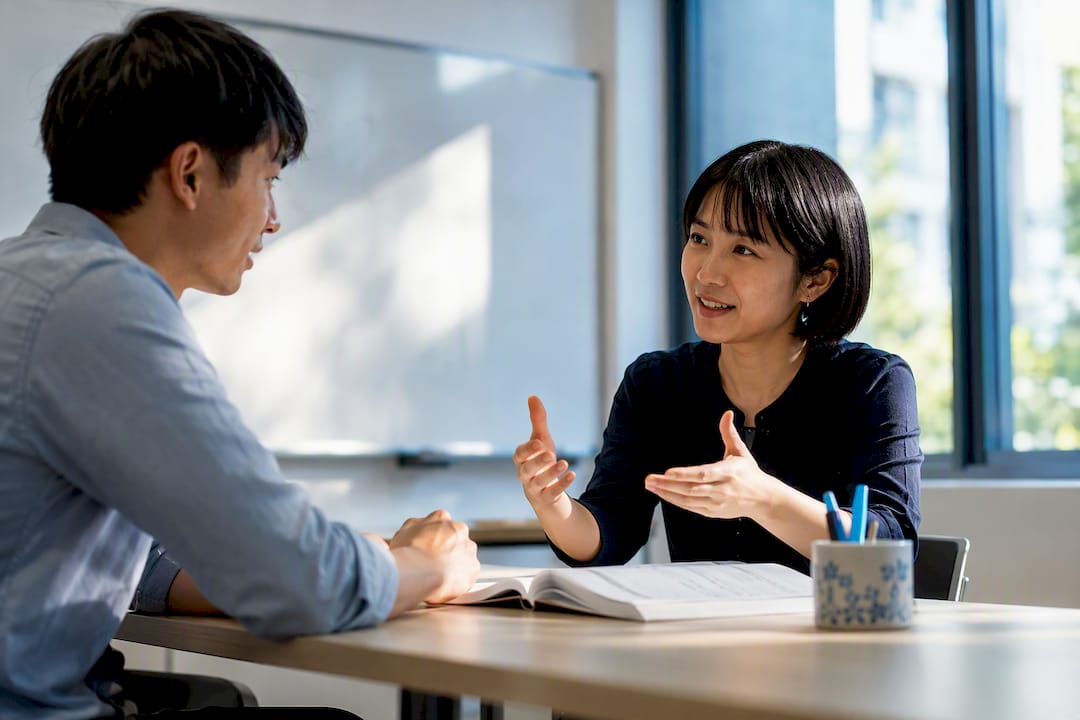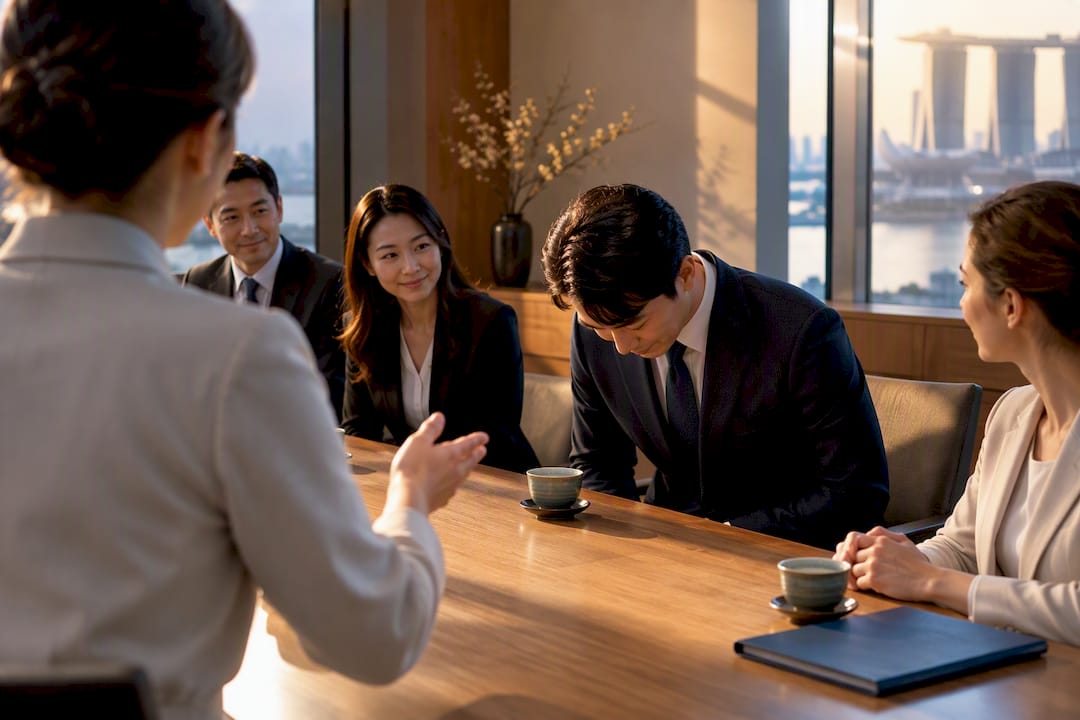
Meetings shape how decisions are made in Japanese companies, and language plays a critical role in showing professionalism and respect. This blog will walk you through Japanese meeting phrases, etiquette, and how minutes are written so you can participate confidently in real business situations.For learners building workplace fluency, Japanese business courses focused on professional communication provide the right foundation for handling real corporate interactions.
Why Japanese Meetings Feel Different from Western Ones
Business communication in Japan prioritizes harmony, hierarchy, and clarity. A meeting is not just a place to exchange ideas. It is a structured process where roles, preparation, and polite language signal competence.
In many organizations, decisions are influenced before the meeting through internal consultations known as nemawashi. By the time formal discussion begins, participants often already understand the direction.
Language reflects this structure. Junior staff tend to use honorific expressions when speaking to seniors. Managers speak more directly but still maintain formality. Silence is not awkward. It often indicates thoughtful consideration rather than disagreement.
Professionals who plan to work with Japanese clients or colleagues usually benefit from formal training such as structured Japanese business courses that teach communication norms alongside vocabulary.
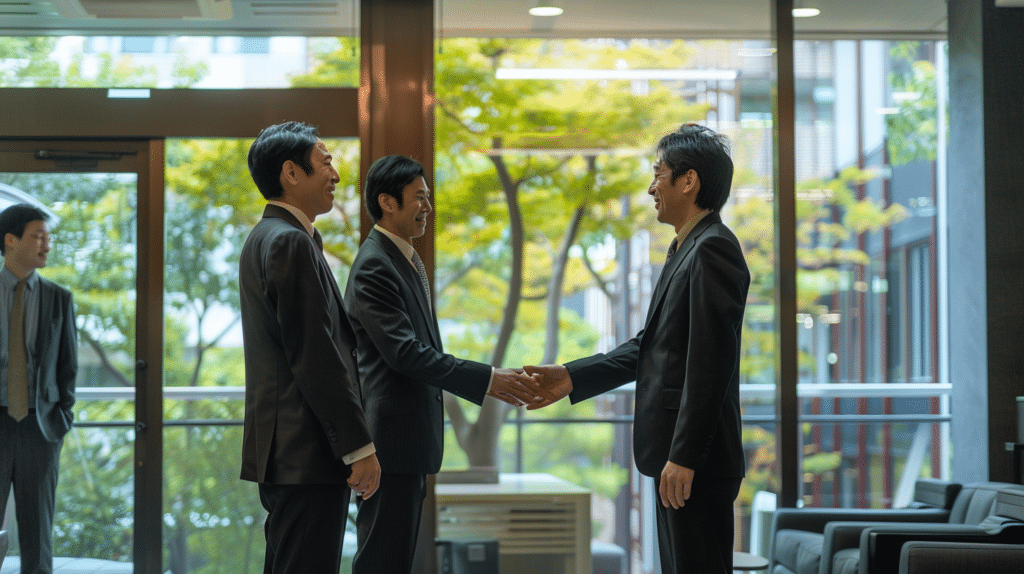
Opening a Meeting in Japanese
Starting a meeting smoothly establishes authority and respect. Opening phrases usually acknowledge participants’ time and confirm the purpose.
Common Opening Phrases
会議を始めます。
Kaigi o hajimemasu.
We will begin the meeting.
本日はお忙しい中お集まりいただき、ありがとうございます。
Honjitsu wa o-isogashii naka o-atsumari itadaki, arigatō gozaimasu.
Thank you for gathering despite your busy schedules.
本日の議題は〜です。
Honjitsu no gidai wa ~ desu.
Today’s agenda is ~
These expressions combine neutral grammar with polite tone. In corporate settings, this balance communicates competence without sounding overly rigid.
Confirming Attendance
Japanese meetings often formally acknowledge participants.
出席者を確認します。
I will confirm attendees.
Roll calls are common when participants include senior executives or external partners.

Discussing the Agenda
Once the meeting begins, discussion usually follows a pre-circulated agenda. Deviating without notice can be seen as disorganized.
Referring to Agenda Items
まず、第一の議題について説明します。
First, I will explain the first agenda item.
次に、売上報告に移ります。
Next, we will move to the sales report.
Clear transitions help participants follow the structure, especially when meetings involve multiple departments.
Asking for Opinions in a Business Context
Japanese workplace communication often invites input indirectly to avoid putting people on the spot.
Polite Ways to Request Input
ご意見をいただけますか。
May we have your opinion?
いかがでしょうか。
What do you think?
何かご質問はございますか。
Do you have any questions?
These phrases use respectful language forms that elevate the listener’s status. In hierarchical settings, juniors rarely speak first unless invited.
Agreeing and Disagreeing Politely
Direct disagreement can damage group harmony. Japanese business culture favors softened responses.
Agreeing
賛成です。
I agree.
その通りだと思います。
I think that is correct.
Expressing Reservations
検討の余地があると思います。
I believe there is room for consideration.
別の案も考えられるかもしれません。
Another option might be possible.
Notice how disagreement is framed as additional perspective rather than opposition.
Decision-Making Language
Formal decisions often include explicit confirmation phrases.
この方向で進めてもよろしいでしょうか。
May we proceed in this direction?
承認をお願いします。
Please approve.
では、この案で決定します。
We will decide on this proposal.
Such statements clarify responsibility and reduce misunderstandings later.
Japanese Keigo for Meetings
Honorific language, or keigo, is central to Japanese corporate communication. It signals hierarchy and professionalism.
Keigo has three main forms:
- Respectful language that elevates the listener
- Humble language that lowers the speaker
- Polite language that maintains formal tone
For example:
申します instead of 言います
I say (humble form)
ご覧になります instead of 見ます
You see (respectful form)
Using keigo correctly can significantly influence how colleagues perceive competence and trustworthiness.Learners who already know polite everyday expressions from restaurant survival phrases in Japanese often find it easier to understand why business Japanese becomes more formal and more layered in meetings.
Professionals who regularly interact with Japanese clients often develop these skills through immersive practice rather than memorization alone.
Closing a Meeting in Japanese
Ending a meeting properly is just as important as opening one. It confirms outcomes and shows appreciation.
Common Closing Expressions
本日の会議は以上です。
That concludes today’s meeting.
ご協力ありがとうございました。
Thank you for your cooperation.
次回は来週の火曜日に開催予定です。
The next meeting is scheduled for next Tuesday.
A clear closing ensures everyone understands next steps and timelines.
How to Write Meeting Minutes in Japanese
Meeting minutes, or 議事録 (gijiroku), are formal records that summarize discussion and decisions. They are widely used in corporations, government agencies, and academic institutions.
According to guidance from Japan’s Ministry of Internal Affairs and Communications, official records must accurately reflect proceedings and decisions to ensure accountability.
Standard Structure of Japanese Minutes
Most documents include:
- Date and time
- Location or format (in person or online)
- Attendees
- Agenda items
- Key discussion points
- Decisions made
- Action items
Clarity matters more than stylistic flair.
Typical Phrases Used in Minutes
議題1について報告が行われた。
A report was presented on Agenda Item 1.
以下の通り決定した。
The following was decided.
次回までに対応する。
Action will be taken by the next meeting.
Passive constructions are common because the focus is on outcomes rather than individuals.
Writing Style
Japanese minutes tend to be concise and objective. Personal opinions are excluded. Only verified statements and decisions appear.
Companies increasingly use digital collaboration tools such as Microsoft Teams or Zoom for remote meetings, but documentation standards remain consistent across platforms.
Research from the International Labour Organization shows that Japan continues to emphasize formal documentation even as hybrid work expands.
Etiquette That Supports Effective Communication
Language alone does not guarantee success. Nonverbal behavior and preparation carry equal weight.
Punctuality
Arriving early signals respect. Late arrival disrupts group harmony and can damage credibility.
Preparation
Participants are expected to review materials beforehand. Asking basic questions that were already addressed in documents may be seen as unprepared.
Listening
Interrupting is rare. Speakers typically finish their points before others respond.
Speaking Order
Senior members often speak first or last depending on company culture. Observing patterns helps newcomers adapt quickly.
From Survival Japanese to Professional Communication
Many learners begin with everyday expressions used in restaurants or travel situations. These build a foundation but differ significantly from workplace language.
Practical resources such as restaurant survival phrases help beginners gain confidence with polite forms before moving into formal corporate communication.
Business Japanese introduces specialized vocabulary, honorific structures, and context-specific etiquette that everyday language does not cover.
When Formal Training Makes a Difference
Self-study can teach vocabulary, but real meetings require spontaneous listening, cultural awareness, and situational judgment.
Structured programs such as Japanese business courses focus on realistic scenarios like negotiations, presentations, and cross-cultural communication. Participants practice responding appropriately to senior executives, clients, and team members.
Companies expanding into Japan often invest in such training because miscommunication can affect partnerships, contracts, and long-term trust.
Conclusion
Mastering Japanese meeting phrases goes beyond translation. It requires understanding hierarchy, etiquette, and documentation practices that shape how decisions are made in Japanese organizations. If you plan to work with Japanese partners or teams, structured training can accelerate your progress and prevent costly misunderstandings.
Explore professional programs that prepare you for real corporate interactions and help you communicate with confidence in high-stakes business environments.
FAQs About Japanese Meeting Phrases
What level of Japanese is needed to attend business meetings?
Most companies expect at least intermediate proficiency with keigo. Organizations such as the Japan Foundation note that workplace communication requires formal structures not covered in casual language learning.
Are meetings in Japan always formal?
Not always. Internal team meetings may be relaxed, but language still reflects hierarchy. External meetings with clients or partners remain highly formal.
How long are typical Japanese meetings?
Duration varies by organization, but many corporate meetings last 30 to 60 minutes with a strict agenda to maintain efficiency.
Is it acceptable to speak English in Japanese meetings?
Some multinational companies operate bilingually, especially in Tokyo. However, using Japanese often builds stronger relationships and shows commitment.