
TL;DR:
- Singaporean learners benefit from kanji familiarity and local Japanese communities.
- Structured study and immersion combined accelerate Japanese fluency efficiently.
- Consistent practice and community support are key to reaching conversational fluency.
Many Singaporeans dream of speaking Japanese fluently, whether for travel, career growth, or connecting with Japanese culture, but most hit a wall within the first few months. The gap between casual self-study and real proficiency is wider than it looks. Scripts feel overwhelming, kanji blur together, and motivation fades without a clear roadmap. The good news? Singapore learners actually have unique advantages, including kanji familiarity for Chinese speakers and a vibrant local Japanese community. This guide walks you through every critical stage of the Japanese language study process, from your very first week to reaching conversational fluency, with strategies proven to work in the Singapore context.
Table of Contents
- What you need to begin Japanese language study
- Mastering the Japanese scripts: hiragana, katakana, and getting a head start with kanji
- Building grammar and vocabulary with proven resources
- Maximizing progress with structured input, immersion, and local practice
- Tracking your progress and overcoming common pitfalls
- Our perspective: what really works for Singapore Japanese learners
- Start your Japanese journey with expert guidance
- Frequently asked questions
Key Takeaways
| Point | Details |
|---|---|
| Set clear goals early | Choose your level and tools before jumping into study for best results. |
| Master scripts first | Prioritize hiragana, katakana, and basic kanji in your first month. |
| SRS boosts retention | Use spaced repetition daily but avoid overdoing to prevent burnout. |
| Combine methods for fluency | Mix textbooks, SRS, classes, and immersion activities—hybrid approaches work best. |
| Track and adjust progress | Regular self-testing and milestone tracking keep you motivated and on course. |
What you need to begin Japanese language study
Before you open a single textbook, it helps to get clear on your goal. Are you aiming for JLPT N5 as a foundation? Do you want conversational ability for a trip to Japan? Or are you building toward professional Japanese for your career? Your goal shapes everything, from which resources you pick to how many hours you commit each week.
Here is a quick look at the core resources every beginner needs:
| Resource type | Recommended options | Best for |
|---|---|---|
| Textbook | Genki, Minna no Nihongo | Structured grammar and vocabulary |
| Script app | Duolingo, Dr. Moku | Hiragana and katakana drills |
| SRS tool | Anki, WaniKani | Kanji and vocabulary retention |
| Dictionary | Jisho, Takoboto | Quick lookups and example sentences |
| Online course | NHK World, YouTube | Supplementary listening and grammar |
As a starting point, master hiragana and katakana first, ideally within one to two weeks, then move into a structured textbook while integrating an SRS tool for kanji and vocabulary retention.
For Singaporean Chinese learners, there is a real head start here. Your existing exposure to Chinese characters means kanji will feel less foreign than it does for learners with no character background at all. That said, do not assume kanji knowledge transfers perfectly. Japanese readings and meanings often differ from Chinese.
Here is what you need to get started:
- A smartphone or laptop for apps and online resources
- A physical or digital notebook for writing practice
- One core textbook (Genki or Minna no Nihongo)
- An SRS app set up and ready to use
- A clear, written goal with a target date
Explore study tools and tips to find the right combination for your learning style.
Pro Tip: Spend your entire first week on hiragana and katakana only. Learners who do this progress through textbook content significantly faster because they can read phonetically from day one, instead of relying on romanized Japanese (romaji), which creates a crutch that slows long-term progress.
Mastering the Japanese scripts: hiragana, katakana, and getting a head start with kanji
The three Japanese scripts can feel like three separate mountains to climb. But with the right sequence, you will find that each one builds on the last.
Here is the step-by-step approach that works:
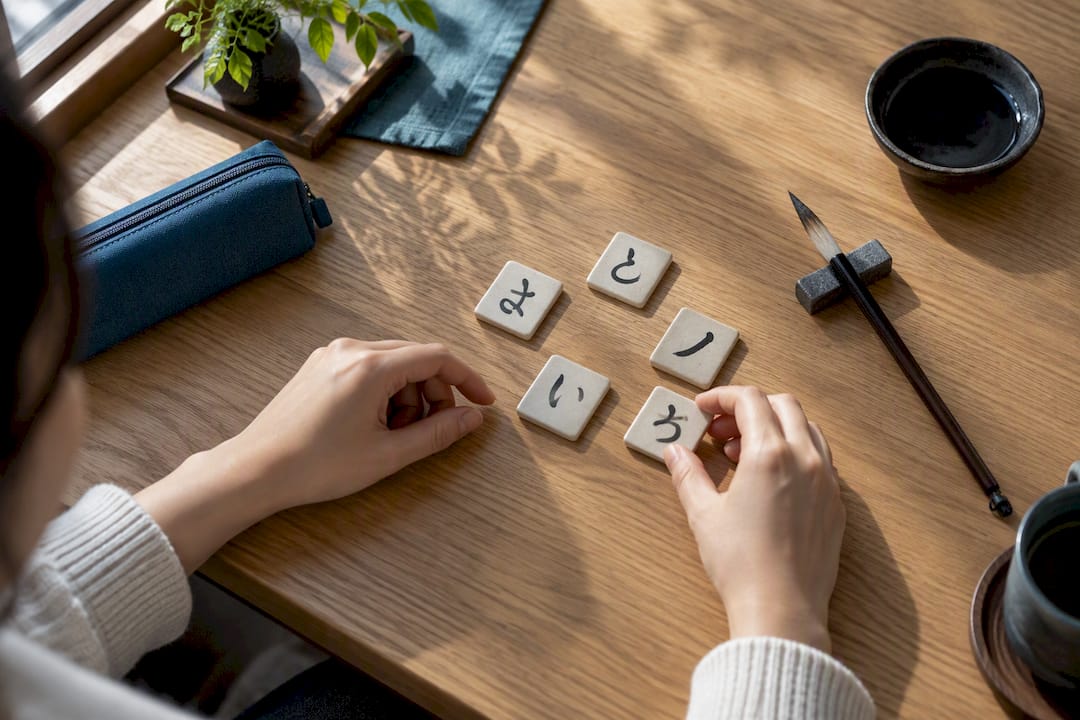
- Week 1: Hiragana. Learn all 46 base characters using a combination of writing practice and an SRS app. Associate each character with a sound, not a romanization.
- Week 2: Katakana. Follow the same method. Katakana is used for foreign loanwords and is essential for reading menus, signs, and modern Japanese text.
- Week 3 onward: Begin kanji basics. Start with the most frequent kanji using SRS setup for scripts to build a sustainable daily review habit.
Why does this sequence matter so much? Because every textbook lesson, every vocabulary list, and every grammar explanation is written in hiragana and katakana. If you skip or rush the scripts, you spend mental energy decoding characters instead of absorbing the actual content.
For kanji, there are three main learning strategies. Research on kanji learning strategies shows that mnemonic methods, analytic methods, and rote learning each have their place, and that Chinese L1 learners benefit most from the analytic method, which involves breaking kanji into components and analyzing their structure.
“L1 Chinese learners show faster kanji acquisition when using analytic learning strategies, leveraging their existing character knowledge.”
Learners without a Chinese background tend to do well with mnemonic systems like Remembering the Kanji by James Heisig, which assigns a memorable story to each character.

The most common trap at this stage is ignoring katakana or delaying kanji study for months. Both slow you down significantly.
Pro Tip: Just 15 minutes of SRS review daily is enough to prevent the forgetting curve from erasing your progress. Do not cram 100 new cards in one session. Consistency beats intensity every single time.
Building grammar and vocabulary with proven resources
With your script foundations in place, it is time to build grammar and vocabulary systematically. The two most popular textbooks for this stage are Genki and Minna no Nihongo, and they suit different learners.
| Feature | Genki | Minna no Nihongo |
|---|---|---|
| Target learner | University students, self-studiers | Classroom learners, structured courses |
| Language of instruction | English and Japanese | Japanese only (with separate translation book) |
| Kanji coverage | 23 lessons, around 300 kanji | Gradual, immersive approach |
| Strengths | Clear grammar explanations, engaging exercises | Authentic Japanese environment, strong listening |
| Weaknesses | Can feel slow for advanced beginners | Requires more teacher or tutor support |
Here is a weekly study loop that builds real progress:
- Review scripts and previous vocabulary using SRS
- Study one new grammar point from your textbook
- Add new vocabulary to your SRS deck
- Practice output: write sentences or speak aloud
- Check progress with a JLPT mock question set
Useful supplementary resources include:
- Anki for custom vocabulary decks
- WaniKani for structured kanji progression
- JapanesePod101 for listening practice
- JLPT Sensei for level-specific grammar and mock tests
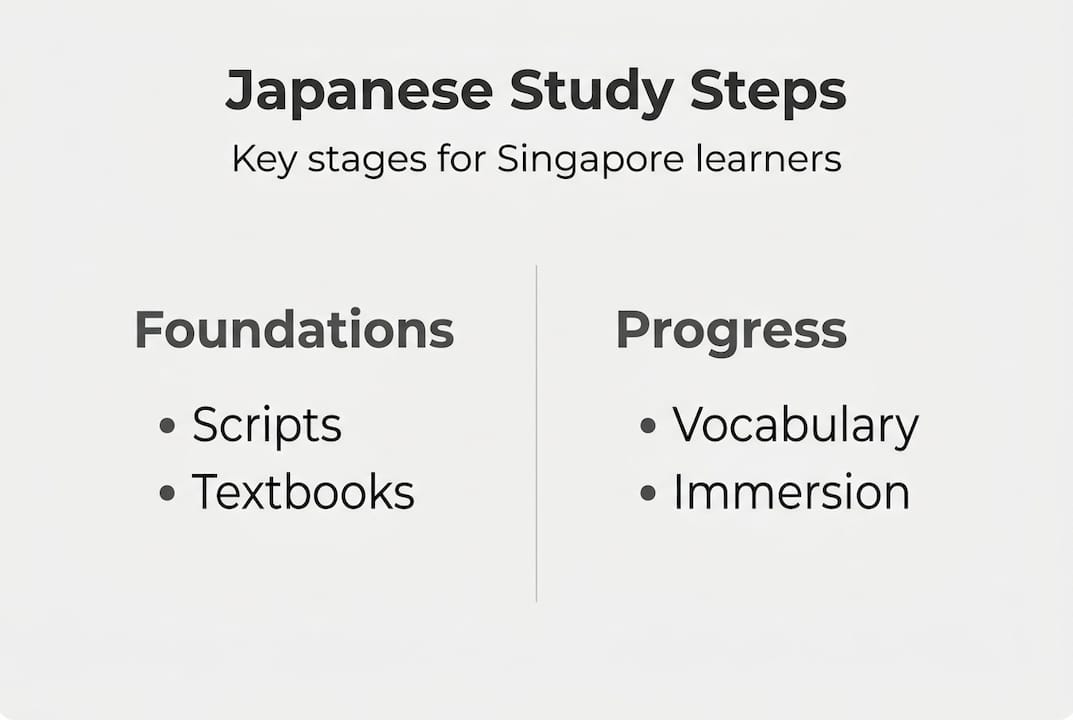
As for time investment, reaching N5 takes roughly 350 to 500 hours, while N3 requires around 900 to 1,325 hours. Singaporean Chinese learners can often reduce these estimates by 20 to 30 percent thanks to their kanji background.
Check out personalized study plan tips and quick mastery tips to build a routine that fits your schedule. You can also browse textbook recommendations to compare options before committing.
Maximizing progress with structured input, immersion, and local practice
Here is a truth that most study guides skip: textbooks and apps alone will not make you fluent. You need real input and real output. Reading grammar rules is not the same as understanding a native speaker talking at natural speed.
Here are the most effective ways to add immersion to your routine in Singapore:
- Join a structured Japanese class with interactive speaking practice
- Participate in Singapore-based language exchange meetups
- Watch Japanese media (anime, dramas, variety shows) with Japanese subtitles
- Listen to Japanese podcasts designed for learners, such as Nihongo con Teppei for Beginners
- Take JLPT mock tests every one to two months to benchmark your level
Research on comprehensible input methods shows that CI-based learning can help learners reach fluency in around 350 hours, compared to 566 hours with traditional methods alone. That said, a hybrid approach is recommended for Japanese specifically, because scripts and kanji still require structured study.
“Combining comprehensible input with structured grammar instruction gives learners the best of both worlds, especially for a script-heavy language like Japanese.”
Singaporean learners who combine structured courses with SRS and immersion can realistically reach conversational N3 to N2 within three to five years of consistent study. That timeline shortens further with regular speaking practice and community involvement.
Discover fun ways to practice Japanese outside the classroom, and explore the career benefits of Japanese if professional development is part of your motivation.
Tracking your progress and overcoming common pitfalls
Accumulating study hours matters, but knowing whether those hours are working is just as important. Without checkpoints, it is easy to spend months feeling busy without actually moving forward.
Here are practical milestones to track your journey:
- Complete Genki I or Minna no Nihongo Book 1
- Pass a JLPT N5 mock test with 80 percent or higher
- Hold a five-minute conversation in Japanese on a familiar topic
- Join your first language exchange session and introduce yourself fully in Japanese
- Read a simple Japanese text (manga, children’s book) without a dictionary
Self-monitoring also means recognizing when you have hit a plateau. Common signs include boredom with your current resource, declining SRS scores, or dreading study sessions. When this happens, rotate your resources, try a new podcast, or join a group class for accountability.
SRS tools prevent the forgetting curve but cause burnout if overused. Keep daily SRS sessions to 15 to 30 minutes and combine them with class time or media consumption to keep things fresh.
Pro Tip: Small group classes are one of the most underrated tools for staying on track. The social accountability, peer support, and structured feedback from a teacher make a genuine difference when motivation dips.
Revisit your study plan every three to six months. Celebrate what you have achieved, adjust what is not working, and set a new target. Use JLPT mock tests as objective benchmarks to measure real growth.
Our perspective: what really works for Singapore Japanese learners
After supporting hundreds of Singapore learners, we have noticed something that no app or textbook will tell you: the learners who succeed are not the ones with the best resources. They are the ones who build Japanese into their daily life.
Textbooks give you structure. SRS gives you retention. But without real speaking and listening practice, you will plateau at an intermediate level and stay there. Singapore’s multilingual environment is actually a hidden advantage here. You are already wired for language switching, and local Japanese clubs, pop culture events, and language exchanges are more accessible here than in most cities.
The uncomfortable truth is that everyone faces setbacks. Motivation dips, kanji pile up, and life gets busy. What separates learners who reach fluency from those who quit is not talent. It is community and consistency. Peer support, regular feedback from a teacher, and even casual conversations with fellow learners matter far more than any single study hack.
Our strongest advice: stop treating Japanese study as a sprint. It is a lifestyle habit. Explore fast mastery insights for techniques, but always come back to the long game. Small, daily actions compound into real fluency over time.
Start your Japanese journey with expert guidance
Knowing the process is one thing. Having the right support makes all the difference.
At Japanese Explorer, we guide learners through every stage of this journey, from script mastery and structured grammar to SRS integration and immersive speaking practice. Our small group classes, private lessons, and online options are designed to fit your schedule and your goals. Whether you are a complete beginner or preparing for JLPT N3 and beyond, our certified bilingual instructors keep you progressing with real feedback and encouragement. Not sure where to start? Learn more about choosing a language school and the essentials to look for before enrolling. We would love to welcome you to our growing family.
Frequently asked questions
How long does it take to become fluent in Japanese for Singaporean learners?
Singaporean learners typically need around 2,200 hours to reach professional fluency, but those with a Chinese background may need 20 to 30 percent less time due to kanji familiarity.
Is it better to self-study or join a Japanese class in Singapore?
Combining structured courses with SRS and immersion offers the fastest and most reliable progress, as each method covers gaps the others leave behind.
What is the most effective way to remember Japanese vocabulary and kanji?
Using an SRS tool for 15 to 30 minutes daily builds long-term retention, especially when paired with real context like reading or conversation practice.
Can Singaporean Chinese learn Japanese faster than non-Chinese speakers?
Yes. Singaporean Chinese learners acquire kanji faster using analytic learning strategies and may progress 20 to 30 percent more quickly overall compared to learners with no character background.
Does immersion matter even for beginners?
Comprehensible input and immersion help beginners develop listening and speaking intuition from day one, making grammar and vocabulary feel more natural when you encounter them in a structured lesson.