
TL;DR:
- Elementary Japanese introduces three scripts, basic grammar, and a core vocabulary to enable simple conversations within months. Most learners focus on hiragana first, then katakana, and gradually learn kanji, while building confidence through daily practice. Setting specific goals and practicing consistently help beginners overcome overwhelm and progress efficiently.
Elementary Japanese is the foundational level of Japanese language study that covers three writing systems, core grammar structures, and essential vocabulary for basic communication. The U.S. Foreign Service Institute classifies Japanese as a Category IV language, the most demanding tier for English speakers, requiring roughly 2,200 hours to reach professional proficiency. That number sounds intimidating, but it does not define your first few months. What is elementary Japanese in practical terms? It is the stage where you build the literacy and speaking habits that make everything else possible. With the right approach, you can hold simple conversations and read basic text within four to six months of consistent daily study.
What writing systems are included in elementary Japanese?
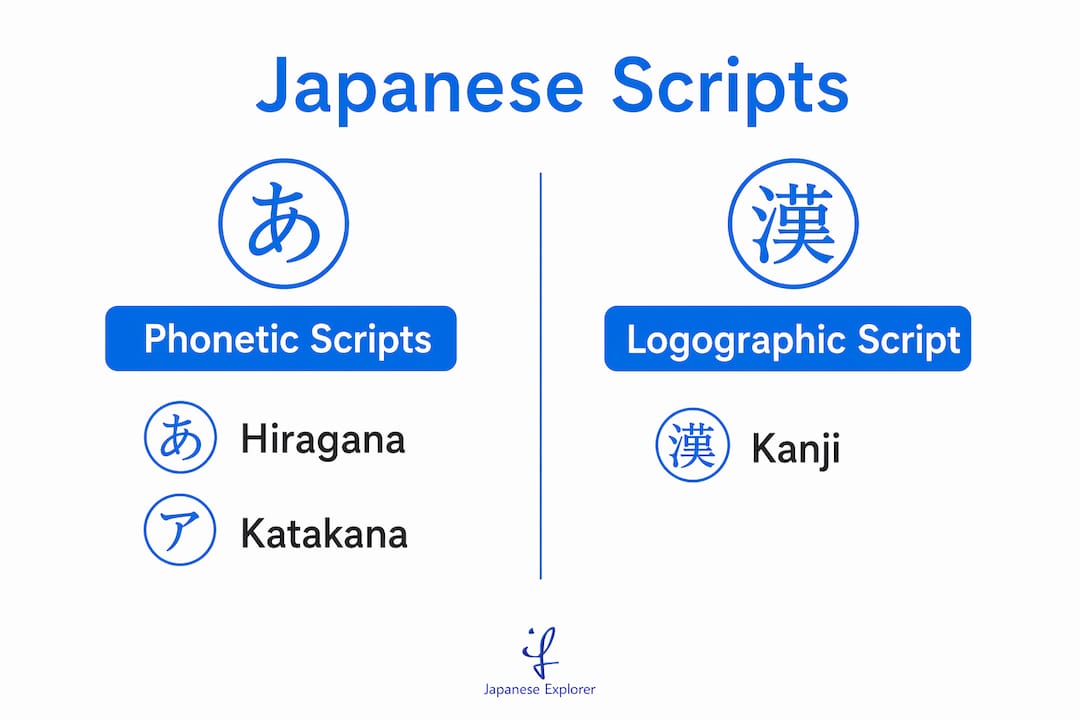
Elementary Japanese introduces three distinct scripts, and the order you learn them matters. Phased learning starting with hiragana, then katakana, then kanji is the expert-recommended pathway to avoid overwhelm and build reading ability fast.

Hiragana: your first script
Hiragana consists of 46 characters representing syllables and is the correct starting point for every beginner. Most learners master it within 1–7 days. That speed is possible because hiragana is purely phonetic. Each character maps to one sound, so once you know the characters, you can read anything written in hiragana out loud, even before you understand the meaning.
Katakana: the second step
Katakana mirrors hiragana in structure but serves a different purpose. It is used mainly for foreign loanwords, brand names, and scientific terms. Learners typically pick it up within 2–14 days after hiragana. Knowing katakana lets you read words like “koohii” (coffee) and “terebi” (television), which gives you an instant vocabulary boost because so many everyday words are borrowed from English.
Kanji: a long-term project
Kanji are Chinese-derived logographic characters. Full literacy requires about 2,000 kanji, but beginners aim for 100–200 in the first few months. Think of kanji as a long-term project you chip away at steadily, not a wall you need to climb before you can speak. Aiming for 20–30 new kanji per week is a manageable and realistic benchmark.
| Script | Primary use | Complexity | Learning tip |
|---|---|---|---|
| Hiragana | Native Japanese words, grammar | Low (46 characters) | Use flashcards and write each character daily |
| Katakana | Foreign loanwords, brand names | Low (46 characters) | Connect each character to its hiragana equivalent |
| Kanji | Nouns, verbs, concepts | High (2,000+ total) | Learn in context with vocabulary, not in isolation |
Pro Tip: You can read and speak simple sentences using only hiragana and katakana without knowing any kanji. Start speaking from week one. That early practice builds real conversational confidence.
What basic grammar defines elementary Japanese?
Elementary Japanese grammar is genuinely simpler than most European languages in several ways. Japanese uses only two verb tenses, past and non-past, and verb conjugations are mostly regular with very few irregular verbs. There are no gendered nouns and no plural forms. That removes a significant memorization burden that French, Spanish, or German learners face from day one.
The biggest structural shift for English speakers is word order. Japanese follows Subject-Object-Verb (SOV) order, while English uses Subject-Verb-Object. “I coffee drink” instead of “I drink coffee.” That adjustment takes practice, but it becomes natural quickly.
Understanding particles
Particles are the biggest barrier for English speakers learning Japanese grammar intuitively. Particles are small words attached to nouns that define each word’s role in a sentence. Instead of relying on word order the way English does, Japanese uses particles to show who is doing what to whom.
The core particles every beginner needs are:
- wa (は): marks the topic of the sentence
- ga (が): marks the grammatical subject
- o (を): marks the direct object
- ni (に): marks direction, time, or indirect object
- de (で): marks location of action or means
- no (の): shows possession, similar to “of” or “’s”
The key insight is to understand particles conceptually rather than translating them word-for-word from English. Trying to find a direct English equivalent for each particle creates confusion. Instead, learn what role each particle assigns in a sentence, and let that guide your understanding.
Pro Tip: Practice particles by writing five new sentences every day using a single particle until it feels automatic. Rotate through the list weekly. This builds intuition faster than memorizing grammar rules in isolation.
Common beginner grammar patterns include the present tense “desu” (is/am/are) structure and simple question forms using “ka” at the end of a sentence. These two patterns alone let you introduce yourself, ask basic questions, and describe things around you.
How do you build vocabulary for everyday conversation?
Vocabulary growth at the elementary level follows a clear and achievable path. The target for your first few months is a core set of 100–200 words covering greetings, numbers, basic verbs, and common adjectives. That range is enough to handle simple travel situations, introduce yourself, and follow basic conversations.

A realistic daily goal is 10–20 new vocabulary words per session. That pace feels manageable and prevents the burnout that comes from trying to memorize 100 words in a weekend. Consistency beats intensity at this stage.
Here is a practical sequence for building your first vocabulary bank:
- Greetings and introductions. Learn “konnichiwa” (hello), “arigatou” (thank you), “sumimasen” (excuse me), and basic self-introduction phrases. These words appear in almost every real-world interaction.
- Numbers 1–100. Numbers unlock shopping, telling time, and asking about prices. Japanese has two number systems (native Japanese and Sino-Japanese), so start with the Sino-Japanese set used for most counting.
- Core verbs. Focus on high-frequency verbs like “taberu” (to eat), “nomu” (to drink), “iku” (to go), and “miru” (to see). These verbs combine with your particle knowledge to form real sentences immediately.
- Basic adjectives. Learn “ookii” (big), “chiisai” (small), “takai” (expensive/tall), and “yasui” (cheap). Adjectives in Japanese attach directly to nouns, making them easy to use once you know the vocabulary.
- Everyday nouns. Add food, transportation, and location words that match your personal goals, whether that is travel, anime, or business.
Spaced repetition is the most effective method for locking in vocabulary. Apps built on spaced repetition algorithms resurface words just before you forget them, which dramatically improves long-term retention. Pair that with context-based learning by reading short texts or watching simple videos where you already know most of the words. That combination builds both recall and comprehension at the same time.
Speaking simple phrases from week one is not just motivating. It actively accelerates your grammar and vocabulary acquisition because you start connecting sounds to meaning in real time. Do not wait until you feel “ready.” Start speaking early and correct as you go.
What challenges do beginners face and how do you overcome them?
Learning elementary Japanese comes with predictable obstacles. Knowing them in advance puts you ahead of most beginners.
- Unclear goals lead to burnout. Setting a specific target like passing the JLPT N5 or achieving travel fluency gives your study sessions a clear direction. Clear, actionable goals prevent the drift that causes most learners to quit within the first few months.
- Inconsistent study habits stall progress. Daily study time of 15 minutes to one hour produces better results than occasional three-hour sessions. Short daily sessions keep vocabulary fresh and grammar patterns active in your memory.
- Perfectionism kills momentum. Focusing on perfect grammar too early stops you from speaking and practicing. Aim for understanding and communication first. Accuracy improves naturally with exposure and feedback.
- Neglecting listening practice. Reading and writing alone will not build comprehension. Regular listening to native Japanese audio, even simple podcasts or short videos, trains your ear to the natural rhythm and pitch of the language.
- Studying without structure. A well-designed study plan that sequences scripts, grammar, and vocabulary prevents you from jumping around and missing foundational concepts.
The learners who succeed at the elementary level share one trait. Consistency and curiosity drive progress more than raw talent or perfect grammar. Show up daily, stay curious about the language, and trust the process.
Key Takeaways
Elementary Japanese builds real communication ability through a phased approach to scripts, grammar, and vocabulary, and consistent daily practice is the single most reliable predictor of progress.
| Point | Details |
|---|---|
| Learn scripts in order | Master hiragana first, then katakana, then begin kanji incrementally over months. |
| Grammar is learner-friendly | Japanese has only two verb tenses and no gendered nouns, reducing early memorization load. |
| Particles define meaning | Learn particles conceptually, not by direct English translation, to grasp sentence structure. |
| Set a vocabulary target | Aim for 100–200 core words in your first few months with 10–20 new words per day. |
| Daily habits beat intensity | Study 15 minutes to one hour every day rather than cramming, to build lasting retention. |
Why I think most beginners approach elementary Japanese backwards
Most people start by worrying about kanji. They see the characters, feel overwhelmed, and either delay starting or spend weeks on kanji before they can say a single sentence. That is the wrong order entirely.
The learners I have seen make the fastest progress do the opposite. They get hiragana solid in the first week, add katakana in the second, and start speaking simple sentences before they have learned a single kanji. By the time kanji enters the picture, they already have a working grammar framework and a growing vocabulary to attach those characters to. Kanji learned in context sticks. Kanji memorized in isolation evaporates.
The other thing most beginners underestimate is how much Japanese grammar actually works in your favor. Two verb tenses. No plurals. No gender. Compared to learning French or German, the grammar load at the elementary level is genuinely lighter. The challenge is not complexity. It is unfamiliarity. Japanese looks and sounds unlike anything most English speakers have encountered, and that unfamiliarity reads as difficulty. Once you accept that you are learning a new logic rather than translating from English, the whole language starts to click.
My honest advice: set one clear goal for your first three months. Not “learn Japanese.” Something specific, like reading a menu in Japan or passing the JLPT N5. That specificity changes how you study. You stop collecting random vocabulary and start building toward something real. Check out the beginner learning tips from experienced teachers if you want a practical framework to get started the right way.
— Paul
Start your elementary Japanese studies with expert guidance
Japanese Explorer offers structured beginner courses in Singapore designed specifically for adult learners who want to build real communication skills from day one. The curriculum covers all the Japanese language basics you need at the elementary level, including hiragana, katakana, introductory kanji, particles, and core vocabulary, taught by certified bilingual instructors.

Whether you prefer the energy of a small group setting or the flexibility of online Zoom classes, Japanese Explorer has a format that fits your schedule. The school is located at 10 Anson Road, Level 22, International Plaza, Singapore 079903, right above Tanjong Pagar MRT. Explore the small group beginner classes or the online Japanese course to find the right fit and take your first step with confidence.
FAQ
What is elementary Japanese exactly?
Elementary Japanese is the beginner level of Japanese language study covering hiragana, katakana, introductory kanji, basic grammar, and a core vocabulary of 100–200 words. It gives learners the tools to read simple text and hold basic conversations.
How long does it take to learn elementary Japanese?
Basic conversational skills can be achieved in four to six months with consistent daily study of 15 minutes to one hour. The U.S. Foreign Service Institute rates Japanese as a Category IV language, so steady daily habits matter more than occasional long sessions.
Do I need to learn kanji at the elementary level?
You do not need kanji to start speaking and reading basic Japanese. Hiragana and katakana alone let you read and speak simple sentences. Beginners typically aim for 100–200 kanji over their first few months as a gradual, long-term project.
What is the hardest part of elementary Japanese grammar?
Particles are the biggest challenge for English speakers because they define sentence roles instead of word order. Learning particles conceptually rather than translating them directly from English is the most effective approach.
What is the JLPT N5 and is it a good goal for beginners?
The JLPT N5 is the entry-level certification of the Japanese Language Proficiency Test, covering basic hiragana, katakana, elementary grammar, and around 800 vocabulary words. It is an excellent concrete goal for beginners because it gives your study sessions clear direction and measurable milestones.