TL;DR:
- A beginner Japanese workflow for expats combines daily practice with cultural habits to build confidence quickly. Learning scripts early and building targeted vocabulary for administrative tasks enhances practical communication in Japan. Combining structured classes with self-study accelerates progress and helps integrate smoothly into Japanese social life.
A structured Japanese beginner workflow for expats is defined as a sequenced plan that combines daily language practice with cultural adaptation habits, giving you real communication skills within months, not years. If you are living in Singapore and planning to work, travel, or connect with Japanese colleagues and culture, this workflow removes the guesswork. You will learn which scripts to tackle first, how to fit study into a packed schedule, and which cultural habits signal respect before you say a single word. The payoff is confidence, not just vocabulary.
What are the essential Japanese language skills every beginner expat should master first?
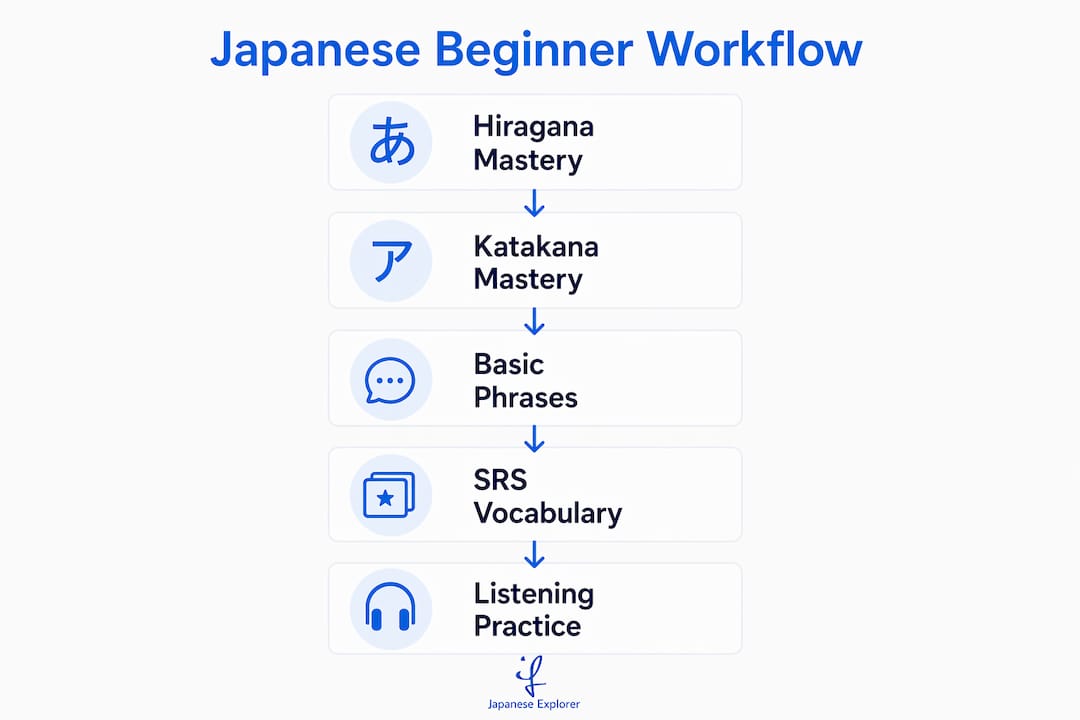
The single most important early decision is script order. Beginners should master Hiragana and Katakana within the first one to two weeks. These two phonetic alphabets unlock menus, signs, apps, and station boards immediately, giving you a practical return on effort from day one.

Once you can read both scripts, survival phrases become your next target. The JLPT N5 level covers roughly 800 core words and basic grammar patterns. Reaching N5 gives you enough language to introduce yourself, ask for directions, and handle simple transactions. JLPT N4 extends that to more natural conversation and is a realistic six-month goal with consistent daily practice.
Cultural knowledge works in parallel with language study, not after it. Three etiquette points matter most for new expats:
- Bowing angles: A 15-degree bow signals casual acknowledgment. A 30-degree bow shows standard respect. A 45-degree bow is reserved for formal apologies or senior figures. Getting this wrong rarely causes offense, but getting it right earns immediate goodwill.
- Genkan etiquette: Remove shoes at the entrance of any home or traditional space. Stepping over the threshold with shoes on is a clear social misstep.
- Chopstick manners: Never stick chopsticks upright in rice or pass food chopstick to chopstick. Both actions carry funeral associations.
The concept of “Wa,” meaning social harmony, sits beneath all of these rules. Japanese culture values the attempt at harmony over perfection. Your effort to bow, remove shoes, or use a few words of Japanese signals respect and earns patience from the people around you.
Pro Tip: Learn to say “Sumimasen” (excuse me/sorry) and “Arigatou gozaimasu” (thank you, formal) in your first week. These two phrases cover more social situations than any other pair in the language.
How to structure a weekly study workflow for busy expats
Sustainable study beats intense cramming every time. The most effective structure for expats with full-time work is 20 to 30 minutes of daily practice combined with longer weekend sessions. That daily habit builds the neural pathways that make vocabulary stick.
A practical weekly schedule looks like this:
- Monday through Friday, morning commute (15 minutes): Review flashcards using a Spaced Repetition System (SRS). SRS apps schedule each card just before you would naturally forget it, making every review session efficient. Target 10 to 15 new words per day.
- Monday through Friday, evening (15 minutes): Complete one short grammar or listening mini-lesson. Audio-first platforms work well here because you can listen while cooking or winding down.
- Saturday (45 to 60 minutes): Focus on reading practice and grammar consolidation. Work through a structured textbook chapter or a graded reader at your current level.
- Sunday (30 minutes): Review the week’s vocabulary, identify gaps, and set targets for the following week.
The SRS method targeting 800-plus words for JLPT N4 is the most efficient path to active vocabulary. Passive recognition is not enough. You need to produce words under mild pressure, which is exactly what SRS flashcard drills train.
| Day | Session type | Duration |
|---|---|---|
| Monday to Friday | Commute flashcard review | 15 minutes |
| Monday to Friday | Evening mini-lesson | 15 minutes |
| Saturday | Grammar and reading focus | 45–60 minutes |
| Sunday | Weekly review and goal-setting | 30 minutes |
Pro Tip: Use your MRT commute in Singapore for audio listening practice. Plug in a Japanese podcast or audio lesson and let your ears absorb natural speech patterns. Active reading study at home, passive listening on the move.

What are practical workflows for Japanese life admin vocabulary?
Most newcomers open a general conversation textbook and wonder why they still freeze at the ward office. The smarter move is to build a custom “Life Admin” vocabulary deck before you need it. This means collecting the specific terms you will encounter at city hall, the bank, and the clinic, not generic phrases from a travel guide.
Key vocabulary categories to build first:
- Residence registration: Terms for address, nationality, visa type, and household registration forms.
- Banking: Words for passbook (通帳, tsuucho), account number, transfer, and withdrawal. Japanese banking still relies heavily on physical passbooks and personal seals called inkan. Registering your seal (inkan toroku) is a required step for most legal and banking transactions.
- Healthcare: Vocabulary for insurance card, appointment, symptoms, and prescription.
Audio practice is critical for admin scenarios because forms are read aloud by staff and you need to respond in real time. Platforms like JapanesePod101 offer audio lessons built around ward office and banking interactions. Listen to these before your actual appointments, not after.
| Admin task | Key vocabulary focus | Preparation tool |
|---|---|---|
| Residence registration | Address, visa type, household terms | Audio lesson + SRS deck |
| Bank account setup | Inkan, tsuucho, transfer terms | Audio simulation + flashcards |
| Medical appointment | Insurance, symptoms, prescription | Phrase list + listening practice |
The Google Translate camera function handles kanji-heavy forms in real time. Point your phone at a form and the translation appears over the original text. This is not a replacement for learning, but it eliminates the paralysis of staring at a page of unfamiliar characters during a stressful appointment.
Pro Tip: Schedule a practice run. Visit your local ward office once just to observe the environment, pick up any available English guides, and note the vocabulary on the signage. Your second visit, when it counts, will feel far less intimidating.
How can expats overcome common challenges in daily Japanese learning?
Progress in Japanese is not linear. You will have weeks where new vocabulary flows easily and weeks where kanji blur together and nothing sticks. Accepting this pattern early prevents the motivation crashes that derail most self-study attempts.
The most underused learning resource for expats is the people already around you. Asking simple questions like “Kore, nante yomu no?” (How do you read this?) turns a colleague or neighbor into a low-stakes language partner. Japanese culture rewards the attempt at communication. You do not need to be fluent to start these exchanges.
“Consistency and small effort attempts at cultural norms matter more than immediate fluency or perfect etiquette. The attempt itself communicates respect, and that opens doors that grammar alone cannot.”
Balancing self-study with structured classes gives you the best of both worlds. Evening classes combined with daily self-study of vocabulary and listening produce better results than either approach alone. A good language study plan also builds in accountability, which matters when motivation dips after the initial excitement fades.
Technology fills the gaps between formal lessons. Combining digital aids with real social practice accelerates acquisition and reduces the isolation that many expats feel in the early months. Use apps for vocabulary, use people for everything else.
Key Takeaways
A structured beginner workflow combining daily SRS practice, cultural etiquette habits, and targeted life admin vocabulary gives expats the fastest path to confident Japanese communication.
| Point | Details |
|---|---|
| Scripts before grammar | Master Hiragana and Katakana in weeks one and two to unlock reading immediately. |
| Daily 20–30 minute sessions | Consistent short sessions build retention faster than occasional long study blocks. |
| Cultural habits run parallel | Learn bowing angles, genkan rules, and chopstick etiquette alongside language from day one. |
| Life admin vocabulary first | Build a custom deck for banking, healthcare, and registration before general conversation phrases. |
| Mix classes with self-study | Evening group classes combined with daily self-study produce the strongest long-term results. |
What I have learned watching expats build their Japanese workflow
The expats who make the fastest progress share one habit: they treat Japanese as a daily utility, not a hobby. They check a flashcard app before coffee. They mouth along to audio lessons on the MRT. They ask their building manager how to read a notice on the board. None of these moments feel like studying. Together, they add up to fluency.
The biggest pitfall I see is waiting until you feel “ready” to speak. There is no ready. The first time you bow at the right angle or use “Sumimasen” in a crowded train, something shifts. You stop being a tourist in the language and start being a participant. That shift happens through action, not preparation.
Cultural learning is not a soft add-on to language study. It is the reason your language study works in real life. You can memorize every phrase in a textbook and still create friction in a Japanese social setting if you do not understand Wa. Invest equal time in both, and the language starts to feel like it belongs to you.
My honest advice: set a 90-day target, not a fluency goal. In 90 days of consistent effort, you will read scripts, handle basic admin, and hold a short conversation. That is enough to change how you experience daily life as an expat. Everything after that is momentum.
— Paul
Structured learning support for expats in Singapore
Japanese Explorer offers small group beginner classes designed specifically for adult expats in Singapore who need a structured, practical foundation. Classes are held at 10 Anson Road, Level 22, International Plaza, directly above Tanjong Pagar MRT, making them easy to fit around a working week.
For expats who prefer flexibility, online Japanese courses via Zoom cover the same curriculum with the same certified instructors. If your company is building Japanese communication skills across a team, Japanese Explorer also runs corporate training programs tailored to business vocabulary and professional etiquette. Every course follows the curriculum framework of the Association for Japanese-Language Teaching, so your progress is structured, measurable, and real.
FAQ
How long does it take a beginner expat to reach JLPT N5?
Consistent study of 20 to 30 minutes daily is sufficient to reach JLPT N5 within three to six months. Mastering Hiragana and Katakana in the first two weeks accelerates the entire process.
What Japanese phrases should expats learn first?
Priority phrases include “Sumimasen” (excuse me), “Arigatou gozaimasu” (formal thank you), and basic self-introduction patterns. These cover the majority of early social interactions and signal cultural respect immediately.
Is it necessary to learn Japanese culture alongside the language?
Yes. Understanding concepts like Wa (social harmony) and etiquette rules such as bowing angles and genkan customs directly affects how your language attempts are received. Cultural knowledge makes your vocabulary more effective.
How do expats handle Japanese bureaucratic tasks without fluency?
Building a targeted life admin vocabulary deck covering banking, residence registration, and healthcare terms reduces anxiety significantly. The Google Translate camera function handles kanji-heavy forms in real time as a practical backup.
Should expats in Singapore take classes or self-study Japanese?
The most effective approach combines both. Evening group classes provide structure and accountability, while daily self-study using SRS flashcards and audio lessons fills the gaps between sessions and accelerates retention.