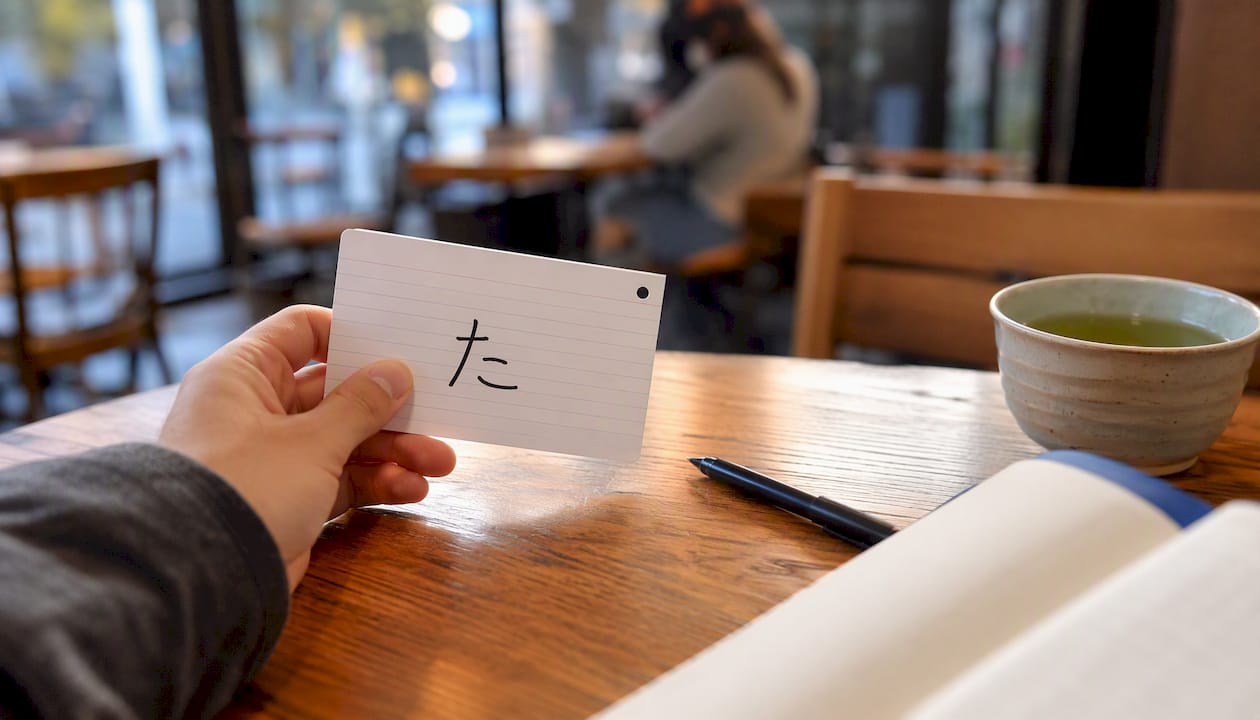
A Japanese language centre gives you structured, leveled classes, a placement test to start you at the right point, and instructor-led practice you simply cannot replicate with an app alone. If you’re an adult learner working toward conversational fluency or business Japanese, this format beats solo study because it forces regular speaking practice and gives you a syllabus with a real endpoint. Japanese Explorer, based right above Tanjong Pagar MRT, builds its courses around the curriculum standard set by the Association for Japanese-Language Teaching and staffs classes with bilingual, certified instructors.
Here’s what matters most when you’re evaluating options:
- Format flexibility: group, private, and online Zoom classes so your schedule doesn’t dictate whether you learn
- Placement testing: you start at your actual level, not a guess
- Instructor quality: native and certified teachers who can explain grammar in English when you’re stuck
- Clear syllabi: you know what you’ll be able to say and understand by the end of each term
The next step is simple: take a placement test or book a trial class before committing to a term.
Key Takeaways
A Japanese language centre delivers real progress when it combines placement testing, a documented curriculum, certified instructors, and flexible formats that match how you actually live and work.
| Point | Details |
|---|---|
| Match format to goal | Choose group for social practice, private for speed, online for flexibility, corporate for workplace needs. |
| Take a placement test first | Starting at the correct level avoids wasted terms and keeps motivation high. |
| Expect gradual, term-based progress | Six to twelve months of weekly classes typically brings you to elementary conversational ability. |
| Verify curriculum and instructor credentials | Look for a named teaching standard and bilingual, certified teachers, not just native speakers. |
| Japanese Explorer fits adult conversational and business learners | Its courses follow the Association for Japanese-Language Teaching standard with flexible group, private, and online formats. |
Table of Contents
- Types of Japanese Language Courses and Formats
- What Do Japanese Course Levels Mean, and How Do They Map to JLPT?
- Teaching Methods That Actually Build Speaking Confidence
- How Much Does a Japanese Course Cost, and How Long Does a Term Run?
- How Do You Choose the Right Japanese Language Centre?
- How Japanese Explorer Meets These Standards
- What Facilities and Learning Resources Support Your Progress?
- What Support Services Should a Language Centre Offer Adult Students?
- Is the Language Centre’s Curriculum Backed by a Recognized Standard?
- What Outcomes Do Adult Students Typically Achieve?
- Where Else Can You Practice and Learn Japanese?
- What Adult Learners Consistently Get Wrong About This Process
- Ready to Start? Here’s Your Next Step
- Sources
- FAQ
Types of Japanese Language Courses and Formats
Your choice of format shapes how fast you progress and how well the class fits your week. Group classes, private tuition, online lessons, and corporate training each solve a different problem, and picking the wrong one is the most common reason adult learners quit halfway through a term.
- Group classes run with a handful of students per session, typically lasting 1.5 to 2 hours. They cost less per hour than private tuition and work well for learners who want peer accountability and conversation partners at a similar level.
- Private tuition gives you one-on-one time with an instructor who adapts pace and topics to your goals. It costs more but compresses timelines, especially useful if you have an upcoming JLPT exam or business trip.
- Online Zoom classes remove the commute entirely. They suit busy professionals and anyone outside commuting distance from a physical Japanese language school, and the format has matured enough that interaction quality now rivals in-person sessions.
- Corporate training is delivered on-site or via Zoom for teams, usually built around workplace scenarios like emails, meetings, and client visits.
Conversational learners tend to thrive in group settings for the social practice. Business learners and those with tight deadlines usually get more value from private or corporate formats.
What Do Japanese Course Levels Mean, and How Do They Map to JLPT?
Course levels exist so you’re not sitting in a class that’s either boring or incomprehensible. Most centres label levels as beginner, elementary, intermediate, and advanced, and these correspond loosely to the five bands of the Japanese-Language Proficiency Test.
- Beginner (roughly N5): hiragana, katakana, basic greetings, and simple present-tense sentences
- Elementary (roughly N4): past tense, connecting particles, and everyday conversation
- Intermediate (roughly N3–N2): more complex grammar, keigo basics, and reading short articles
- Advanced (roughly N1): nuanced expression, business-level formality, and near-native comprehension
A placement test checks where you actually stand rather than where you think you stand, which matters because placement testing prevents misplacement into classes that waste your time or leave you lost. With one weekly lesson, most motivated adults reach an elementary conversational level within less than a year; intensive full-time programs in Japan have pushed dedicated learners to N2 in about two years, though that pace assumes daily immersion most working adults in Singapore won’t have.
Teaching Methods That Actually Build Speaking Confidence
Grammar drills alone won’t get you talking. The methods that move the needle for adult learners combine three things: shadowing, communicative practice, and just enough grammar to make sentences click.
Shadowing means repeating what a native speaker says in real time, matching their rhythm and pitch accent rather than translating word by word. Local schools frequently cite it as one of the most effective techniques for spoken fluency because it trains your mouth and ear together instead of just your memory. Communicative-approach classes build lessons around role-play scenarios (ordering food, negotiating a deal, calling a client) so grammar gets absorbed through use, not memorization. Grammar-focused lessons still have a place, particularly if your goal is passing JLPT, since exam-oriented instruction prioritizes reading and structure over spontaneous conversation.
Classroom time works best paired with daily mobile learning habits outside it. The Japan Foundation recommends combining formal instruction with regular practice using digital tools, and resources like JF Minato and NHK’s Easy Japanese portal are built for exactly that kind of daily reinforcement.
Pro Tip: Ask any centre you’re considering whether instructors are bilingual and certified, not just native speakers. A native speaker who can’t explain why a particle changes meaning will leave you guessing.
- Look for instructors who can teach grammar in both Japanese and English
- Ask whether classes include structured shadowing or pronunciation drills
- Check if the syllabus balances speaking practice with reading and writing
How Much Does a Japanese Course Cost, and How Long Does a Term Run?
Budgeting for lessons gets easier once you understand how centres typically structure fees. Most price group classes by term, private lessons by the hour, and add a modest one-time cost for textbooks or registration.
- Group classes: priced per term, usually covering 10 to 12 lessons, with per-session cost lower than private tuition
- Private lessons: priced hourly, with rates reflecting one-on-one instructor time
- Materials and admin fees: a small separate charge on top of tuition, often covering textbooks
Local centres commonly structure courses this way, with 10 to 12 lessons per term being a standard benchmark across the industry. A typical weekly commitment for one group class is about two hours in the classroom, plus however much time you put into homework and self-study.
What to expect over time: after three months of consistent weekly classes, you’ll handle basic self-introductions and simple daily exchanges. By six months, ordering food, asking directions, and small talk should feel natural. At the one-year mark with steady attendance, most learners reach a comfortable elementary-to-intermediate conversational level, roughly N4 territory.
How Do You Choose the Right Japanese Language Centre?
Picking a centre is easier when you treat it like due diligence, not a gut decision. A short checklist catches the details that separate a well-run program from one that’s coasting on marketing.
Start with these evaluation points before you enroll:
- Does the centre offer a placement test, or does it just ask which level you “think” you’re at?
- Are instructor bios available, showing certification and teaching experience, not just “native speaker” as the sole credential?
- What’s the class size, and does it match the kind of speaking practice you actually want?
- Can you see a sample syllabus with concrete learning outcomes for the term?
- Are fees transparent upfront, with no surprise charges for materials or registration buried in fine print?
- Is there a trial class option before you commit to a full term?
| What to Check | Why It Matters |
|---|---|
| Placement test availability | Confirms you start at the right level instead of guessing |
| Instructor credentials | Bilingual, certified teachers explain grammar clearly, not just fluently |
| Class size | Smaller classes mean more speaking time per student |
| Refund or pro-rata policy | Protects you if a schedule conflict forces you to withdraw mid-term |
Red flags are usually easy to spot once you know what to look for: no placement test offered, vague promises like “become fluent fast” with no syllabus to back it up, classes of 15 or more students, or fee structures that only become clear after you’ve already paid a deposit. For a fuller breakdown of what separates a solid program from a weak one, this checklist on choosing a Japanese language school walks through additional questions worth asking during your enquiry call.
How Japanese Explorer Meets These Standards
Japanese Explorer’s curriculum follows the standard set by the Association for Japanese-Language Teaching, which structures grammar, speaking, and listening into every lesson rather than treating them as separate units. Every instructor is bilingual and certified, so you get native-level pronunciation modeling alongside clear English explanations when a grammar point doesn’t click on the first try.
The school runs group classes, private tuition, online Zoom courses, and business Japanese programs, all built around the same core curriculum so you can switch formats between terms without losing continuity. Every new student takes a placement test first.
Small-class interaction paired with regular speaking-focused drills produces faster gains in conversational confidence for adult learners than grammar-only instruction.
Booking a trial class is the fastest way to judge fit: you sit in on a real lesson, meet an instructor, and see the syllabus before paying for a full term.
What Facilities and Learning Resources Support Your Progress?
Classroom time is only part of the picture. A well-equipped centre gives you places and tools to practice between lessons, which matters more than most learners expect when they’re only budgeting for weekly class hours.

A reference library stocked with graded readers, JLPT prep books, and manga at different difficulty levels lets you build reading stamina at your own pace, something that’s hard to do with a single textbook. Multimedia resources, including audio and video drills for pronunciation and listening comprehension, help bridge the gap between “I understand it on paper” and “I can follow a real conversation.” Conversation clubs, informal sessions where students from different classes mix and practice speaking without a lesson plan, do more for spoken confidence than another hour of grammar review, because they force you to think on your feet in a low-stakes setting.
Access to these resources also matters for pacing your own study outside class. A learner juggling a full-time job doesn’t have hours to spend hunting for appropriate-level reading material, so having it curated and organized by a centre removes a real barrier. Combined with daily digital practice through tools like JF Minato or NHK’s learning portal, these in-house resources round out what a single weekly class alone cannot deliver. Ask any centre you’re considering what’s available beyond scheduled lesson time. The answer tells you a lot about whether the program is built for real progress or just for filling a timetable slot.
What Support Services Should a Language Centre Offer Adult Students?
Learning a language as an adult comes with friction that a syllabus alone doesn’t solve: scheduling conflicts, motivation dips, and the awkwardness of practicing out loud with strangers. Good centres build in support for exactly this.
Academic counseling, where staff check your progress and help you decide whether to repeat a level or move ahead, prevents you from drifting through a term without a clear sense of improvement. Language exchange partnerships, pairing you with a native speaker or advanced learner for informal conversation, give you speaking practice that doesn’t feel like a graded exercise. Cultural events, from festival celebrations to casual meetups, build the kind of familiarity with Japanese customs and etiquette that textbooks tend to skip entirely.
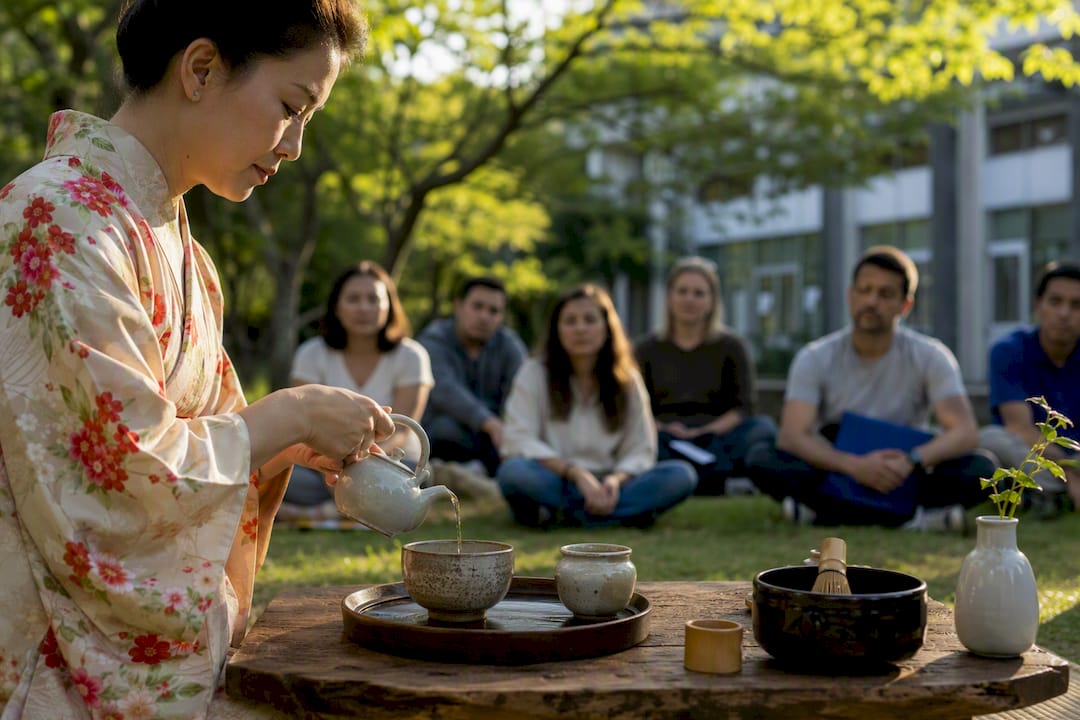
These services matter most for learners studying toward business Japanese, since workplace communication in Japan leans heavily on unspoken social context that a grammar drill won’t teach you. A centre that organizes cultural exposure alongside language instruction gives you a fuller picture of how the language actually functions in context, not just how to conjugate it correctly. If you’re weighing several centres, ask directly whether they run conversation exchanges or cultural events during the term, and how often. A program that mentions this without prompting is usually one that treats language learning as more than a transaction.
Is the Language Centre’s Curriculum Backed by a Recognized Standard?
Not every Japanese language provider follows a documented teaching standard, and that gap shows up in inconsistent lesson quality from term to term. The curriculum standard set by the Association for Japanese-Language Teaching gives structure to how grammar, speaking, and listening get sequenced across levels, which means a beginner class this term covers roughly the same ground as a beginner class next term, regardless of which instructor teaches it.
Japanese Explorer’s courses are guided by this standard, which is one reason lesson plans stay consistent even as class sizes and formats shift between group, private, and online options. This matters practically: if you switch from a group class to private tuition mid-way through your learning, a shared curriculum standard means you won’t lose progress or repeat material unnecessarily.
When you’re comparing centres, ask directly what curriculum framework, if any, guides their course design. A center that can name a specific standard and explain how it shapes weekly lesson plans is giving you a more reliable answer than one that simply says lessons are “designed by experienced teachers.” Course syllabi should spell out learning outcomes for each level, not just a list of grammar points covered, so you can judge for yourself whether the pacing matches your goals.
What Outcomes Do Adult Students Typically Achieve?
Most adult learners aren’t chasing a certificate for its own sake. They want to order food without switching to English, follow a work meeting in Tokyo, or read a menu without pulling out a translation app. Outcomes worth tracking are practical ones: how many students who complete a term can hold a five-minute conversation, how many progress to the next level without needing to repeat, and how many go on to sit the JLPT with a realistic shot at passing.
Alumni paths tend to split into two groups. Some learners study purely for personal enrichment, travel, or connecting with family, and their measure of success is comfort in everyday situations. Others study for career reasons, using business Japanese skills to support client relationships, secure a transfer, or simply stand out in a workplace where language proficiency correlates with leadership opportunities. Both groups benefit from a centre that tracks progress transparently, term over term, rather than promising vague fluency with no way to measure it.
Ask a centre directly how many of their students progress from one level to the next each term, and whether they track JLPT pass rates among students who take the exam. A program confident in its results will usually share this openly rather than deflecting with testimonials alone.
Where Else Can You Practice and Learn Japanese?
A few resources pair well with structured lessons: JF Minato for guided self-study, NHK’s Easy Japanese portal for listening practice, and Busuu for script drills between classes.
What Adult Learners Consistently Get Wrong About This Process
The biggest misjudgment I see in how people approach Japanese language learning is treating the centre choice as secondary to willpower. Plenty of adult learners assume that if they just study hard enough on their own, the format barely matters. It does. A learner in a well-structured class with weekly speaking practice will consistently outpace someone doing solo grammar drills for twice as long, because speaking is a skill you build through repetition with feedback, not through reading rules.
The second thing conventional advice gets wrong is treating JLPT prep and conversational fluency as the same goal with the same coursework. They’re not. A course built for exam reading comprehension won’t make you comfortable ordering dinner in Osaka, and a conversation-first class won’t necessarily prepare you to pass N3 grammar sections. Decide which one you actually need before you enroll, and say so explicitly when you ask a centre about their syllabus.
If there’s one thing worth prioritizing above all else, it’s the placement test. Skipping it, or treating it as a formality, is how learners end up bored in a class too easy for them or lost in one too advanced. Neither builds confidence.
Ready to Start? Here’s Your Next Step
Unlike generic apps or self-study playlists, a structured centre gives you an instructor who corrects your mistakes in real time and a syllabus that actually ends somewhere. Japanese Explorer, located at 10 Anson Road, Level 22, International Plaza, right above Tanjong Pagar MRT, runs its courses on the Association for Japanese-Language Teaching curriculum standard with bilingual, certified instructors across group, private, and online Zoom formats.
If conversational fluency is your goal, small-group classes give you regular speaking practice alongside peers at your level. If you need flexibility, the online Japanese course delivers the same curriculum over Zoom. Professionals building workplace skills can look at the business Japanese course, and teams can arrange corporate training tailored to workplace scenarios. Whichever path fits, the first step is the same: book a placement test to find out exactly where you stand before your first lesson.
Sources
- JF Japanese e-Learning Minato | The Japan Foundation
- NHK WORLD-JAPAN — Learn Japanese
- Busuu — Learn Japanese online
FAQ
How much does a Japanese language course cost?
Costs vary by format: group classes are typically priced by term, covering around 10 to 12 lessons, while private lessons are priced hourly at a higher per-session rate. Materials and registration usually add a small separate fee.
How long does it take to become fluent in Japanese?
With one weekly class, most adult learners reach an elementary conversational level in six to nine months and an intermediate level within a year of consistent attendance. Full-time immersion programs have pushed dedicated learners to JLPT N2 in about two years, a pace few working adults can match with once-weekly lessons.
What is the 80/20 rule in Japanese learning?
This generally refers to focusing your study time on the 20% of grammar patterns and vocabulary that show up in roughly 80% of everyday conversation, rather than spreading effort evenly across every rule in a textbook. Centres that prioritize communicative practice over exhaustive grammar coverage tend to apply this principle naturally.
Where can I practice speaking Japanese for free?
Conversation clubs run by language centres offer free informal practice, and digital resources like NHK’s Easy Japanese portal and JF Minato provide listening and speaking exercises you can use daily outside class.
Does Japanese Explorer offer a placement test before enrollment?
Yes, every new student takes a placement test to determine the right starting level before joining group, private, or online classes.