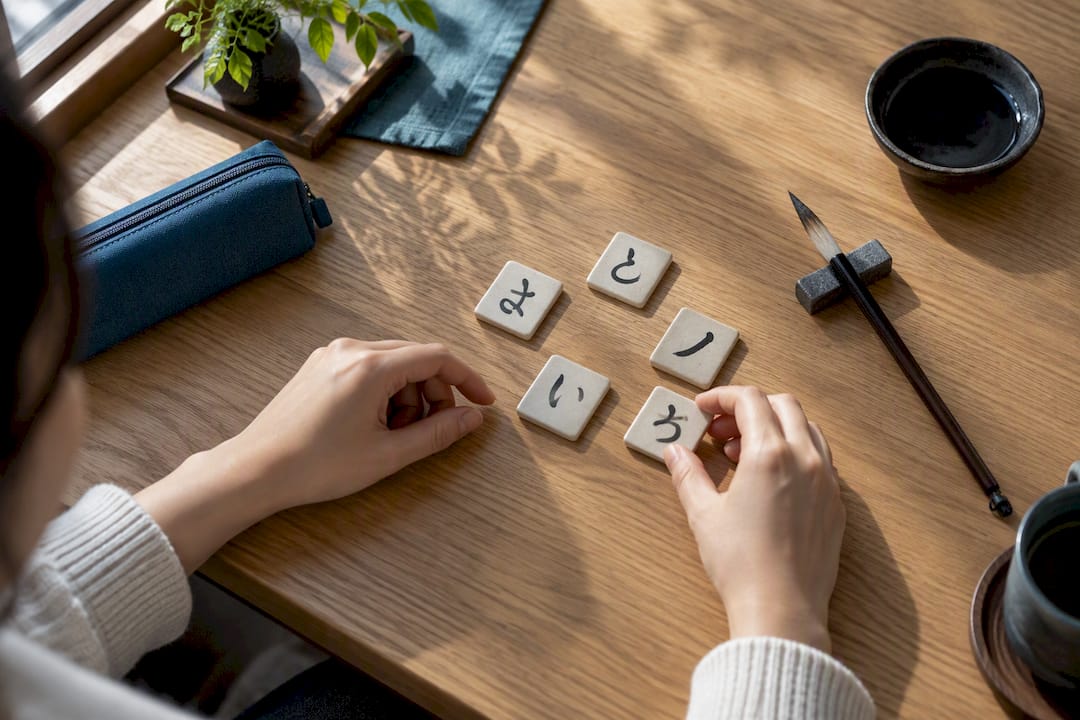
A kanji radical, or bushu (部首), is the single component that a dictionary uses to file a character. Every kanji, no matter how complicated it looks, has exactly one dictionary radical assigned to it. That single fact is the key to unlocking two things beginners struggle with most: looking up unfamiliar kanji and remembering the ones they’ve already studied.
Here’s the practical payoff. Once you recognize the roughly 50 radicals that show up most often in everyday kanji, you stop seeing characters as random collections of strokes. You start seeing patterns. That shift is what separates learners who plateau at flashcard memorization from those who can actually guess a character’s ballpark meaning on sight.
Start here, right now:
- Learn the core 50 radicals before worrying about the full traditional set.
- Pick three kanji you already know and try to spot their radical.
- Use a repeatable checklist (covered later in this guide) instead of guessing.
- Practice radicals attached to real words, not as an isolated list.
If you do nothing else after reading this, do that. Everything below builds on it.
Key Takeaways
Mastering the top 50 kanji radicals through a repeatable 12-step identification checklist and daily spaced repetition builds faster kanji lookup and stronger long-term retention than memorizing all 214 radicals cold.
| Point | Details |
|---|---|
| Definition matters | Every kanji has exactly one dictionary radical, drawn from the traditional 214-radical Kangxi system. |
| Prioritize the core | Focus study time on the most frequent 20 to 50 radicals rather than the full 214. |
| Use the checklist | Apply the 12-step position order (whole character, enclosure, left, right, top, bottom, corners, inside) to find any radical reliably. |
| Meaning is a tendency | Radicals often hint at meaning, as in 氵 in 海, but they don’t guarantee it or predict pronunciation. |
| Practice in context | Learn radicals embedded in real kanji and real vocabulary, using SRS and mnemonics rather than isolated lists. |
Table of Contents
- Kanji Radicals Basics: The 214 System vs. the Practical Core
- How Radicals Work: Filing Tool and Meaning Clue
- Core Radicals to Learn First
- How to Find the Radical in Any Kanji
- Building a Radical Study Routine That Actually Sticks
- Common Pitfalls and Quick Fixes
- Who’s Behind This Guide
- Ready to Put Radicals Into Practice?
- An Editorial Take on Learning Radicals the Practical Way
- Sources
- FAQ
Kanji Radicals Basics: The 214 System vs. the Practical Core
Japanese dictionaries didn’t invent their own filing system from scratch. They borrowed the Kangxi radical system, a set of 214 traditional radicals that Chinese lexicographers standardized centuries ago and that Japanese dictionaries still use today to sort kanji by component rather than by sound. That’s the origin story, and it explains why some radical names sound archaic. But knowing the history matters less than knowing the scope.
Here’s where beginners often trip up: a radical is not the same thing as a component, and a component is not the same as a variant shape. A component is any visual chunk that makes up a character. A radical is the one official component the dictionary uses for filing. A variant is a radical that changes shape depending on where it sits in the character. Water (水) becomes the three-stroke splash 氵 on the left side of a character. Person (人) shrinks to 亻 in the same position. These aren’t different radicals wearing costumes. They’re the same radical, just compressed to fit.
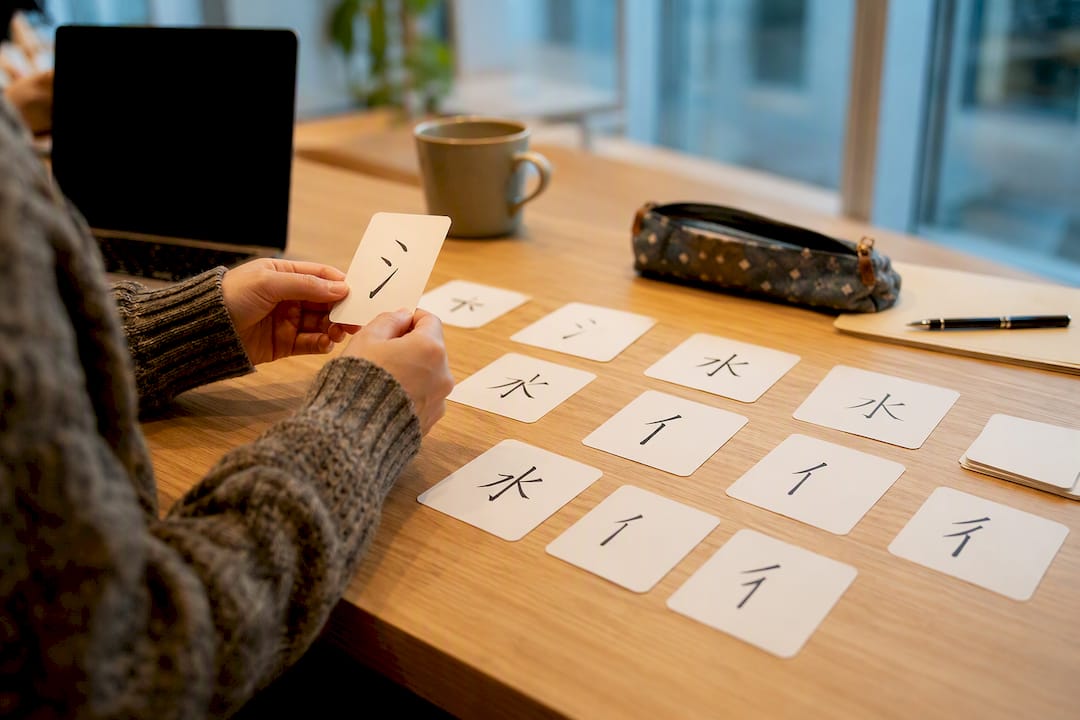
Now for the efficiency argument, which is the whole reason this guide exists. Nobody actually memorizes all 214 radicals cold. Most learners get the biggest return from focusing on the most frequent 20 to 50 radicals, which show up across a disproportionate share of the kanji you’ll meet in daily reading. Mastering roughly the top 20 alone can cover somewhere in the range of half to three-quarters of common joyo kanji, depending on which frequency list you’re using.
That’s not a rounding error. That’s the difference between spending six months on a memorization slog and spending three weeks building a pattern-recognition habit that pays off every single day after.
Three things worth locking in before you move forward:
- Every kanji has exactly one dictionary radical, never two, never zero.
- The 214-radical system is the filing standard, but your study target should be the top 20 to 50.
- Variant shapes (氵, 亻, 忄, 扌) are the same radical in disguise, not new vocabulary to learn separately.
How Radicals Work: Filing Tool and Meaning Clue
Radicals do two jobs, and conflating them is where a lot of confusion starts. Job one is purely mechanical: dictionaries file every kanji under its radical, then sub-sort by the stroke count of everything remaining after you remove that radical. Job two is softer: radicals often, but not always, hint at what a character means.
The filing logic, compressed into three moves:
- Identify the character’s radical using position and shape.
- Count the strokes in the radical itself.
- Count the remaining strokes in the character and use that number to locate the exact entry within that radical’s section.
Now the meaning side, which is where radicals get genuinely fun to learn:
- 海 (sea) carries 氵, the water radical, on its left. Water plus a phonetic component gives you “sea.”
- 語 (language) carries 言, the speech radical, on its left. Speech plus a phonetic component gives you “language.”
- 持 (to hold) carries 扌, the hand radical, on its left. Hand plus a phonetic component gives you “to hold.”
- 明 (bright) carries 日, the sun radical, on its left. Sun next to moon literally reads as “bright.”
Notice the pattern: radical on the left, meaning-bearing hint, phonetic piece doing the rest of the work. That pattern holds often enough to be useful and fails often enough that you shouldn’t bet your reading comprehension on it alone.
Radicals function best as a lookup and pattern tool, not a strict meaning key. Treating every radical as a guaranteed semantic clue leads learners to misread characters that don’t follow the pattern, and there are plenty of those.
Water-radical characters aren’t all about liquid (think 法, “law”). Sun-radical characters aren’t all about brightness. Radicals are tendencies you can lean on, not rules you can bank on.
Core Radicals to Learn First
This is the list that actually moves the needle. Instead of chasing all 214, learn these shapes, memorize one or two example kanji for each, and drill recognition until your eye catches them automatically inside more complex characters. Pay special attention to the “compressed form” column.
| Radical (standalone) | Compressed form | Meaning | Example kanji |
|---|---|---|---|
| 水 | 氵 | water | 海 (sea), 泳 (swim) |
| 人 | 亻 | person | 休 (rest), 作 (make) |
| 心 | 忄 | heart/emotion | 忙 (busy), 快 (pleasant) |
| 手 | 扌 | hand | 持 (hold), 打 (hit) |
| 艸 (草) | 艹 | grass/plant | 花 (flower), 草 (grass) |
| 火 | 灬 | fire | 熱 (hot), 煮 (boil) |
| 言 | 訁 (rare in Japanese) | speech | 語 (language), 話 (talk) |
| 日 | (unchanged) | sun | 明 (bright), 時 (time) |
| 木 | (unchanged) | tree | 林 (woods), 森 (forest) |
| 金 | (unchanged) | metal/gold | 銀 (silver), 鉄 (iron) |
| 女 | (unchanged) | woman | 好 (like), 姉 (older sister) |
| 子 | (unchanged) | child | 学 (study), 字 (character) |
| 山 | (unchanged) | mountain | 岩 (rock), 島 (island) |
| 糸 | (unchanged) | thread | 続 (continue), 紙 (paper) |
| 目 | (unchanged) | eye | 見 (see), 眠 (sleep) |
| 口 | (unchanged) | mouth | 呼 (call), 味 (taste) |
| 食 | 飠 | eat/food | 飲 (drink), 飯 (meal) |
| 月 | (unchanged) | moon/body part | 明 (bright), 肝 (liver) |
| 大 | (unchanged) | big | 太 (fat), 天 (heaven) |
| 王 | 玊 | jewel/king | 玉 (jewel), 現 (appear) |
Use the table like a set of flashcards, not a reference sheet to read once and forget. For each row, cover the example column and try to recall a kanji containing that shape. Then flip it: look at a kanji you already know and try to identify which row it belongs to. That back-and-forth drill is what actually builds recognition speed, and it’s the same principle behind proven techniques for memorizing kanji more broadly.
Pro Tip: Don’t waste energy memorizing separate Japanese names for every variant shape. Learn to see 水 and 氵 as visually equivalent, the same way you instantly recognize a lowercase “a” and an italic “a” as the same letter. Your brain already does this kind of shape-matching constantly. You’re just pointing that skill at a new alphabet.
How to Find the Radical in Any Kanji
Guessing a radical by eye works maybe half the time. A reliable checklist works close to all the time, and it’s worth memorizing the order once so you never have to think about it again.
- Look at the whole character first. Some kanji are entirely their own radical (日, 木, 水).
- Check for an enclosure. If the character is wrapped on multiple sides (like 国 or 回), the enclosure is usually the radical.
- Check the left side. This is the single most common radical position (氵, 亻, 扌, 言).
- Check the right side. Less common, but real (刀-derived 刂, for example).
- Check the top. Grass (艹) and roof-shaped radicals (宀) sit here.
- Check the bottom. Fire’s compressed form (灬) and 心 both appear underneath.
- Check the northwest corner.
- Check the northeast corner.
- Check the southwest corner.
- Check the southeast corner.
- Check inside the character, if nothing external candidate fits.
- If two positions both look plausible, the radical with the higher stroke count usually wins the tie.
A few supporting habits make this checklist actually usable under dictionary conditions:
- Count strokes for the radical candidate and the remaining part of the character separately. Dictionaries file by radical first, then by remaining stroke count.
- Practice stroke counting on kanji you already know before trying it on new ones. It’s a skill, and it gets faster with repetition.
- When you’re stuck between two candidates, default to whichever piece looks structurally “load bearing” rather than decorative.
Try it on three characters right now. 休 (rest): left side is 亻, person, and that’s your radical. 花 (flower): top is 艹, grass, radical confirmed. 語 (language): left side is 言, speech, and the tie never even comes up because nothing else competes.
Building a Radical Study Routine That Actually Sticks
Knowing the checklist doesn’t help if you never open it. The learners who retain radicals long-term treat them the same way they’d treat vocabulary: with spaced repetition, not a single study session and a prayer.
If you’re using a spaced repetition system (SRS) like Anki, build radical cards in both directions. One direction shows the radical shape and asks you to recall two or three example kanji containing it. The reverse direction shows a familiar kanji and asks you to name its radical. Reviewing both directions forces your brain to build the connection as a two-way street instead of a one-way fact.
Mnemonics help more with radicals than almost any other part of kanji study, because radical shapes are genuinely visual. The fire radical’s compressed form, 灬, looks like four little flames licking upward. The rain radical, 雨, looks like drops falling under a roof. You don’t need clever wordplay here. You need a mental image that matches the actual shape, because that’s faster to recall under pressure than an abstract Japanese name you memorized in isolation.

Speaking of names: don’t front-load them. Visual recognition beats rote name memorization for reading fluency, especially early on. You can learn that a shape means “water” and recognize it instantly for months before you ever need to know its formal dictionary name. Prioritize the recognition skill first.
A simple daily routine, 10 to 15 minutes, keeps this moving without burning you out:
- Five minutes of SRS review on radical cards you’ve already added.
- Five minutes spotting radicals inside kanji from your current vocabulary list.
- Five minutes practicing the 12-step checklist on two or three unfamiliar kanji you pull from a dictionary or app.
Pro Tip: Attach every new radical to at least one word you’re already trying to learn. A radical sitting alone in a flashcard deck is forgettable. A radical embedded in “語学” (language study) or “海外” (overseas) sticks because it’s doing real work in a real word.
Common Pitfalls and Quick Fixes
The biggest mistake beginners make is treating every visual chunk of a kanji as if it were a radical. It isn’t. Some pieces are just decorative strokes or phonetic filler with no filing significance at all. The fix: run the checklist and cross-check against a verified radical list instead of guessing from instinct.
The second mistake is expecting radicals to predict pronunciation. They don’t, generally. Radicals carry meaning hints far more often than sound hints, and conflating the two leads to mispronounced vocabulary and frustration. Keep reading practice and radical study as separate tracks that occasionally overlap, not one and the same.
The third mistake is studying radicals as a cold, standalone list, the way you might memorize a table of chemical elements. That approach produces recognition that falls apart the moment a radical shows up inside an unfamiliar character. The fix is almost embarrassingly simple: always study a radical attached to real kanji, never in isolation, so your brain builds the shape-in-context association from day one rather than trying to bolt it on later.
- Verify, don’t assume, when a component looks radical-shaped.
- Separate pronunciation study from radical study entirely.
- Embed every radical in at least one real, memorable kanji example.
Who’s Behind This Guide
This guide was written by Paul, a contributor to Com, covering practical study methods for Japanese learners. It draws on the same teaching principles that shape our classroom curriculum, guided by the Association for Japanese-Language Teaching’s structured approach to grammar, speaking, and listening in every lesson.
A few things worth knowing about how Com supports learners working through radicals and kanji more broadly:
- Every course is taught by certified bilingual instructors who build real-world communication skills, not just test-passing tricks.
- Learning formats include small group classes, private one-on-one lessons, and fully online sessions over Zoom, so you can pick whatever fits your schedule.
- Materials are curated to reinforce exactly the kind of pattern recognition this guide describes, rather than asking students to memorize characters cold.
If you want to put the study routine above into practice with actual feedback, our techniques for memorizing kanji page and our guide to why kanji effort pays off are good next stops.
Ready to Put Radicals Into Practice?
Reading about radicals only gets you so far. Real progress happens when you’re saying words out loud, writing characters by hand, and getting corrected in real time by someone who’s taught this material to hundreds of adult learners before you. Com runs small-group and private Japanese classes from our training center at 10 Anson Road, Level 22, International Plaza, right above Tanjong Pagar MRT, plus fully structured online Japanese courses for learners who’d rather study from home.
If you’re building toward workplace fluency rather than casual conversation, our Business Japanese course folds radical-based reading practice into vocabulary you’ll actually use in meetings and emails. Every course follows a structured curriculum shaped by the Association for Japanese-Language Teaching, taught by certified bilingual instructors who know exactly where beginners tend to get stuck with kanji. If you’re not sure which level fits, our placement test takes a few minutes and points you toward the right group class.
For learners who want additional self-study material outside our own curriculum, resources like Mowisiebezgranic offer supplementary practice worth exploring alongside your coursework.
An Editorial Take on Learning Radicals the Practical Way
Most kanji advice still treats radicals like a trivia set: memorize all 214, know their formal names, move on. That advice is backwards for anyone below advanced fluency. The research behind this guide points somewhere else entirely: a small, frequency-weighted core of radicals, drilled through a deterministic checklist, beats exhaustive memorization every time for a beginner or intermediate learner.
The conventional approach fails because it optimizes for completeness instead of usefulness. You don’t need to identify the radical in a character you’ll see twice in your lifetime. You need instant recognition of the shapes that recur constantly, the ones sitting inside dozens of common words you’re already trying to learn.
So prioritize shape recognition over name memorization, embed every radical in real kanji rather than studying it cold, and trust the 12-step checklist over gut instinct when you’re stuck. Skip the completionist trap. The core 50 will take you further than the full 214 ever will at this stage.
Sources
- Kanji Radicals: What They Are and How to Find Them — Kanji123
- How to Find The Kanji Radical — Tofugu
- JOSHU — An Introduction to Kanji Radicals (University resource)
FAQ
What is the best way to learn kanji radicals?
Focus on the most frequent 20 to 50 radicals rather than all 214, and practice recognizing each one embedded inside real kanji and vocabulary using spaced repetition and shape-based mnemonics.
What are some important kanji radicals to know first?
Water (氵), person (亻), heart (忄), hand (扌), grass (艹), fire (灬), and speech (言) are among the highest-frequency radicals and appear across hundreds of common everyday kanji.
How many radicals can a kanji have?
Every kanji has exactly one official dictionary radical, even though the character may contain several visual components; the radical is the specific piece the dictionary uses for filing.
Is it better to learn radicals before kanji?
Learning a handful of core radicals early helps, but the most effective approach studies radicals alongside real kanji and vocabulary rather than as an isolated list learned in advance.
How do I look up a kanji if I don’t know its radical?
Apply a step-by-step checklist that checks enclosure, then left, right, top, bottom, and corner positions in order, then use the radical’s stroke count plus the character’s remaining strokes to find it in a radical-stroke dictionary or digital lookup tool.