You’ve probably sung Japanese karaoke and dined to your satisfaction on sashimi and sushi. Moreover, you also know everything about anime. Indeed, Japanese culture has left a mark on the global stage. However, how much information do you know regarding the Japanese language? Are you aware of its honorific language? Or that Japanese is spoken as the first language by ninety-nine per cent of the population residing in Japan? Most importantly, what about the origins and history of the Japanese language? The search for these answers is critical because they determine how the Japanese language is viewed by other cultures.
Unearthing the roots of the Japanese language is certainly a harder task than you’d imagine. This is because the language is classified as an isolated language, which means that it bears no relation to any other language. While the spoken and written Japanese languages have influenced each other, they each possess their own distinct histories. Read on for more insight.
Written Japanese
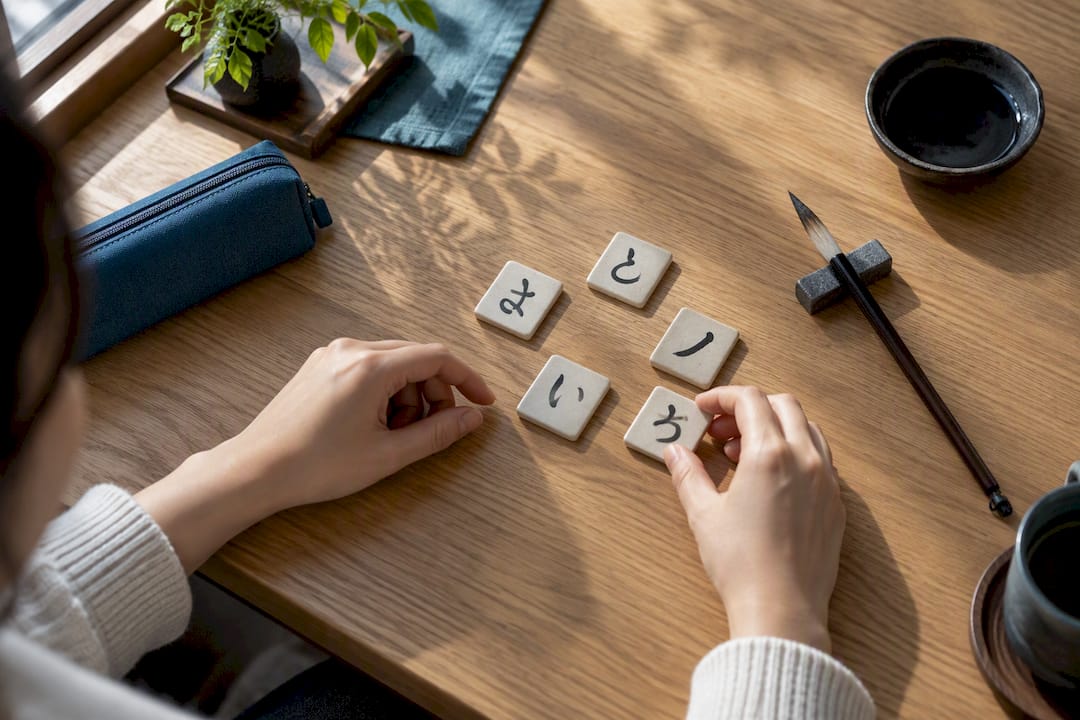
In your japanese course singapore, you will learn that the Japanese didn’t have a writing system prior to the development of the Chinese system, which was initially employed by Chinese people who resided in Japan at some stage in the early Christian era. Some of the first examples of written Japanese can be dated back to the 5th and 6th Centuries A.D. These were proper names written in Chinese characters on a sword and a mirror. Later on, Chinese characters were predominantly used to write the Japanese language during the 8th and 9th Centuries A.D.
Given that the two languages are very different in terms of their phonology and syntax, Chinese loanwords and characters started to be ‘Japanified’ for increasingly suitable use. Due to this Chinese influence and local adaptation, the Japanese writing system developed into its current threefold system, with amazing complexity. The complexity aspect is attributed to the differences or mismatch between the Japanese and Chinese languages.
Spoken Japanese
The Japanese spoken language has not been irrefutably linked to any language or set of languages. In spite of the vagueness of its origins, there are few prominent and plausible theories that seek to explain the ancestry of the Japanese language.
Altaic Languages
One of the theories that you’ll learn in your Singapore Japanese lessons is that Japanese may be related to the Ural-Altaic language family, which consists of the Turkish, Mongolian, Korean and Manchurian languages. In fact, many reasons can be cited to support this argument. For instance, Altaic languages boast of vowel harmony with the Japanese. Moreover, similar to Japanese, Altaic languages lack the grammatical distinction of neither gender nor number. Furthermore, neither possess a passive voice or relative pronouns. However, they both have postpositions. The sheer volume of evidence listing the similarities between these Japanese and Altaic is incredible and convincing.
Korean Language
Another theory floated in Japanese language school Singapore cites Korean, a geographical neighbour, as the closest link to the Japanese language. Well, both Japanese and Korean sound very similar. Besides, scientific evidence points towards their connection. For example, a comparison between the grammatical morphology and phonology of both languages shows concurrence. Secondly, there are numerous grammatical similarities, for instance, the word order harmony is very similar such that translation calls for little rearrangement. Moreover, neither Korean nor Japanese features an article, but both include postpositions instead of prepositions. Most importantly, both languages rely on the widespread use of honorific speech, where the hierarchical status or position of the listener influences the discourse.
Furthermore, there exists a historical similarity between the phonology of these two languages. The Japanese maintained vowel concurrence until the 9th Century whereas the Korean language went even further until the 17th Century. Due to all these comparisons, Korean is closely linked to the origin of the Japanese language.
Conclusion
As you embark on linguistic research in SkillsFuture Japanese language class, perhaps you may soon identify an undisputable ancestor of Japanese language and help the citizens of Japan rest from their identity ambiguity. But more likely, research is likely to be focused on refining the abovementioned theories to make the connections between Japanese, Altaic, and the Korean languages more clear and accurate. Who knows, the future holds a greater promise. At any rate, you should be happy with Japanese as an autonomous language, and a vital element of a unique culture.