TL;DR:
- Speaking practice is essential for turning passive knowledge into active conversation skills and building fluency. It trains retrieval, automaticity, and cultural understanding, making Japanese speech more natural and effective. Regular, even brief, daily practice accelerates progress far more than infrequent study.
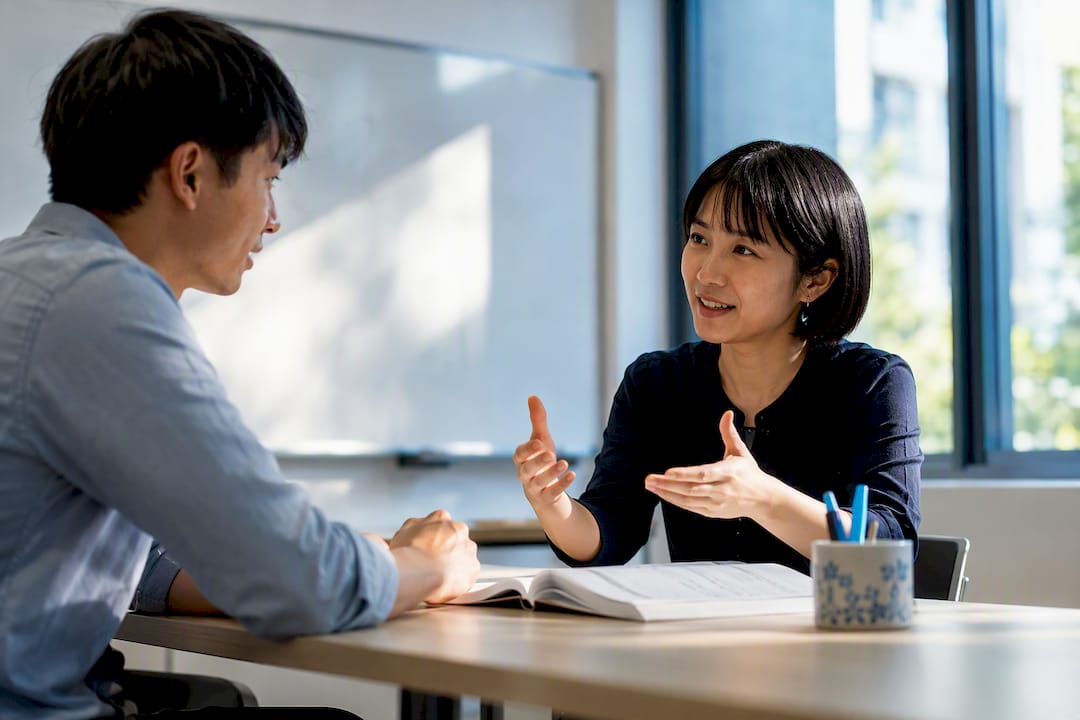
Speaking practice is defined as the deliberate, active production of spoken language to build fluency, accuracy, and communication confidence. For Japanese learners, it is the single most direct path from textbook knowledge to real conversation. Passive input methods like reading grammar charts or listening to audio alone cannot produce a speaker. The Output Hypothesis, developed by linguist Merrill Swain, establishes that learners acquire language by producing it, not just consuming it. Japanese Explorer’s curriculum, guided by the Association for Japanese-Language Teaching, builds every lesson around this principle.
What is the role of speaking practice in language acquisition?
Speaking practice does something passive study cannot. It forces your brain to retrieve vocabulary, apply grammar, and produce language in real time, all at once. That process is fundamentally different from recognizing a word when you read it. Output practice builds automaticity by requiring active retrieval under time pressure, which is exactly what real conversation demands.
Learners who rely only on listening and reading often hit a frustrating wall. They understand Japanese well but freeze when it is time to speak. Input alone does not yield speaking fluency. The gap between comprehension and communication only closes through consistent output practice.
The Affective Filter Hypothesis, developed by Stephen Krashen, explains why anxiety blocks language production. When learners feel safe to make mistakes, their affective filter lowers and acquisition accelerates. Speaking practice reduces anxiety by building self-efficacy through repeated successful attempts, even imperfect ones. Each conversation you complete, however messy, trains your brain to trust itself.
Task-Based Language Teaching (TBLT) formalizes this approach. A systematic review of 16 empirical studies from 2015 to 2025 confirmed that TBLT significantly improves speaking fluency, accuracy, and complexity through interactive, low-anxiety environments. That evidence base is why structured conversation tasks outperform grammar drills for developing spoken Japanese.
Learners should not wait for perfection before speaking. Engaging in pushed output, where you are required to express ideas beyond your comfort zone, triggers the noticing of knowledge gaps that efficiently drive further learning. This is the core mechanism behind speaking-led acquisition.
The key distinction is between recognition and retrieval. Reading a kanji and producing the correct word in a sentence are two entirely different cognitive tasks. Speaking practice trains retrieval. Without it, your Japanese stays locked in passive memory.
How does pronunciation practice sharpen your spoken Japanese?
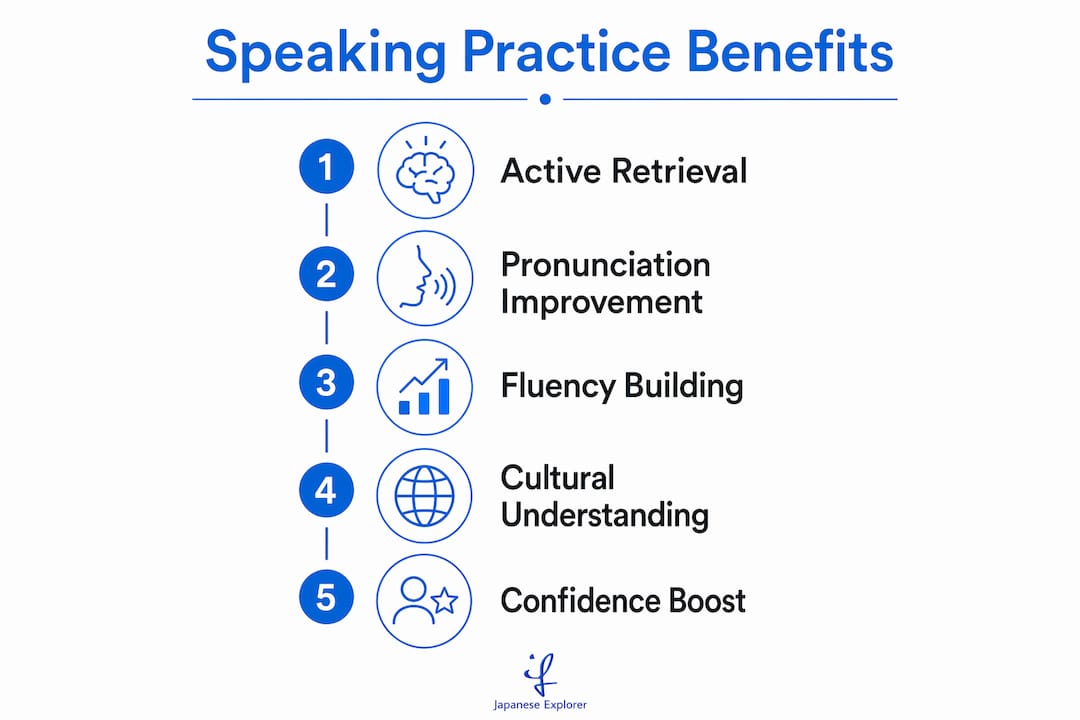
Pronunciation is not a separate subject. It is woven into every speaking exchange, and poor pronunciation causes communication breakdowns even when your grammar is correct. Integrating pronunciation into daily lessons improves phonemic awareness, accuracy, and communicative effectiveness, especially when paired with regular feedback cycles.
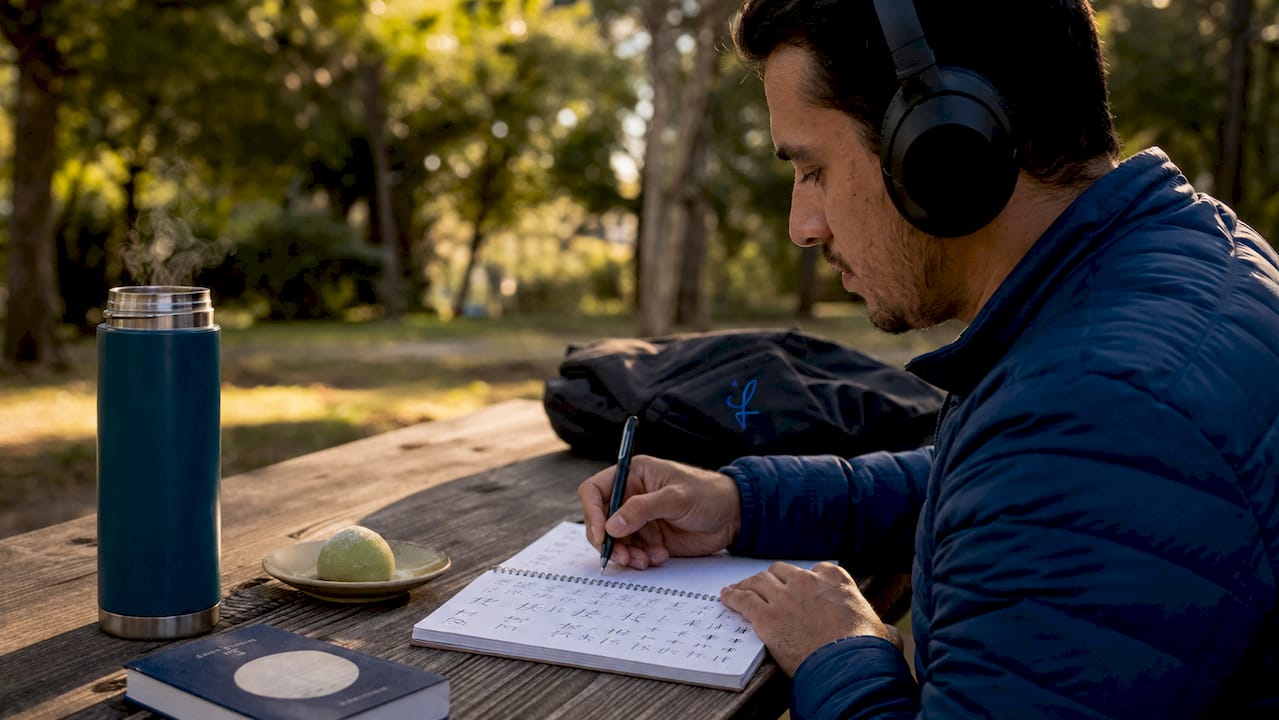
Japanese presents specific pronunciation challenges that learners must address directly. Pitch accent is one of the most misunderstood. Japanese is a pitch-accent language, meaning the rise and fall of tone changes word meaning. The word hashi can mean chopsticks, bridge, or edge depending on pitch. Most learners never practice this because textbooks rarely teach it. Ignoring it produces speech that sounds unnatural to native speakers, even when every word is technically correct.
Recitational reading is one of the most effective tools for building pronunciation automaticity. Reading aloud enhances fluency by reinforcing the link between decoding and phonological processing, reducing cognitive load over time. When you read a Japanese sentence aloud repeatedly, your mouth learns the physical patterns of the language. That muscle memory transfers directly to conversation.
| Pronunciation Challenge | Why It Matters | Practice Method |
|---|---|---|
| Pitch accent | Changes word meaning entirely | Shadowing native audio, recitational reading |
| Long vowels | Alters meaning (e.g., ojisan vs. ojiisan) | Minimal pair drills, listening comparison |
| Double consonants | Signals different words (e.g., kite vs. kitte) | Slow repetition, phonemic chart work |
| R-sound articulation | No direct English equivalent | Tongue placement exercises, audio modeling |
Pro Tip: Record yourself speaking Japanese for 60 seconds each day, then compare it to a native speaker saying the same sentences. Your ear will catch errors your mouth does not notice in real time.
Feedback loops accelerate pronunciation improvement faster than isolated exercises. Pronunciation improvement is accelerated when feedback is integrated into daily practice rather than saved for periodic correction sessions. A teacher who corrects pitch accent in the moment of a conversation creates a stronger memory trace than one who marks errors on a worksheet.
Practical speaking techniques to build Japanese fluency
The most effective speaking practice combines solo methods with partner interaction. Neither alone is sufficient. Solo practice builds the raw material. Partner practice tests it under real communicative pressure.
Solo techniques that build output habits
- Shadowing. Listen to a native Japanese speaker and repeat immediately, matching rhythm, pitch, and speed. This trains your ear and mouth simultaneously. Use news broadcasts, podcasts, or drama clips for authentic input.
- Timed monologues. Set a timer for 90 seconds and speak about a topic in Japanese without stopping. The constraint forces you to work with the vocabulary you have rather than pausing to search for perfect words.
- Recitational reading aloud. Read Japanese menus, news articles, or brochures out loud. Authentic materials improve phonological accuracy and engagement by grounding practice in real-world language. Step away from textbooks and into real-life interactions as often as possible.
- Self-recording and review. Record short spoken responses to prompts, then listen back critically. This builds metacognitive awareness of your own errors.
Partner and group techniques that push your output further
Partnered speaking practice creates environments for complex expression and immediate corrective feedback, outperforming solo practice for developing fluency. When a partner responds to what you say, you must process their language and produce a reply in real time. That loop is irreplaceable.
- Language exchange partnerships. Find a Japanese speaker learning English and alternate languages. You get authentic conversation and cultural insight simultaneously. Japanese Explorer offers guidance on finding a language exchange partner if you are not sure where to start.
- Role-play scenarios. Practice ordering food, navigating a business meeting, or asking for directions. Role-play anchors language to specific, memorable contexts.
- Group discussion tasks. Debate a topic in Japanese with classmates. Group tasks require you to listen, process, and respond quickly, which mirrors real conversation more closely than scripted exercises.
Pro Tip: If speaking anxiety holds you back, start with low-stakes solo recordings before moving to partner practice. Building confidence in private first makes the transition to live conversation much less intimidating. Japanese Explorer has specific advice for overcoming speaking fear if this resonates with you.
Daily consistent speaking output, even imperfect, is critical to language development. Delaying output prolongs fluency development. Five minutes of spoken Japanese every day beats two hours once a week.
Why cultural understanding makes your Japanese speaking land better
Speaking Japanese accurately is not enough on its own. How you say something, and when, matters as much as what you say. Japanese communication is shaped by deeply embedded cultural norms that affect every spoken exchange.
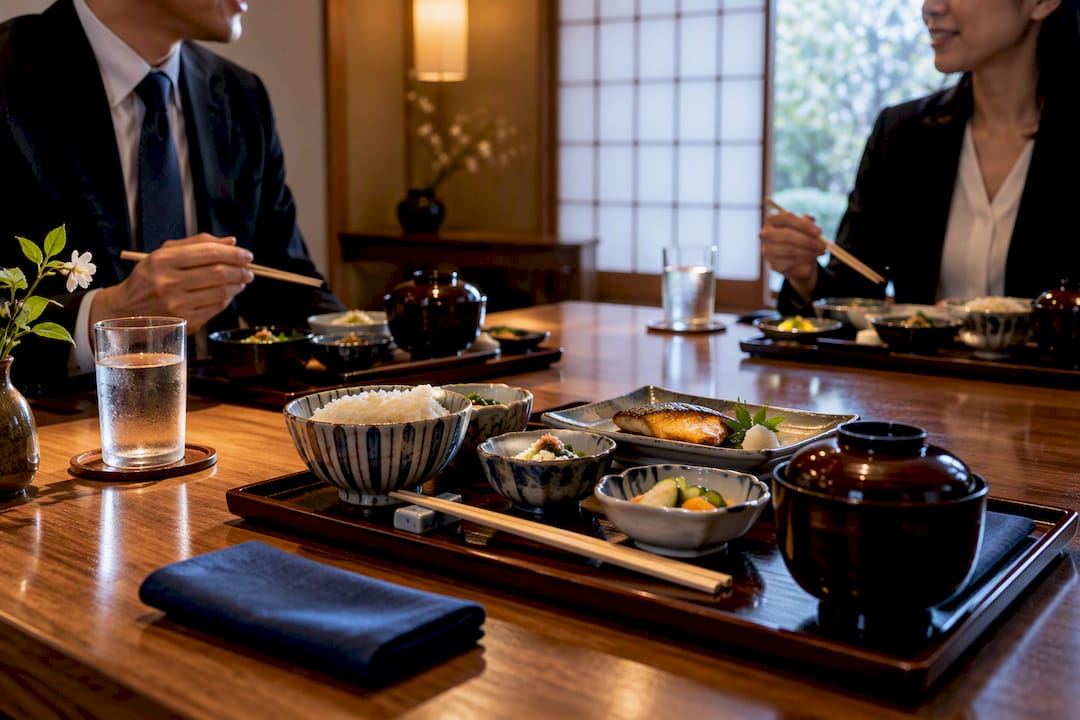
Politeness levels, called keigo, are one of the most significant. Japanese has distinct speech registers for formal, semi-formal, and casual situations. Using casual speech with a senior colleague is not just grammatically wrong. It signals a lack of respect and can damage a professional relationship. Integrating cultural learning with speaking practice improves natural communication by building awareness of these social cues.
Cultural competence also shapes turn-taking. Japanese conversation often includes longer pauses than English speakers expect. Filling silence too quickly can come across as aggressive or inattentive. Learning to sit comfortably in a pause is a speaking skill, not just a cultural nicety.
- Learn context-specific vocabulary. Business Japanese uses different expressions than casual conversation. Knowing osewa ni natte orimasu as a standard business greeting signals cultural fluency, not just language skill.
- Study idioms and proverbs. Japanese idioms and proverbs carry cultural meaning that direct translation misses. Using them correctly builds rapport with native speakers.
- Watch authentic Japanese media. Dramas, variety shows, and news programs expose you to natural speech patterns, humor, and social dynamics that textbooks do not capture.
- Practice with cultural context in mind. When you role-play a business meeting, use the correct honorifics. When you practice casual conversation, drop the formal endings. Context-aware practice builds the right habits for the right situations.
Key Takeaways
Speaking practice is the most direct path to Japanese fluency because it builds the retrieval, automaticity, and cultural competence that passive study cannot produce.
| Point | Details |
|---|---|
| Output beats passive input | Speaking forces active retrieval, which builds fluency faster than listening or reading alone. |
| Pronunciation needs daily feedback | Integrating pitch accent and phonemic work into every lesson accelerates accuracy more than isolated drills. |
| Partner practice pushes complexity | Conversation with a partner creates pushed output and immediate feedback that solo practice cannot replicate. |
| Cultural knowledge shapes spoken impact | Understanding keigo, pauses, and idioms makes your Japanese land correctly in real social contexts. |
| Consistency matters more than perfection | Daily short speaking sessions, even imperfect ones, build automaticity faster than infrequent long study blocks. |
Why I tell every Japanese learner to speak before they feel ready
I have worked with hundreds of adult learners across conversational and business Japanese, and the pattern is always the same. The learners who wait until their grammar is “good enough” before speaking are the ones who stall. The learners who speak from day one, badly and bravely, are the ones who reach fluency.
The research backs this up completely. Pushed output, the act of trying to express something just beyond your current ability, is what triggers real acquisition. You notice the gap. You seek the answer. You remember it because you needed it in a real moment. That process does not happen when you are passively reading a textbook.
Pronunciation is where I see the most avoidance. Learners treat pitch accent like an advanced topic to tackle later. It is not. Getting pitch accent wrong from the start builds habits that are genuinely hard to unlearn. Integrate it from lesson one, even roughly, and your ear calibrates correctly as you progress.
The cultural dimension is the piece most language programs underweight. Speaking Japanese without cultural awareness is like wearing a suit to a beach party. Technically correct, completely wrong for the context. Understanding keigo, reading the room, and knowing when silence is respectful are speaking skills that no grammar chart teaches.
My honest advice: speak today, record yourself, and find a partner or a class that gives you real feedback. Imperfect output with correction beats perfect silence every time.
— Paul
Build real Japanese speaking skills with Japanese Explorer
Japanese Explorer runs small group Japanese classes in Singapore designed specifically around spoken communication and cultural fluency. Every lesson integrates grammar, speaking, and pronunciation practice guided by the Association for Japanese-Language Teaching, so you build real skills from the first class.

Professionals looking to communicate confidently in Japanese workplaces can explore the business Japanese course, which covers keigo, meeting language, and professional communication norms. Flexible online options are also available for learners who prefer to study from home. Japanese Explorer’s certified bilingual instructors provide the feedback loops that make speaking practice actually work. Classes are held at 10 Anson Road, Level 22, International Plaza, Singapore 079903, right above Tanjong Pagar MRT.
FAQ
Why is speaking practice essential for learning Japanese?
Speaking practice builds the active retrieval and automaticity that passive input cannot produce. Without regular output, learners understand Japanese but cannot produce it in real-time conversation.
How does pronunciation practice improve Japanese communication?
Integrating pronunciation work, especially pitch accent and long vowel distinctions, into daily speaking sessions reduces communication breakdowns and makes your Japanese sound natural to native speakers.
What are the most effective speaking practice techniques for Japanese?
Shadowing, timed monologues, recitational reading aloud, and partnered role-play tasks are the most research-supported methods. Partner practice adds pushed output and immediate corrective feedback that solo techniques cannot replicate.
How does cultural understanding affect spoken Japanese?
Japanese communication norms, including keigo politeness levels, turn-taking pauses, and context-specific vocabulary, directly shape how your spoken language is received. Cultural competence is a core part of effective speaking, not an optional add-on.
How often should I practice speaking Japanese?
Daily short sessions outperform infrequent long study blocks. Even five to ten minutes of spoken output each day builds automaticity and fluency significantly faster than studying grammar without speaking.