Japanese Explorer publishes a private conversational Japanese package of eight two-hour sessions: 16 teaching hours per level. It offers physical lessons or live Zoom sessions. Before booking, discuss your current experience, the situations you want to use Japanese in, and how lessons will be organised. This guide separates the published package from suggested planning examples.
You can use the following areas as questions for a lesson-planning discussion. They are suggestions, not a mandatory agenda published by the school:
- Warm-up (greetings, quick oral review, or a short listening prompt)
- Review of previous lesson material or homework
- New input (grammar point, vocabulary set, or reading/listening passage)
- Guided practice (controlled drills, then freer conversation or writing)
- Feedback on errors and pronunciation
- Homework assignment targeting identified weaknesses
The school lists curriculum produced by the Association for Japanese-Language Teaching (AJALT). Ask which materials and activities are appropriate for your starting level. The planning prompts above do not establish a fixed lesson sequence.
Key Takeaways
| Point | Details |
|---|---|
| Lesson planning | Ask how review, new material, practice and feedback will be organised for your goals. |
| Session format | Japanese Explorer’s private package runs eight two-hour sessions (16 hours) per level, in person or over Zoom. |
| Format choice | Both physical and Zoom formats are published. Compare your travel, audio setup and available times with the school. |
| Progress pace | Depends on lesson frequency, homework consistency and daily exposure. There is no guaranteed timeline to a specific JLPT level. |
| Japanese Explorer | Offers private and online lessons for adults with bilingual instructors and the AJALT-guided curriculum. |
Table of Contents
- What does a private Japanese lesson look like?
- In-person vs online: which format works better for you?
- How are lessons tailored to your specific goals?
- Illustrative two-hour lesson sequences
- How often should you take lessons?
- Japanese Explorer’s private lesson pricing
- Pre-enrolment lesson-brief worksheet
- How do you choose the right private Japanese teacher?
- What should you expect from a trial lesson?
- Japanese Explorer’s private lessons: what you get and how to book
- Useful sources
- FAQ
What does a private Japanese lesson look like?
The package specifies two-hour sessions, but it does not publish a minute-by-minute agenda. The questions below are an original discussion aid for a prospective learner.
| Area | Question to discuss |
|---|---|
| Review | Which earlier task or difficulty should we revisit? |
| New material | What fits my level and the agreed syllabus? |
| Practice | Can I try a relevant speaking, listening, reading or writing task? |
| Feedback | Which correction should I work on next? |
| Between lessons | What should I review before the next session? |
Ask the instructor how to balance your goals with the course syllabus. An exam deadline and a workplace task can require different activities; confirm the appropriate course rather than assuming every goal is included in one package.
In-person vs online: which format works better for you?
Choose a format you can attend and use comfortably. A format label alone does not establish how much feedback or practice you will receive.
In person: Consider travel, venue and how you prefer to work with lesson materials. Ask how the teacher demonstrates and corrects pronunciation.
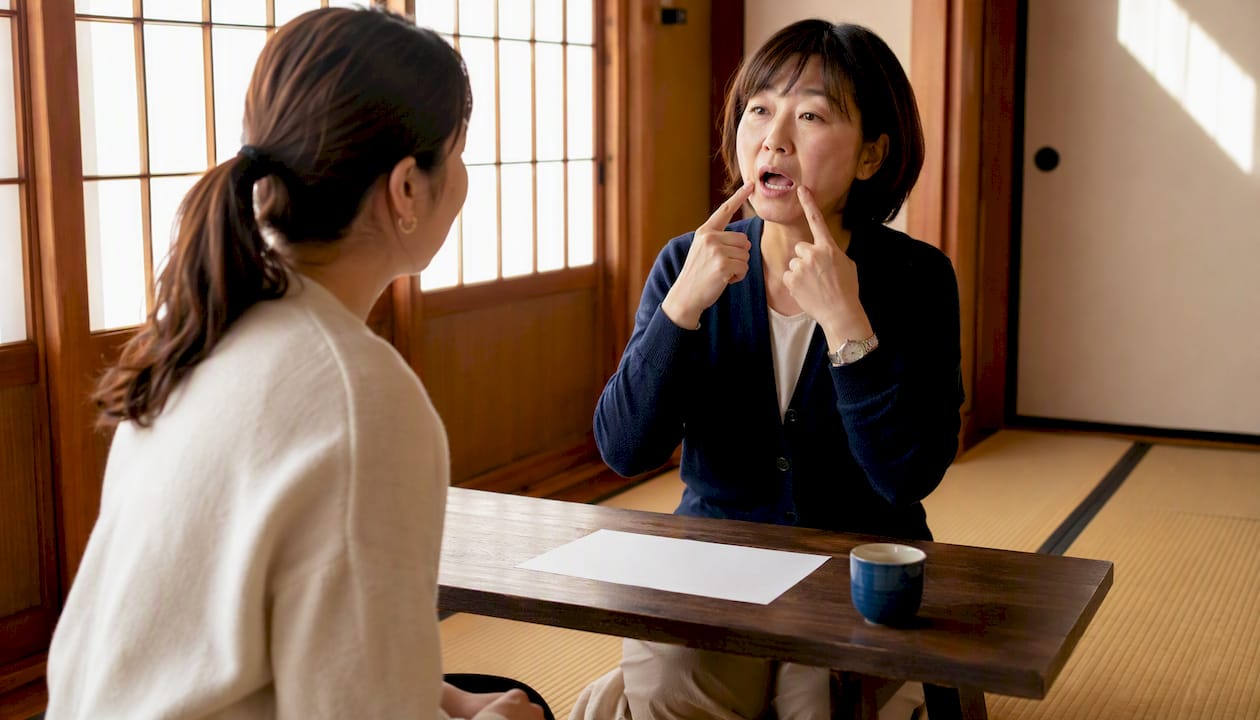
Online: Japanese Explorer lists live Zoom private lessons. Check that the proposed times and your audio, camera and internet setup suit you. Confirm the materials and arrangements for your chosen package.
Tech checklist for online lessons:
- Stable internet connection (wired is more reliable than Wi-Fi)
- Headset with a microphone for clear audio
- Camera enabled so your teacher can see your facial expressions
- A shared folder or screen-share tool for lesson materials
- Confirmed time zone before your first booking (sessions follow Singapore time, UTC+8)
If pronunciation is a priority, ask how feedback is given in your chosen format. The online course page lists the available online packages and inclusions.
How are lessons tailored to your specific goals?
Tell the school which tasks matter most to you. The examples below are possible discussion topics, not a promise that every private package covers all of them.
- Conversation fluency: Topical roleplays, spontaneous Q&A, and vocabulary sets built around your real interests (travel, anime, daily life)
- JLPT prep: Grammar pattern drilling, timed reading comprehension, mock listening tests, and spaced repetition vocabulary review
- Business Japanese: Meeting phrases, email templates, keigo (formal register), and workplace roleplay scenarios. A business Japanese course has its own package details; ask which course fits your goal.
- Travel Japanese: Survival phrases, numbers, directions, and restaurant or hotel vocabulary
Prepare your current experience, any deadline and the situations in which you want to use Japanese. Ask which course and starting level fit those needs, and what can reasonably be covered in the package.
Illustrative two-hour lesson sequences
The sequences below are planning examples for prospective learners. They show how two hours might be used at different stages. Your actual lessons will vary based on your instructor’s assessment of your needs.
Beginner (illustrative)
- Warm-up in Japanese using known greetings and simple questions
- Homework review: correct written exercises, reinforce verb conjugation
- New input: introduce one grammar point (e.g., the te-form) with example sentences
- Guided practice: fill-in-the-blank drills, then short original sentences
- Roleplay: order food at a restaurant using the new form
- Listening task: short audio clip with comprehension questions
- Free conversation: discuss the week’s events using learned patterns
- Feedback summary and homework assignment
Intermediate (illustrative)
- Oral check-in: describe a recent experience in Japanese
- Listening or reading task with comprehension questions and discussion
- Task-based speaking: explain a process or opinion using target grammar
- Roleplay: simulated workplace scenario (e.g., a client meeting or phone call)
- New grammar input with contextual examples
- Writing task: draft a short email or summary
- Error review and homework (write a journal entry or prepare a short presentation)
How often should you take lessons?
Decide how much time you can set aside for lessons and independent review. Ask what preparation is useful between sessions, and review a specific task with your teacher rather than assuming a set number of lessons will produce fluency.
The published 16 teaching hours describe a package, not the calendar time to reach an exam level or conversational goal. Confirm the available dates and weekly frequency with the school before paying.
Japanese Explorer’s private lesson pricing
Japanese Explorer publishes the following private conversational Japanese packages on its private lessons page:
| Package | Fee |
|---|---|
| Private Conversational Japanese, 1 student | $1,280 per level |
| Private Conversational Japanese, 2 students | $1,580 per level |
Each level is eight sessions of two hours each (16 training hours total). A one-time registration fee of $50 per student applies. Course materials per student include a physical course book, e-workbook, audio files, recorded class videos and online support.
For the one-student conversational package, $1,280 divided by 16 teaching hours equals $80 per teaching hour. This is a comparison calculation, not a separately bookable hourly rate. The registration fee is separate. Ask the school to confirm the complete amount payable and any other applicable terms.
For the current fee and any intake details, confirm directly with the school. The pricing above is as published on the private lessons page.
Pre-enrolment lesson-brief worksheet
This worksheet is an original planning aid for prospective learners. It is not a required school document or part of the enrolment process. Filling it in before your first session or trial helps you and your instructor make the most of the initial meeting.
| Question | Your answer |
|---|---|
| Primary goal: What do you want to achieve? (e.g., pass JLPT N4, hold a business meeting, travel conversation) | |
| Current experience: Have you studied Japanese before? If so, for how long and what did you cover? | |
| Specific tasks: Are there particular tasks you need Japanese for? (e.g., read work emails, order food, give a presentation) | |
| Support preferences: Do you prefer textbook-led learning, conversation-first, or a mix? | |
| Availability: How many sessions per week can you commit to, and what times work? | |
| Questions for the instructor: What do you want to ask about the lesson format, homework or materials? |
How do you choose the right private Japanese teacher?
Not every qualified teacher is the right fit for your goals. Use this checklist when screening candidates:
- Experience teaching adult learners (not just children or exam students)
- Familiarity with your target area: JLPT, business Japanese, or conversational fluency
- Bilingual ability so they can explain grammar in English when needed. Bilingual instructors reduce confusion at critical learning moments.
- Willingness to share a sample lesson plan or conduct a trial session
- Clear homework and feedback method
Questions to ask in a discovery call:
- How do you assess my level at the start?
- What does a typical lesson look like for someone at my stage?
- How do you track progress between sessions?
- What is your cancellation and make-up policy?
- Can I see an example of the homework you assign?
Red flags: No clear lesson plan, vague goals (“we’ll just chat”), inconsistent availability, and no concrete feedback method. A good teacher welcomes these questions.
What should you expect from a trial lesson?
Before booking a trial, ask what it includes, its fee and duration, and whether it is suitable for the course you are considering. You can use it to raise questions about level, materials and feedback.
Assessment items you might encounter:
- A short speaking prompt (“Tell me about your day in Japanese”)
- A listening excerpt with two or three comprehension questions
- A quick grammar check (fill-in-the-blank or sentence correction)
- A sample homework task to take away
After a trial or enquiry, note which of your questions were answered and what still needs confirmation. Ask about the first package before committing to it.
If you have studied Japanese before, ask whether the published placement route is appropriate. A complete beginner can ask about the beginner starting course; this guide does not require every learner to take a test.
Japanese Explorer’s private lessons: what you get and how to book
Japanese Explorer publishes private conversational Japanese for one or two students, with physical and Zoom options. The listed package is $1,280 for one student or $1,580 for two students per level of eight two-hour sessions, plus a $50 one-time registration fee per student. Read the teacher profiles and confirm your package, dates and learning goals with the school.
For a business or JLPT goal, ask which published course is appropriate and request its own package details. These are not automatically included in the conversational package. See the course overview and online course page to compare routes.
Useful sources
- Private Japanese Course in Singapore | Japanese Explorer
- Online Japanese Course | Japanese Explorer
- JLPT FAQ | The Japan Foundation and Japan Educational Exchanges and Services
FAQ
How long is each private Japanese lesson at Japanese Explorer?
Each private session runs two hours. A level consists of eight sessions (16 training hours total). This applies to both in-person and online Zoom formats.
How much do private Japanese lessons cost?
Japanese Explorer’s published fee is $1,280 per level for one student or $1,580 per level for two students sharing the session. A one-time registration fee of $50 per student also applies. Confirm the current fee on the private lessons page.
What curriculum do the private lessons follow?
The curriculum is guided by the Association for Japanese-Language Teaching (AJALT), aligned with the JLPT proficiency standard. AJALT provides the syllabus framework; completing a level at the school is separate from taking and passing an official JLPT exam.
Can I take private Japanese lessons online?
Yes. Private lessons are available as live Zoom sessions. The curriculum, session length and materials are the same as in-person lessons. Timings follow Singapore time (UTC+8).
What should I prepare before my first private lesson?
Bring a clear idea of your goals, your current level (even “complete beginner” is useful), and any materials you already own. The pre-enrolment worksheet in this guide can help you organise your thoughts before the session.