
TL;DR:
- Japanese language school certification is an official quality status granted by Japan’s Ministry of Education, Culture, Sports, Science and Technology to institutions meeting strict standards. This certification is essential for schools enrolling students seeking Japanese residence visas, with only 32 out of 100 applicants approved in 2025. Maintaining certification involves ongoing compliance, and verification through MEXT’s official list should be a key step when choosing a school.
Japanese language school certification is the official quality designation granted by Japan’s Ministry of Education, Culture, Sports, Science and Technology (MEXT) to institutions that meet defined educational and operational standards. This system, formally called the Japanese Language Education Institution Certification Act, directly determines whether a school can enroll students seeking a student residence status in Japan. If you are planning to study Japanese in Japan or want to choose a school with verified program standards, understanding this certification process is the most practical step you can take before enrolling.
Japanese language school accreditation explained: the legal framework
The Japanese Language Education Institution Certification Act took effect in April 2024. It created a structured government system for certifying Japanese language schools based on measurable quality criteria. Before this Act, there was no unified national standard for what made a Japanese language school legitimate.
To earn certification, a school must meet standards across four core areas:
- Curriculum design: The program must follow a structured, nationally recognized framework that integrates grammar, speaking, and listening skills.
- Staffing: Schools must employ registered Japanese language teachers holding national qualifications. Teacher credentials are a core assessment criterion.
- Facilities: Physical or digital learning environments must meet defined requirements for student capacity and instructional delivery.
- Learner support: Schools must demonstrate systems for student welfare, progress monitoring, and administrative support.
The MEXT Minister holds final authority over all certification decisions. Schools that want to enroll students under the “student” residence status must obtain certification by March 2029. That deadline is firm. Any school still operating without certification after that date cannot legally accept students applying for that visa category.
As of October 2025, 64 Japanese language education institutions had received certification under this framework. That number reflects how early the system still is in its rollout. Thousands of Japanese language schools operate across Japan, so the certified pool remains relatively small for now.
How does certification affect your student visa eligibility?
Enrollment in a certified institution is a direct requirement for applying for the student residence status in Japan. Without it, your visa application cannot proceed. Here is how the process connects:
- Choose a certified school. Confirm the school holds MEXT certification specifically for the student residence status category. Certification categories differ, so this step matters.
- Receive your Certificate of Eligibility. The school submits documentation to immigration authorities on your behalf. Only certified schools can do this for student visa applicants.
- Apply for your residence status. The immigration bureau reviews your application independently. Certification of the school does not guarantee your visa will be approved.
- Maintain enrollment. Once in Japan, your residence status is tied to continued enrollment at the certified institution. Leaving the school can affect your legal status.
The distinction between certification and visa approval is one students frequently misunderstand. Visa approval is a separate process handled individually by immigration authorities. A certified school gives you eligibility to apply. It does not guarantee the outcome.
Certification categories also vary. Schools may hold certification for the student residence status category, employment-related categories, or daily life categories. Each category has different requirements and serves different student profiles. If your goal is to study full time in Japan, you need a school certified specifically for the student residence status.
Pro Tip: Ask any school you are considering to show you their certification category in writing before you pay any enrollment fees. A school that cannot produce this documentation quickly is a red flag.
What does the certification assessment process look like?
The assessment process is more demanding than most students realize. MEXT evaluates schools on a package of factors, not just written documents.

The review cycle produces selective results. In the 2025 fiscal year second review cycle, only 32 out of 100 applicant institutions received certification for the student residence status category. That is a 32% approval rate. Of the remaining applications, 53 were withdrawn, 2 were formally disapproved, and 13 remained under review. These numbers show that certification is not a rubber stamp. Schools that apply without meeting the full operational standards are unlikely to pass.
The assessment includes three components:
| Assessment Stage | What MEXT Reviews |
|---|---|
| Document review | Curriculum plans, teacher credentials, facility records, learner support policies |
| Interviews | School leadership explains operational systems and educational philosophy |
| On-site inspections | Physical verification of facilities, staffing, and student support infrastructure |
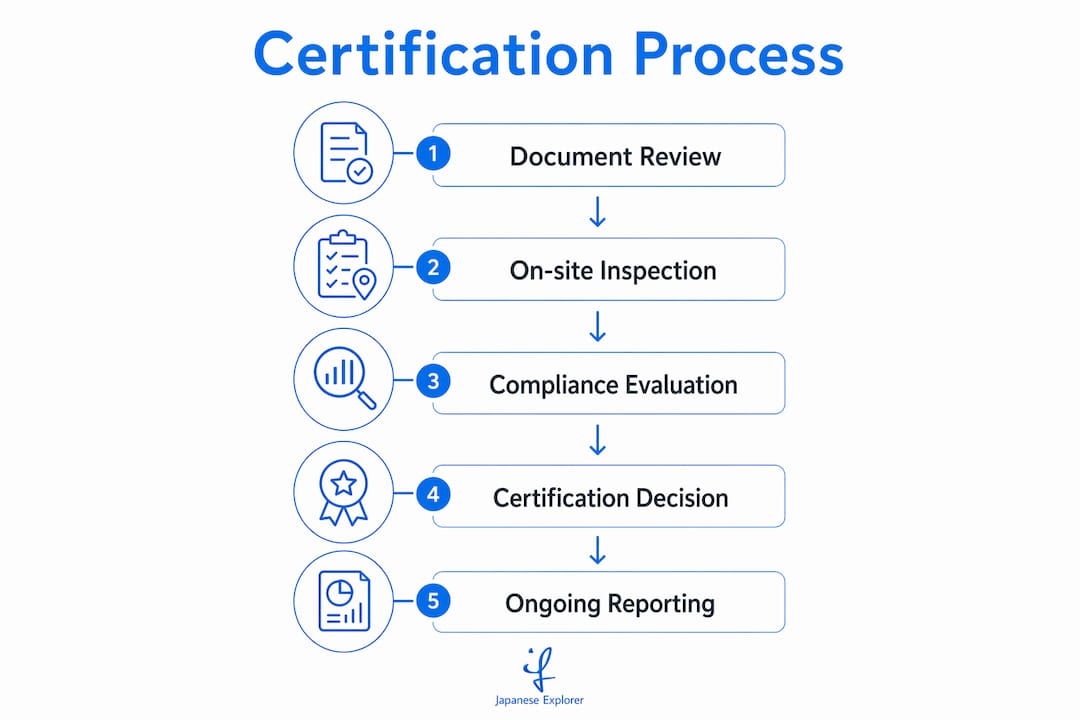
After certification, the work does not stop. Continued compliance is confirmed through self-evaluation reports, ongoing documentation submissions, and periodic on-site inspections. Schools that fail to maintain standards risk having their certification canceled. That cancellation would directly affect every enrolled student’s visa status.
In March 2026, MEXT updated its application guidance to shift all filings and compliance reporting to a digital portal system. The assessment criteria themselves did not change, but the administration of ongoing compliance became more structured and trackable. This shift signals that certification is moving toward continuous operational oversight rather than a one-time approval event.
Pro Tip: When researching schools, ask specifically about their self-evaluation reporting schedule and whether they have completed any post-certification inspections. Schools that are actively managing compliance will answer this confidently.
How can you verify a school’s certification status?
Verifying a school’s certification status is straightforward if you know where to look. MEXT publishes an official list of certified Japanese language education institutions. You can access this through MEXT’s Guide to Certified Japanese Language Education Institutions, which is updated as new certifications are granted.
When you check a school’s status, look for these specifics:
- Certification category: Confirm the school holds certification for the student residence status category if that is your goal. A school certified only for employment or daily life categories cannot support your student visa application.
- Certification date: Newer certifications may still be building their compliance track record. Schools certified in the first wave have more operational history under the new system.
- Pending status: Some schools are listed as having submitted applications but not yet received certification. Enrolling in a pending school carries real risk. If their application is withdrawn or disapproved, your enrollment plans collapse.
You should also verify certification scope by asking the school directly for documentation they can share with immigration authorities. A certified school will have this material ready. Schools that are vague about their certification details or claim informal recognition without MEXT documentation should be avoided entirely.
One common pitfall is confusing older government registration systems with the new MEXT certification. Japan previously had a separate notification system for Japanese language schools. That system is different from the 2024 certification framework. A school registered under the old system is not automatically certified under the new one.
When choosing a Japanese language school, treat certification verification as a non-negotiable first step, not an afterthought.
What are the real benefits and limits of attending a certified school?
Certification delivers concrete benefits for students. Here is what you actually get:
- Qualified teachers: Certified schools employ registered Japanese language teachers with national qualifications. You are not learning from unverified instructors.
- Standardized curriculum: The program follows nationally recognized Japanese language program standards, so your learning progression is structured and measurable.
- Visa eligibility: Only certified schools can support your student residence status application. This is the most direct practical benefit.
- Student commuter benefits: Students enrolled at certified institutions in Japan may qualify for commuter discounts and other student welfare benefits.
- Employer recognition: Completing a program at a certified school carries more weight with Japanese employers and institutions than completing one at an uncertified school.
The limits are equally worth knowing. Certification does not guarantee visa approval. Immigration authorities evaluate each applicant individually based on financial standing, background, and other factors. Certification also does not guarantee educational outcomes. A certified school can still deliver a poor learning experience if class sizes are too large or teaching methods do not suit your learning style.
When evaluating what to look for in a Japanese language school, certification is the floor, not the ceiling. Use it to filter out unqualified schools, then apply additional criteria like class format, teacher interaction style, and student support quality to make your final choice.
Key takeaways
MEXT certification is the single most important factor to verify before enrolling in a Japanese language school if you plan to study in Japan on a student residence status.
| Point | Details |
|---|---|
| Certification is legally required | Schools must hold MEXT certification by March 2029 to enroll student visa applicants. |
| Approval rates are selective | Only 32 of 100 applicants were certified in the 2025 second review cycle, showing the bar is high. |
| Certification category matters | Confirm the school holds certification specifically for the student residence status, not another category. |
| Compliance is ongoing | Schools face continuous reporting, self-evaluation, and inspections after initial certification. |
| Certification does not guarantee visa approval | Immigration authorities evaluate each student independently regardless of school status. |
Why certification matters more than most students expect
I have seen students make the same mistake repeatedly. They find a school with a polished website, reasonable tuition, and enthusiastic testimonials, and they enroll without ever checking certification status. Then they discover the school is either pending certification or operating under the old notification system, and their visa plans fall apart.
The 2024 certification framework changed the stakes significantly. Before it existed, the quality of Japanese language schools varied enormously, and students had little reliable way to distinguish a serious institution from a poorly run one. Now there is a government-backed standard with real consequences for schools that do not maintain it.
What I find most encouraging about the 2026 digital portal update is that it shifts the system toward continuous accountability. Certification is no longer a badge a school earns once and displays forever. Schools must keep proving they meet the standard. That is good for students.
My practical recommendation is this: treat the MEXT certified institutions list as your starting point, not your ending point. Once you confirm a school is certified for the right category, dig deeper. Ask about teacher qualifications, class sizes, and how the school handles student support issues. The best schools will welcome those questions. The ones that deflect them are telling you something important.
The future of this system will likely involve tighter digital compliance tracking and faster certification cycles as more schools apply. Students who understand how the process works will always be better positioned to make smart enrollment decisions.
— Paul
Start your japanese learning journey with confidence
If you are building toward studying in Japan or simply want to learn Japanese from instructors who meet the highest teaching standards, Japanese Explorer is here to support you. Our curriculum follows the guidelines of the Association for Japanese-Language Teaching, and our certified bilingual instructors bring the same rigor you would expect from any quality-focused program.

Whether you prefer small group classes for structured learning with peers, online Japanese courses for flexible scheduling, or business and corporate training for professional development, Japanese Explorer has a format that fits your goals. Our school is located at 10 Anson Road, Level 22, International Plaza, Singapore 079903, right above Tanjong Pagar MRT. Reach out today and take the first real step toward fluency.
FAQ
What is the japanese language education institution certification act?
The Japanese Language Education Institution Certification Act is a law enacted in April 2024 that established MEXT’s authority to certify Japanese language schools meeting defined standards for curriculum, staffing, facilities, and learner support.
Does school certification guarantee my student visa?
No. Enrollment in a certified school is required to apply for the student residence status, but visa approval is decided separately by immigration authorities based on your individual application.
How many schools are currently certified?
As of October 2025, 64 institutions had received MEXT certification. The number continues to grow as more schools complete the review process.
What happens if a certified school loses its certification?
If a school fails to maintain compliance standards, MEXT can cancel its certification. Students enrolled at that school would lose their basis for the student residence status, which directly affects their legal right to remain in Japan.
How do i check a school’s certification category?
Use MEXT’s official published list of certified Japanese language education institutions and confirm the school holds certification specifically for the student residence status category. Ask the school directly for documentation if anything is unclear.