
TL;DR:
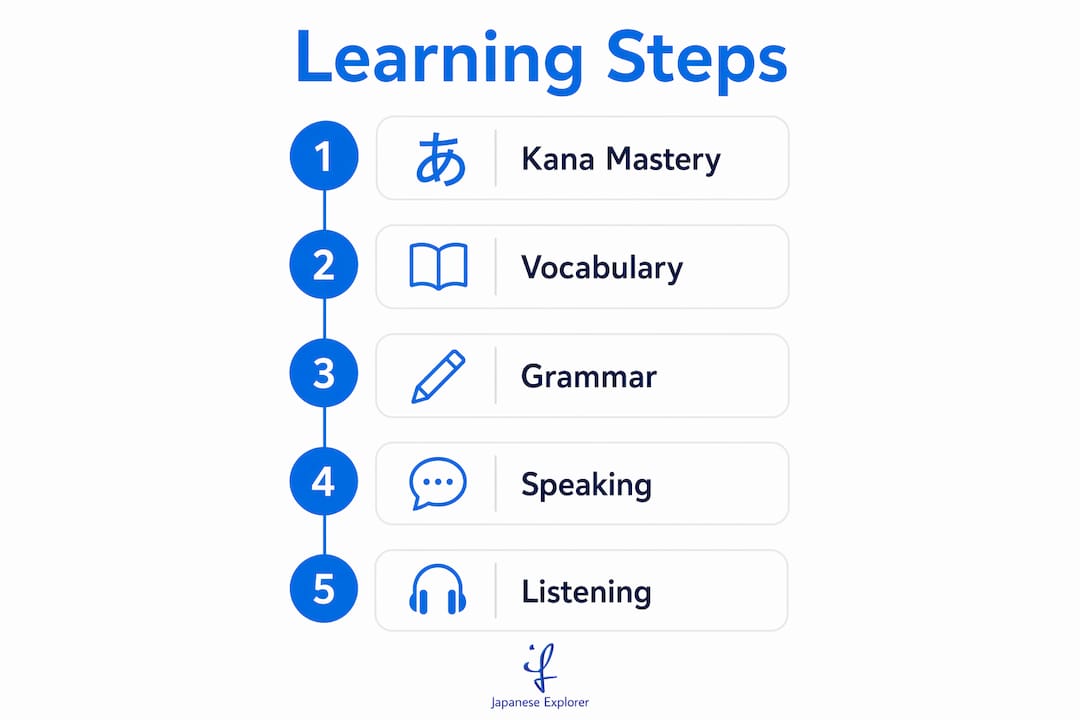
- Mastering hiragana and katakana within the first two weeks is essential because it provides the foundational decoding skills necessary for progressing in Japanese.
- Using structured tools like Anki and WaniKani to review vocabulary and kanji daily accelerates retention, while early speaking practice begins from month two to build fluency.
Learning Japanese starts with one non-negotiable step: mastering hiragana and katakana before anything else. If you wanna learn Japanese and you skip this foundation, you will hit a wall within weeks. Japanese is classified by the Foreign Service Institute as a Category IV language, meaning it demands roughly 2,200 hours for English speakers to reach professional proficiency. That number sounds daunting, but with the right tools like Anki, WaniKani, and structured grammar guides, and a consistent daily habit, conversational fluency is achievable in 18 to 24 months. This guide gives you the exact roadmap.
Why learning Japanese starts with hiragana and katakana
Hiragana and katakana are the two phonetic scripts that form the backbone of written Japanese. Together they cover 92 characters, and every sound in the Japanese language maps directly to one of them. Mastering kana within the first 1-2 weeks is the industry standard for good reason: once you can decode these scripts, you can read pronunciation guides, follow textbooks, and process new vocabulary without guessing.
The biggest trap beginners fall into is relying on romanization, which is the practice of writing Japanese sounds using the Latin alphabet. Romanization delays native phonetic comprehension and creates a dependency that serious learners must avoid from day one. Most popular beginner apps actually assume prior kana knowledge, which is why learners who skip this step hit a frustrating plateau after just a few weeks.
Here is a practical one to two week kana study plan:
- Days 1-3: Learn the five vowel sounds (a, i, u, e, o) and the first two rows of hiragana using Tofugu’s free hiragana guide
- Days 4-6: Complete the remaining hiragana characters using spaced repetition flashcards on Anki
- Days 7-9: Begin katakana using the same method, focusing on recognition before writing
- Days 10-14: Review both scripts daily with Inku Japanese’s kana drills until recognition is automatic
Pro Tip: Focus on recognizing kana before perfecting how to write them. Reading fluency comes first; handwriting can be refined later once you have vocabulary to practice with.
The payoff is immediate. Once kana clicks, every Japanese resource opens up to you. Textbooks, flashcard decks, and even anime subtitles become readable. That sense of progress is exactly what keeps you motivated through the harder stages ahead.
What tools and methods build vocabulary and grammar fastest
After kana mastery, your two parallel priorities are vocabulary and grammar. The most effective self-study tools in 2026 combine spaced repetition systems for vocabulary with structured grammar guides for sentence building.

Spaced repetition systems, or SRS, work by showing you a flashcard just before you are about to forget it. Anki is free and lets you download pre-made community decks covering the most frequent Japanese words. WaniKani takes a different approach, using radicals and mnemonics to teach kanji and vocabulary together, which makes kanji retention significantly stronger than isolated drilling. WaniKani costs around $10 per month but covers over 2,000 kanji and 6,000 vocabulary items in a structured sequence.
For grammar, you have three strong options depending on your learning style:
| Tool | Type | Cost | Best for |
|---|---|---|---|
| Genki I & II | Textbook series | ~$50 per book | Structured classroom or self-study |
| Tae Kim’s Guide | Free online guide | Free | Grammar logic and sentence patterns |
| BunPro | SRS grammar platform | ~$4/month | Drilling grammar points with context |
| Anki | Flashcard app | Free | Custom vocabulary and phrase decks |
| WaniKani | Kanji SRS platform | ~$10/month | Kanji and vocabulary together |
Do not wait until you have finished a grammar textbook before you start speaking. AI-powered conversational practice compresses early learning stages by mixing writing systems and grammar contextually rather than sequentially. Platforms like italki connect you with native Japanese tutors for affordable one-on-one sessions, even at the beginner level.
Pro Tip: Study vocabulary and grammar in parallel from week three onward. Learning grammar without words to fill the patterns is abstract. Learning words without grammar leaves you unable to form sentences. Both together create real communicative ability.
Check out Japanese Explorer’s guide on building vocabulary fast for additional SRS strategies tailored to adult learners.
How speaking, listening, and immersion accelerate your fluency
Passive study alone will not make you fluent. Early speaking practice using apps like HelloTalk and platforms like italki accelerates progress because it forces your brain to retrieve and produce language, not just recognize it. HelloTalk pairs you with native Japanese speakers who want to learn your language, creating a mutual exchange with built-in AI correction and voice recognition.
Immersion does not require moving to Japan. You can build a Japanese-rich environment at home through these daily habits:
- Watch one episode of anime or a Japanese drama with Japanese subtitles (not English) for 20 minutes
- Read three to five articles on NHK Easy News, which uses simple vocabulary and furigana above kanji
- Listen to a Japanese podcast like Nihongo con Teppei for Beginners during your commute
- Practice speaking out loud for five minutes using an AI conversation partner or recording yourself
- Review your Anki deck for 10 to 15 minutes before bed to lock in the day’s new words
The fear of speaking before you feel “ready” is the single biggest obstacle adult learners face. The reality is that consistent daily practice of 20 to 30 minutes beats sporadic longer sessions for long-term retention. You do not need to be perfect. You need to be consistent.
Pro Tip: Start speaking from month two, even if your sentences are broken. Native speakers appreciate the effort, and the mistakes you make in real conversation are the ones you remember and fix fastest.
Manga is another underrated immersion tool. Series like Yotsubato! are written for young readers, which means simple sentence structures and furigana on every kanji. Reading manga for 15 minutes a day builds reading speed and exposes you to natural conversational Japanese that textbooks rarely capture.
How long does it realistically take to learn Japanese?
Japanese takes longer than most European languages, and setting honest expectations protects you from quitting too early. The Foreign Service Institute classifies Japanese as requiring approximately 2,200 hours for professional proficiency for native English speakers. That figure applies to full-time study. For most adult learners studying 30 to 60 minutes daily, the timeline looks like this:
| Milestone | Estimated time | Study hours |
|---|---|---|
| Kana mastery | 1-2 weeks | 10-15 hours |
| JLPT N5 (basic phrases) | 3-6 months | 150-200 hours |
| JLPT N4 (simple conversation) | 6-12 months | 300-400 hours |
| JLPT N3 (intermediate) | 12-18 months | 600-800 hours |
| Conversational fluency | 18-24 months | 1,000+ hours |
These timelines assume consistent daily study. Skipping days regularly or jumping between methods without a plan adds months to each milestone. Kanji is the element that surprises most learners. There are over 2,000 kanji in everyday use, and acquiring them is a multi-year process even for dedicated students. The key is to treat kanji as a long game and not let slow kanji progress discourage you from advancing in speaking and listening.
Many learners quit between months three and six, right when the initial excitement fades and the volume of new material feels overwhelming. Recognizing this “intermediate plateau” in advance helps you push through it. Setting small, measurable goals like passing JLPT N5 or holding a five-minute conversation keeps motivation concrete and trackable.
What mistakes beginners make and how to avoid them
The most common beginner errors in learning Japanese are predictable, and knowing them in advance saves you months of wasted effort. Here are the pitfalls that derail the most learners:
- Skipping kana: Jumping straight to vocabulary or kanji without mastering hiragana and katakana means you cannot decode any Japanese text independently. Most beginner apps assume kana knowledge, so skipping it causes an immediate plateau.
- Over-relying on romaji: Romanization feels comfortable at first but actively prevents your brain from building a Japanese phonetic map. Drop it entirely after your first week.
- Rushing into kanji: Kanji are important, but attacking 2,000 characters before you have basic grammar and vocabulary is a recipe for burnout. Start kanji study after reaching JLPT N5 level vocabulary.
- Neglecting speaking practice: Studying grammar and vocabulary without ever speaking creates a “silent learner” who understands Japanese but cannot produce it. Start speaking in month two at the latest.
- Switching methods constantly: Trying a new app or textbook every few weeks resets your progress. Pick one grammar resource and one SRS tool, then commit for at least three months before evaluating.
For a deeper look at the specific errors that trip up adult learners, Japanese Explorer’s article on beginner mistakes to avoid covers each pitfall with practical corrective steps.
Pro Tip: Balance input and output from the start. For every hour you spend reading or listening (input), spend at least 15 minutes speaking or writing (output). This ratio keeps your productive skills from falling behind your passive comprehension.
Key takeaways
Mastering hiragana and katakana in the first two weeks is the single most important decision a Japanese beginner can make, because it unlocks every other learning resource and sets the pace for reaching conversational fluency within 18 to 24 months.
| Point | Details |
|---|---|
| Kana first, always | Master hiragana and katakana within two weeks before touching vocabulary or kanji. |
| Use SRS tools daily | Anki and WaniKani schedule reviews to maximize retention with minimal time investment. |
| Speak from month two | Early speaking practice with HelloTalk or italki builds fluency that passive study cannot. |
| Expect 18-24 months | Conversational fluency requires consistent daily study; kanji mastery takes several years. |
| Avoid romaji entirely | Romanization delays phonetic comprehension and should be dropped after the first week. |
Why the kana-first approach is the only approach that works
I have seen hundreds of adult learners start their Japanese study with enthusiasm, download Duolingo, and spend three months on hiragana-free lessons before wondering why nothing sticks. The kana-first approach is not a preference. It is the structural requirement of the language itself.
What I find genuinely exciting about learning Japanese in 2026 is how well modern tools map onto this foundational approach. Anki handles vocabulary retention so efficiently that learners can realistically acquire 10 to 15 new words per day without burnout. WaniKani makes kanji feel manageable by breaking characters into visual components. AI conversation partners remove the social anxiety from early speaking practice. None of these tools work well, though, if you arrive at them without kana.
The adult learners I have seen succeed share one trait: they treat the first two weeks as non-negotiable. They do not touch kanji. They do not download vocabulary apps. They sit with hiragana and katakana until both scripts are automatic. After that, every subsequent tool and method clicks into place faster than they expected.
My honest advice is to set a 30-minute daily study block and protect it the way you would protect a work meeting. Thirty minutes of focused, daily practice with the right tools will outperform two-hour weekend sessions every single time. Japanese rewards consistency above everything else.
— Paul
Start learning Japanese with structured courses in Singapore
Japanese Explorer offers adult Japanese language courses designed around exactly the kind of structured, progressive learning this article describes. Whether you prefer small group classes at the International Plaza center above Tanjong Pagar MRT, or you want the flexibility of online Zoom lessons from anywhere, there is a format that fits your schedule and goals.
From beginner conversational courses to business Japanese and corporate training programs, every class is taught by certified bilingual instructors following a curriculum guided by the Association for Japanese-Language Teaching. If you are ready to move from “I wanna learn Japanese” to actually doing it, explore the Japanese language courses available at Japanese Explorer, or check out the online Japanese course options if you prefer learning from home.
FAQ
What should I learn first when starting Japanese?
Start with hiragana and katakana, the two phonetic scripts that together cover 92 characters. Mastering kana in the first 1-2 weeks gives you the decoding foundation every other Japanese resource depends on.
How long does it take to reach conversational fluency in Japanese?
With consistent daily study of 30 to 60 minutes, most learners reach conversational fluency in 18 to 24 months. Reaching professional proficiency requires approximately 2,200 study hours in total.
What are the best free tools to learn Japanese online?
Anki for spaced repetition vocabulary study, Tae Kim’s Grammar Guide for sentence structure, and NHK Easy News for reading practice are all free and widely recommended. HelloTalk is free for basic use and connects you with native Japanese speakers for real conversation practice.
Is it possible to learn Japanese without a teacher?
Self-study is entirely possible using tools like Anki, WaniKani, Genki textbooks, and AI conversation platforms. However, a structured course with a certified instructor accelerates progress by providing feedback, accountability, and a clear curriculum sequence.
What is the JLPT and should beginners aim for it?
The Japanese Language Proficiency Test, or JLPT, is the internationally recognized standard for measuring Japanese ability across five levels from N5 (beginner) to N1 (advanced). Targeting JLPT N5 within your first three to six months gives you a concrete, measurable goal that keeps study focused and motivation high.