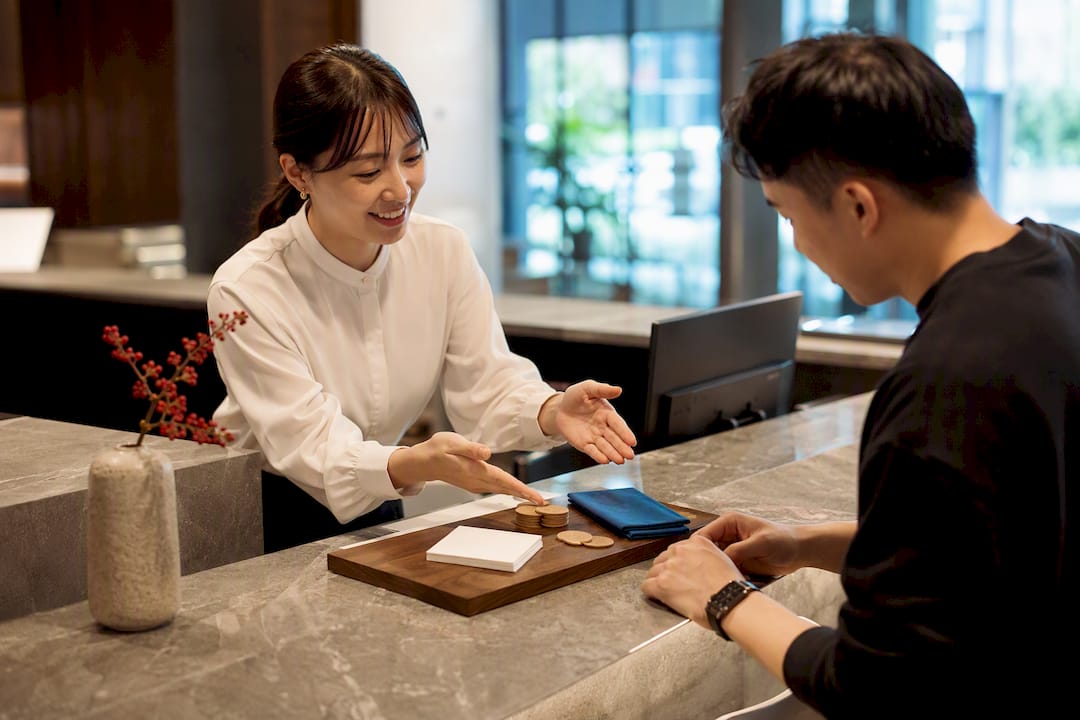
You don’t need to be fluent to get around Japan. A focused set of japanese phrasebook essentials, learned before you board your flight, gives you the confidence to greet locals, order food, find your hotel, and handle emergencies without panic. These are the phrases that actually matter, organized so you can start using them right away.
Your core phrase starter kit:
- Konnichiwa (kon-nee-chee-wah) — Hello / Good afternoon
- Ohayou gozaimasu (oh-hah-yoh goh-zah-ee-mah-ss) — Good morning (polite)
- Konbanwa (kon-bahn-wah) — Good evening
- Arigatou gozaimasu (ah-ree-gah-toh goh-zah-ee-mah-ss) — Thank you very much
- Sumimasen (soo-mee-mah-sen) — Excuse me / I’m sorry
- Hai / Iie (hah-ee / ee-eh) — Yes / No
- Wakarimasen (wah-kah-ree-mah-sen) — I don’t understand
- Eigo ga hanasemasu ka? (eh-ee-goh gah hah-nah-seh-mah-ss kah) — Do you speak English?
- [Object] wa doko desu ka? (wah doh-koh deh-ss kah) — Where is [object]?
- [Object] o kudasai (oh koo-dah-sah-ee) — Please give me [object] / I’d like [object]
- Ikura desu ka? (ee-koo-rah deh-ss kah) — How much does it cost?
- Tasukete! (tah-soo-keh-teh) — Help!
- Byouin wa doko desu ka? (byoh-een wah doh-koh deh-ss kah) — Where is the hospital?
- Keisatsu o yonde kudasai (keh-ee-sah-tsoo oh yon-deh koo-dah-sah-ee) — Please call the police
These basic Japanese phrases cover the situations you’ll face most often, from arriving at your hotel to flagging down help in a pinch.
How do you pronounce Japanese phrases correctly?
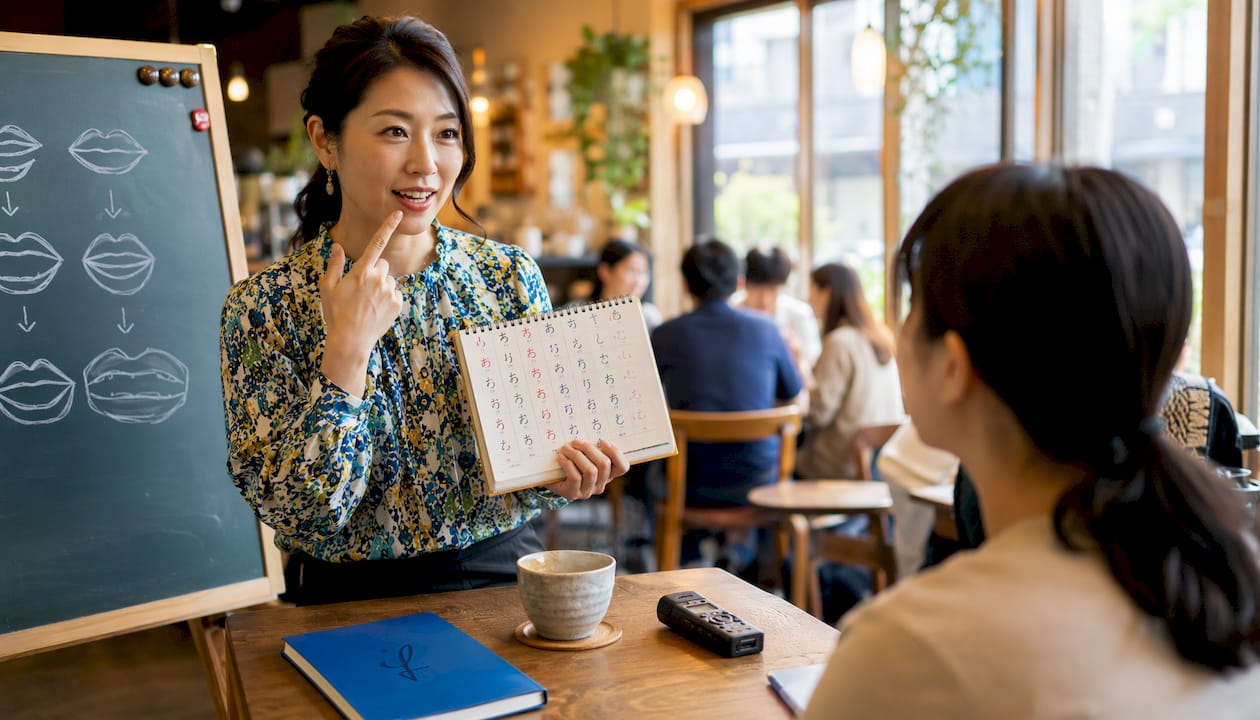
Japanese pronunciation is far more consistent than English. Once you learn the five vowel sounds, you can read and say almost any Romanized phrase with reasonable accuracy. That consistency is your biggest advantage as a traveler.
The five Japanese vowels:
- A — like the “a” in “father” (short, open)
- I — like the “ee” in “feet” (short, crisp)
- U — like the “oo” in “food” but softer, with less lip rounding
- E — like the “e” in “bed”
- O — like the “o” in “more”
Every syllable in Japanese is built around one of these vowels. “Arigatou” breaks down as a-ri-ga-to-u, each part given equal weight. Pronunciation challenges are common, but speaking slowly and clearly matters far more than sounding like a native speaker.
Pronunciation do’s and don’ts:
- Do say each syllable distinctly. “Sumimasen” has five syllables: su-mi-ma-se-n.
- Do keep your vowels short and clipped unless the word has a long vowel (written as “oo” or “uu”).
- Do drop the “u” in “desu” and “masu” in natural speech. They sound like “dess” and “mahss.”
- Don’t stress syllables the way you would in English. Japanese syllables carry roughly equal weight.
- Don’t rush. A slow, clear attempt reads as respectful and gets better results than a fast, garbled one.
- Don’t worry about pitch accent at this stage. Travelers who speak clearly are understood even without perfect pitch.
Pro Tip: Before your trip, spend ten minutes listening to each phrase on a free resource like Forvo or Google Translate’s audio feature. Hearing the rhythm once is worth more than reading the Romanization five times.
For a deeper look at how Japanese sounds work, the beginner’s pronunciation guide at Japanese Explorer walks through syllable structure with audio-friendly examples.
Why politeness and cultural etiquette change everything in Japan
Polite language in Japan isn’t just good manners. It actively changes how people respond to you. Using the formal register, called teineigo, signals respect and opens doors that blunt or casual speech closes. Even broken Japanese delivered politely tends to get a warmer, more helpful reaction than perfect English delivered without courtesy.
The phrase “Sumimasen” does more work than almost any other word in your kit. It means “excuse me,” but it also functions as a soft apology, a way to get someone’s attention, and a polite opener before any request. Starting with “Sumimasen” before asking a question is standard polite behavior that locals notice and appreciate. Think of it as the verbal equivalent of a small bow before speaking.
Politeness do’s and don’ts:
- Do use “Arigatou gozaimasu” rather than just “Arigatou” when thanking staff, servers, or anyone helping you.
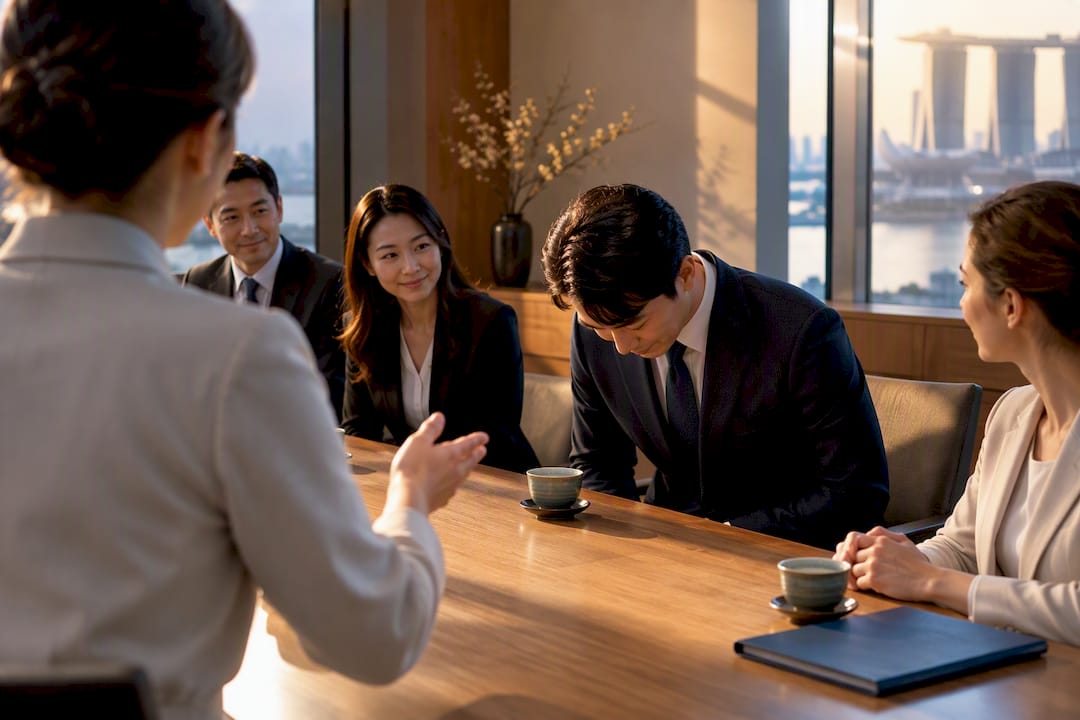
- Do bow slightly when greeting or thanking someone. A small nod of the head is enough for a traveler.
- Do use the sentence-ending particle “ka” to form questions. It softens a statement into a polite inquiry.
- Don’t speak loudly in restaurants, trains, or public spaces. Quiet, measured speech is the norm.
- Don’t hand money directly to a cashier’s hand. Place it on the small tray provided at the counter.
- Don’t eat or drink while walking. It’s considered impolite in most public settings.
The language barrier in Japan is often less intimidating than travelers expect, largely because polite phrases open doors to better service and genuine local warmth. Combining verbal politeness with calm, humble body language, like keeping your voice low and avoiding large gestures, amplifies the effect considerably.
Pro Tip: Add the particle “ne” (neh) to the end of a statement to soften it and invite agreement. “Oishii desu ne” (It’s delicious, isn’t it?) is a simple way to connect with a server or host and earns a smile almost every time.
Essential phrases for eating, shopping, transportation, and emergencies
Eating and drinking
Restaurants in Japan often have plastic food displays or picture menus outside, which helps enormously. Still, a few phrases go a long way.
- Kore o kudasai (koh-reh oh koo-dah-sah-ee) — I’ll have this one (point at the menu)
- Osusume wa nan desu ka? (oh-soo-soo-meh wah nahn deh-ss kah) — What do you recommend?
- [Ingredient] wa haitte imasu ka? (wah hah-ee-teh ee-mah-ss kah) — Does it contain [ingredient]?
- Okaikei onegaishimasu (oh-kah-ee-keh-ee oh-neh-gah-ee-shee-mah-ss) — Check, please
- Oishii desu (oh-ee-shee deh-ss) — It’s delicious
- Mizu o kudasai (mee-zoo oh koo-dah-sah-ee) — Water, please
Shopping
- Ikura desu ka? — How much is it?
- Yasuku narimasu ka? (yah-soo-koo nah-ree-mah-ss kah) — Can you lower the price?
- Kore o kudasai — I’ll take this one
- Kore wa iranai desu (koh-reh wah ee-rah-nah-ee deh-ss) — I don’t need this
- Fukuro wa iranai desu (foo-koo-roh wah ee-rah-nah-ee deh-ss) — I don’t need a bag
- Kado de haraemasu ka? (kah-doh deh hah-rah-eh-mah-ss kah) — Can I pay by card?
Transportation
- [Destination] made onegaishimasu (mah-deh oh-neh-gah-ee-shee-mah-ss) — To [destination], please (for taxis)
- [Station] wa doko desu ka? — Where is [station]?
- Kono densha wa [destination] ni tomarimasu ka? (koh-noh den-shah wah nee toh-mah-ree-mah-ss kah) — Does this train stop at [destination]?
- Kippu o kudasai (kee-ppoo oh koo-dah-sah-ee) — A ticket, please
- Tsugi no eki wa nan desu ka? (tsoo-gee noh eh-kee wah nahn deh-ss kah) — What is the next station?
Emergencies
- Tasukete! — Help!
- Byouin wa doko desu ka? — Where is the hospital?
- Keisatsu o yonde kudasai — Please call the police
- Kyuukyuusha o yonde kudasai (kyoo-kyoo-shah oh yon-deh koo-dah-sah-ee) — Please call an ambulance
- Nusumaremashita (noo-soo-mah-reh-mah-shee-tah) — I’ve been robbed
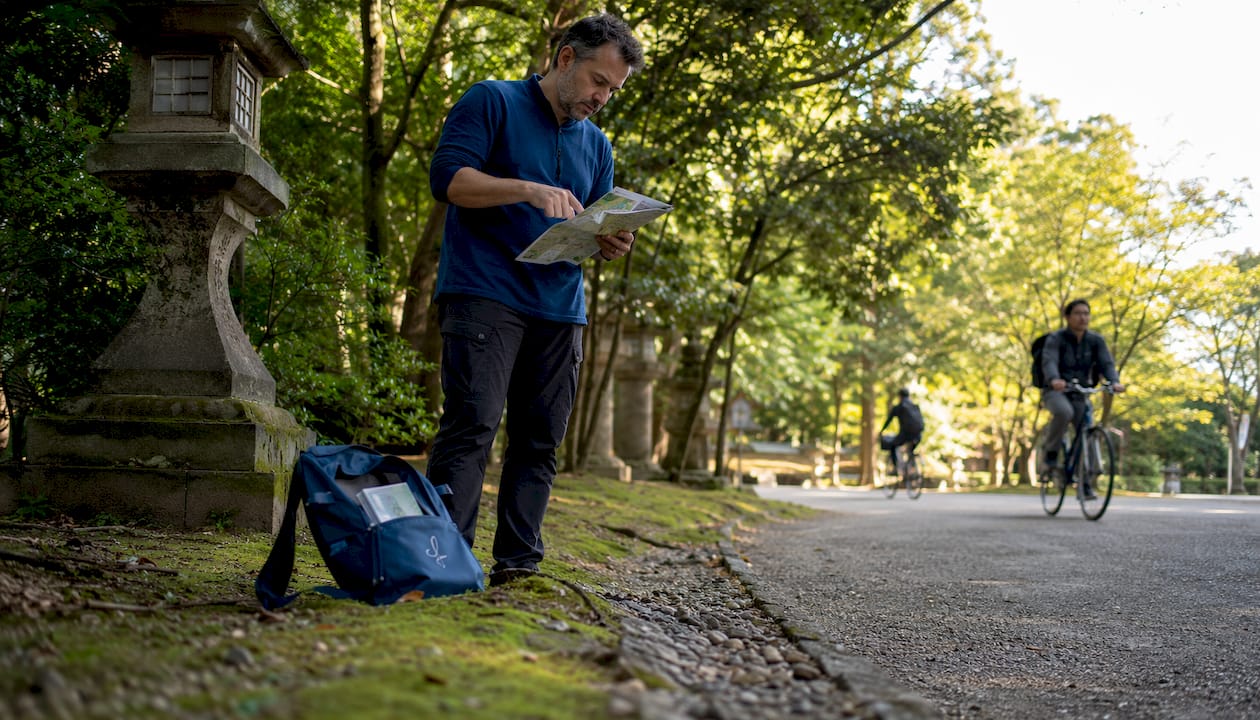
When asking for directions, pointing at maps or photos dramatically improves your chances of being understood, especially if your pronunciation isn’t perfect yet. Pull up Google Maps, point to your destination, and say “Koko wa doko desu ka?” (Where is this place?). Non-verbal cues carry real weight in Japan.
Which tools help you handle language barriers in Japan?
Memorized phrases cover most daily situations, but Japan occasionally throws you a curveball: a medical question, a complex dietary restriction, or a train announcement you can’t parse. That’s when digital tools earn their place.
Recommended tools and resources:
- JNTO Tourist’s Language Handbook — The Japan National Tourism Organization publishes a free Tourist’s Language Handbook with categorized phrases for travel scenarios. It’s a reliable, officially curated reference.
- VoiceTra — A free translation app developed by Japan’s National Institute of Information and Communications Technology, optimized for travel conversations. It handles spoken input and outputs spoken Japanese, which is useful when you need to communicate something complex quickly.
- WordByWord — WordByWord’s conversation tools are built specifically for travelers who need real-time translation support in unfamiliar language environments.
- Google Translate (camera mode) — Point your phone camera at a menu, sign, or form and get an instant visual translation. Works offline if you download the Japanese language pack before your trip.
- Pocket phrasebook — A small printed phrasebook is a reliable backup when your phone battery dies or you lose signal in a rural area.
Relying solely on memorized phrases is risky for complex situations. The smartest approach combines a core set of phrases you know cold with at least one translation app and the JNTO handbook saved offline. That combination covers the vast majority of travel scenarios, including medical and safety situations where getting it right matters most.
How do numbers work in Japanese for prices, time, and quantities?
Numbers in Japanese follow a logical pattern once you learn the base set. You’ll use them constantly, from reading price tags to telling a taxi driver your floor number.
Core numbers:
| Japanese | Romanization | Meaning |
|---|---|---|
| 一 | ichi | — |
| 二 | ni | — |
| 三 | san | 3 |
| 四 | shi / yon | — |
| 五 | go | — |
| 六 | roku | — |
| 七 | shichi / nana | — |
| 八 | hachi | — |
| 九 | ku / kyuu | 9 |
| 十 | juu | 10 |
| 百 | hyaku | — |
| 千 | sen | —,000 |
| 万 | man | — |
Numbers above ten combine simply: 11 is juu-ichi, 20 is ni-juu, 35 is san-juu-go. Prices in Japan are quoted in yen, so “san-zen en” (3,000 yen) is a phrase you’ll hear at shops and restaurants regularly.
For quantities, Japanese uses counters, small words that attach to numbers depending on what you’re counting. For most travel purposes, you only need a few. “Hitotsu, futatsu, mittsu” (one, two, three) work as general counters when you’re pointing at items and indicating how many you want. Holding up fingers alongside the words removes any ambiguity.
Pro Tip: When asking about prices, just say “Ikura desu ka?” and point. Most cashiers will show you the total on a calculator or receipt, so you rarely need to parse a spoken number under pressure.
How do you talk about time and dates in Japanese?
Telling time and discussing schedules comes up more than you’d expect, especially when catching trains, booking tours, or confirming restaurant reservations.
Telling time:
- Ima nanji desu ka? (ee-mah nahn-jee deh-ss kah) — What time is it now?
- [Number]-ji desu ([number]-jee deh-ss) — It is [number] o’clock. For example, “Ku-ji desu” means “It is 9 o’clock.”
- [Number]-ji [number]-fun — [Number] o’clock [number] minutes. “Juu-ji juu-go-fun” means 10:15.
- Gozen / Gogo (goh-zen / goh-goh) — AM / PM
Days of the week:
| Day | Japanese | Romanization |
|---|---|---|
| Monday | 月曜日 | Getsuyoubi |
| Tuesday | 火曜日 | Kayoubi |
| Wednesday | 水曜日 | Suiyoubi |
| Thursday | 木曜日 | Mokuyoubi |
| Friday | 金曜日 | Kin’youbi |
| Saturday | 土曜日 | Doyoubi |
| Sunday | 日曜日 | Nichiyoubi |
Useful time phrases:
- Kyou (kyoh) — Today
- Ashita (ah-shee-tah) — Tomorrow
- Kinou (kee-noh) — Yesterday
- Nan-ji ni akimasu ka? (nahn-jee nee ah-kee-mah-ss kah) — What time does it open?
- Nan-ji ni shimarimasu ka? (nahn-jee nee shee-mah-ree-mah-ss kah) — What time does it close?
Japan runs on punctuality, so knowing how to ask and confirm times keeps your itinerary on track.
What phrases do you need for checking into a hotel in Japan?
Hotels in Japan, from budget guesthouses to traditional ryokan, follow clear check-in and check-out routines. A handful of phrases handles almost every interaction at the front desk.
Check-in and check-out:
- Chekkuin onegaishimasu (cheh-koo-een oh-neh-gah-ee-shee-mah-ss) — Check-in, please
- Chekku auto wa nanji desu ka? (cheh-koo ah-oo-toh wah nahn-jee deh-ss kah) — What time is check-out?
- Yoyaku shite imasu. [Your name] desu (yoh-yah-koo shee-teh ee-mah-ss) — I have a reservation. I am [name].
- Heya no kagi o kudasai (heh-yah noh kah-gee oh koo-dah-sah-ee) — Room key, please
Asking about facilities:
- Wifi no password wa nan desu ka? (wah-ee-fah-ee noh pah-ss-wah-doh wah nahn deh-ss kah) — What is the WiFi password?
- Asagohan wa arimasu ka? (ah-sah-goh-hahn wah ah-ree-mah-ss kah) — Is breakfast included?
- Ofuro wa doko desu ka? (oh-foo-roh wah doh-koh deh-ss kah) — Where is the bath?
- Taoru o motto kudasai (tah-oh-roo oh mot-toh koo-dah-sah-ee) — More towels, please
- Heya ga samui desu (heh-yah gah sah-moo-ee deh-ss) — The room is cold
- Heya ga urusai desu (heh-yah gah oo-roo-sah-ee deh-ss) — The room is noisy
At a ryokan, staff often greet you with “Irasshaimase” (ee-rah-sshai-mah-seh), a warm welcome phrase. You don’t need to repeat it back. A small bow and a smile are the right response. The full range of travel phrases for accommodation scenarios, from requesting extra bedding to reporting a problem, follows the same polite structure you’ve already practiced.
Key Takeaways
A focused set of essential Japanese phrases, combined with clear pronunciation and polite delivery, gives travelers the tools to communicate confidently across every major travel scenario in Japan.
| Point | Details |
|---|---|
| Start every request with “Sumimasen” | This polite opener signals respect and consistently gets a warmer, more helpful response from locals. |
| Vowels are your pronunciation anchor | Japanese has five consistent vowels; mastering them lets you say almost any Romanized phrase accurately. |
| Politeness changes outcomes | Using the formal register, teineigo, and bowing slightly improves service and local interactions noticeably. |
| Combine phrases with digital tools | Pair memorized phrases with VoiceTra or the JNTO Tourist’s Language Handbook for complex situations like medical needs. |
| Numbers follow a logical pattern | Learn the base set of —–10 plus —, —,000, and —, and you can handle prices, times, and quantities. |
FAQ
What are the most important Japanese phrases for first-time travelers?
The highest-priority phrases are “Sumimasen” (excuse me), “Arigatou gozaimasu” (thank you), “[Object] wa doko desu ka?” (where is [object]?), and “Tasukete!” (help). These cover greetings, requests, directions, and emergencies, the four situations you’ll face most often.
Do I need to speak Japanese to travel in Japan?
You don’t need fluency, but even a small set of essential phrases in Japanese makes a real difference. Polite phrases open doors to better service, and locals respond warmly to travelers who make the effort.
How do I ask for the price in Japanese?
Say “Ikura desu ka?” (ee-koo-rah deh-ss kah), which means “How much does it cost?” Most cashiers will also show you the total on a screen or calculator, so you can confirm visually.
What translation app works best for travel in Japan?
VoiceTra, developed for travel conversations, and Google Translate’s camera mode are both practical choices. The JNTO also offers a free Tourist’s Language Handbook that works offline, making it reliable in areas with poor signal.
How do I sound more polite when speaking Japanese?
Start requests with “Sumimasen,” use “Arigatou gozaimasu” rather than the casual “Arigatou,” and keep your voice calm and measured. Adding a small bow when greeting or thanking someone reinforces the verbal politeness and makes a strong positive impression.
Ready to go beyond a phrasebook and build real conversational confidence before your trip? Japanese Explorer offers Japanese language courses for adults at all levels, from complete beginners to those preparing for the JLPT, with flexible group, private, and online Japanese classes via Zoom. Whether you want to travel more freely, connect with locals, or develop professional Japanese skills, the team at Japanese Explorer is here to help you get there.
Visit Japanese Explorer at 10 Anson Road, International Plaza, or explore online options at japaneseexplorer.com.sg.