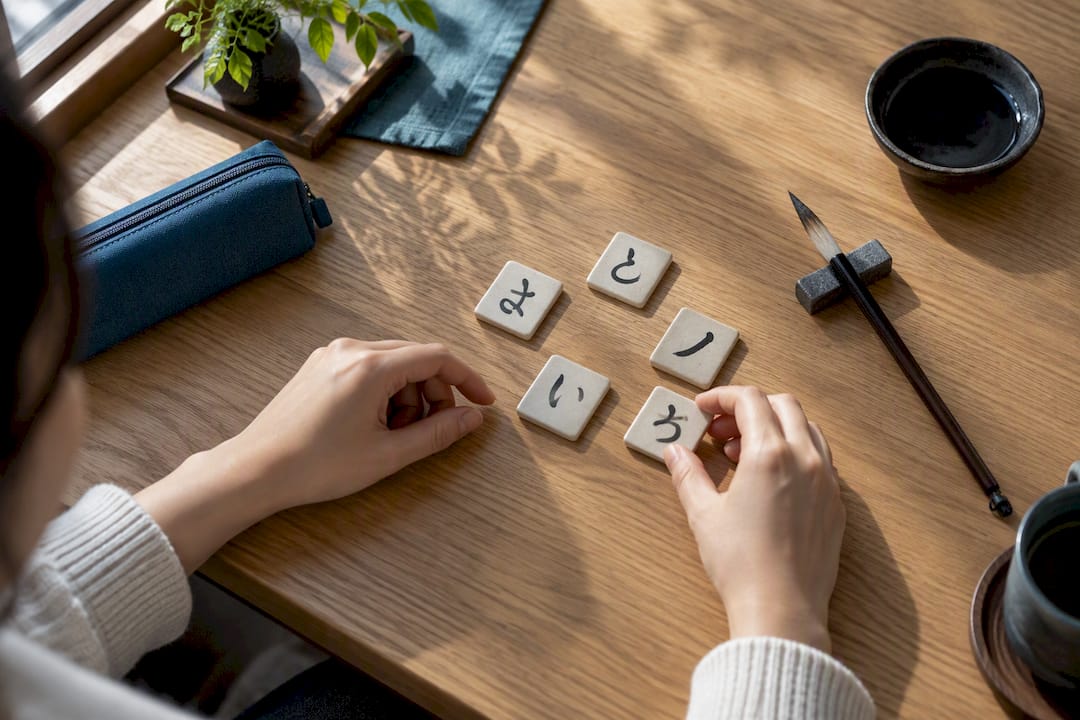
For calls to friends or family, open with “moshi moshi” and stick to plain form. For any business line, skip “moshi moshi” entirely and use a keigo-based opener that names your company and yourself. Memorize the “phone core pack,” a set of fixed phrases for greeting, introducing, confirming, and closing, and romaji versions of each appear below so you can start practicing today.
TL;DR:
- Business phone calls must start with thank-you plus company name and personal names should always be followed by polite expressions such as でございます.
- When asking for someone, use fixed phrases like いらっしゃいますか or 〜さんはいますか, and expect fixed responses for availability or absence, such as ただいま外出しています.
- Leaving messages requires concise communication, including your name, reason for calling, and contact details, avoiding long or rambling messages.
- Practice with scripted call-and-response drills and shadowing exercises to build reflexes for real-time response speed and pitch control.
- Formal and casual call practices should never be mixed, as using casual phrases in a business context or vice versa risks sounding disrespectful or unprofessional.
Table of Contents
- Japanese Phone Call Phrases: The Core Rhythm and Cheat Sheet
- Answering the Phone in Japanese: Casual vs Business Phrases
- How to Introduce Yourself and State Your Reason for Calling
- Asking to Speak to Someone: Transfers and Hold Phrases
- Leaving and Taking Messages, and Requesting a Callback
- Clarifying, Bad Connections, and Aizuchi on the Phone
- Keigo Cheat Sheet for Phone Calls
- Ready-to-Use Mini-Scripts You Can Practice Today
- Practice Drills That Actually Build Phone Confidence
- Cultural Etiquette and Nuances on Japanese Phone Calls
- Handling Misunderstandings and Interruptions Mid-Call
- Personal vs Business Phone Phrases: What Actually Changes
- Why Practicing Phone Phrases Matters
- Keep Building Phone Confidence With Structured Practice
- Sources
- FAQ
Japanese Phone Call Phrases: The Core Rhythm and Cheat Sheet
Nearly every phone conversation in Japanese follows the same five beats: greeting, self-introduction, reason for calling, confirmation, and closing. Business calls swap the casual greeting for a company-name opener, but the underlying phone-call rhythm stays the same whether you’re calling a friend or a client. Once that rhythm is automatic, you stop translating in your head mid-call and start reacting.
Before your next call, glance at these six phrases.
- Casual hello: もしもし (moshi moshi) — “Hello?”
- Business hello: お電話ありがとうございます (odenwa arigatou gozaimasu) — “Thank you for calling.”
- Self-intro: 〜と申します ( to moushimasu) — “My name is…”
- Asking for someone: 〜さんはいらっしゃいますか (san wa irasshaimasu ka) — “Is available?”
- Hold request: 少々お待ちください (shoushou omachi kudasai) — “One moment, please.”
- Closing: 失礼いたします (shitsurei itashimasu) — “Excuse me (goodbye).”
Your choice of register comes down to one question: is the person on the other end someone you’d text casually, or someone you’d bow to in person? That answer decides everything that follows.
Answering the Phone in Japanese: Casual vs Business Phrases
The way you pick up the phone tells the caller everything about the relationship before you’ve said a full sentence.
-
Casual answer at home. A friend calling gets a simple もしもし (moshi moshi), followed by plain form: “もしもし、うん、元気?” (Moshi moshi, un, genki? — “Hello, yeah, how’s it going?”). “Moshi moshi” itself is a phone-specific greeting reserved for personal calls. It never appears on a company line.
-
Business answer, formal company line. Reception staff typically open with a thank-you plus company name, not a greeting word at all: “お電話ありがとうございます、山田商事でございます” (Odenwa arigatou gozaimasu, Yamada Shouji de gozaimasu — “Thank you for calling, this is Yamada Trading”). This “thank-you first” structure is the industry standard for any adult who answers a desk phone.
-
Business answer, giving your own name. If you’re answering directly rather than as a receptionist, follow with your name: “はい、田中でございます” (Hai, Tanaka de gozaimasu — “Yes, this is Tanaka”). The verb でございます (de gozaimasu) is the polite form of “to be,” and it replaces the plain です almost automatically once a call starts.
A short example makes the contrast obvious. Casual: “もしもし?” / “あ、もしもし、久しぶり!” (Hello? / Oh, hello, long time no see!). Business: “お電話ありがとうございます、ABC商事でございます。” / “お世話になっております、田中と申します。” (Thank you for calling, ABC Trading. / Thank you for your continued support, this is Tanaka.) Notice how the business exchange never uses もしもし at all, on either side.
How to Introduce Yourself and State Your Reason for Calling
Once the greeting is out of the way, a business caller is expected to identify their company, then their name, then their role, in that order, before saying a word about why they’re calling. Reversing that order sounds abrupt in Japanese even when it would sound perfectly normal in English.
A dependable template: “お世話になっております。[会社名]の[名前]と申します。” (Osewa ni natte orimasu. no to moushimasu — "Thank you for your continued support. My name is from "). お世話になっております (osewa ni natte orimasu) is close to a verbal handshake. It signals respect before any actual content arrives.
Stating your reason gets its own fixed slots, too:
- 〜の件でお電話しました ( no ken de odenwa shimashita) — "I’m calling regarding "
- 確認のためお電話しました (kakunin no tame odenwa shimashita) — “I’m calling to confirm something.”
- 〜についてご相談したいのですが ( ni tsuite gosoudan shitai no desu ga) — “I’d like to discuss , if you have a moment.”
Swap in your own topic and the sentence works for almost any business call, whether you’re confirming a meeting time or following up on an email that went unanswered.
Asking to Speak to Someone: Transfers and Hold Phrases
Getting to the right person on a Japanese business line usually takes one polite request and one wait. Learn the request, the hold response, and what happens next, and you’ll never freeze on this part of the call again.
To ask for someone: “田中さんはいらっしゃいますか” (Tanaka san wa irasshaimasu ka — “Is Tanaka there?”) or the slightly more direct “田中さんをお願いします” (Tanaka san wo onegaishimasu — “Tanaka, please”).
- If they’re available, you’ll usually hear 少々お待ちください (shoushou omachi kudasai — “One moment, please”) followed by ただいまお繋ぎいたします (tadaima otsunagi itashimasu — “I’ll connect you now”).
- If they’re away from their desk, expect ただいま席を外しております (tadaima seki wo hazushite orimasu — “They’re away from their desk right now”).
- If they’re on another call, listen for 只今他の電話に出ております (tadaima hoka no denwa ni dete orimasu — “They’re currently on another line”).
Each of these receiver-side lines is fixed and rarely improvised, so once you’ve heard them a few times you’ll recognize them instantly, even at natural speaking speed.
Leaving and Taking Messages, and Requesting a Callback
When the person you want isn’t available, the call shifts into message mode. Japanese has its own tidy formulas for this, on both sides of the line.
- Offering to take a message. A receptionist might say ご伝言を承ります (godengon wo uketamawarimasu — “I’ll take a message for you”), a formal use of kenjougo that lowers the speaker’s own action to elevate the listener.
- Leaving your own message. Keep it to three parts: your name, your reason, and your contact number. For example: “田中と申します。契約書の件でお電話しました。折り返しお電話いただけますでしょうか” (Tanaka to moushimasu. Keiyakusho no ken de odenwa shimashita. Orikaeshi odenwa itadakemasu deshou ka — “This is Tanaka. I’m calling about the contract. Could you call me back?”).
- Confirming a callback. The receptionist typically closes with 折り返しご連絡いたします (orikaeshi gorenraku itashimasu — “We’ll get back to you”), which you can simply acknowledge with よろしくお願いいたします (yoroshiku onegai itashimasu).
Keep your message short. A rambling voicemail is harder to relay accurately than a three-line one.
Clarifying, Bad Connections, and Aizuchi on the Phone
Phone calls strip away facial expressions and gestures, so Japanese leans harder on verbal listening cues, called aizuchi, and on graceful ways to ask someone to repeat themselves.
- もう一度お願いします (mou ichido onegaishimasu) — “One more time, please.”
- ゆっくりお願いします (yukkuri onegaishimasu) — “Slowly, please.”
- お電話が遠いようです (odenwa ga tooi you desu) — “The call sounds distant” (a polite way to flag a bad connection without blaming the other person).
- はい / ええ / なるほど (hai / ee / naruhodo) — “Yes / Right / I see,” dropped in every few seconds to show you’re still listening.
Pro Tip: Watch your pitch on “hai.” Said flat, it means “yes, go on.” Said with a rising lilt, it can sound like “sorry, what did you say?” Learners commonly flip these two by accident, which confuses the other speaker mid-sentence.
Keigo Cheat Sheet for Phone Calls
Business calls in Japanese lean on three honorific categories: teineigo (polite, general politeness), sonkeigo (respectful language that elevates the other person’s actions), and kenjougo (humble language that lowers your own actions). On the phone, you’ll hear all three within seconds of picking up, and mixing them up is the single most common learner mistake.
The combination shows up constantly in phrases like いらっしゃいますか (a sonkeigo question about whether someone is present), いたします (a kenjougo verb lowering your own action), and 〜と申します (kenjougo for stating your own name). This trio of keigo forms covers most of what a business call requires.
| Situation | Japanese | Romaji | English |
|---|---|---|---|
| Answering, formal | お電話ありがとうございます | Odenwa arigatou gozaimasu | Thank you for calling |
| Stating your name | 〜と申します | to moushimasu | My name is |
| Asking if someone is in | いらっしゃいますか | Irasshaimasu ka | Is there? |
| Asking someone to wait | 少々お待ちください | Shoushou omachi kudasai | One moment, please |
| Closing a business call | 失礼いたします | Shitsurei itashimasu | Excuse me (goodbye) |
The most common pitfall is applying casual です/ます endings to a formal request, which sounds stiff in the wrong direction, too plain rather than too polite. The fix is simple: default to でございます over です on any call where you don’t already know the person well.
Ready-to-Use Mini-Scripts You Can Practice Today
Reading a script once won’t build fluency. Reading it aloud, shadowing the audio in your head, and repeating it three or four times will. Here are four short scenes worth drilling this week.
- Answering a business call: “お電話ありがとうございます、ABC商事でございます。” (Odenwa arigatou gozaimasu, ABC Shouji de gozaimasu.) — “Thank you for calling, this is ABC Trading.”
- Connecting a caller: “少々お待ちください。ただいまお繋ぎいたします。” (Shoushou omachi kudasai. Tadaima otsunagi itashimasu.) — “One moment. I’ll connect you now.”
- Person away, taking a message: “申し訳ございません、田中はただいま席を外しております。ご伝言を承りましょうか。” (Moushiwake gozaimasen, Tanaka wa tadaima seki wo hazushite orimasu. Godengon wo uketamawarimashou ka.) — “I’m sorry, Tanaka is away from the desk. Shall I take a message?”
- Outbound reservation call: “もしもし、予約をお願いしたいのですが。” (Moshi moshi, yoyaku wo onegaishitai no desu ga.) — “Hello, I’d like to make a reservation.”
Pause half a beat after every comma when you read these aloud. Natural Japanese speech has more built-in breathing room than most textbooks show.
Practice Drills That Actually Build Phone Confidence
Two drills do most of the heavy lifting. Shadowing: play a short script, repeat each line half a second behind the audio, five repetitions per script. Call-response pairs: have a partner (or your teacher) deliver a receiver-side line at random, and you answer within three seconds, no pausing to translate. Structured shadowing and timed call-response practice builds the reflex speed that phone calls demand far faster than flashcards alone.
Three mistakes come up again and again. First, using もしもし at work, swap it for お電話ありがとうございます. Second, closing a business call with a casual じゃあね, use 失礼いたします instead. Third, panicking when you don’t catch a name, that’s what もう一度お願いします is for.
At Japanese Explorer, live role-play built around exactly this kind of call-and-response is baked into our small-group and business Japanese lessons, because decoding fast receiver-side keigo is genuinely one of the hardest listening skills for learners at any level.
Cultural Etiquette and Nuances on Japanese Phone Calls
Japanese phone etiquette carries more unspoken weight than most learners expect. Silence, for one, isn’t awkward the way it can feel in English. A pause of two or three seconds while someone checks a schedule or confirms a name is completely normal, and jumping in to fill it can come across as impatient.
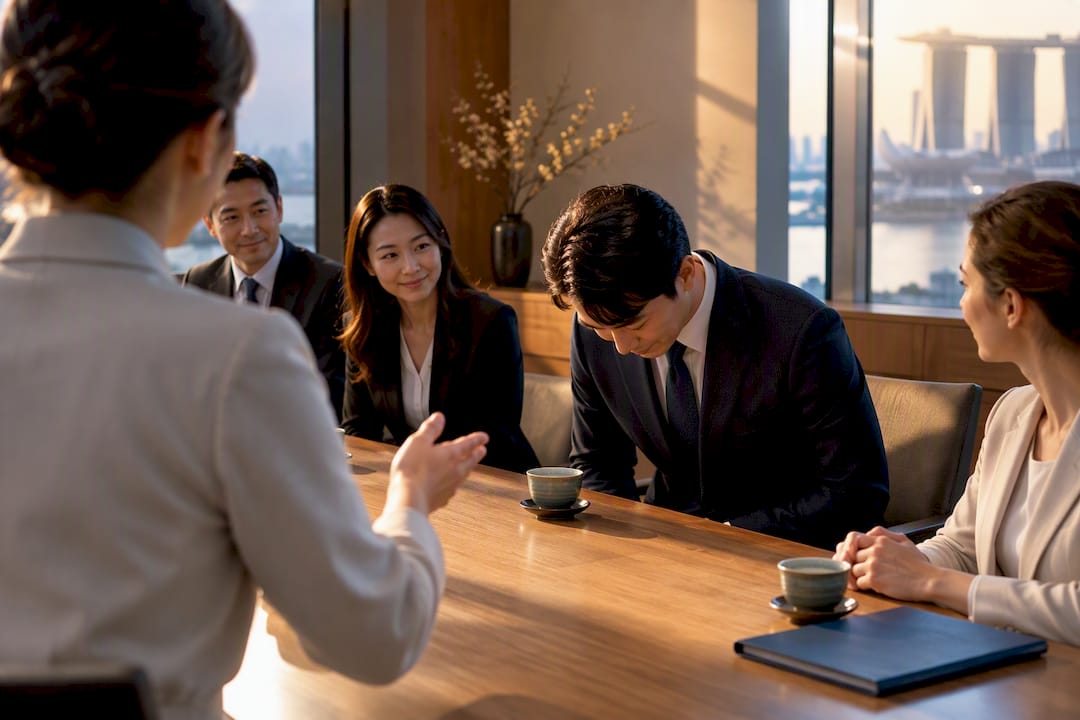
Bowing on the phone is another quirk that surprises newcomer learners. Japanese speakers frequently bow slightly while speaking, even though the other person can’t see it. It’s not performative, it’s muscle memory tied to the politeness register itself, and it often makes the voice sound naturally more deferential.
Timing matters more than in many Western business cultures. Calling a company outside business hours, even five minutes past closing, is generally avoided, and calling a personal contact late in the evening without a prior arrangement can feel intrusive. When in doubt, a quick text asking でんわしてもいいですか (denwa shite mo ii desu ka, “Is it okay if I call?”) smooths the way.
Ending a call also has its own rhythm. Whoever initiated the call is traditionally expected to hang up first, and doing so a beat after the other person finishes speaking, rather than the instant they stop, is read as more considerate. None of this is written down anywhere. It’s absorbed through repeated exposure, which is exactly why scripted practice with a real speaking partner closes the gap faster than passive listening ever will.
Handling Misunderstandings and Interruptions Mid-Call
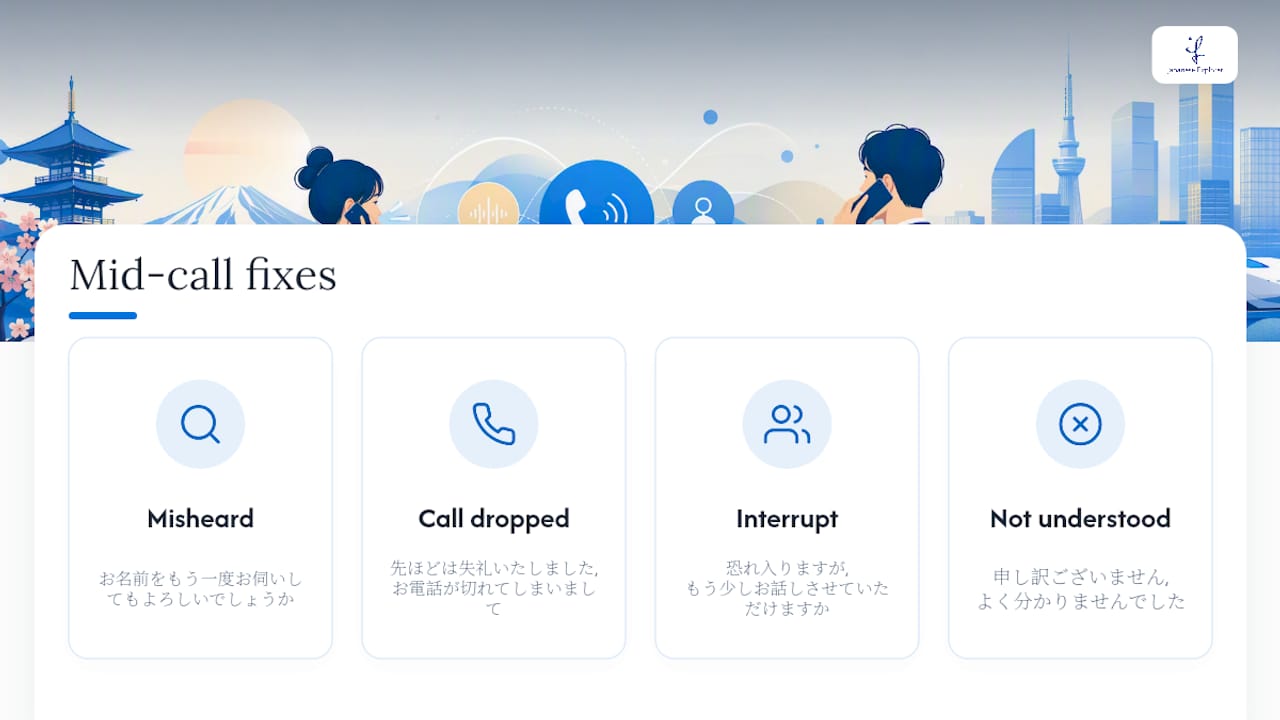
Every phone call eventually goes sideways, a name gets misheard, a line drops, someone talks over the greeting. Japanese has calm, face-saving ways to handle each without sounding flustered.
If you mishear a name or number, don’t guess. Ask directly: お名前をもう一度お伺いしてもよろしいでしょうか (onamae wo mou ichido oukagai shite mo yoroshii deshou ka, “May I ask your name again?”). It’s more formal than もう一度お願いします and better suited to a business context where getting a name wrong matters.
If the call drops entirely, the person who reconnects typically opens with 先ほどは失礼いたしました, お電話が切れてしまいまして (sakihodo wa shitsurei itashimashita, odenwa ga kirete shimaimashite, “Sorry about that, the call disconnected”) rather than any explanation of blame, technical or otherwise. Nobody accuses the network or the other party.
Interruptions get handled with a soft apology rather than a direct “wait, let me finish.” Try 恐れ入りますが, もう少しお話しさせていただけますか (osoreirimasu ga, mou sukoshi ohanashi sasete itadakemasu ka, “I’m sorry, but could I continue for just a moment?”). It buys you space without sounding confrontational.
And if you genuinely don’t understand something even after a repeat, it’s fine to say so plainly: 申し訳ございません, よく分かりませんでした (moushiwake gozaimasen, yoku wakarimasen deshita, “I’m sorry, I didn’t quite understand”). Japanese speakers generally respect directness about comprehension far more than a bluffed “hai, hai” that later causes a bigger mix-up.
Personal vs Business Phone Phrases: What Actually Changes
The gap between a casual call and a business call in Japanese isn’t just vocabulary, it’s a completely different register operating on a different set of rules, and conflating the two is the fastest way to sound off in either direction.
Casual calls run on plain form and contractions. Sentences end in verbs like だよ, じゃん, or plain past tense, and greetings like もしもし, genuinely only belong here. You’d never hear a company receptionist open with it.
Business calls run almost entirely on teineigo, sonkeigo, and kenjougo stacked together, often in the same sentence. The opener changes (thank-you plus company name instead of a hello), the self-introduction changes (company first, name second, always with と申します), and even simple words shift, いる becomes いらっしゃる when talking about someone else, and いたします when talking about your own actions.
Closings diverge just as sharply. A call with a friend might end with じゃあね or またね, quick, informal, no ceremony. A business call closes with 失礼いたします, and skipping it in favor of a casual goodbye reads as genuinely careless in a professional setting, not just informal.
The practical takeaway: don’t try to make one set of phrases stretch across both contexts. Learn the casual pack for friends and family, and learn the business pack as its own separate toolkit, because a phrase that sounds warm and normal to a friend can sound almost rude to a business contact, and vice versa.
Why Practicing Phone Phrases Matters
Phone calls expose gaps that reading and writing hide. There’s no pause button, no kanji to double check, just a voice and half a second to respond. That pressure is exactly why scripted, repeated practice works better than passive study here: the goal isn’t to memorize grammar rules, it’s to build reflexes fast enough for real time. If a short drill or two from this article felt useful, working through them out loud with a teacher who can correct your pitch and timing closes the gap far quicker than practicing alone.
— Paul
Keep Building Phone Confidence With Structured Practice
Reading a phrase list gets you halfway there. Real phone confidence comes from saying these lines out loud, under mild pressure, with someone who can correct your pitch and pacing before a bad habit sets in, and that’s the part self-study genuinely struggles to deliver. Japanese Explorer builds that kind of practice directly into its courses.

If your goal is everyday conversational confidence, our small-group classes include live role-play built around exactly these call-and-response patterns. If phone calls are part of your job, whether client check-ins, vendor calls, or internal transfers, our business Japanese course focuses specifically on keigo and workplace phone etiquette. And if you’d rather practice from home on your own schedule, the online Japanese course delivers the same live drilling over Zoom with a bilingual instructor watching your pitch and timing in real time. Book a class and start turning this phrase list into a reflex.
Sources
For deeper study on the mechanics covered here, Tofugu’s breakdown of “moshi moshi” explains exactly why the greeting is phone-specific and casual-only. FluentU’s guide to casual and formal phone conversation expands on the five-step call rhythm referenced throughout this article. For business keigo specifically, Jepang.org’s phone keigo guide walks through kenjougo and sonkeigo in more depth. To keep practicing beyond phone calls, our guide to polite language and honorific categories is a natural next step.
- Moshi moshi — Tofugu
- Jepang
- Casual and formal phone conversation in Japanese — FluentU
- Making a phone call in Japanese — J-Compass
FAQ
What do Japanese people say when answering a phone call?
Personal calls typically start with もしもし (moshi moshi, “hello”), while business calls open with a thank-you and company name, such as お電話ありがとうございます、[company] でございます.
Is it rude to say “moshi moshi” at work?
Yes, “moshi moshi” is reserved for personal, casual calls, and using it when answering a business line sounds unprofessional; use お電話ありがとうございます instead.
How do I ask someone to repeat themselves politely on the phone?
もう一度お願いします (mou ichido onegaishimasu, “one more time, please”) works for most situations, and お名前をもう一度お伺いしてもよろしいでしょうか is a more formal option for names in business calls.
What’s the correct way to end a formal Japanese phone call?
Business calls close with 失礼いたします (shitsurei itashimasu), a formal “excuse me” that signals the conversation is over; casual calls typically end with じゃあね or またね.
Why does “hai” sound different depending on how it’s said?
Said flat, はい (hai) simply means “yes, continue,” but said with rising intonation it can signal confusion, so learners should practice both tones deliberately to avoid sending the wrong signal mid-call.