TL;DR:
- Japanese honorifics include suffixes expressing respect and social hierarchy, forming the core of everyday communication. Respectful speech, called Keigo, has three types—polite, respectful, and humble—that reflect social positioning and group identity. Using honorifics correctly signals cultural understanding and helps learners transition from tourists to respectful speakers.
Japanese honorifics are suffixes and speech forms that express respect, familiarity, and social hierarchy in communication. They are not optional decorations. They are the structural backbone of how Japanese speakers signal relationships, status, and context in every conversation. Understanding Japanese honorifics means grasping a two-layer system: name suffixes that cover most daily interactions, and Keigo, a parallel grammar system used in formal and professional settings. Whether you are learning Japanese for travel, work, or personal enrichment, getting honorifics right transforms you from a tourist into a respectful communicator.
What are the most common Japanese honorific suffixes?
Name suffixes cover 90–95% of everyday interactions for learners. They attach to a person’s name and instantly signal your relationship with them. Learning these first gives you a strong foundation before tackling anything more complex.
The four suffixes you will encounter most often are:
- -san: The default, gender-neutral suffix for adults and acquaintances. Skipping it is often considered rude. Use it with virtually everyone you meet until invited to do otherwise.
- -chan: An affectionate suffix used with young children, close friends, and pets. Using it with someone you barely know reads as condescending or overly familiar.
- -kun: Typically used for younger males or juniors in a group or workplace. Female superiors sometimes use it for male subordinates, but it is rarely appropriate in the reverse direction.
- -sama: A highly formal suffix reserved for customers, royalty, or people of very high status. You will hear it constantly in customer service settings, where staff address patrons as “okyaku-sama” (honored guest).
The table below summarizes each suffix, its typical usage, and its formality level.
| Suffix | Typical usage | Formality level |
|---|---|---|
| -san | Adults, acquaintances, colleagues | Neutral (standard) |
| -chan | Children, close friends, pets | Casual (affectionate) |
| -kun | Younger males, juniors | Casual to semi-formal |
| -sama | Customers, royalty, high status | Very formal |
| -sensei | Teachers, doctors, experts | Respectful |
Pro Tip: Never assume you can drop to -chan or -kun with someone you just met. Default to -san in every new interaction and wait for the other person to invite a more casual form of address.
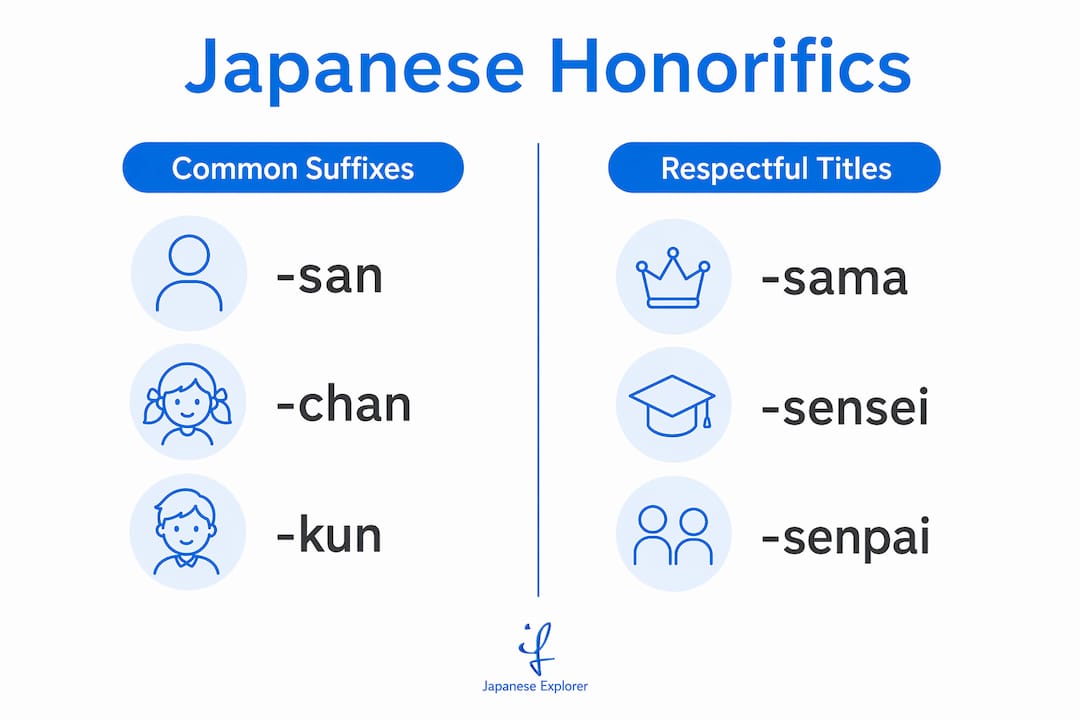
One suffix worth noting separately is -sensei, used for teachers, doctors, and recognized experts. You would address a Japanese language instructor as “Tanaka-sensei,” not “Tanaka-san.” Getting this right signals genuine cultural awareness, not just textbook knowledge.
What is Keigo and how does it structure polite speech in Japanese?
Keigo is a three-part respectful speech system that modifies verbs, vocabulary, and sentence structure to express social hierarchy. It operates as a grammar layer that sits above everyday speech. Suffixes tell people how you feel about them. Keigo tells them exactly where they stand relative to you.
The three types of Keigo work like this:
- Teineigo (polite form): The baseline level of politeness, built around the verb endings “desu” and “masu.” This is what most learners study first. It is appropriate in most public and semi-formal situations.
- Sonkeigo (respectful form): Used to elevate the actions of the person you are speaking to or about. The verb “to eat” becomes “meshiagaru” instead of “taberu” when referring to a customer or superior.
- Kenjougo (humble form): Used to lower your own actions or those of your in-group when speaking to someone of higher status. “To give” becomes “sashiageru” when you are the one giving to a superior.
| Keigo type | Direction | Example verb (to eat) |
|---|---|---|
| Teineigo | Neutral politeness | tabemasu |
| Sonkeigo | Elevates the other person | meshiagaru |
| Kenjougo | Humbles yourself | itadaku |
A fourth element, Bikago, adds refinement through beautifying prefixes. The prefixes “o-” and “go-” attach to nouns to make speech sound more polished. “Gohan” (rice or meal) and “ocha” (tea) are everyday examples. These beautifying prefixes attach based on whether the word has native Japanese or Sino-Japanese origins, and using them correctly makes your speech sound natural rather than mechanical.
One critical mistake to avoid is “nijū keigo,” or double honorifics. This happens when learners stack respectful forms on top of each other, producing speech that sounds unnatural or even unintentionally mocking. Simplicity is the antidote. Use one appropriate form and stop there.
Pro Tip: When you are unsure whether to use sonkeigo or kenjougo, ask yourself: whose action am I describing? If it is yours or your group’s, use kenjougo. If it is theirs, use sonkeigo.
How do cultural concepts influence Japanese honorific usage?
Honorific choice is not just about grammar. It reflects a cultural logic rooted in the concept of uchi-soto, which translates roughly as “inside-outside.” Uchi refers to your in-group: your family, your team, your company. Soto refers to everyone outside that circle.
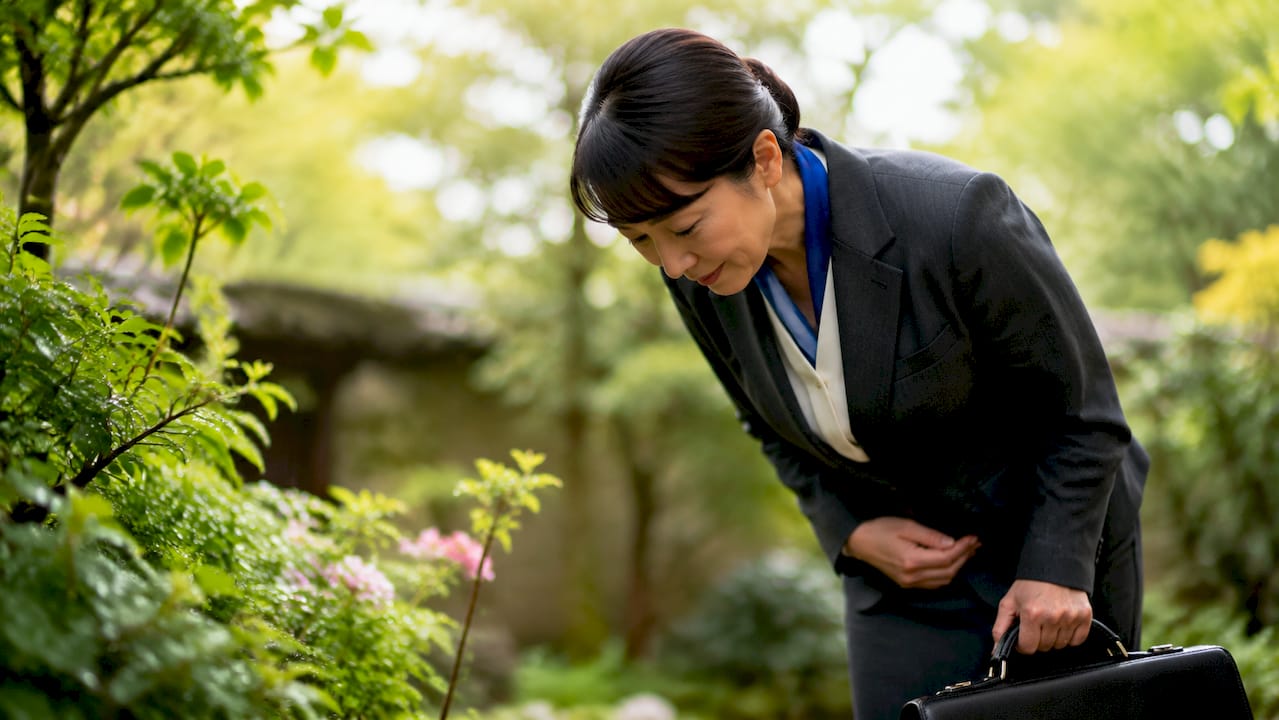
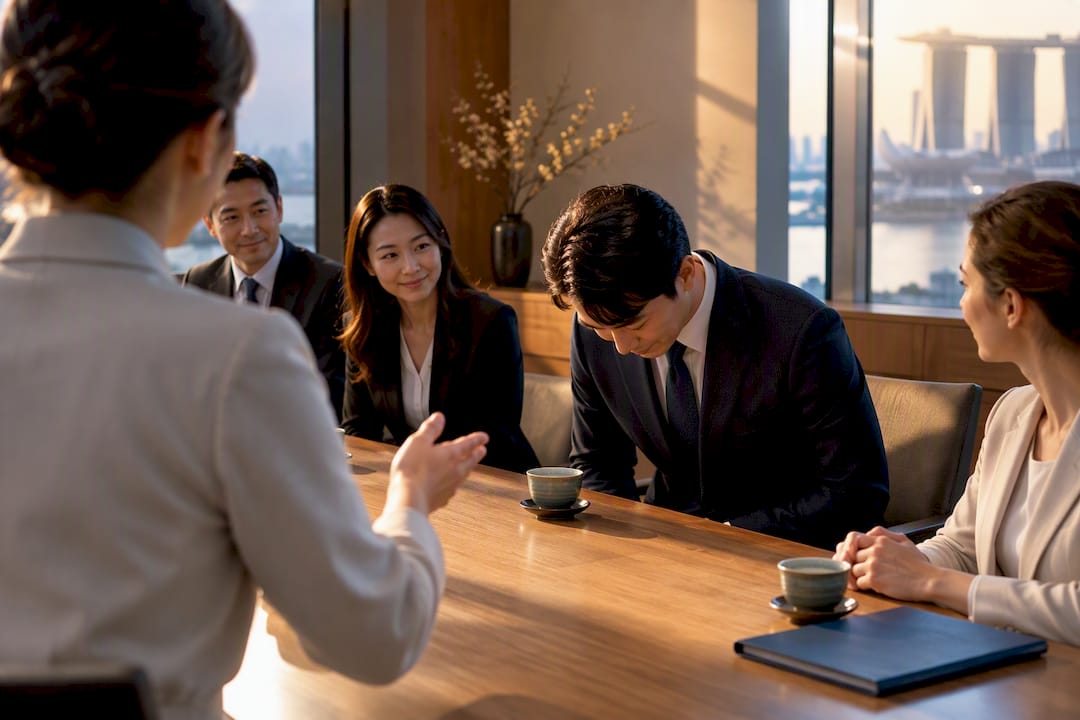
The rule is counterintuitive for many Western learners. When speaking to an outsider about someone in your in-group, you humble your own group, even if that person outranks you internally. A Japanese employee speaking to a client would refer to their own manager with plain, humble language, while using elevated, respectful language for the client. This is not disrespect toward the manager. It is the correct application of uchi-soto logic.
Here is how to apply this in practice:
- Casual setting (A-level): Friends, family, peers. Use plain speech with no Keigo. Suffixes like -chan or -kun are appropriate.
- Neutral-polite setting (B-level): Acquaintances, public interactions, everyday service encounters. Use teineigo with -san suffixes.
- Formal setting (C-level): Business meetings, customer service, official correspondence. Use sonkeigo for others and kenjougo for yourself.
This A/B/C framework gives you a practical tool for choosing the right politeness level without memorizing every possible verb conjugation. Assess the setting first, then select the tier.
The most common cultural pitfall is what instructors call “honorific paralysis.” This is when learners become so anxious about choosing the wrong form that they freeze or avoid speaking altogether. Native Japanese speakers also feel anxiety about Keigo usage. The goal is respectful intent, not grammatical perfection.
Pro Tip: When in doubt, default to B-level teineigo. It is polite enough for almost any situation and rarely causes offense, even if it is not perfectly calibrated.
What practical strategies help learners master Japanese honorifics?
Mastering honorifics is a process, not a one-time memorization task. The most effective approach builds skills in layers, starting with what you will use most.
- Start with suffixes. They cover the vast majority of daily interactions and are easy to apply immediately. Knowing when to use -san versus -sama versus -sensei alone puts you ahead of most beginners.
- Learn teineigo first. The desu/masu verb endings are the foundation of polite speech. Get comfortable with them before adding sonkeigo or kenjougo.
- Apply the A/B/C framework. Rather than memorizing every Keigo verb, identify the social tier of your situation and match your language to it. This approach scales as your vocabulary grows.
- Listen to real Japanese. Anime, dramas, and business podcasts all demonstrate honorifics in context. Notice how characters shift register when moving from casual to formal settings.
- Accept imperfection. Even native speakers find Keigo challenging. Respectful intent and correct core usage matter far more than flawless execution.
Studying polite language in business contexts is especially useful if your goal is professional communication. Business Japanese requires consistent use of sonkeigo and kenjougo, and the stakes for getting it wrong are higher than in casual conversation.
One underrated strategy is to study common speaking mistakes made by learners at your level. Knowing what errors to avoid is just as valuable as knowing what to do correctly.
Pro Tip: Practice honorifics in real conversations, not just exercises. Role-playing a business introduction or a customer service scenario with a teacher gives you feedback that no textbook can replicate.
Key Takeaways
Japanese honorifics form a two-layer system of name suffixes and Keigo speech that governs respect, hierarchy, and social relationships in every Japanese interaction.
| Point | Details |
|---|---|
| Suffixes cover most interactions | -san, -chan, -kun, and -sama handle the majority of daily address situations. |
| Keigo has three distinct types | Teineigo, sonkeigo, and kenjougo each serve a specific directional purpose in polite speech. |
| Uchi-soto logic governs formal use | Humble your in-group and elevate outsiders, even when your own senior is involved. |
| A/B/C framework simplifies choices | Match casual, neutral-polite, or formal tiers to your social setting without memorizing every verb. |
| Respectful intent beats perfection | Even native speakers struggle with Keigo; clarity and genuine respect matter most. |
Why honorifics are about culture, not just grammar
I have worked with hundreds of Japanese language learners over the years, and the pattern is always the same. Learners who treat honorifics as a grammar problem hit a wall. Learners who treat them as a cultural window make real progress.
Here is the uncomfortable truth: you can memorize every sonkeigo verb and still sound wrong. That is because honorifics are not a checklist. They are a live expression of how you perceive your relationship with the person in front of you. When a Japanese speaker hears you use the right form in the right moment, they do not think “good grammar.” They think “this person understands us.”
The uchi-soto concept is the clearest example of this. It feels backwards to Western learners to humble your own boss when speaking to a client. But once you understand that it is about group identity and social positioning, it clicks. You are not insulting your boss. You are showing the client that they are valued.
My honest advice: stop trying to be perfect and start trying to be respectful. Use teineigo as your default. Add sonkeigo when you are clearly in a formal or customer-facing situation. Let kenjougo come naturally as your confidence grows. The Japanese people you speak with will notice your effort long before they notice your mistakes.
— Paul
Learn Japanese honorifics with expert guidance
Honorifics are one of the most rewarding parts of learning Japanese, and they are also one of the areas where good instruction makes the biggest difference.

Japanese Explorer offers small group Japanese classes in Singapore and online Japanese courses that integrate honorific speech, Keigo, and cultural context from the very first lesson. Courses run from beginner to advanced and business levels, taught by certified bilingual instructors who focus on real-world communication. If your goal is professional fluency, the business Japanese program covers sonkeigo and kenjougo in workplace scenarios that mirror actual corporate settings. Classes are available at 10 Anson Road, level 22, International Plaza, Singapore 079903, right above Tanjong Pagar MRT, and online via Zoom.
FAQ
What are Japanese honorifics?
Japanese honorifics are suffixes and speech forms that express respect, familiarity, and social hierarchy. They include name suffixes like -san and -sama, and a formal speech system called Keigo.
What is the most important Japanese honorific suffix?
The suffix -san is the most essential, gender-neutral, and versatile honorific, appropriate in the vast majority of interactions with adults and acquaintances.
What is Keigo in Japanese?
Keigo is a three-part respectful speech system consisting of teineigo (polite), sonkeigo (respectful), and kenjougo (humble) forms that modify verbs and vocabulary to reflect social hierarchy.
What is the uchi-soto rule in Japanese honorifics?
The uchi-soto distinction requires you to use humble language when referring to your own in-group and elevated, respectful language when addressing or referring to outsiders, even in formal workplace settings.
How do I avoid double honorific errors in Japanese?
Avoid stacking multiple respectful verb forms in a single sentence. Use one appropriate Keigo form per verb, and default to teineigo when you are unsure of the correct level.