TL;DR:
- Mastering Japanese business meetings involves understanding the differences between Kaigi for decisions and Uchiawase for planning. Knowing key vocabulary, cultural etiquette, and informal consensus-building strategies is essential for success and trust. Proper preparation, including nemawashi and respectful communication, ensures proposals progress smoothly in Japanese professional settings.
Business meeting Japanese terms are specialized vocabulary and cultural conventions that govern how professionals communicate in Japan’s formal and informal meeting settings. For Singapore professionals working with Japanese partners or clients, knowing terms like Kaigi, Uchiawase, Ninshiki awase, and Ringi is not optional. These words carry meaning that goes far beyond translation. They signal your awareness of hierarchy, process, and respect. Get them right, and you build trust fast. Miss them, and even a well-prepared proposal can stall before it starts.
What are the main types of japanese business meetings?
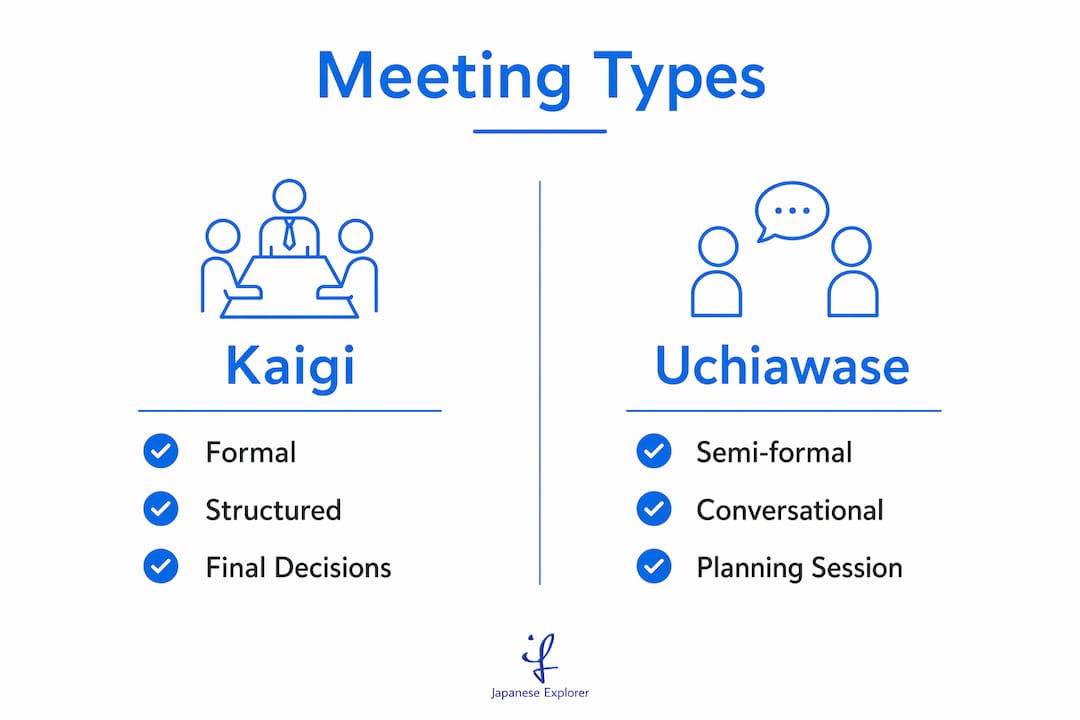
Kaigi is a highly formal, structured meeting used for final decisions, while Uchiawase is a semi-formal planning session used to align expectations before any formal gathering. Understanding this distinction is the single most important thing you can do before entering a Japanese business setting.
Kaigi follows a rigid structure. Attendees arrive prepared, seating reflects rank, and the agenda moves without deviation. Decisions announced in Kaigi are rarely surprises. They are the result of extensive behind-the-scenes work done well before the meeting begins. Think of Kaigi as a ceremonial endorsement where outcomes are rehearsed, not debated.
Uchiawase works differently. It is frequent, conversational, and focused on project groundwork. You use Uchiawase to float ideas, clarify direction, and build the consensus that makes Kaigi run smoothly. Requesting an Uchiawase is a proactive signal that you respect the process and want alignment before committing to anything formal.
Here is how the two meeting types compare:
| Feature | Kaigi | Uchiawase |
|---|---|---|
| Formality level | High, structured | Semi-formal, conversational |
| Primary purpose | Final decisions and announcements | Planning, alignment, and groundwork |
| Language style | Formal keigo (honorific speech) | Polite but more relaxed |
| Typical agenda | Fixed, distributed in advance | Flexible, discussion-driven |
| Who attends | Senior stakeholders, decision-makers | Project team members, direct contacts |
Pro Tip: If you are invited to a Kaigi without having attended a prior Uchiawase on the same topic, ask your contact whether a planning session is needed first. Skipping Uchiawase and going straight to Kaigi is a common mistake that can derail your proposal entirely.
Key japanese business meeting vocabulary you must know
The core of Japanese business vocabulary for meetings centers on a set of terms that appear constantly across industries and company sizes. Knowing these words lets you follow conversations, respond appropriately, and show genuine professionalism.
Here are the must-know terms for conducting meetings in Japanese:
- Gidai (agenda): The list of topics for discussion. Confirming the Gidai before a meeting shows preparation and respect.
- Shiryō (documents or materials): Refers to handouts, reports, or presentations shared during a meeting. Distributing Shiryō in advance is standard practice.
- Sanka shimasu (I will participate): A polite phrase used to confirm your attendance at a meeting.
- Kaigi wo hajimemasu (Let us begin the meeting): The standard phrase to open a formal session.
- Kaigi wo owarimasu (The meeting is now closed): The formal closing phrase used by the meeting chair.
- Ninshiki awase (aligning understanding): Used to confirm that all parties share the same interpretation of a situation or decision.
- Ringi (formal internal approval): A structured process where a proposal circulates through the organization for sign-off before implementation.
- Mochikaeru (to take back for review): A polite way to say you need more time to consider a request. Using Mochikaeru saves face when immediate commitment is not possible.
- Gijiroku (meeting minutes): The written record of decisions and discussions. Distributing Gijiroku after a meeting is expected.
- Keigo (honorific language): The formal speech register used in all professional settings. Mastering even basic Keigo signals serious intent.
- Hai (yes or acknowledgment): Commonly misread as agreement. In meetings, it often means “I hear you” rather than “I agree.”
- Shōchi shimashita (understood and accepted): A stronger phrase than Hai, used to confirm genuine agreement.
Pro Tip: Learn to distinguish between Hai and Shōchi shimashita early. Treating every Hai as a confirmed yes is one of the most common sources of misalignment between foreign and Japanese teams. Check out these essential business phrases to build your foundation.
How does japanese business etiquette shape meeting language?
Cultural behavior and language are inseparable in Japanese meetings. The way you sit, when you speak, and how you respond all carry meaning that words alone cannot convey.
Nemawashi is the informal consensus-building process that happens before any formal meeting. It involves speaking with stakeholders individually to gauge support and address concerns quietly. Failure to do nemawashi typically results in stalled or rejected proposals during Kaigi. Singapore professionals who skip this step often find that their Japanese counterparts seem unexpectedly resistant in formal settings, even when earlier conversations felt positive.
Seating hierarchy is rigid in Japanese meetings. The most senior person sits farthest from the door, a position called Kamiza. Junior members and those in service roles sit closest to the door, in the Shimozeki position. Sitting in the wrong seat is not a minor slip. It signals a misunderstanding of rank and can create social discomfort that lingers through the entire meeting.
Aizuchi are the small verbal acknowledgments, such as “hai,” “sō desu ne,” and “naruhodo,” that Japanese speakers use throughout a conversation. They signal active listening, not agreement. Misreading Aizuchi as approval has caused real project misalignment for many foreign teams. Always follow up with a direct confirmation phrase before assuming a decision has been made.
Silence in Japanese meetings signals thoughtful processing and respect, not disengagement. Interrupting a pause is considered rude. Give your Japanese counterparts time to reflect before responding. This is especially true after presenting a new idea or a complex proposal.
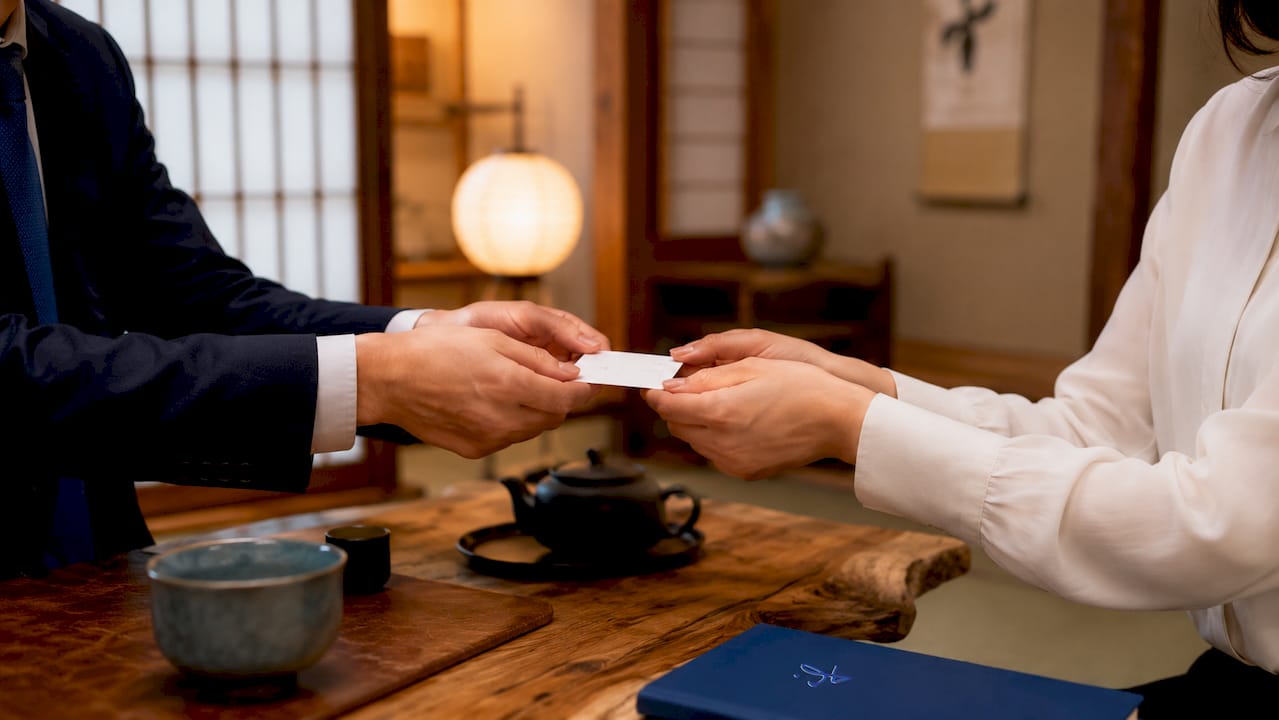
Business card exchange, known as meishi kōkan, sets the tone for the entire meeting. Present your card with both hands, Japanese side facing the recipient. Receive cards with both hands and take a moment to read them carefully before placing them respectfully on the table. Stuffing a card into your pocket immediately is a serious breach of etiquette.
Pro Tip: Before your first meeting with a Japanese partner, research their company hierarchy. Knowing who holds seniority helps you direct your Nemawashi conversations to the right people and seat yourself correctly without hesitation.
How to prepare for japanese meetings using the right terms
Preparation for a Japanese business meeting starts well before the meeting itself. The language you use in the lead-up is just as important as what you say in the room.
-
Request an Uchiawase first. Contact your Japanese counterpart and ask to schedule a planning session before any formal Kaigi. Use the phrase “Uchiawase wo onegai dekimasu ka?” to make this request politely. This signals that you value alignment and are not rushing toward a decision.
-
Confirm the Gidai in advance. Send a written agenda and ask for confirmation using “Gidai wo go-kakunin itadakemasu ka?” Distributing the agenda early gives all parties time to prepare and avoids surprises during the meeting.
-
Prepare your Shiryō carefully. All materials should be clean, well-organized, and ideally available in both English and Japanese. Handing out polished documents reinforces your credibility before you say a word.
-
Practice your opening and closing phrases. Memorize “Kaigi wo hajimemasu” and “Kaigi wo owarimasu” so you can use them naturally. These phrases frame the meeting and show you understand its structure.
-
Know when to use Mochikaeru. If a question arises that you cannot answer immediately, say “Mochikaeru hitsuyō ga arimasu” to indicate you need to review the matter internally. This is far better than guessing or giving a vague response.
-
Take notes and distribute Gijiroku after the meeting. Following up with meeting minutes shows engagement and professionalism. Send them within 24 hours and use polite language throughout.
-
Role-play common scenarios before the meeting. Practice the full arc of a meeting, from the meishi kōkan at the start to the closing phrases at the end. You can find structured practice resources through polite business language guides designed for professional contexts.
Pro Tip: Record yourself practicing meeting phrases and play them back. Hearing your own pronunciation and pacing helps you catch errors that reading alone will not reveal. Even five minutes of daily practice before a major meeting makes a measurable difference.
Key takeaways
Mastering business meeting Japanese terms requires equal command of vocabulary, cultural protocol, and the informal consensus-building that happens before any formal session begins.
| Point | Details |
|---|---|
| Know your meeting types | Kaigi is for final decisions; Uchiawase is for planning and alignment before Kaigi. |
| Learn core vocabulary | Terms like Gidai, Mochikaeru, Ringi, and Gijiroku appear in nearly every professional meeting. |
| Read Aizuchi correctly | “Hai” signals active listening, not agreement. Always confirm with Shōchi shimashita. |
| Do nemawashi first | Build informal consensus before Kaigi to prevent proposals from stalling in formal settings. |
| Respect seating and card etiquette | Kamiza and Shimozeki seating, plus proper meishi kōkan, set the tone for the entire meeting. |
Why language and culture must be learned together
I have worked with many Singapore professionals preparing for their first serious engagement with Japanese business partners, and the pattern I see most often is the same. They prepare the vocabulary. They study the phrases. Then they walk into a Kaigi, hear a room full of “hai” responses, and leave convinced the meeting went well. Two weeks later, nothing moves forward.
The vocabulary is not the hard part. The hard part is understanding that Japanese meetings are not forums for debate. They are, as meeting culture research consistently shows, ceremonial spaces where decisions are endorsed after the real work has already been done informally. If you have not done your nemawashi, no amount of polished Keigo will save your proposal in the room.
What I tell every professional I work with is this: treat the language and the culture as one subject, not two. The word Mochikaeru is not just a phrase to memorize. It is a cultural tool for preserving relationships when you are not ready to commit. Aizuchi is not just a listening habit. It is a signal system that requires you to ask follow-up questions rather than assume agreement. Every term in Japanese business communication carries a behavioral expectation behind it.
The professionals who succeed in Japanese business settings are not always the most fluent. They are the ones who understand why the language works the way it does. That understanding comes from structured learning combined with real exposure to Japanese communication style, not from a vocabulary list alone.
— Paul
Build your japanese business skills with japanese explorer
If you are preparing for meetings with Japanese partners or clients, structured learning makes all the difference. Japanese Explorer offers business Japanese courses in Singapore designed specifically for working professionals who need practical communication skills, not just grammar drills.

Classes are available in small group, private, and online formats, so you can fit learning around your schedule. The curriculum covers real meeting scenarios, keigo usage, and cultural etiquette alongside core vocabulary. Japanese Explorer’s instructors are bilingual and certified, with experience teaching professionals across industries. The school is located at 10 Anson Road, Level 22, International Plaza, Singapore 079903, right above Tanjong Pagar MRT. Whether you are preparing for your first Kaigi or looking to sharpen your Uchiawase skills, there is a course format that fits where you are right now.
FAQ
What is the difference between kaigi and uchiawase?
Kaigi is a formal, structured meeting used for final decisions, while Uchiawase is an informal planning session used to build alignment before Kaigi. Skipping Uchiawase and going straight to Kaigi is a common mistake that often causes proposals to stall.
What does mochikaeru mean in a japanese business meeting?
Mochikaeru means taking a matter back for internal review before giving a response. It is a polite and face-saving phrase used when immediate commitment is not possible.
Does “hai” always mean yes in japanese meetings?
No. In Japanese meetings, “hai” typically signals active listening rather than agreement. To confirm genuine acceptance, listen for “Shōchi shimashita,” which means the matter is understood and agreed upon.
What is nemawashi and why does it matter?
Nemawashi is the informal process of building consensus with stakeholders before a formal meeting. Proposals that skip nemawashi frequently fail in Kaigi because key decision-makers have not been consulted in advance.
How should you exchange business cards in a japanese meeting?
Present and receive business cards with both hands, take a moment to read the card carefully, and place it respectfully on the table in front of you. Treating a card carelessly signals disrespect and can affect the tone of the entire meeting.