TL;DR:
- Japanese culture deeply intertwines with language, reflecting social values like harmony, effort, and acceptance.
- Studying regional dialects, customs, and history alongside language proficiency fosters authentic cultural understanding.
- Immersive methods such as media, community events, and observation accelerate learning and cultural fluency.
Japanese culture is defined by a set of deeply interwoven social values, communication norms, and historical traditions that cannot be separated from the language itself. If you are looking for a practical guide to studying Japanese culture, the most important thing to understand upfront is this: language and culture are not two separate subjects. They are the same subject, studied from different angles. At Japanese Explorer, we see this every day with adult learners who discover that once they understand the why behind Japanese customs, the language clicks into place far faster.
Why a guide to studying Japanese culture starts with language
The connection between Japanese language and culture is not symbolic. It is structural. Politeness levels shape grammar and speech choices in ways that have no direct equivalent in English. When you speak to a senior colleague, a stranger, or a close friend in Japanese, you are not just choosing different words. You are using entirely different verb forms, sentence endings, and even vocabulary sets. Getting this wrong does not just sound awkward. It signals a misunderstanding of the social relationship itself.
Three cultural concepts sit at the heart of this connection:
- Wa (和): The value of group harmony. This is why Japanese communication tends to be indirect. Saying “no” bluntly disrupts wa, so speakers use softened refusals, silence, or deflection instead.
- Ganbaru (頑張る): The ethic of persistent effort. This concept shows up constantly in everyday encouragement and explains why Japanese colleagues rarely admit defeat or ask for help early.
- Shouganai (しょうがない): Acceptance of what cannot be changed. This phrase appears in daily conversation and reflects a cultural attitude toward setbacks that shapes how people respond to problems at work and in life.
Understanding cultural context helps learners stop memorizing rules and start speaking naturally. When you know that indirectness protects group harmony, you stop trying to find the “direct translation” and start reading the situation instead.
Pro Tip: When you encounter a Japanese phrase that seems unnecessarily complex or roundabout, ask yourself what social value it is protecting. Nine times out of ten, the answer is wa.
What cultural themes and regional diversity should your study plan include?
A common mistake in Japanese cultural studies is treating Japan as a single, uniform culture. Regional diversity is significant, and older generations in particular use distinct dialects and accents that can make communication genuinely difficult even for fluent speakers. Osaka dialect (Kansai-ben) sounds and feels different from Tokyo standard Japanese. Kyoto speech carries its own formality markers. Okinawan cultural identity has distinct historical roots that set it apart from mainland Japan entirely.
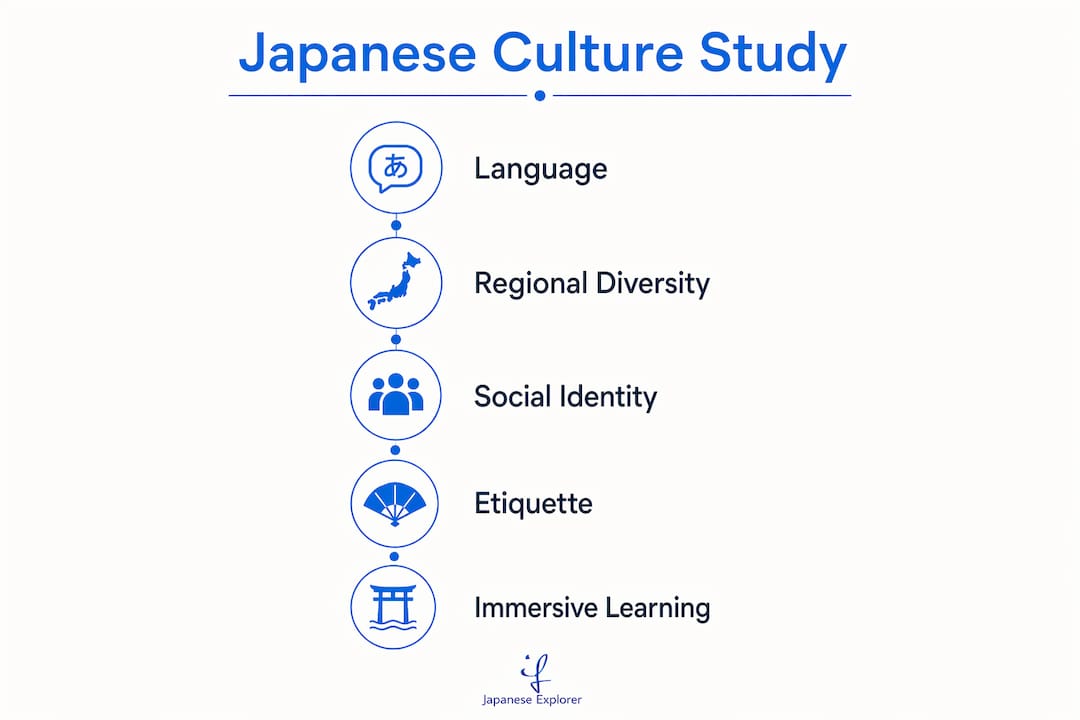
Your study plan should cover both the national cultural framework and regional variation. Here is a practical way to structure it:
| Cultural theme | What to study |
|---|---|
| Social group identity | How belonging to a school, company, or region shapes self-expression and loyalty |
| Regional dialects | Kansai-ben, Tohoku dialect, and how regional speech signals identity and age |
| Seasonal customs | How climate and the four seasons shape food, clothing, festivals, and language |
| Historical context | The Meiji Restoration, postwar reconstruction, and how they shaped modern values |
| National vs. local norms | Where Tokyo “standard” culture ends and regional pride begins |
Avoiding cultural overgeneralization is one of the most important skills a serious student of Japan can develop. When you study regional examples alongside national norms, you build a much more accurate and respectful picture of the country.
A few additional themes worth including in any Japanese culture for beginners study plan:
- The concept of uchi (in-group) versus soto (out-group) and how it governs what people share, say, and show
- The role of gift-giving (omiyage culture) as a social obligation and relationship maintenance tool
- How age and seniority (senpai/kohai) structure relationships in schools, workplaces, and social groups
What are the best methods for immersive cultural learning?
Combining structured media, events, communities, and history is the most effective approach to learning Japanese culture beyond a textbook. Each method builds a different layer of understanding, and together they create the kind of depth that makes cultural knowledge stick.
Here is a step-by-step immersion plan you can start this week:
-
Watch Japanese media with subtitles first, then without. Start with Japanese dramas, variety shows, or anime using English subtitles to absorb context. Then rewatch the same episode without subtitles and focus on tone, body language, and social dynamics. You will notice things the subtitles never captured. Japanese Explorer’s guide on integrating media into learning covers this method in detail.
-
Read cultural articles and scenario-based content. Platforms like NHK World and Talkpal offer short cultural explainers paired with language exercises. Reading about a topic like hanami (cherry blossom viewing) in Japanese, even at a basic level, connects vocabulary to lived cultural meaning.
-
Attend local Japanese cultural events. Singapore hosts regular Japanese festivals, cultural fairs, and community events through organizations like the Japan Creative Centre. These are not tourist experiences. They are genuine opportunities to observe social behavior, hear natural speech, and practice greetings in context.
-
Join a Japanese language or cultural study group. Online communities on platforms like HelloTalk and Tandem connect you with native speakers who can answer cultural questions in real time. Tutors provide essential cultural context that no app or textbook can replicate, especially for politeness levels and indirect communication.
-
Study one historical period in depth. Pick the Edo period, the Meiji era, or postwar Japan and read about it specifically. History explains why modern Japan values punctuality, group loyalty, and craftsmanship the way it does. Structured cultural study builds interpretation skills rather than just a checklist of facts and festivals.
How do you learn Japanese etiquette through observation and practice?
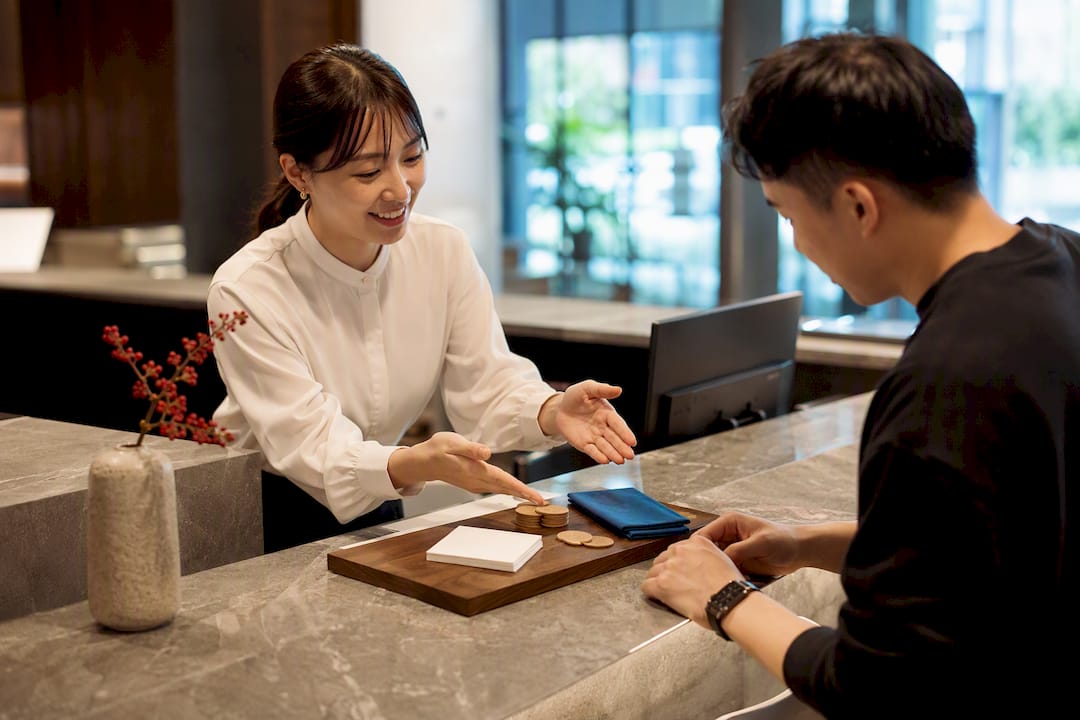
Japanese etiquette is best learned through behavior, not memorization. Starting with basic greetings and observing rituals at temples and shrines gives you an immediate, respectful entry point into cultural practice. You do not need to understand every nuance on day one. You need to watch carefully and follow thoughtfully.
The core etiquette areas every learner should study are:
- Greetings and bowing: The depth of a bow communicates the level of respect. A 15-degree nod works for casual acknowledgment. A 30-degree bow is standard for business or formal situations. A 45-degree bow signals deep apology or gratitude. Timing matters too. Bowing while speaking dilutes both the words and the gesture. Japanese Explorer’s resource on essential Japanese greetings is a good starting point for getting this right.
- Gift-giving: Gifts are presented with both hands and a modest verbal disclaimer, such as tsumaranai mono desu ga (“this is a humble thing, but…”). Unwrapping a gift immediately in front of the giver is generally avoided. The ritual matters as much as the gift itself.
- Public transportation: Orderly queuing, silence, and giving up priority seats are non-negotiable social norms on Japanese trains and buses. Phone calls are avoided. Eating on local trains is frowned upon. These behaviors reflect a core value: do not burden others.
- Shrine and temple visits: Washing hands at the temizuya and following bowing sequences are best learned by watching locals first, then imitating carefully. Asking a local guide or instructor to explain the sequence afterward deepens understanding significantly.
National Geographic recommends a “watch, mirror, ask lightly” approach for mastering Japanese rituals. Observe the behavior. Replicate it as closely as you can. Then, if you are uncertain, ask a trusted Japanese friend or instructor for gentle clarification. This method respects the social environment while accelerating your learning.
Pro Tip: Focus on the behavioral goal behind each rule, not just the rule itself. On public transport, the goal is not to follow a list of dos and don’ts. The goal is to avoid burdening the people around you. Once you internalize that goal, most of the right behaviors follow naturally.
Key takeaways
Studying Japanese culture effectively requires integrating language, etiquette, regional awareness, and immersive practice into a single, connected approach rather than treating each as a separate subject.
| Point | Details |
|---|---|
| Language and culture are inseparable | Politeness levels and indirect speech reflect core social values like wa and ganbaru. |
| Regional diversity matters | Japan’s dialects and local customs vary significantly; avoid treating Tokyo as the whole picture. |
| Immersive methods accelerate learning | Combining media, events, tutors, and community participation builds real cultural fluency. |
| Etiquette is behavioral, not rule-based | Understanding the social goal behind each custom helps you adapt naturally in new situations. |
| Observation before imitation | Watch locals carefully at temples, on transport, and in social settings before practicing yourself. |
Why patience is the real skill in Japanese cultural study
I have worked with hundreds of adult learners who come in expecting Japanese culture to be a checklist. Learn the bow angles. Memorize the gift-giving phrases. Watch a few episodes of a drama. Done. What surprises almost all of them is how long it takes to move from knowing the rules to actually feeling comfortable inside them.
The hardest part is not the etiquette. It is the indirect communication. Japanese speakers often signal disagreement, discomfort, or refusal through silence, topic changes, or vague affirmations like sou desu ne. Learners trained in direct Western communication styles spend months misreading these signals. I have seen fluent speakers walk away from conversations convinced they had agreement when the other person had been declining politely the entire time.
What actually works is combining historical study with daily practice. When you understand why Japan developed its indirect communication style, rooted in centuries of group-oriented social structure, you stop fighting it and start reading it. Regional study helps too. A learner who has spent time understanding Osaka’s more direct, humor-forward communication style and Kyoto’s famously layered politeness will have a far more nuanced picture of Japan than someone who studied only standard Tokyo Japanese.
My honest advice: give yourself permission to be a long-term student of Japan. The culture rewards patience, observation, and genuine curiosity. The learners who get the most out of it are not the ones who rush to fluency. They are the ones who stay curious long after they stop making obvious mistakes.
— Paul
Start learning Japanese culture with the right support
If you are ready to move beyond surface-level cultural knowledge, structured language learning is the fastest path forward. Japanese Explorer offers small group Japanese classes in Singapore that integrate cultural context into every lesson, taught by experienced bilingual instructors who bring real-world examples into the classroom. For learners who prefer flexibility, the online Japanese course delivers the same cultural depth through live Zoom sessions you can join from anywhere.

Whether you are a complete beginner or an intermediate learner looking to sharpen your cultural understanding, Japanese Explorer’s adult courses cover conversational Japanese, business communication, and corporate training. The school is located at 10 Anson Road, Level 22, International Plaza, Singapore 079903, right above Tanjong Pagar MRT. Reach out today and take the first real step toward authentic cultural fluency.
FAQ
What is Japanese culture, and why is it hard to study?
Japanese culture is a system of social values, communication norms, and historical traditions that govern daily life, relationships, and language use. It is challenging to study because many of its most important rules are unspoken and expressed through behavior rather than direct instruction.
How do language and culture connect in Japanese?
Social rules shape grammar and vocabulary in Japanese, meaning that politeness levels, verb forms, and sentence endings all change depending on your relationship with the person you are speaking to. Learning the language without the cultural context leads to technically correct but socially inappropriate speech.
What are the best resources for exploring Japanese traditions?
A combination of Japanese media, cultural events, online communities like HelloTalk, and working with a native Japanese tutor gives you the broadest exposure. Structured courses that integrate cultural context, like those at Japanese Explorer, accelerate the process significantly.
How do I learn Japanese etiquette without making mistakes?
National Geographic’s watch, mirror, ask approach is the most reliable method. Observe locals carefully, replicate their behavior as closely as possible, and ask a trusted instructor or Japanese friend for clarification when you are unsure.
Do I need to visit Japan to study its culture effectively?
No. Singapore offers Japanese cultural events, language schools, and active Japanese communities that provide genuine immersive experiences. Combining local resources with Japanese media, online classes, and structured language study builds strong cultural understanding without requiring travel.