TL;DR:
- Reading is the primary driver of vocabulary, grammar, and kanji recognition in Japanese learning.
- Consistent extensive reading using graded materials and enjoyable content accelerates fluency and cultural understanding.
Reading is the single skill that unlocks every other dimension of Japanese proficiency, from kanji recognition to natural grammar acquisition. Most adult learners underestimate how central reading is until they hit a plateau in speaking or listening and realize their vocabulary base is too thin to carry them further. Resources like NHK Web Easy and Tadoku graded readers exist precisely because the research is clear: volume of reading and comprehension level are the two biggest drivers of long-term Japanese fluency. This guide breaks down what the science says, which methods actually work, and how to build a reading habit that fits your life at any stage of learning.
What the role of reading in Japanese learning really means for your progress
Reading is not a passive skill you develop after mastering speaking. It is the primary engine of vocabulary growth, grammar internalization, and kanji recognition in Japanese. Jeon and Day’s meta-analysis covering 49 studies found consistent positive effects of extensive reading on comprehension, vocabulary, and fluency across language learners. That breadth of evidence is significant. It means reading’s benefits are not limited to one learner type or one language level.
The concept behind this research is called Extensive Reading, a term from second-language acquisition (SLA) research that describes reading large volumes of comprehensible, self-chosen material for meaning rather than analysis. Nation’s Four Strands framework, one of the most cited models in SLA, places meaning-focused input (which includes reading) as one of four equal pillars of language development alongside output, fluency practice, and deliberate study. Meaning-focused input through reading drives incidental acquisition of grammar and vocabulary, meaning you absorb patterns without consciously studying them.
Japanese adds a layer of complexity that makes reading even more critical. The writing system combines hiragana, katakana, and kanji, and you cannot develop kanji recognition through listening or speaking alone. Every sentence you read reinforces character shapes, readings, and meanings in context. That contextual reinforcement is something no flashcard app fully replicates.
“Reading in Japanese is not just one skill among many. It is the connective tissue that holds vocabulary, grammar, and kanji together into a functioning whole.”
The importance of reading in Japanese also extends to cultural comprehension. Written Japanese carries register, politeness levels, and cultural references that spoken conversation often glosses over. Learners who read regularly develop a richer, more nuanced understanding of how the language actually works.
How Tadoku and graded reading make Japanese reading accessible
The Tadoku method is the most practical framework for adult Japanese learners who want to build a reading habit without burning out. Tadoku promotes self-selected, easy reading to build natural Japanese reading skills without reliance on translation. The core principle is simple: read a lot, read easy, and never stop to translate every word.
Here is how to apply the Tadoku approach step by step:
- Start at Level 0 or Level 1 graded readers. These books use picture support, furigana (small hiragana above kanji), and limited vocabulary. They feel almost too easy, and that is the point.
- Read for meaning, not perfection. If you understand the general story, keep moving. Stopping to look up every unknown word turns extensive reading into intensive study, which is a different and slower process.
- Track your reading volume. Tadoku learners often count pages or characters read per month. Tracking creates momentum and makes progress visible.
- Join a reading community. The Japanese Tadoku NPO runs free community reading events and book clubs, including sessions in 2026. These reduce decision fatigue and normalize daily reading as a social habit.
- Progress gradually. Move to the next level only when the current level feels genuinely comfortable, not just manageable.
The Tadoku approach works because enjoyment sustains volume, and volume is what produces results. Learners who read materials they find interesting read more pages per week than those grinding through textbook passages. More pages mean more exposure to vocabulary, grammar, and kanji in natural context.
Pro Tip: If you find yourself reaching for a dictionary more than once every two pages, the material is too difficult. Drop down a level. Comprehensibility beats challenge every time in extensive reading.
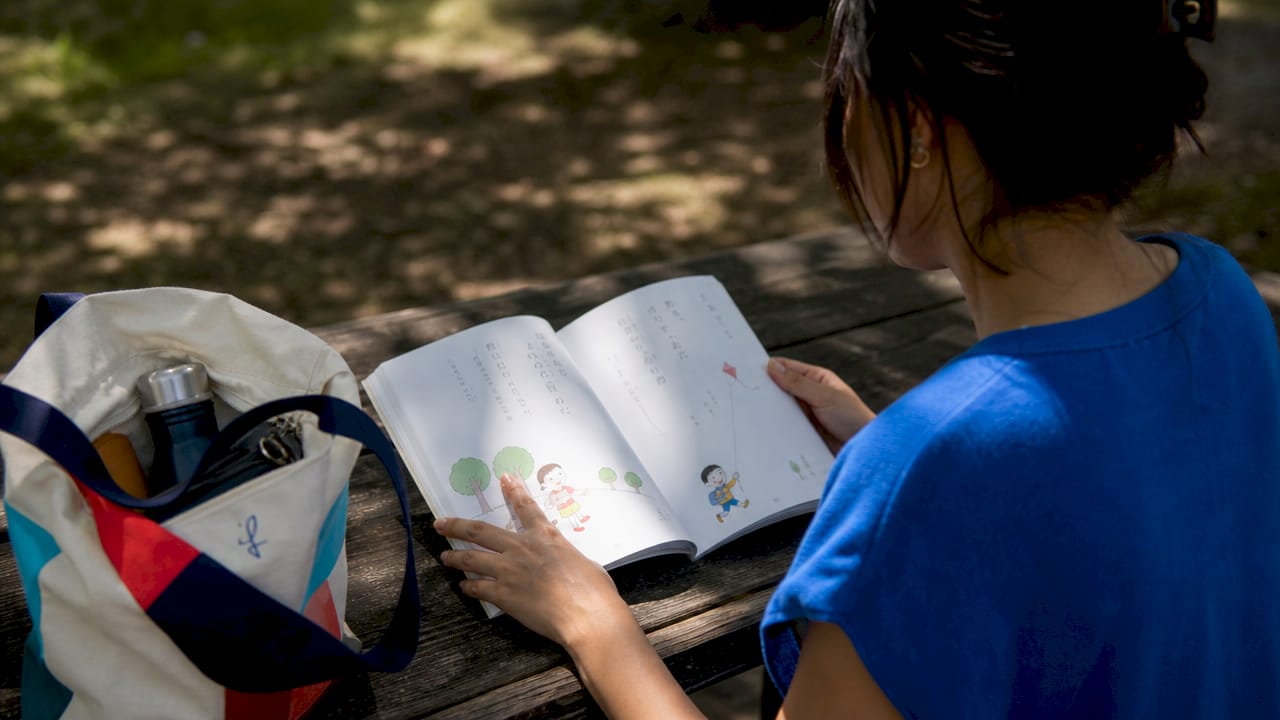
Graded readers from publishers like Ask Publishing and White Rabbit Press are widely used alongside Tadoku materials. Manga with furigana, such as Yotsubato!, also serves as an excellent bridge between graded readers and native content. The key is matching the material to your current level, not to where you want to be.
Common challenges in Japanese reading and how to solve them
The biggest obstacle most learners face is choosing texts that are too difficult. When a text contains too many unknown words, you shift from extensive reading into intensive reading, which means stopping constantly to analyze grammar and look up vocabulary. Experts recommend targeting materials where you already know 95 to 98 percent of the vocabulary. At that coverage level, you can infer unknown words from context and keep reading fluently.
Here are the most common reading pitfalls and their solutions:
- Jumping to native materials too early. Native novels, news articles, and social media posts are written for fluent speakers. Attempting them at N4 or N3 level creates frustration, not progress. Use NHK Web Easy, which rewrites current news in simplified Japanese with furigana, as a stepping stone.
- Relying on flashcards for kanji instead of reading. Kanji recognition builds better through repeated exposure in context than through isolated flashcard drilling. Reading sentences that contain kanji reinforces both the character and its meaning simultaneously.
- Reading in long, infrequent sessions. Daily short sessions of around five minutes with suitable materials are more effective and sustainable than hour-long weekend cramming. Consistent daily exposure keeps language patterns fresh in memory.
- Avoiding reading until speaking feels solid. Many learners delay reading because they feel they need to “earn” it. This slows overall progress. Starting reading early with comprehension-appropriate materials accelerates grammar acquisition by reinforcing patterns in context.
Pro Tip: Set a five-minute reading timer each morning before you check your phone. Pair it with a cup of coffee and a Level 1 graded reader. The habit forms faster when it attaches to an existing routine.
You can also explore how manga and light novels fit into a reading-based study plan, since visual context in manga makes comprehension easier and keeps motivation high.
How to integrate reading into your Japanese routine at every level
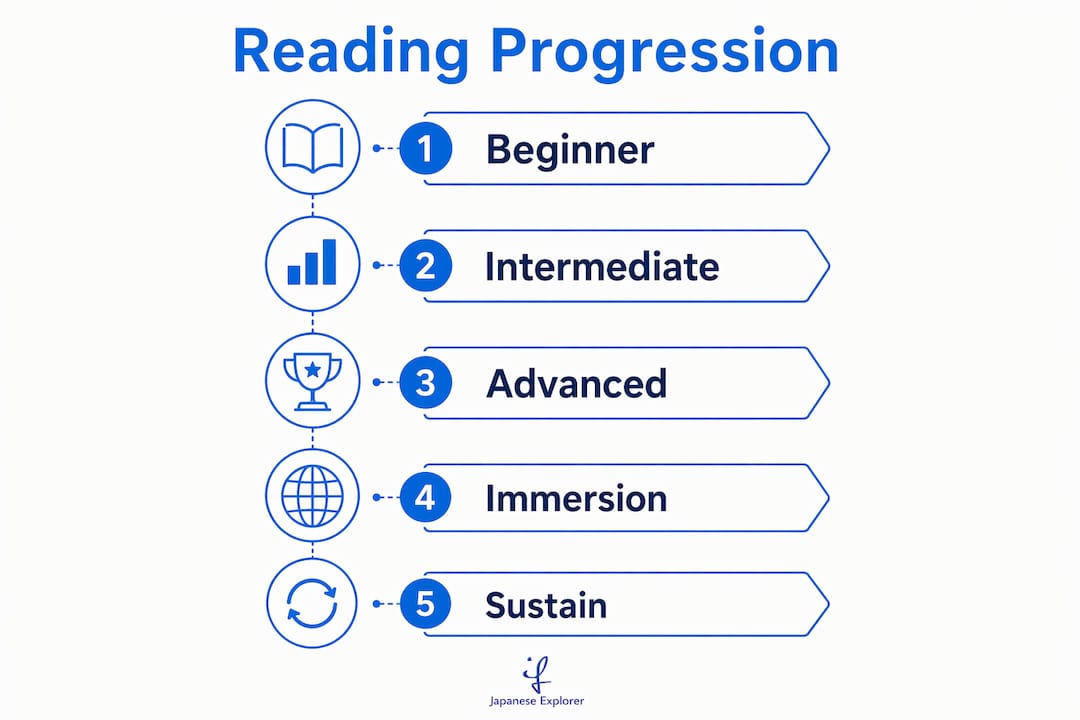
Reading strategies for Japanese learners need to shift as proficiency grows. The table below maps the right approach to each stage.
| Level | Recommended materials | Reading focus |
|---|---|---|
| Beginner (N5/N4) | Tadoku Level 0-1, NHK Web Easy, picture books with furigana | Comprehension and hiragana/katakana fluency |
| Intermediate (N3/N2) | Graded readers Level 2-4, simple manga, short blog posts | Vocabulary expansion and kanji recognition |
| Advanced (N1 and above) | Native novels, newspapers, essays with selective dictionary use | Fluency, register, and cultural nuance |
At the beginner stage, the goal is not to read difficult content. It is to read frequently enough that hiragana and katakana become automatic. Once you stop sounding out every character, reading speed increases and comprehension follows. Resources like NHK Web Easy give you real-world content at a manageable level from early on.
At the intermediate stage, reading volume matters more than material prestige. Reading fifty pages of a graded reader does more for your Japanese than reading five pages of a native novel with a dictionary open the entire time. This is where building vocabulary fast through reading context becomes a genuine accelerator. You start recognizing kanji compounds across different texts, and grammar patterns stop feeling like rules you memorized and start feeling like natural expressions.
At the advanced stage, the shift is toward reading native materials with selective dictionary use. The goal is not zero lookups. It is to keep reading momentum high while gradually expanding your vocabulary ceiling. Pairing reading with listening to the same content, such as an audiobook alongside its text, compounds the benefit. Balanced language acquisition requires integrating extensive reading with output and deliberate study, so your reading practice should sit alongside speaking practice, not replace it.
For learners wondering whether to prioritize study or immersion at different stages, the answer depends on your current vocabulary base. You can explore that question in depth when thinking about study versus immersion as your proficiency grows.
Key takeaways
Reading drives Japanese fluency because it builds vocabulary, kanji recognition, and grammar intuition simultaneously through repeated, contextual exposure at every proficiency level.
| Point | Details |
|---|---|
| Extensive reading drives acquisition | Jeon and Day’s 49-study meta-analysis confirms reading improves vocabulary, comprehension, and fluency. |
| Vocabulary coverage threshold matters | Target texts where you know 95 to 98 percent of words to keep reading extensive and enjoyable. |
| Tadoku makes reading sustainable | Self-selected easy materials and community reading clubs build volume and motivation over time. |
| Daily short sessions beat cramming | Five minutes of daily reading with suitable materials outperforms long, infrequent study sessions. |
| Match materials to your level | Beginners use graded readers and NHK Web Easy; advanced learners shift to native texts with selective dictionary use. |
Why I think most learners get reading backwards
I have worked with hundreds of adult Japanese learners, and the pattern is almost universal. People spend months drilling grammar and flashcards, then wonder why their comprehension stalls the moment they encounter real text. The truth is that reading was never meant to come after the “real” study. It is the real study.
What surprises most learners is how quickly kanji stops being intimidating once you read regularly. You do not need to memorize every stroke order. You need to see the same characters in enough different sentences that your brain starts recognizing them automatically. That only happens through reading volume, not through drilling.
The other thing I would push back on is the idea that reading has to be serious. Tadoku exists because enjoyment is not a luxury in language learning. It is a prerequisite for the volume you need. If you are reading something you find boring, you will read less of it. Find a manga series you love, a blog about a topic you care about, or a graded reader with a story that pulls you in. The language acquisition follows the engagement.
My honest advice: start reading today, even if you only know hiragana. A Level 0 Tadoku book takes five minutes and teaches you more about natural Japanese rhythm than a grammar chart ever will. Consistency over perfection, every time.
— Paul
Start building your reading skills with Japanese Explorer
If you want structured support alongside your self-study reading practice, Japanese Explorer offers adult Japanese courses in Singapore designed to develop all four language skills together.

At Japanese Explorer, certified bilingual instructors guide you through grammar, vocabulary, and reading comprehension in every lesson, so your independent reading practice connects directly to what you learn in class. Whether you prefer small group classes at our center above Tanjong Pagar MRT or the flexibility of an online Japanese course via Zoom, there is an option that fits your schedule and goals. Conversational and business Japanese courses are available for all adult proficiency levels. Explore your options and take the next step in your Japanese learning today.
FAQ
What is extensive reading in Japanese learning?
Extensive reading means reading large volumes of comprehensible, self-chosen material for meaning rather than detailed analysis. Research by Jeon and Day across 49 studies confirms it improves vocabulary, comprehension, and fluency consistently.
How much vocabulary do I need before I start reading Japanese?
You need to recognize roughly 95 to 98 percent of the words in a text for reading to be effective and enjoyable. For beginners, this means starting with Level 0 or Level 1 graded readers or resources like NHK Web Easy rather than native materials.
Is Tadoku suitable for complete beginners?
Yes. Tadoku Level 0 books use pictures, furigana, and minimal vocabulary, making them accessible from the earliest stages of learning. The method is designed to remove pressure and build reading confidence gradually.
Does reading help with kanji recognition?
Reading builds kanji recognition better than flashcards alone because repeated exposure in context reinforces both the character and its meaning simultaneously. Every sentence containing kanji strengthens your ability to recognize it in new contexts.
How long should I read each day as a Japanese learner?
Daily sessions of around five minutes with level-appropriate materials are more effective than long, infrequent sessions. Consistency matters more than duration, especially at the beginner and intermediate stages.