TL;DR:
- Choosing a Japanese conversation course requires aligning your specific goals with a format that emphasizes active speaking in real-world scenarios.
- Online classes, private coaching, and group sessions each suit different schedules and learning preferences, so select based on your objectives and availability.
Choosing the right Japanese conversation class is defined by one decision: aligning your specific goals with a course format that prioritizes real-world speaking over grammar drills. In Singapore, learners have access to group classes, private coaching, and intensive formats through schools like Japanese Explorer, as well as online platforms offering Zoom-based lessons. The difference between a class that transforms your speaking confidence and one that leaves you memorizing verb conjugations is almost always a matter of fit. Get that fit right, and your progress accelerates. Get it wrong, and you spend months on material that never moves you closer to actual conversation.
How to choose a Japanese conversation class that matches your goals
The single most important step before selecting a Japanese conversation class is defining what you actually want to achieve. Aligning course choice with goals such as business communication versus casual conversation directly accelerates proficiency and learner satisfaction. That is not a soft observation. It is the difference between enrolling in a course built around travel phrases and one designed for boardroom presentations.
Your goals generally fall into two categories:
- Daily conversational fluency: You want to chat comfortably with Japanese colleagues, travel through Japan without anxiety, or connect with Japanese friends and family. Courses in this category focus on natural speech patterns, pitch accent, and social expressions.
- Business Japanese communication: You need to conduct meetings, write professional emails, give presentations, or manage relationships with Japanese clients. This requires a different vocabulary set, formal speech levels (keigo), and an understanding of workplace culture.
There is also a middle ground. Many Singapore learners working in Japanese companies need both. They want to hold casual lunch conversations AND navigate formal meetings. Knowing this before you enroll helps you avoid wasting time on a course that only covers one side.
Pro Tip: Write down three specific situations where you want to use Japanese within the next six months. A job interview with a Japanese firm, a trip to Tokyo, a weekly call with a Japanese supplier. Those three scenarios are your course brief.
Consider your professionalism needs too. If you are aiming for leadership communication or client-facing roles, look for courses that include presentation practice, negotiation language, and business etiquette. Courses structured for professional skills like presentations and leadership communication exist specifically for this audience in Singapore.
What class format fits your schedule and learning style?
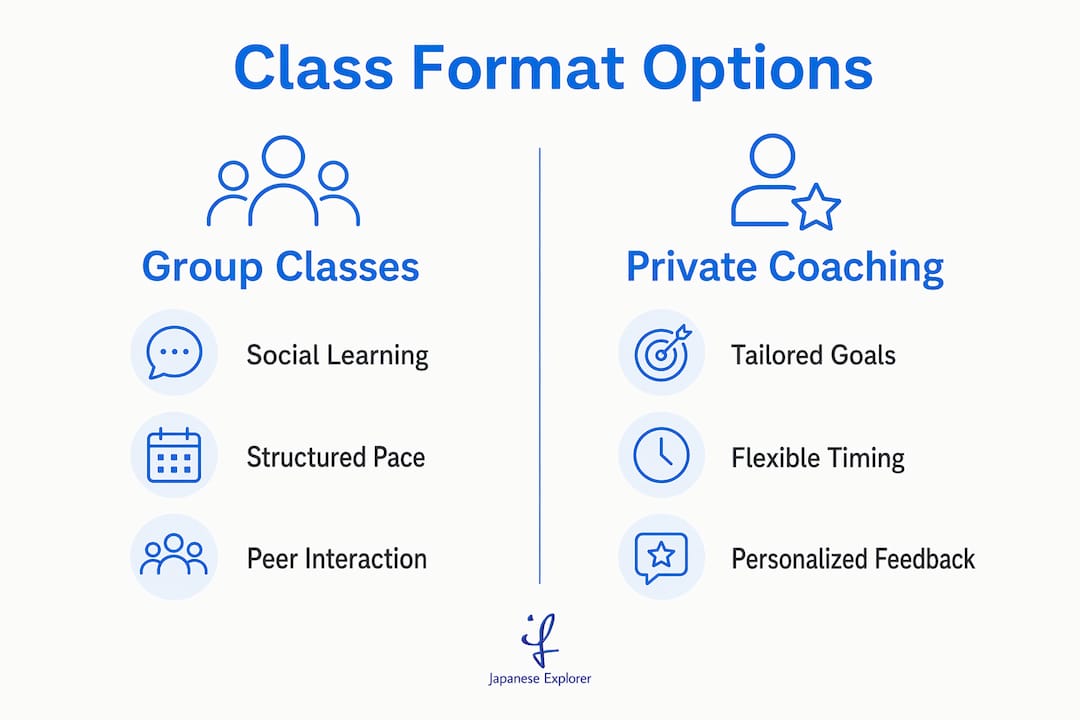
Once your goals are clear, format becomes the next filter. The three main formats available in Singapore each serve a different type of learner.
| Format | Best for | Key benefit | Watch out for |
|---|---|---|---|
| Group classes | Social learners, steady progress | Peer interaction, shared practice | Less individual feedback |
| Private coaching | Professionals, specific goals | Fully tailored content and pace | Higher cost per session |
| Intensive courses | Fast-track learners | Rapid progression | Heavy time commitment |
| Online classes | Busy professionals | Schedule flexibility, diverse tutors | Requires self-discipline |
Group classes build communication skills through shared learning and discussion, while private coaching offers tailored lessons focused on professional or specific goals. Both are valid. The question is which one fits your life right now.
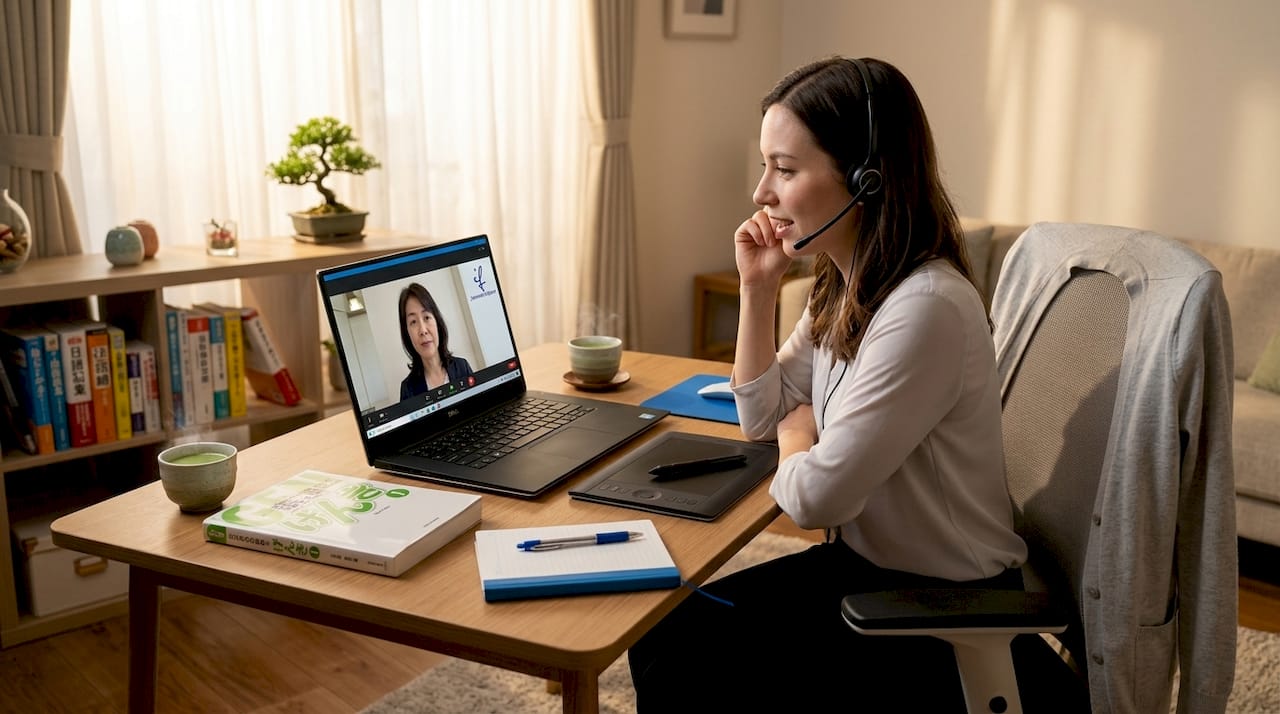
For working professionals in Singapore, scheduling flexibility is a decisive factor. Online Japanese conversation classes with native speakers provide practical, flexible learning that fits busy schedules, with Zoom-based sessions combining conversation practice and cultural insights. If your work hours are unpredictable, an online format removes the friction of commuting to a fixed location at a fixed time.
Private coaching suits learners who have very specific professional goals or who have tried group classes and found the pace too slow or too fast. The lessons adapt to you, not to the average of the group. Japanese Explorer’s private Japanese coaching is built exactly for this: one-on-one sessions shaped around your schedule and objectives.
Pro Tip: If you are unsure between group and private, start with a group class. You will quickly discover whether you need more individual attention or whether peer interaction is actually accelerating your learning.
Scheduling flexibility is a key factor for adult learners balancing work and study, which makes online and private coaching particularly attractive options for Singapore’s professional community.
What makes a Japanese conversation class genuinely practical?
Not every class marketed as a “conversation course” actually delivers conversation. A practical Japanese conversation class has specific, identifiable characteristics. Look for all of these before enrolling:
- Real communication scenarios: Lessons should simulate actual situations. Think job interviews, restaurant orders, client calls, airport navigation, and social gatherings. Not just textbook dialogues.
- Certified or native-speaker instructors: A good Japanese course includes structured grammar, speaking and listening practice, and adaptation to learner levels. Instructors should be able to model natural speech, not just correct written exercises.
- Active speaking time: You should be speaking for at least 40 to 50 percent of every lesson. If a class is mostly lecture and note-taking, it is not a conversation class.
- Cultural context: Language without culture produces awkward speakers. Good courses weave in cultural insights, such as when to use formal versus casual speech, how to address colleagues by title, and what silence communicates in Japanese business settings.
- Level placement checks: Trial lessons and level checks ensure learners join courses suitable for their proficiency and goals. Being placed in the wrong level is one of the fastest ways to lose motivation.
- Balanced grammar integration: Grammar matters, but it should serve conversation, not replace it. The best courses explain a grammar point and immediately apply it in a speaking exercise.
Japanese Explorer’s curriculum follows the Association for Japanese-Language Teaching framework, which integrates grammar, speaking, and listening in every lesson rather than treating them as separate subjects. That structure matters because it mirrors how real communication works.
How to evaluate and compare Japanese conversation courses in Singapore
Researching your options systematically saves you from making an expensive mistake. Here is a practical process for comparing courses before you commit:
- Define your comparison criteria first. Use the goals you identified earlier. A course that is perfect for a traveler may be wrong for a business professional. Compare against your own brief, not a generic checklist.
- Read learner reviews with specificity. Look for reviews that mention speaking confidence, instructor feedback quality, and real-life application. Generic five-star reviews tell you nothing. A review that says “I was able to hold a full conversation with my Japanese client after three months” tells you everything.
- Check instructor qualifications. Verify whether teachers are certified, bilingual, and experienced with adult learners. Native speaker status alone does not guarantee effective teaching. Teaching methodology matters as much as fluency.
- Compare course objectives, not just prices. Focusing on course objective, class format, and practical real-life situations reduces the risk of enrolling in classes that are mostly grammar or exam preparation. A cheaper course built around JLPT test prep will not improve your speaking confidence.
- Request a trial lesson. Most reputable schools offer a trial or placement session. Use it. You will learn more about teaching style and class atmosphere in one session than from any website description.
- Distinguish conversation courses from exam prep. JLPT preparation courses are valuable for certification, but they are not conversation courses. If your goal is speaking fluency, confirm that the course you are considering is explicitly built around spoken communication.
Pro Tip: Ask the school directly: “What percentage of class time is spent speaking versus listening to the teacher?” Any answer below 40 percent is a red flag for a conversation course.
You can also explore what to look for in a Japanese language school to build a sharper evaluation framework before you start comparing options.
Common mistakes to avoid when selecting a Japanese conversation class
Most learners who end up in the wrong class made one of these five errors:
- Prioritizing grammar over speaking. Courses overly focused on grammar or exam prep without conversational practice hinder speaking confidence and real-life communication ability. Grammar is a tool, not the destination.
- Ignoring scheduling compatibility. A course that meets on Tuesday evenings when you regularly work late is not a realistic option. Missed classes compound quickly and derail progress.
- Skipping the goal-definition step. Enrolling without clear goals means you cannot evaluate whether a course is working. You need a benchmark to measure against.
- Skipping trial sessions. A trial lesson reveals teaching style, class energy, and pace. Skipping it is like buying shoes without trying them on.
- Assuming all native-speaker classes are equal. Native fluency and teaching skill are different competencies. A native speaker without structured methodology may deliver entertaining classes that produce slow progress. Verify the teaching approach, not just the teacher’s background.
Practicing with native speakers is genuinely valuable, but only when the interaction is structured around your learning goals rather than free-form conversation that never pushes your weak points.
Key takeaways
Choosing the right Japanese conversation class requires matching your specific goals, preferred format, and practical speaking focus before you enroll in anything.
| Point | Details |
|---|---|
| Define goals first | Clarify whether you need casual fluency or business Japanese before comparing any courses. |
| Match format to lifestyle | Group classes suit social learners; private coaching fits professionals with specific goals. |
| Verify speaking time | A genuine conversation class should allocate at least 40 to 50 percent of lesson time to active speaking. |
| Use trial lessons | A placement or trial session reveals teaching style and class fit better than any course description. |
| Avoid grammar-only courses | Courses built around test prep or grammar drills will not build real conversational confidence. |
Why goal alignment matters more than course prestige
I have seen this pattern repeat itself with Singapore learners more times than I can count. Someone enrolls in a well-known Japanese course, attends every session, completes every assignment, and after six months still freezes when a Japanese colleague speaks to them at speed. The course was not bad. It was just the wrong course for what they actually needed.
The most common version of this mistake is choosing a course based on reputation or price rather than fit. A prestigious school with a rigid grammar-heavy curriculum will not serve someone whose primary need is conversational confidence in a professional setting. And an audio-focused course like Pimsleur, which emphasizes conversational fluency quickly but lacks reading and writing, is excellent for speaking practice but leaves gaps if your role requires written Japanese communication.
Singapore learners face a specific challenge. Most are balancing demanding careers with the desire to learn. That means wasted class time is not just frustrating. It is genuinely costly. Forty-five minutes of commuting to a class that spends thirty minutes on grammar worksheets is a poor trade. Online options and flexible class formats exist precisely to solve this problem, and they are worth taking seriously.
My honest recommendation: spend thirty minutes defining your goals before you spend thirty seconds browsing course listings. That investment pays back every week you are in class.
— Paul
Start speaking Japanese with confidence at Japanese Explorer
Japanese Explorer offers small group classes, private coaching, and online Zoom courses designed specifically for adult learners in Singapore who want practical Japanese conversation skills. Whether your goal is casual fluency or professional business communication, every course integrates speaking, listening, and cultural context from the first lesson.
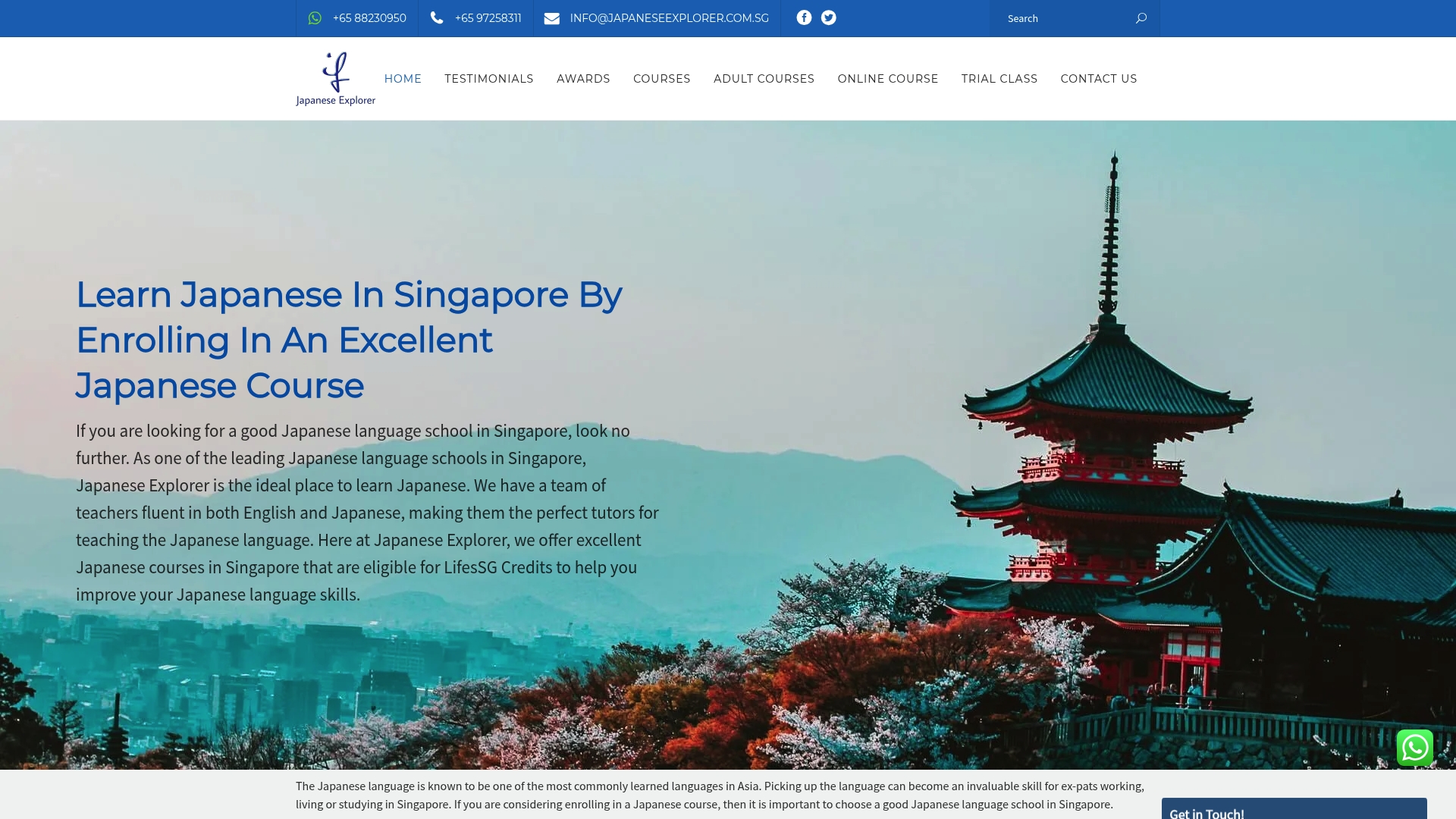
Classes are taught by certified bilingual instructors at the school’s city-center location above Tanjong Pagar MRT, with online options available for learners who need scheduling flexibility. Explore small group Japanese classes built for real conversation, or check out the online Japanese course if you prefer learning from home. For professionals, the business Japanese program covers everything from keigo to client presentations. Your next conversation in Japanese starts here.
FAQ
What should I look for in a Japanese conversation class?
Look for courses that dedicate significant class time to active speaking, use real-life scenarios, and include level placement checks. Instructor qualifications and a balance between grammar instruction and conversation practice are equally important signals of a quality course.
How do I choose between group and private Japanese lessons?
Group classes work well for learners who benefit from peer interaction and a steady, structured pace. Private lessons suit professionals with specific goals, irregular schedules, or those who need faster, more personalized progress.
Are online Japanese conversation classes effective?
Online Japanese conversation classes with native speakers are effective and practical, especially for busy professionals. Zoom-based sessions that combine conversation practice with cultural context can match the quality of in-person classes while offering greater scheduling flexibility.
How do I know if a Japanese course is focused on conversation or exam prep?
Ask the school directly what percentage of class time involves active speaking. Courses built around JLPT preparation focus on reading, grammar, and vocabulary recognition rather than spoken fluency. A genuine conversation course will prioritize speaking exercises and real-world communication scenarios.
Should I take a trial lesson before enrolling?
Yes. Trial lessons and level checks ensure you join a course matched to your proficiency and goals, which directly improves your learning outcomes. A single trial session reveals teaching style, class pace, and whether the course format fits your needs far better than any course description can.