
TL;DR:
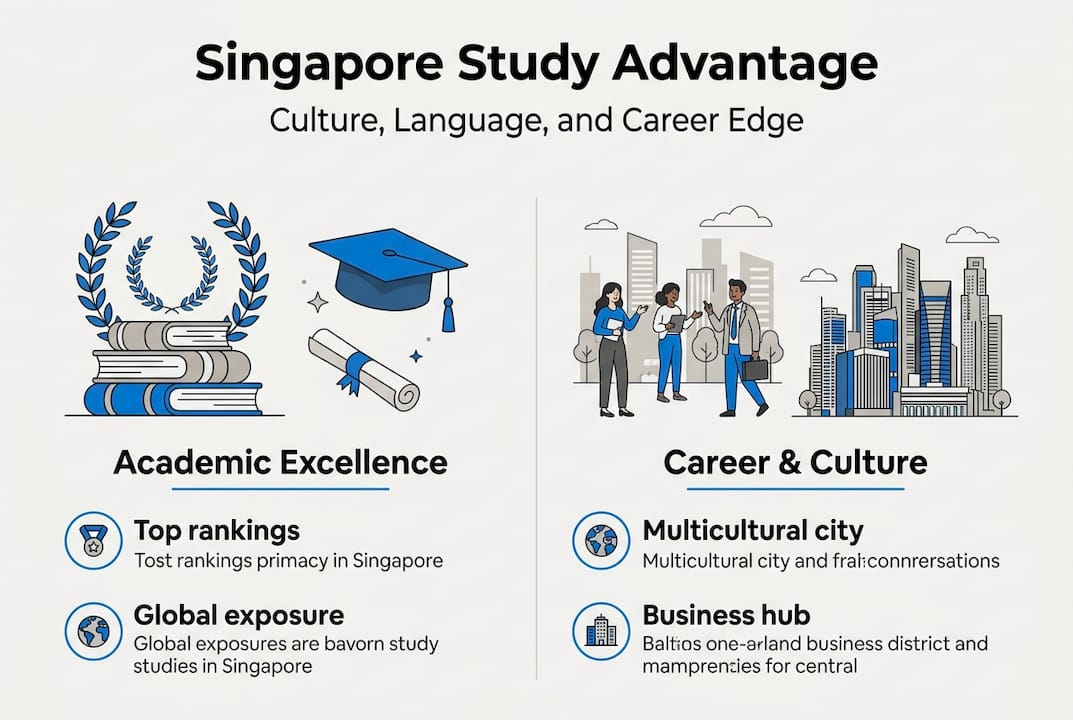
- Singapore hosts top-ranked universities recognized globally, offering diverse academic and research opportunities.
- The multicultural environment enhances soft skills like cultural fluency and adaptability useful for careers.
- English is the main language, but learning Mandarin or Japanese expands career prospects across Asia.
Singapore rarely tops the list when international students picture their dream study destination. Many default to the US, UK, or Australia without realizing that Singapore offers something genuinely different: world-class universities, a multilingual environment you experience daily, and direct access to Asia’s fastest-growing job markets. If you’re weighing your options, the advantages here go well beyond a prestigious diploma. This article walks you through Singapore’s academic strengths, its rich cultural mix, the language opportunities available, and the real career pathways waiting for graduates who make the most of their time here.
Table of Contents
- World-class universities and academic opportunities
- Multicultural immersion and world-class safety
- English as a launchpad and gateway to Asia
- Career pathways, location, and realities: Singapore’s global edge
- Why Singapore’s value for international students goes beyond rankings
- Take the next step: Explore language learning opportunities in Singapore
- Frequently asked questions
Key Takeaways
| Point | Details |
|---|---|
| Elite global universities | NUS and NTU offer top-ranked programs that open doors worldwide. |
| Multicultural environment | Singapore’s diversity and safety make it ideal for cultural and language immersion. |
| English and beyond | English language instruction plus opportunities to master other key languages boost your employability. |
| Career launchpad | Strong industry connections and post-study visa options make Singapore a smart career investment. |
| Consider the costs | Singapore’s high living expenses and competitive entry require careful planning for the best value. |
World-class universities and academic opportunities
Singapore punches far above its weight in global academia. For a city-state of just under six million people, its universities consistently rank among the best in the world, and that reputation carries real weight when you’re job hunting after graduation.
The National University of Singapore (NUS) holds the #8 spot globally in the QS World University Rankings 2026, making it Asia’s top university. It also places in the global top 10 across 28 individual subjects, which means no matter your field, you’re likely studying in one of the best programs on the planet. Nanyang Technological University (NTU) isn’t far behind, ranking #12 globally in the same QS 2026 list.
| University | QS World Ranking 2026 | Asia Rank | Subjects in Global Top 10 |
|---|---|---|---|
| National University of Singapore (NUS) | #8 | #1 | 28 |
| Nanyang Technological University (NTU) | #12 | #2 | Multiple |
These rankings aren’t just numbers on a page. Employers across Asia, Europe, and North America recognize NUS and NTU graduates as well-prepared, research-capable professionals. For international students, that recognition opens doors that would otherwise take years to unlock.
Beyond rankings, Singapore’s universities maintain strong research partnerships with global corporations in technology, biomedical sciences, engineering, and finance. Many programs integrate industry projects directly into the curriculum, so you’re building a real portfolio before you even graduate.
Stat to know: NUS ranks in the top 10 globally across 28 subjects, covering everything from computer science to law.
Understanding the benefits of learning Japanese alongside your degree program can also sharpen your academic profile, especially if your research or career interests extend to Japan’s tech and manufacturing sectors.
The academic ecosystem in Singapore rewards ambition. Scholarships for international students are competitive but available, and the government actively invests in attracting global talent to its institutions.
Multicultural immersion and world-class safety
Strong academics are only part of the story. What sets your campus experience apart in Singapore is the cultural richness you encounter every single day, not just in classrooms but at hawker centers, festivals, and neighborhoods.
Singapore’s population is made up of Chinese (about 74%), Malay (about 13%), Indian (about 9%), and a significant expat community from all over the world. That mix isn’t just demographic data. It means you’re sharing lecture halls, study groups, and dining tables with people who have genuinely different cultural frameworks, communication styles, and worldviews.
Here’s what that looks like in practice:
- Festivals: You’ll experience Chinese New Year, Hari Raya, Deepavali, and Christmas all celebrated publicly and enthusiastically.
- Food culture: Each community brings its own cuisine, and sharing meals is a genuine social ritual here.
- Languages: You’ll hear Mandarin, Malay, Tamil, and English in a single bus ride.
- Neighborhoods: Areas like Little India, Chinatown, and Kampong Glam each carry distinct cultural identities.
This kind of daily exposure builds soft skills that no classroom can replicate. Cultural fluency, adaptability, and cross-cultural communication are increasingly what employers look for, and Singapore gives you those skills organically.
Safety is another factor worth taking seriously. Singapore consistently ranks as one of the safest cities in the world, and for international students, especially those moving abroad for the first time, that matters enormously. Living and studying in Singapore means you can focus on your studies and social life without the security concerns that come with larger, more chaotic urban environments.
“Singapore’s multicultural environment and strong safety record make it one of the most welcoming places in the world for international students.” — Study International
For personal growth, few environments match what Singapore offers. You arrive as a student and leave as someone who genuinely understands how to navigate different cultural contexts. That’s not a soft benefit. It’s a career asset.
English as a launchpad and gateway to Asia
With a vibrant campus and city life, it’s time to look at how you’ll study and communicate day-to-day. One of Singapore’s most practical advantages is that English is the primary language of instruction, business, and daily life. If you’re coming from an English-speaking background, there’s no language barrier to clear before you start learning.
But here’s where it gets interesting. Singapore’s multilingual environment means you’re constantly surrounded by Mandarin, Malay, and Tamil speakers. Picking up conversational Mandarin while studying here isn’t unusual. It happens naturally, and it can dramatically expand your career options across Southeast Asia and China.
| Factor | Studying in Singapore | Studying in a non-English Asian country |
|---|---|---|
| Language of instruction | English | Local language (often required) |
| Daily language exposure | English + Mandarin, Malay, Tamil | Primarily local language |
| Career reach | Asia-wide + global | Primarily local market |
| Adjustment period | Minimal for English speakers | Significant |
For students who want to push further, Singapore is an ideal base for learning Japanese. Japan’s economic ties with Singapore are strong, and Japanese language skills open roles in trade, technology, and tourism that few other language skills can match. If you’re curious about making that transition, resources on going from English to Japanese can help you understand what the learning curve actually looks like.
Pro Tip: Find a language exchange partner while you’re studying in Singapore. With so many multilingual residents, you can practice Mandarin, Japanese, or Malay in real conversations, not just textbooks.
The multilingual career skills you build here aren’t theoretical. Companies hiring for Asia-facing roles actively look for candidates who can operate across languages and cultures. Singapore gives you the environment to develop exactly that.
Career pathways, location, and realities: Singapore’s global edge
Beyond campus life, Singapore’s work and professional landscape shape your post-graduation path in very concrete ways.
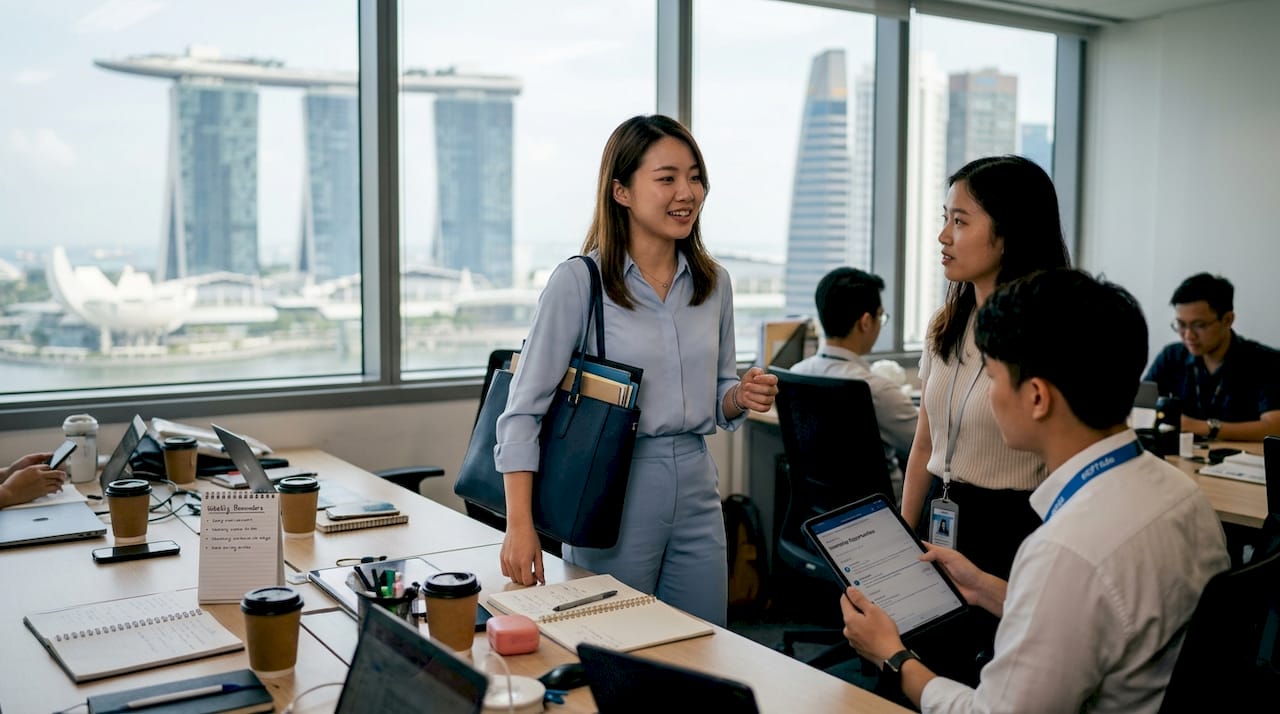
Singapore sits at the center of Southeast Asia, making it a natural hub for multinational corporations with regional headquarters. Companies like Google, Facebook, Procter and Gamble, and hundreds of others base their Asia-Pacific operations here. For international students, that means internship pipelines and graduate recruitment programs are genuinely accessible, not just theoretical possibilities.
Here’s how to make the most of your time strategically:
- Pursue internships early. Many Singapore universities have formal industry tie-ups. Apply in your first year, not your final year.
- Build your language portfolio. Adding Mandarin, Japanese, or another Asian language to your resume makes you stand out in a competitive graduate market.
- Network across cultures. Singapore’s professional events and alumni networks are genuinely diverse. Use them.
- Understand your visa options. After graduation from a local institution, you can apply for a 1-year Long-Term Visit Pass (LTVP) to stay and seek employment, giving you real runway to land your first role.
Singapore’s position as Asia’s business hub also means that the professional connections you make here travel well. A contact in Singapore’s finance or tech sector often has links across Hong Kong, Tokyo, Jakarta, and beyond.
That said, be realistic. Living costs in Singapore are high, and university admissions are competitive. You’ll want to plan your finances carefully and apply with a strong academic record. The post-study work visa process also requires proactive planning, so research your options before you graduate, not after.
For those thinking about how language skills translate directly into career growth, the case for boosting your career with Japanese is particularly strong in Singapore’s Japan-connected industries.
Why Singapore’s value for international students goes beyond rankings
Most guides focus on rankings and living costs. That’s useful, but it misses something important.
Singapore’s government has actively shaped a multilingual policy environment for decades. The result isn’t just a diverse city. It’s a place where switching between languages and cultural registers is a normal part of daily life. For international students, that daily immersion does something no classroom can replicate: it rewires how you think about communication.
Research consistently shows that people who operate across multiple languages develop stronger cognitive flexibility, better problem-solving habits, and sharper cultural sensitivity. These aren’t soft skills in the dismissive sense. They’re the exact capabilities that make someone effective in a regional leadership role.
What most guides miss is that the diploma you earn in Singapore carries more weight when it’s paired with the cultural and linguistic fluency you build here. Employers in Asia don’t just want credentials. They want people who can actually navigate complexity. Singapore trains you for that whether you realize it or not. That’s the real edge.
Take the next step: Explore language learning opportunities in Singapore
Singapore’s environment is already working in your favor. Now imagine adding structured Japanese language skills to everything you’re building here.
Japanese is one of the most career-relevant languages you can learn in Singapore, given the city’s deep trade and business ties with Japan. Whether you’re a complete beginner or looking to reach business-level fluency, Japanese Explorer offers flexible group, private, and online courses designed around real-world communication. If you’re still figuring out where to start, our guide on choosing a Japanese language school walks you through exactly what to look for. Come join our growing community of learners making the most of Singapore.
Frequently asked questions
Is studying in Singapore worth the high cost for international students?
For many students, yes. Singapore’s high living costs are offset by world-class academic credentials, exceptional safety, and direct access to Asia’s most active job markets.
Do I need to know a language other than English to study in Singapore?
No. English is the primary language for study and daily life, but learning Mandarin or Japanese while you’re here can significantly strengthen your career prospects.
Can international students work in Singapore after graduation?
Yes. Graduates from local institutions can apply for a 1-year LTVP to remain in Singapore and actively search for employment.
How does Singapore compare to other Asian countries for international study?
Singapore stands out for English-medium instruction, consistent safety, globally ranked universities, and strong ties to multicultural business networks that few other Asian cities can match.
What languages can I learn in Singapore besides English?
Singapore’s three other official languages are Mandarin, Malay, and Tamil. Beyond those, the city’s diverse population and language schools make it easy to learn Japanese, Korean, and more through multilingual opportunities that are genuinely part of everyday life.
Recommended
- Learn Japanese | Leading Japanese Language School Singapore
- 4 Ways Learning Japanese Can Greatly Catapult Your Career | Japanese Explorer
- Articles | Japanese Explorer