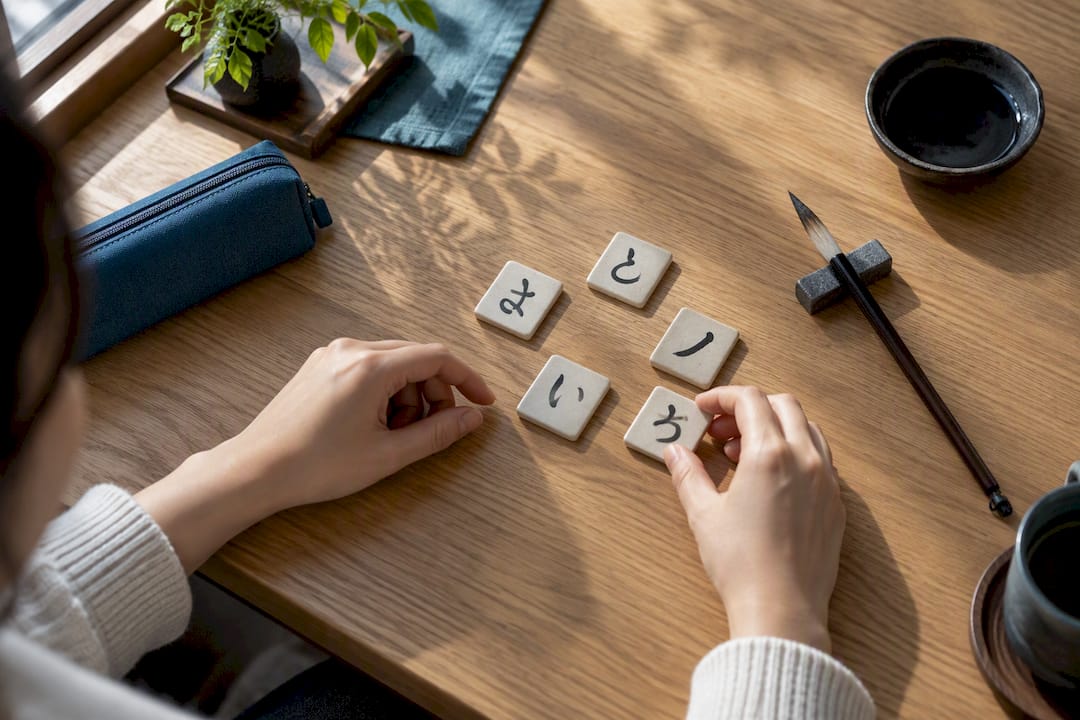
Picking up Kanji can be considered a daunting aspect of learning Japanese in Singapore. Due to the sheer number of it, approximately 2,136 characters that are used regularly just thinking about the task of memorising each character’s meaning, stroke order, and pronunciations is enough to overwhelm any budding student.
Despite this seemingly unfeasible challenge, learning these characters isn’t impossible. To emphasise the importance of Kanji, get to know the 3 reasons why studying them is necessary for proficiency.
It’s easier to read sentences that have Kanji
At the beginning of your Japanese studies, you’ll most likely be exposed to mere short sentences when going over the lessons in your coursebooks. As such, the need for Kanji doesn’t seem all too necessary at that point. But once you progress far enough, you’ll understand why Kanji is so crucial in Japanese when it comes to writing, reading and comprehension.
To prove this point, here are two simple sentences, one that incorporates some Kanji while the other is only in Hiragana:
今日は暇だけど、明日は忙しすぎる。
きょうはひまだけど、あしたはいそがしすぎる。
For those familiar with the Kanji used in the first sentence, reading the sentence is undoubtedly a piece of cake. This is all thanks to each Kanji having its particular meaning, allowing one to understand what’s being stated at just a glance.
As for the second sentence, a reader will need to read the Hiragana first, accurately determine its beginning and end (which is challenging if your vocabulary isn’t vast yet), and further deduce the correct word based on the pronunciation alone.
You don’t need as many characters when conversing in Hanji
Whether you’re composing a text message on your phone or writing a letter by hand in Japanese, using Kanji in your sentences will considerably take up less space. This is because two or three characters written in Hiragana can often be condensed into a single Kanji character. If you’d like your recipient to finish reading what you wrote in a promptly and avoid giving them a headache, it’d be best for you to get into the habit of using Kanji more often.
Kanji provides the necessary context and meaning
You’ve probably already encountered some English words with the same pronunciation but completely different spelling and meaning. Some examples are flower and flour, dear and deer, bare and bear, and so on. This oddity is more pronounced in the Japanese vocabulary, with words sharing the same pronunciation in the language.
If these words that share the same pronunciation are put together in a single sentence, the lack of Kanji can make things very difficult to understand. As such, Kanji is necessary for not only differentiation of meanings, but also provides the needed context.
For example, take a look at this sentence:
すもももももももものうち
Does it look difficult to comprehend? On the other hand, here’s the version that uses Kanji:
李も桃も桃のうち
Conclusion
In truth, learning the Kanji characters isn’t as challenging as it’s rumoured to be. With the help of good instructors and an effective class, you’re sure to become well-acquainted with all these Japanese characters in no time.
If you’d like to begin your Japanese studies as soon as today, then come and check out Japanese Explorer! We offer Japanese courses in Singapore led by our professional and native Japanese tutors who will guide you in your learning efforts and teach you how to tackle Kanji in the right way.