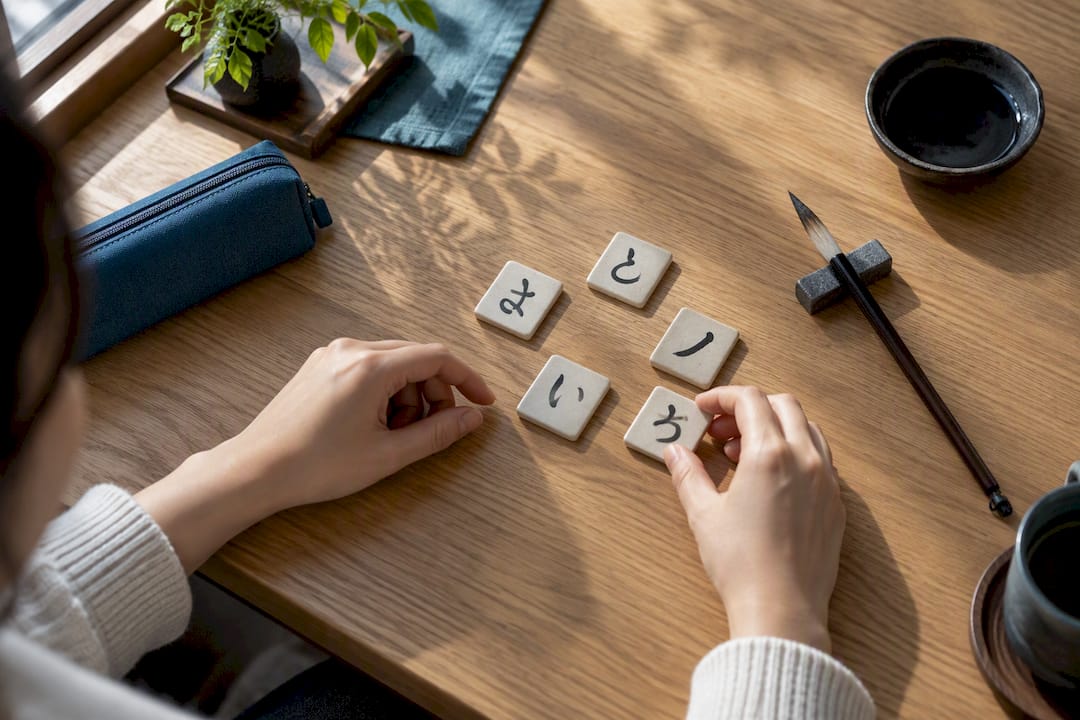
Apart from being one of the most popular foreign languages to learn, the Japanese language is also known to be one of the most challenging. The complexities of the language alone are enough to intrigue and frustrate language learners on equal measures. If you’re one of the many that wish to learn Japanese, here are some aspects of the language that you will need to ready yourself for. Be prepared before you embark on this challenging yet rewarding learning journey.
1. Grammar And Syntax
Grammar is complex in all languages and cannot be grasped within a short period of time. In the case of Japanese, many English speakers have a hard time understanding its grammar structure and syntax because they are fundamentally different.
For instance, unlike that of the English language that uses the SVO (subject-verb-object) sentence structure, the Japanese language uses the SOV (subject-order-verb) order. This, thus, require a bit of manoeuvring and tinkering. Whilst it may look confusing at first, you’ll be quick to find out that it is rather logical.
Japanese sentences are structured around grammatical markers, also known as particles. These particles indicate how a particular word relates to the other words in the sentence. Thus, whilst the verb may appear last, you can still play around the with the word order as the particles are what tell us who did what where and how. Of course, this is entirely different than most SVO languages, which is the main reason why Japanese grammar is somewhat hard to learn.
2. Phonology
Fortunately, the Japanese phonology is quite simple. It features a total of 5 basic vowels and 15 consonant phenomes. Compared to the English language, which has a wide variation in pronunciation both historically and from dialect to dialect (simply think of British English vs American English), Japanese phonology is relatively straightforward.
Perhaps, the attribute that makes a few students stumble is the fact that it’s a mora-timed language. This means that each syllable takes up one timing unit (mora), which will translate to relatively fast speaking patterns. Thus, those who are not accustomed to hearing the language may be shocked by how fast a native Japanese person can speak, and with perfect enunciation at that.
Whilst Japanese may not be a tonal language like their Chinese predecessor, one needs to take note that the language also places importance on pitch. The language uses a pitch accent where each mora can be pronounced with a high or low pitch to indicate the meaning of the word. This intonation, of course, varies depending on the dialect. There are 4 pitch accents in total and unless you’re planning to attain high mastery, you’d usually take up the Standard (Tokyo) Japanese ‘accent’.
3. The 3 Writing Systems
It’s not surprising to know that the 3 writing systems are what make the Japanese language intimidating to new learners. Kanji, especially, is more challenging to learn than the other two systems (Hiragana and Katakana) as they use Chinese iconography to mean a specific thing in Japanese. Even those that have already learnt Chinese can’t immediately master Kanji as the Chinese counterparts will have an entirely different meaning.
That said, you don’t necessarily need to start learning Kanji straightaway. Many new students start their Japanese classes by learning Hiragana, which has fewer characters than Kanji. Besides, most Japanese natives use Hiragana on the daily, thus you can still be able to navigate through conversations and physical spaces with relative ease.
As with any particular endeavour, slow and steady wins the race. Thus, perseverance and consistency are what sets the foundation of your learning journey. You may get discouraged but don’t give in! With time and hard work, you’d be able to reach the mastery level that you’ve always dreamt of having.