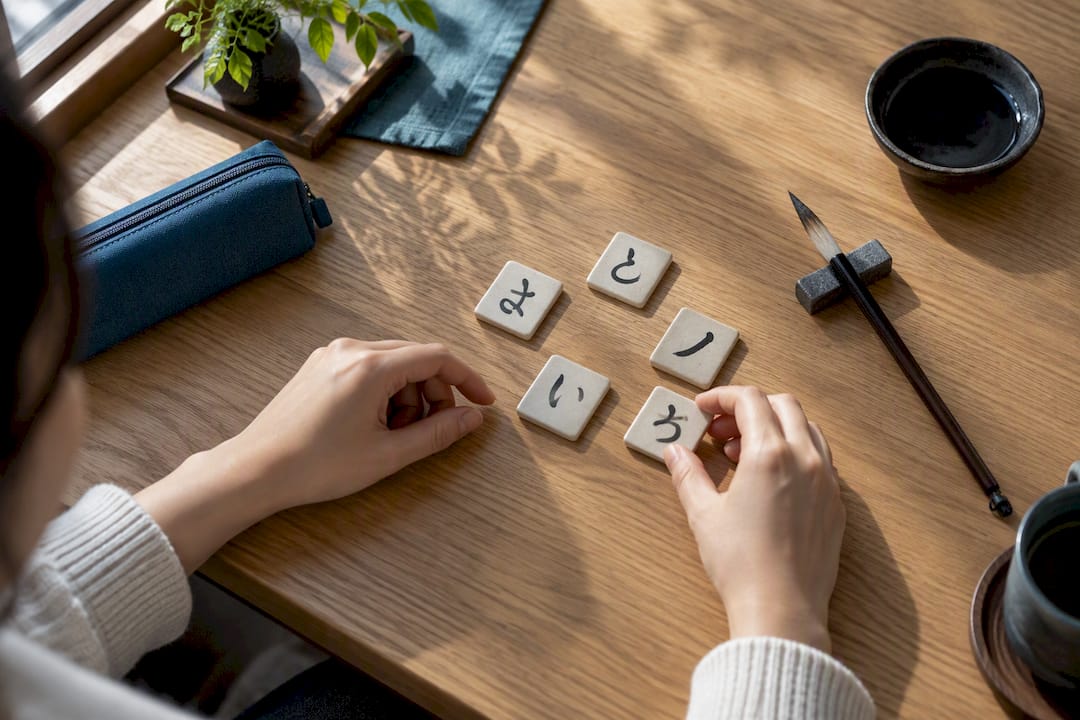
For a 30 to 60 second professional jikoshoukai, say: “Hajimemashite. [Company/Team] no [Surname] to moushimasu. [One-line career summary]. Nanitozo yoroshiku onegai moushiagemasu.” That single line, paired with a bow, covers the core structure Japanese workplaces expect: opener, name, affiliation, one fact about you, formal close. Interviews call for 60 to 90 seconds; a quick team greeting needs only 15 to 30. Use と申します (to moushimasu) for anyone outside your company; です (desu) is fine once you’re speaking to colleagues who already know your team.
TL;DR:
- A 30-second self-introduction should include your name, your company and role, a brief career background, and your motivation for the position.
- Use humble keigo forms like と申します for your name and はいったん, regardless of your familiarity with the listener, but stick to です only among colleagues.
- Bow after finishing your introduction with a slight drop of gaze, and avoid handshakes unless initiated; speaking slowly and clearly improves perceived professionalism.
- Rehearse using timed recordings and roleplaying to blend natural delivery with precise timing, especially under interview or meeting conditions.
- Maintain a consistent structure, only add or remove sentences when adapting for different durations, and focus on clear, concrete details over generic statements.
Table of Contents
- What is the standard structure for a Japanese self introduction at work?
- How much keigo do I actually need for a self introduction?
- What etiquette matters when you deliver the introduction?
- What mistakes make an introduction fall flat?
- How do you practice until it sounds natural, not memorized?
- Teacher perspective: what we fix first in class
- Ready to sharpen your workplace introduction?
- Sources
- FAQ
What is the standard structure for a Japanese self introduction at work?
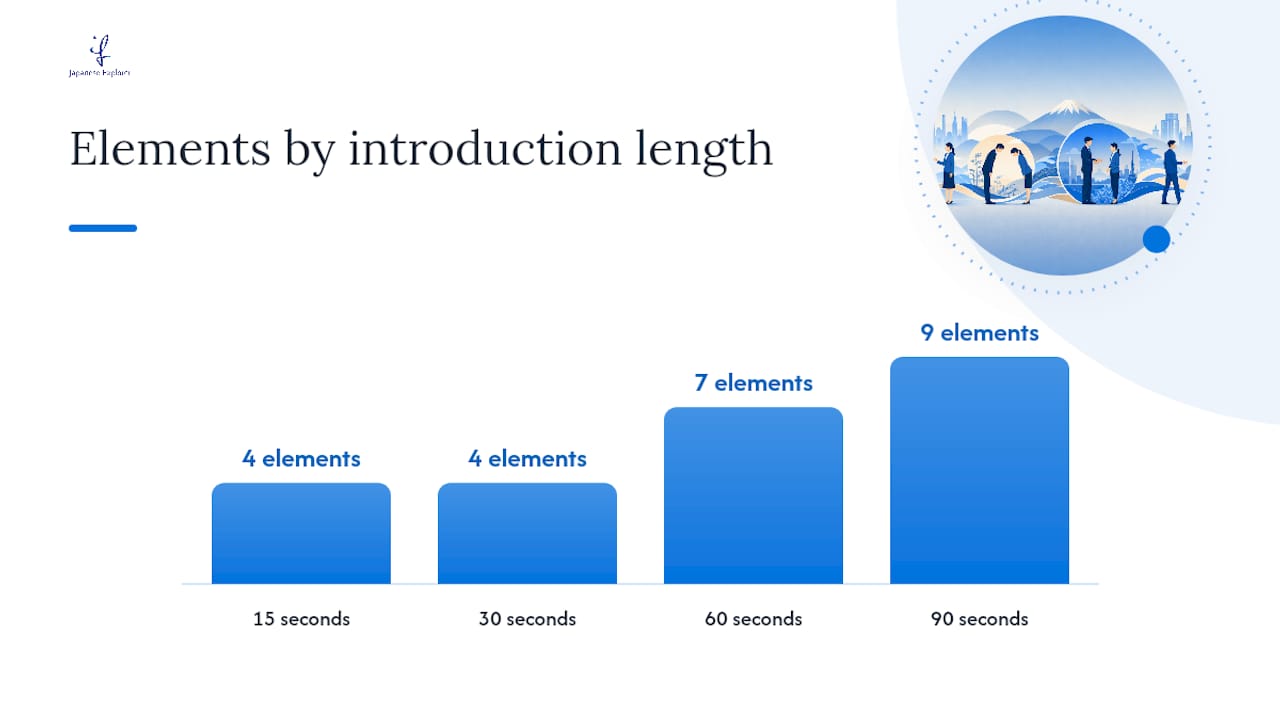
Japanese business self-introductions follow a fixed sequence, and interviewers, clients, and new coworkers all expect it in roughly the same order: greeting, name, affiliation or origin, role or job status, an optional personal detail, then a closing phrase. This structure holds whether you’re speaking for 15 seconds in an elevator or 90 seconds in a job interview, and research on jikoshoukai structure confirms register shifts depending on who’s listening, but the skeleton stays put.
The templates below are built around that skeleton, scaled to four common time budgets. Read through each one, then pick the version that matches your next meeting, interview, or client call.
15 seconds: elevator or hallway introduction
This is the bare minimum: name, role, and a polite close. Nothing else fits.
- Hajimemashite.
- [Surname] to moushimasu.
- [Department] no [role] o shite orimasu.
- Yoroshiku onegaishimasu.
Gloss: “Nice to meet you. I’m [surname]. I work as [role] in [department]. Pleased to be working with you.”
30 seconds: team or chorei-style introduction
Chorei (morning team meetings) call for a slightly fuller version that includes where you came from or what you’ll be doing.
-
Greeting: Hajimemashite, or Ohayou gozaimasu if it’s a morning meeting.
-
Name and affiliation: [Company] no [department], [surname] to moushimasu.
-
One-line context: Honjitsu kara kono chiimu de hataraku koto ni narimashita, or a short line on your role.
-
Close: Douzo yoroshiku onegaishimasu.
60 seconds: client visit or standard interview
This is where a career summary and a note on motivation enter the script. A structured version built for interviews should stay focused on career history, achievements, and motivation rather than hobbies, according to guidance on business self-introduction templates.
- Hajimemashite. [Surname] to moushimasu.
- [Company/university] kara kimashita. [Department] de [role] o shite orimasu.
- Kore made [X-nen], [field] no gyoumu ni juujishite kimashita.
- Kono kikai ni [motivation, one line].
- Douzo yoroshiku onegai moushiagemasu.
90 seconds: extended interview version
Add one concrete achievement and a short bridge to why you want this specific role. Keep the achievement to a single sentence; interviewers are listening for clarity, not a full résumé read-aloud, and one structured framework for interview self-introductions recommends folding in a concise career overview plus one measurable result within the 60 to 90 second window, per interview self-introduction guidance.
Walkthrough: to shrink a 90 second script to 15 seconds, cut everything after your role title. To expand a 30 second team version to 60, add one sentence of career context before the close. The order never changes. Only what gets trimmed from the middle.
How much keigo do I actually need for a self introduction?
Keigo confusion is where most learners stall, but the rules for a self-introduction are narrower than general polite Japanese. You’re almost always using humble forms (kenjougo) for your own actions, never respectful forms (sonkeigo), which are reserved for other people’s actions.
と申します vs です
と申します (to moushimasu) is the humble version of “I am called,” and it’s the safer default anytime you’re speaking to someone outside your own company, a client, an interviewer, or someone senior you’ve never met. です (desu) after your name is acceptable in casual internal settings, like introducing yourself to a new hire on your own team.
Common humble verbs for introductions
- 申します (moushimasu): the humble form of “to be called,” used for your name.
- 参りました (mairimashita): the humble form of “came,” used for where you’re from or transferred from.
- しております (shite orimasu): the humble, ongoing form of “doing,” used for your current role.
- いたします (itashimasu) or 申し上げます (moushiagemasu): used in formal closing lines instead of plain onegaishimasu.
Small keigo substitutions like these are exactly what interviewers notice, and practicing the precise verb forms for name, origin, and closing lines is described as a meaningful signal of professionalism in practitioner advice on interview keigo.
| Casual | Polite | Humble (self-introduction) |
|---|---|---|
| ~です | ~です | ~と申します |
| 来た (came) | 来ました | 参りました |
| している (doing) | しています | しております |
| よろしく | よろしくお願いします | よろしくお願い申し上げます |
The most common keigo mistake
Sonkeigo (respectful language) is for describing someone else’s actions, never your own. Saying いらっしゃいました about yourself instead of 参りました is a small error that stands out immediately to a fluent listener, since it flips the direction of respect. If you’re unsure which form applies, default to the humble column above; it’s never wrong to be humble about yourself in a professional setting. For a fuller phrase bank beyond introductions, common workplace expressions cover the openings and closings used throughout a typical business meeting.
What etiquette matters when you deliver the introduction?
The words are half the job. How you stand, when you bow, and what you do with your hands carry as much weight as the script itself in a Japanese business setting.
- Bow after you finish speaking, not during. A bow layered over your words looks rushed and undercuts the line you just delivered, according to etiquette guidance on jikoshoukai, which also notes that hajimemashite is reserved specifically for first meetings, not repeat encounters.
- Use hajimemashite only the first time you meet someone; on later meetings with the same person, otsukaresama desu is the natural greeting among colleagues instead.
- Skip the handshake unless your counterpart initiates one. A slight bow of about 15 to 30 degrees is the default in most office settings.
- Hold eye contact briefly, then let your gaze drop slightly during the bow. Staring throughout can read as overly direct.
- Speak a notch slower and slightly louder than you would in casual conversation. Rushed delivery is the single fastest way to sound nervous rather than prepared.
Meishi (business card) basics
Offer your card with both hands, text facing the recipient, while saying your name and company. Receive theirs the same way, and never write on a card or slide it into a back pocket in front of them. A short phrase like “Meishi o choudai itadakemasu ka” (may I receive your business card) works well if they haven’t offered one yet.
Adapting for Zoom or Teams
Frame yourself from mid-chest up, look at the camera lens rather than the screen when you deliver your name, and replace the bow with a small nod of the head. Since there’s no physical meishi exchange, close with a verbal line instead: “Meishi no koukan ga dekimasen node, mata betsu no kikai ni yoroshiku onegaishimasu.”
Pro Tip: Record yourself doing a full run-through on video call settings once before the real meeting. Most people don’t realize how close their face is to the camera until they see the awkward crop themselves.
What mistakes make an introduction fall flat?
Interviewers and managers notice the same handful of problems over and over, and almost all of them are fixable with a single rehearsal pass.
- Mixing casual and polite forms mid-sentence. Starting with です and ending with 申し上げます in the same intro sounds inconsistent rather than polite.
- Reading the introduction off a resume. A memorized 30 to 60 second script always lands better than a recited document; interviewers are listening for how you synthesize your own background, not whether you can read.
- Running long. A rambling two-minute intro when 60 seconds was expected signals poor self-awareness about time and audience.
- Using respectful forms (sonkeigo) for yourself. This is the fastest way to sound like you skipped basic keigo training.
- No concrete detail. A generic “I have worked in sales for many years” says nothing; one specific achievement or project name does far more work.
30-second pre-room checklist
Before you walk in, run through this once: name and affiliation ready, one achievement chosen and rehearsed, motivation line in one sentence, formal close memorized, and the whole thing timed under your target. If your mind blanks mid-sentence, a simple recovery phrase like “Sumimasen, mou ichido moushimasu” (excuse me, let me say that again) buys you a clean restart without breaking the flow entirely.
How do you practice until it sounds natural, not memorized?
Rehearsal quality matters more than rehearsal quantity. A script you’ve said out loud twenty times in the shower will still come out smoother than one you’ve only read silently fifty times.
- Shadowing drills: play a native recording of a jikoshoukai and speak along in real time, matching pacing and pitch before swapping in your own details.
- Timed recording: record your 30 and 60 second versions on your phone, then check the actual clock time against your target. Most first attempts run 15 to 20 seconds over.
- One-person roleplay: run through your script imagining three different audiences in a row, an interviewer, a new client, a new coworker, adjusting only the affiliation and closing line each time while keeping the core structure fixed.
- Peer roleplay: trade scripts with a study partner and have them ask one plausible follow-up question after your intro, since real conversations rarely end right after your closing line.
Refining the core delivery of your name and professional value matters more in practice time than polishing small pleasantries, a priority echoed in advice on business self-introduction preparation.
Pro Tip: Breathe before your closing line, not during it. A short pause before “yoroshiku onegaishimasu” reads as composed; rushing straight into it from your last sentence reads as anxious, even if the words are correct.
Teacher perspective: what we fix first in class
The first thing we correct in almost every session isn’t grammar, it’s pacing. Learners write a technically perfect script, then deliver it in a flat rush because they’re focused on recall instead of communication. We sequence instruction the same way every time: phrase bank first, then a slow read-aloud, then a timed mock intro with a stopwatch running because timing pressure is what actually simulates an interview room. The keigo mistakes almost always show up under that pressure, not during calm practice. Once a learner can hit their time target three times in a row without checking notes, the delivery problem is usually solved.
— Paul
Ready to sharpen your workplace introduction?
A strong jikoshoukai script only helps if the delivery holds up when someone’s actually watching you, and that’s the gap most self-study misses. Com’s Business Japanese course is built specifically around workplace scenarios like this: keigo correction on the exact verbs you’ll use for your name and role, script tightening so a 90 second version doesn’t creep to two minutes, and live practice with a bilingual instructor who catches the sonkeigo slip before an interviewer does.
If your schedule doesn’t allow for a fixed weekly class, the online Japanese course covers the same coaching over Zoom, useful if your next client call or interview is remote anyway. For something more targeted, private lessons let you bring your actual script and have it corrected line by line in a single session rather than waiting through a full course.
Not sure which level fits your current Japanese? Take the placement test first, or visit the training center at 10 Anson Road, Level 22, International Plaza, Singapore 079903, right above Tanjong Pagar MRT, to talk through which format suits your timeline.
Sources
For phrase-level detail beyond this guide, Real-World Japanese’s business self-introduction templates cover client visits and chorei specifically. Tofugu’s jikoshoukai guide is a solid reference for etiquette nuance. Internally, the self-introduction phrase bank and job interview phrases pages expand on the scripts above, and SparkCV’s application prep checklist is useful if you’re refining your résumé alongside your spoken introduction.
- Japanese Business Self-Introduction: 8 Templates for Chorei, Client Visits, and Interviews | Real-World Japanese
- Jepang
- Jikoshoukai: How to Introduce Yourself in Japanese | Tofugu
- Mastering the Interview Self-Introduction | Templates, Examples & Tips 2026
FAQ
What does “yoroshiku” actually mean when closing an introduction?
Yoroshiku onegaishimasu has no direct English equivalent; it’s a closing phrase that signals goodwill and asks for a favorable ongoing relationship, roughly “please treat me kindly going forward.” The more formal version, yoroshiku onegai moushiagemasu, fits interviews and client meetings.
Can you provide a sample jikoshoukai self-introduction?
Yes: “Hajimemashite. Suzuki to moushimasu. ABC Shoji no eigyoubu de sanpuronen hataraite orimasu. Kaigai eigyou no keiken o ikashite, kono posuto de kouken shitai to kangaete orimasu. Douzo yoroshiku onegai moushiagemasu.” This fits a standard 60 second interview slot and follows the opener, name, affiliation, motivation, close order used throughout this guide.
How do I introduce myself in a short way?
For a 15 second version, use only four pieces: greeting, name with と申します, your role or department, and a short yoroshiku onegaishimasu. Anything longer than that for a hallway or elevator moment starts to feel like an interview script in the wrong setting.
When should I use と申します instead of です?
Use と申します with anyone outside your company, in interviews, or with clients and senior contacts you’re meeting for the first time. です is fine for casual internal introductions among coworkers who already know your team.