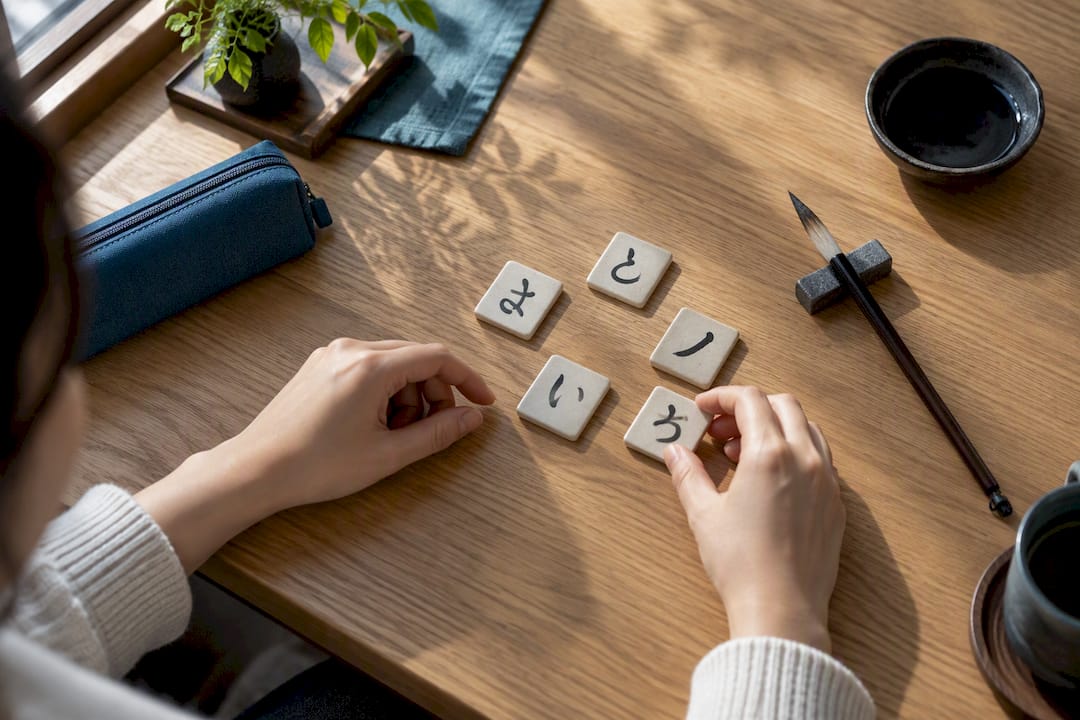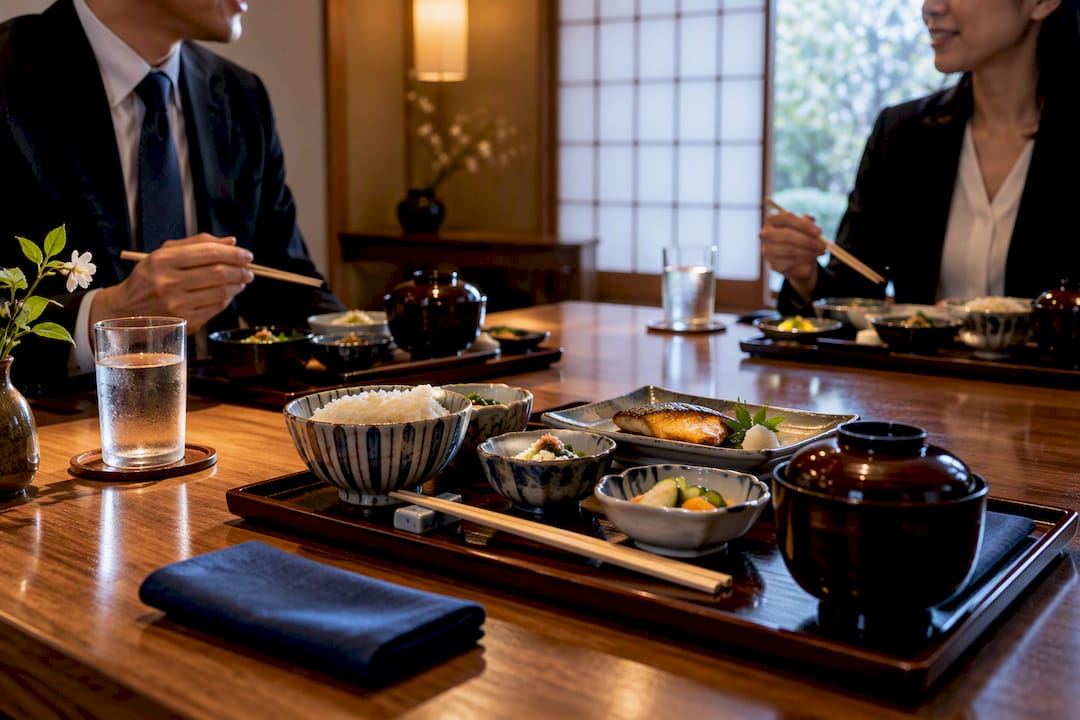
The fastest, most reliable path through Japanese learning follows a set sequence: master hiragana and katakana first, build core grammar and high-frequency vocabulary with a spaced repetition system, learn kanji embedded inside real words rather than in isolation, and spend the bulk of your hours on comprehensible input. Speaking practice gets layered in early, not saved for “someday.”
Three moves to make today:
- Learn hiragana this week using mnemonics; katakana follows the same pattern.
- Set up a spaced repetition deck (Anki is the standard choice) and add ten new words daily.
- Pick one beginner course or graded reader and commit to it for 30 days before switching.
Pro Tip: Anchor your first month around JLPT N5 as a target, not a test you must take. It gives your studying a shape.
Key Takeaways
Reliable Japanese learning follows a fixed sequence: kana, then grammar and vocabulary with SRS, then kanji in context, then heavy comprehensible input alongside regular speaking practice.
| Point | Details |
|---|---|
| Start with kana | Learn hiragana and katakana in about two weeks using mnemonics before moving to grammar. |
| Use SRS daily | Run a spaced repetition deck like Anki every day to retain vocabulary and kanji long term. |
| Learn kanji in context | Study kanji embedded in real vocabulary with radicals, not as isolated flashcards. |
| Prioritize comprehensible input | Spend the majority of study time on graded readers, NHK audio, and slightly-above-level material. |
| Consider guided instruction | Japanese Explorer offers curriculum-guided courses in beginner, business, and online formats for learners who need structure and correction. |
Table of Contents
- What Is the Right Sequence for Learning Japanese?
- How Much Time Does It Take to Learn Japanese Each Week?
- Which Resources Actually Move the Needle?
- Why a Structured Course Often Closes the Gaps Self-Study Leaves Open
- Why Culture Isn’t Optional in Japanese Learning
- What Makes Kanji and Pronunciation So Hard, and What Fixes Them
- How Do You Stay Consistent When Motivation Fades?
- How Do You Get Pronunciation and Intonation Right?
- Formal Versus Informal Japanese: When Does Each Apply?
- What the Research Actually Supports
- Ready to Put This Roadmap Into Practice?
- Sources
- FAQ
What Is the Right Sequence for Learning Japanese?
Skipping steps is the number one reason self-learners stall out around month four. The order matters more than the pace.
-
Hiragana and katakana (weeks 1 to 2). Each script has 46 base characters, and most learners get functional recognition within one to two weeks of daily focused practice. Don’t wait until you’ve “mastered” kana to move on. Type-first is fine; handwriting can wait.
-
Core grammar and vocabulary (months 1 to 3). Focus on particles (は, が, を, に, で), the polite verb forms (ます/です), and a target of 300 to 500 of the most frequent words. This is where an SRS habit starts paying off, since spaced repetition schedules reviews right before you’d naturally forget a word, which makes it unusually efficient for building vocabulary that sticks.
-
Kanji in context (ongoing from month 2). Don’t drill kanji as isolated flashcards disconnected from meaning. Kanji retention improves when characters are learned inside actual vocabulary and paired with radical recognition, which cuts down the mental load of memorizing what otherwise looks like arbitrary strokes. Tofugu’s guide argues that tackling kanji early, rather than deferring it until “later,” produces better long-term results.
-
Comprehensible input (from month 3 onward). This is the engine. Graded readers, NHK’s Easy Japanese audio lessons, and structured platforms like Minato from the Japan Foundation give you material that’s slightly above your current level, which is exactly the zone where real acquisition happens.
Use JLPT levels as milestones, not exams you’re obligated to sit. N5 covers basic phrases and roughly 800 vocabulary words; N4 adds everyday conversation; N3 marks the shift into intermediate reading; N2 and N1 demand near-native handling of abstract topics and formal registers. Rough study-hour estimates back this up: N5 sits around 350 to 450 hours, conversational comfort closer to 600 to 900, and professional-level fluency near 2,200 hours.
How Much Time Does It Take to Learn Japanese Each Week?
Consistency beats marathon sessions. A 20 minute daily habit outperforms a single three hour Sunday cram almost every time, because language retention depends on frequency, not just total hours.
-
Micro-sessions (15 to 30 minutes). Split into three chunks: five minutes of SRS review, ten minutes of a grammar point, and ten minutes of input, whether that’s a graded reader page or an NHK clip.
-
The 30-day plan. Finish kana, start your SRS deck, and complete unit one of a beginner course. Expect roughly 15 to 20 hours total.
-
The 90-day plan. Layer in 300 to 400 vocabulary words, basic particle grammar, and your first 50 to 100 kanji learned inside vocabulary. Expect 60 to 90 hours cumulative, putting you within range of N5 material.
-
The 365-day plan. With consistent daily practice, most learners land somewhere between N5 and N4, provided they’ve hit 350+ hours of combined study and input.
Log your time honestly: input hours (reading, listening), production attempts (writing, speaking), and periodic JLPT-style practice tests. When progress stalls, the fix is rarely “study harder.” It’s usually increase input volume, swap stale materials for new ones, or add a speaking component you’ve been avoiding.
Pro Tip: A structured daily routine combining short SRS sessions, one grammar micro-lesson, and 15 minutes of input holds up far better over months than occasional long study binges.
Which Resources Actually Move the Needle?
Not every tool deserves equal time. Some categories do heavy lifting; others are supplementary at best.
- Structured courses work best for learners who need accountability and a graded path. Self-study suits those with strong discipline and time to build their own curriculum.
- SRS platforms should run daily, integrated with whatever you’re reading or listening to that week, not treated as a standalone chore.
- Comprehensible input sources, including graded readers, NHK’s Easy Japanese programming, and beginner-level podcasts, should occupy the largest share of your weekly hours once you’re past absolute basics.
- Speaking practice comes from language exchange partners, tutors, or private AI-powered conversation sandboxes that let you rehearse scenarios without an audience. Tools in this last category act as a low-stakes practice environment, reducing the anxiety that keeps many learners silent for years.
- A simple beginner stack: kana app, SRS deck, one structured course, ten minutes of daily audio.
- An intermediate stack: SRS with sentence cards, a graded reader series, weekly tutor conversation, and native podcasts at reduced speed.
Why a Structured Course Often Closes the Gaps Self-Study Leaves Open
Self-study handles vocabulary and grammar rules well. It struggles with real-time correction, natural pacing feedback, and the accountability that keeps momentum alive past month three.
At Japanese Explorer, the curriculum is guided by the Association for Japanese-Language Teaching, which keeps grammar, speaking, and listening integrated into every lesson rather than siloed. Classes are taught by bilingual, certified instructors who focus on real-world conversation, not just textbook drills.
- Beginner courses map directly onto the kana-to-grammar stage of the roadmap above.
- Flexible formats, group, private, or online via Zoom, fit different schedules and budgets.
Join a course when you need correction on pronunciation or grammar habits you can’t hear yourself making, or when self-study has stalled past a plateau. Keep self-studying alongside it. Courses accelerate the roadmap; they don’t replace input hours or SRS practice. For adults weighing structured Japanese classes, pairing guided lessons with daily self-study consistently produces faster JLPT progress than either approach alone.
Why Culture Isn’t Optional in Japanese Learning
Grammar and vocabulary only get you halfway. Japanese is a language where social context reshapes word choice, sentence structure, and even which verb form is acceptable in a given room.
Consider keigo, the honorific speech system. It isn’t decoration. Choosing the wrong register with a boss, a customer, or an elder can land as genuinely rude, even if your grammar is technically correct. Understanding concepts like uchi and soto (in-group versus out-group) explains why the same request sounds completely different depending on who’s asking and who’s being asked.

Cultural fluency also unlocks comprehension. Japanese media, from anime to business email, leans heavily on implication rather than direct statement. Learners who study only vocabulary lists often find themselves grammatically correct but socially confused, unable to read the subtext that native speakers absorb automatically.
This is where comprehensible input earns its keep twice over. Watching native content, reading manga, or listening to podcasts doesn’t just teach words. It models how people actually navigate politeness levels, indirect refusals, and seasonal greetings that don’t translate cleanly into English. Skipping this layer produces learners who can conjugate verbs perfectly but freeze in an actual conversation because the social cues don’t match anything in their textbook.
What Makes Kanji and Pronunciation So Hard, and What Fixes Them
Two obstacles derail more learners than anything else: kanji volume and pronunciation habits that calcify early.
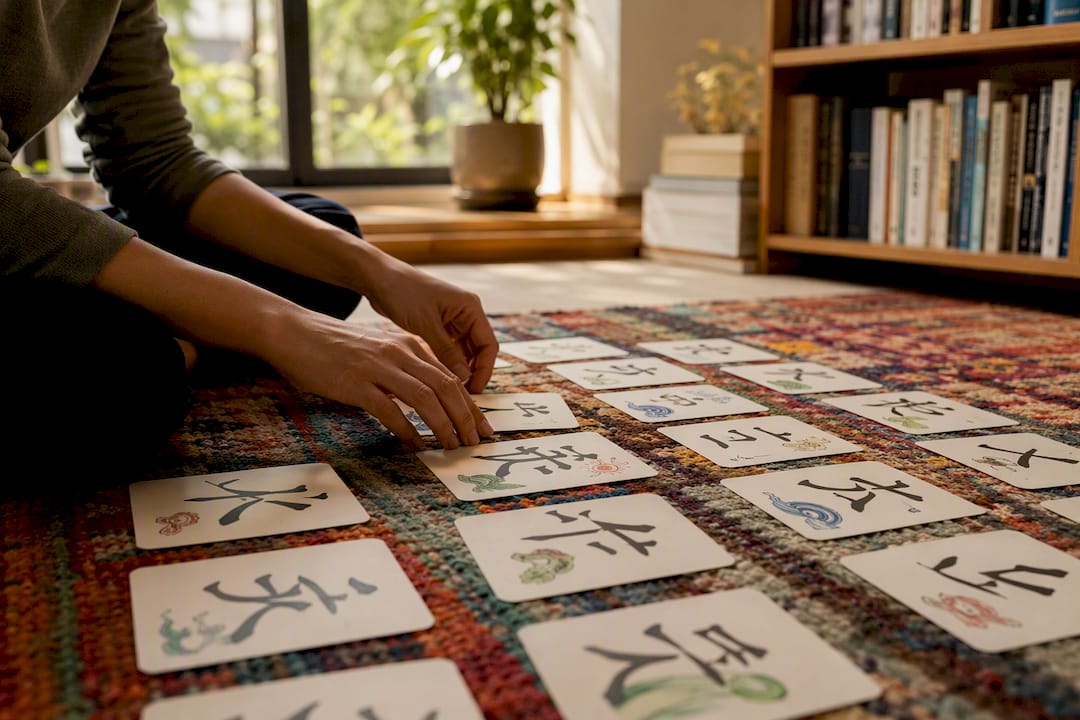
Kanji memorization feels overwhelming because there are over 2,000 characters in common use, each with multiple readings depending on context. The fix isn’t more flashcards. It’s context and radicals: learn characters as pieces of vocabulary you’re already using, not as abstract shapes in isolation. Recognizing common radicals lets you guess meaning and readings for unfamiliar kanji, which speeds up recognition dramatically once you’ve internalized the 50 or so most frequent radicals.
Pronunciation difficulties usually trace back to pitch accent, a feature English speakers aren’t wired to notice. Japanese isn’t tonal like Mandarin, but word meaning can shift based on which syllable carries higher pitch. Most textbooks barely mention it, so learners develop a flat, monotone delivery that’s understandable but noticeably foreign. The fix is exposure: shadowing native audio, repeating phrases aloud, and paying attention to pitch patterns in the first few months rather than trying to correct habits after they’ve hardened.
A third quiet challenge is plateauing around intermediate level, usually because input stays too easy or too repetitive. Rotating in new media formats, harder graded readers, or a tutor who pushes back conversationally tends to break the stall faster than grinding the same materials longer.
How Do You Stay Consistent When Motivation Fades?
Motivation dips are predictable, not a sign you’re failing. Everyone hits a wall somewhere between month two and month six, right when the initial novelty wears off and kanji starts to blur together.
Build habits that don’t depend on motivation at all. Attach your SRS session to something you already do daily, like coffee or a commute, so it becomes automatic rather than a decision you have to make each day. Track visible progress: a running list of kanji learned, vocabulary count, or hours logged gives you concrete evidence that the blur is temporary.
Vary your materials before boredom sets in. If a textbook feels stale, switch to a graded reader or a podcast for two weeks, then return. Small format changes reset engagement without derailing the roadmap.
Community matters more than most self-learners expect. Studying alongside others, whether through a class, a language exchange, or an online study group, adds social accountability that solo learners lose easily. Setting a JLPT date, even an informal one, gives your studying a deadline that’s easy to ignore when the goal is vague (“get better at Japanese”) but hard to ignore when it’s specific (“pass N4 by December”).
How Do You Get Pronunciation and Intonation Right?
Japanese pronunciation is more forgiving than people expect at the sound level. It has five vowel sounds and a relatively small consonant inventory compared to English, so most sounds are learnable within weeks.
Pitch accent is the real challenge. Unlike English stress, where you emphasize a syllable with volume, Japanese words carry pitch patterns, meaning a syllable is spoken at a relatively higher or lower tone. The word 橋 (hashi, “bridge”) and 箸 (hashi, “chopsticks”) are spelled the same in romaji but carry different pitch patterns that native listeners use to distinguish meaning instantly.
Rhythm also trips up English speakers. Japanese is mora-timed, meaning each syllable-like unit gets roughly equal length, unlike English’s stress-timed rhythm where some syllables get compressed and others stretched. This is why English speakers often sound rushed or uneven when they first start speaking Japanese: they’re importing English rhythm into a language that doesn’t work that way.
Shadowing, repeating audio in real time while trying to match pitch and rhythm exactly, remains one of the most effective fixes. Start with short phrases from native audio, not full sentences, and prioritize matching the pattern over understanding every word at first.
Formal Versus Informal Japanese: When Does Each Apply?
Japanese runs on at least three distinct registers, and mixing them up is one of the fastest ways to sound either awkwardly stiff or accidentally rude.
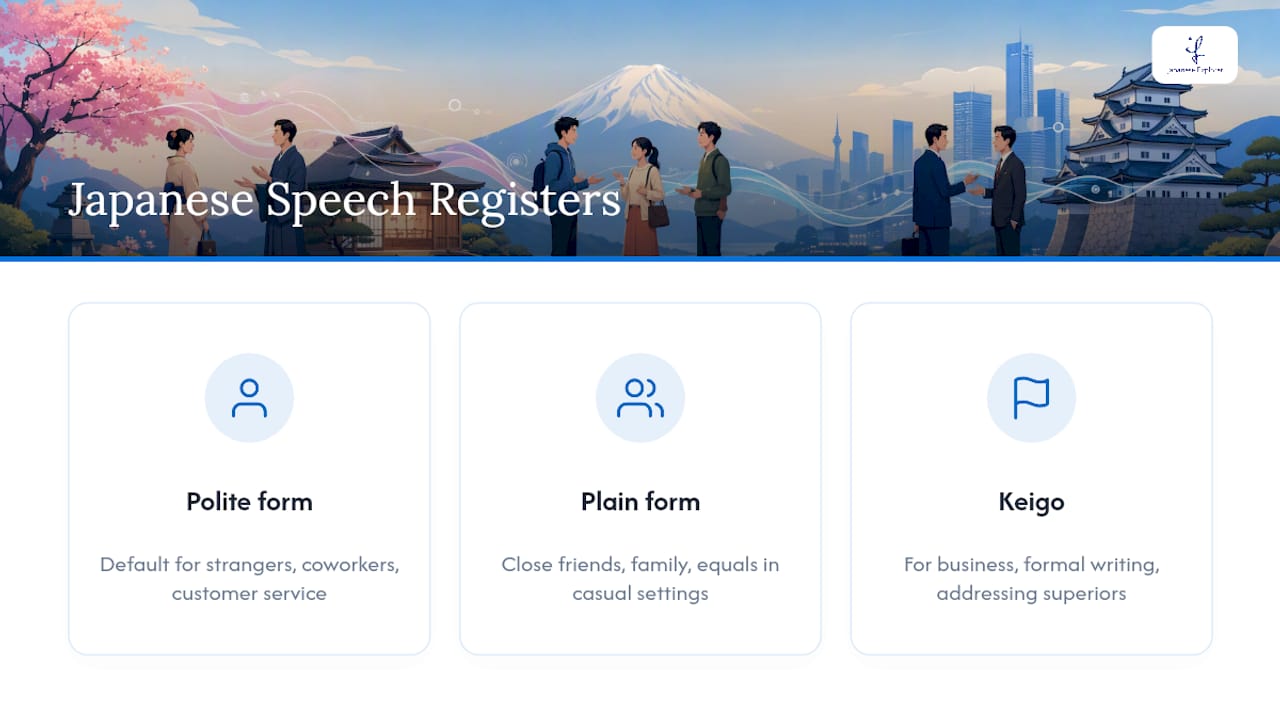
Polite form (です/ます) is the default for strangers, coworkers, customer service, and anyone you don’t have an established casual relationship with. This is what most beginner courses teach first, and it’s a safe default in nearly any unfamiliar situation.
Plain form is used with close friends, family, and people of equal or lower social status in casual settings. Switching too early into plain form with someone you’ve just met can come across as presumptuous, even if your grammar is flawless.
Keigo (honorific speech) sits above polite form and is reserved for business contexts, formal writing, and situations involving social hierarchy, such as addressing a superior or serving a customer. It has its own verb conjugations entirely separate from plain and polite forms, and business Japanese courses typically spend significant time on it precisely because getting it wrong in a professional setting carries real consequences.
The practical rule: default to polite form until someone signals it’s fine to relax, usually by using plain form with you first. Learning to read that signal is itself a marker of genuine fluency, not just vocabulary size.
What the Research Actually Supports
Most advice about learning Japanese treats every method as equally valid, as if flashcards, immersion, and grammar drills all deserve the same weight in your weekly schedule. They don’t. The evidence consistently favors comprehensible input as the primary driver of long-term fluency, with SRS and grammar study as supporting infrastructure, not the main event.
Where conventional advice falls short is kanji sequencing. Plenty of guides still recommend memorizing kanji in isolation before touching real sentences, which produces learners who can write characters on command but freeze when those same characters show up in an unfamiliar word. Learning kanji inside vocabulary from day one avoids that trap entirely.
If you take one thing from this roadmap, prioritize input volume over app-hopping. Learners who stick with one solid course and read consistently outperform those who chase the newest tool every few weeks. Structure beats novelty, every time.
— Paul
Ready to Put This Roadmap Into Practice?
Self-study gets you through kana, basic grammar, and a solid vocabulary foundation. Where most independent learners stall is correction: nobody’s listening for pitch accent mistakes, checking whether your keigo actually lands right, or pushing you past a plateau you can’t see from inside it.

Japanese Explorer runs its curriculum around the Association for Japanese-Language Teaching framework, so lessons integrate grammar, speaking, and listening together instead of treating them as separate skills to drill in isolation. Classes are taught by bilingual, certified instructors, and you can choose group, private, or online formats depending on your schedule. Beginners can start with a dedicated beginner course, while working professionals often go straight into business Japanese training built around workplace scenarios. If flexibility matters more than location, the online course over Zoom covers the same curriculum without the commute. The training centre sits at 10 Anson Road, Level 22, International Plaza, right above Tanjong Pagar MRT, for anyone who prefers in-person lessons. Browse the full range of Japanese language courses and pick the format that fits where you are in the roadmap.
Sources
- Learn Japanese: A Ridiculously Detailed Guide · Tofugu
- JF Japanese e-Learning Minato |The Japan Foundation
- How to Learn Japanese in 2026: A Complete Beginner’s Guide · Shinobi Japanese
- Penko Vox: Japanese on Steam
FAQ
How Can I Learn Japanese Myself?
Start with hiragana and katakana, build core grammar and vocabulary using a spaced repetition system, then shift most of your study time toward comprehensible input like graded readers and native audio. Add speaking practice through language exchange, a tutor, or a private conversation sandbox as soon as you know basic sentence patterns.
What Are the Numbers 1 Through 10 in Japanese?
They are: ichi (1), ni (2), san (3), yon or shi (4), and go (5). Several numbers have two valid readings depending on context.
How Do You Say “I Love You” in Japanese?
The most common phrase is aishiteru (愛してる), though it’s used more sparingly than “I love you” is in English. Many native speakers favor softer expressions like suki (好き, “I like you”) for everyday romantic contexts.
How Can I Learn Japanese Easily?
There’s no shortcut around the roughly 350 to 450 hours it takes to reach JLPT N5 level, but consistent short daily sessions combining SRS, grammar, and input make the process far less draining than infrequent long study blocks. Structured courses, like those built around the Association for Japanese-Language Teaching curriculum, also reduce friction by correcting mistakes before they become habits.
How Long Does It Take to Reach Conversational Japanese?
Most learners reach conversational comfort after roughly 600 to 900 hours of combined study and input, though pace varies based on consistency and how much speaking practice you get along the way.