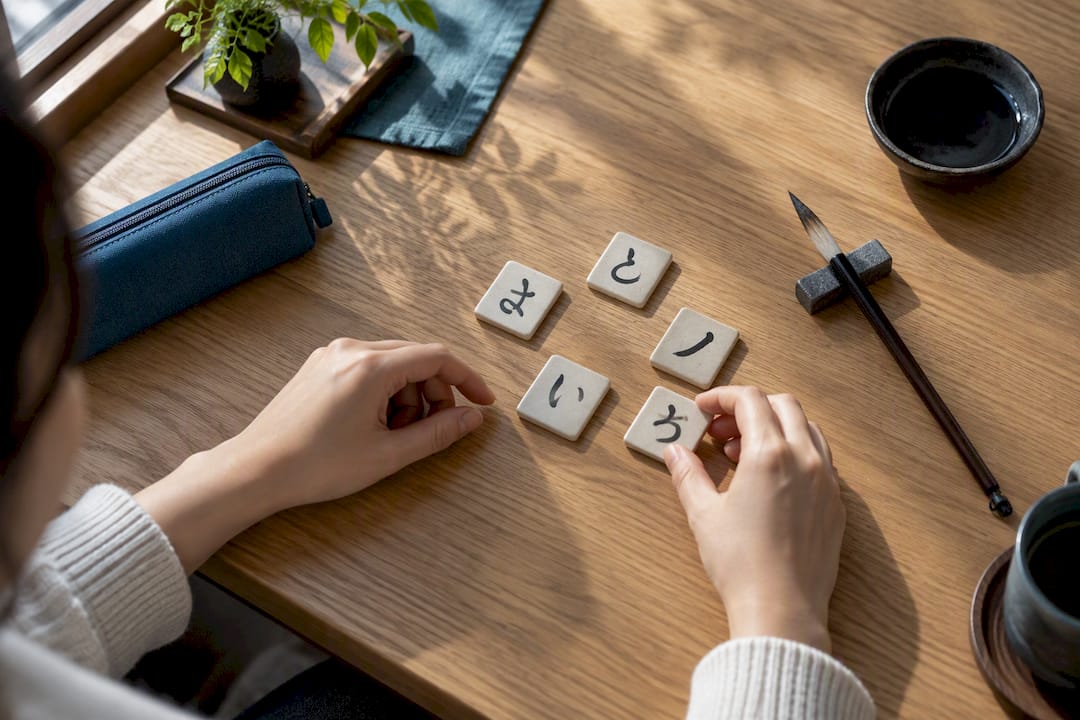
If you search for free Japanese classes, you will find two things: genuinely free self-study material from public institutions, and paid trial lessons that language schools offer as a preview. This guide covers both. It points you to free resources you can start using today, explains the difference between free material and a paid trial, and gives you a seven-question checklist for evaluating any trial lesson you book.
Japanese Explorer’s own trial class is a paid lesson: S$45 for 120 minutes, available at City, Jurong, Tampines or online, subject to your chosen date and format. It is not free, and this article does not redefine “free” to mean a paid preview.
Free Japanese Learning Resources
Two Japan Foundation projects offer material at no cost:
- Irodori: Japanese for Life in Japan provides free downloadable PDF textbooks and audio files covering everyday situations such as shopping, travel and workplace communication. You can download the material and use it for independent practice (Japan Foundation e-learning portal).
- JF Minato is a Japan Foundation e-learning platform where account registration is free. Minato lists free and paid courses with different study formats and support. Before enrolling, check whether the specific course you choose is marked as free or paid (Minato FAQ).
Downloaded self-study material does not provide an assigned teacher or live feedback. Minato also offers other course formats: check the particular listing for its schedule, instructor support and fee. Free account registration does not make every course free.
Free Material, Free Preview or Paid Lesson?
Understanding what you are signing up for saves time and money:
- Free self-study resources include Irodori downloads and courses specifically marked Free on Minato. A downloadable resource is different from a scheduled class. For any course, check enrolment dates, access periods and whether live support is included.
- A free preview or consultation is sometimes offered by schools to explain their programme, assess your level or answer questions. Not every school offers one, and the format varies.
- A paid trial lesson is a real class session you pay for, usually at a set price, to experience the instructor, format and pace before committing to a full package.
Free material can build your reading and listening foundations. A paid trial lets you test whether live instruction adds enough value for your goals. They serve different purposes, and one does not replace the other.
Seven Questions for Evaluating a Trial Lesson
Use these questions before, during and after any trial lesson. Write your actual observations rather than relying on impressions after the fact.
- Goal and level fit. Did the instructor ask about your specific goal (travel, work, exam) and adjust the lesson content? Note: what goal did you state, and how did the lesson address it?
- Actual participation. How much of the session did you spend speaking versus listening? Note: estimate your speaking time in minutes.
- Explanation and feedback. When you made an error, how did the instructor correct you? Were grammar explanations clear in your language? Note: describe one correction you received.
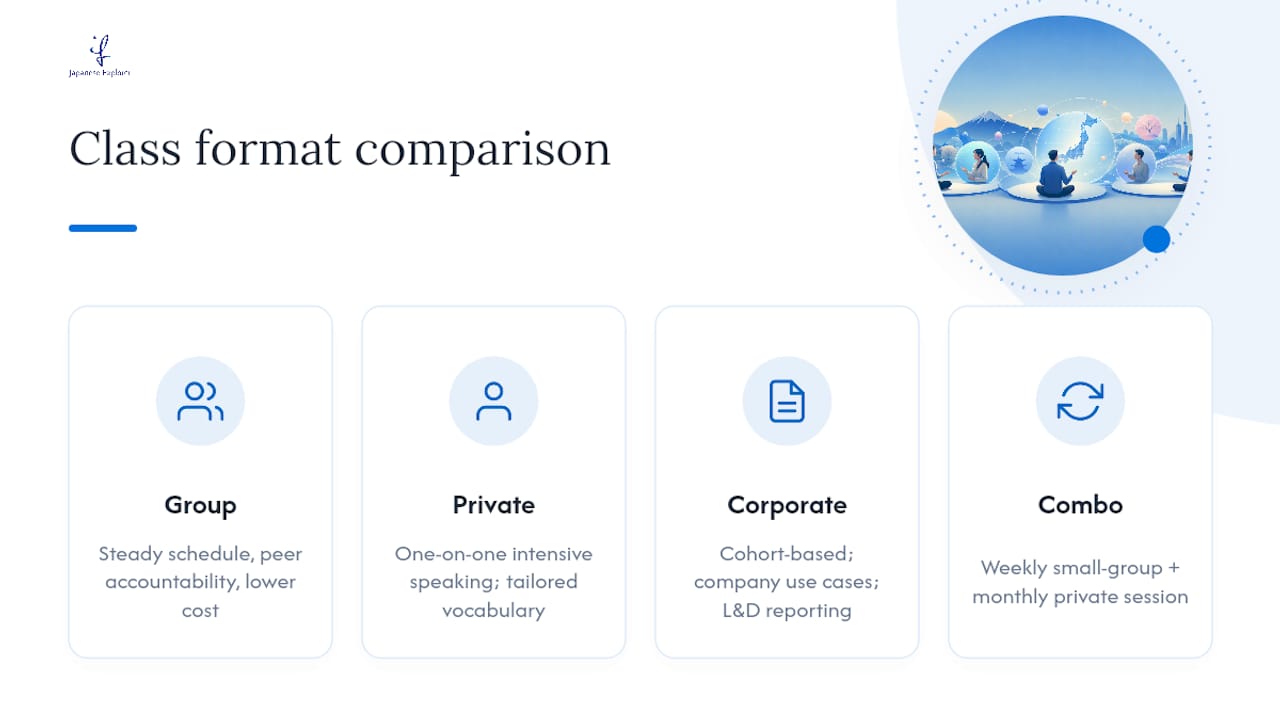
- Hours and schedule. What days, times and formats (in-person, online, group, private) are available? Do they fit your actual week? Note: write the options offered.
- Total cost and inclusions. What is the full price for the package you are considering? Are materials, recordings or make-up sessions included or charged separately? Note: write the quoted figure and what it covers.
- Cancellation and rescheduling terms. What happens if you miss a lesson? Is there a refund, credit or make-up policy? Note: write the exact terms you were told.
- Next step. After the trial, what does enrolment look like? Is there a placement test, a waiting list or a start date? Note: write the next action and any deadline.
How to Use This Checklist
Before the trial: Write down your goal in one sentence (for example, “handle a short Japanese conversation with a colleague”). Tell the school your current level honestly so the trial covers relevant material.
During the trial: Focus on questions 1 through 3. Pay attention to how much you speak, how errors are handled, and whether the content matches your stated goal. If you are evaluating an online class, test your camera and microphone beforehand.
After the trial: Ask questions 4 through 7 before making a decision. Compare at least two providers using the same checklist so the differences are clear rather than relying on memory.
Download the trial evaluation worksheet (PDF) Use one copy per provider, then compare your notes and the written course quotes.
Japanese Explorer Trial Details
Japanese Explorer’s trial lesson costs S$45 for 120 minutes. Locations include City (10 Anson Road, Level 22, International Plaza, Singapore 079903), Jurong, Tampines and online. The date, time and format depend on availability when you book. This is the school’s published paid trial, not a free preview. Do not assume a credit or waiver against later course fees. The published terms make paid trial fees non-refundable and non-transferable and allow one rescheduling; confirm the current terms before booking.
- Book a trial Japanese class
- Take the Japanese placement test
- View detailed course fees for group, private and online formats

FAQ
Are There Genuinely Free Japanese Classes Online?
Yes. The Japan Foundation’s Irodori offers free downloadable textbooks and audio, and JF Minato hosts free self-paced courses alongside paid ones. For Minato, check the specific course listing for its fee, study format and any instructor support. Downloadable material alone does not include a live teacher.
Is Japanese Explorer’s Trial Class Free?
No. The trial lesson costs S$45 for 120 minutes and is available at City, Jurong, Tampines or online.
What Should I Prepare Before a Trial Lesson?
Write a one-sentence learning goal and state your current level honestly. If the lesson is online, test your camera and microphone in advance. Bring the seven-question checklist from this guide to record your observations.