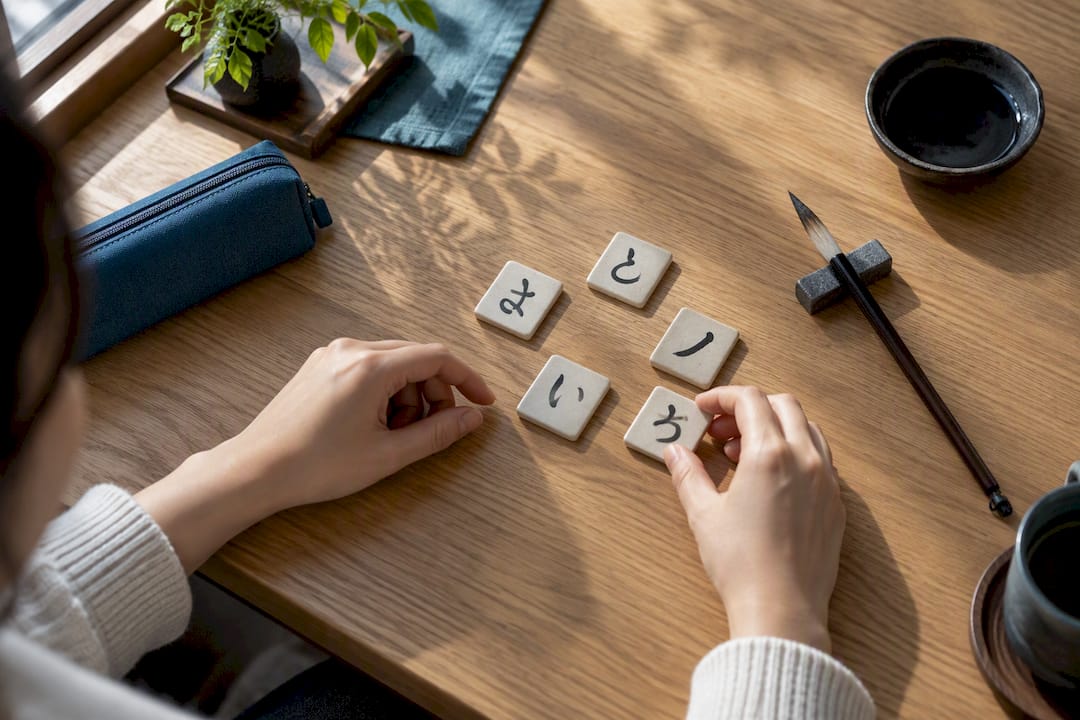
The fastest real progress comes from four things done in parallel: learn hiragana and katakana this week, start a spaced repetition deck immediately, feed yourself 15 to 30 minutes of graded listening or reading every day, and get one weekly speaking session on the calendar before you feel ready. Everything else in learning Japanese language study builds on that foundation.
Here’s what to do in the next 48 hours:
- Learn hiragana this week using mnemonics and a kana chart, then move to katakana.
- Install an SRS deck (Anki works well) and add 10 to 15 new words a day, no more.
- Subscribe to one graded resource today: NHK World Learn Japanese for structured lessons, Nihongo-e-na style beginner drills, or the r/LearnJapanese community for daily Q&A support.
Key Takeaways
Consistent daily input, spaced repetition for vocabulary, and early speaking practice together produce faster, more durable progress than any single app or method alone.
| Point | Details |
|---|---|
| Start with kana | Master hiragana and katakana with consistent daily practice before touching kanji seriously. |
| Use SRS daily | Regularly add new vocabulary cards through a spaced repetition tool like Anki for lasting retention. |
| Speak before you’re ready | Weekly conversation practice, even briefly, prevents the reading-only plateau. |
| Learn kanji in context | Study characters inside real words rather than as isolated shapes. |
| Add structure when you plateau | Japanese Explorer’s group, private, and online adult courses build on self-study with real feedback and a level-chart curriculum. |
Table of Contents
- Your First 3-Month Roadmap for Learning Japanese
- What Should You Study First: Kana, Grammar, or Vocabulary?
- How Do You Practice Listening and Speaking From Day One?
- Which Apps and Tools Actually Work for Studying Japanese?
- Why Do Some Study Methods Work Better Than Others?
- Self-Study, Apps, Tutors, or Classroom: Which Fits You?
- How Do You Practice Writing Kana and Kanji Effectively?
- What Mistakes Do Most Beginners Make?
- Ready for Guided Structure? Here’s How Japanese Explorer Fits In
- Sources
- FAQ
Your First 3-Month Roadmap for Learning Japanese
A realistic three-month plan has three phases, and skipping the order is the single biggest reason beginners stall out.
- Weeks 1-2: Master hiragana and katakana. Most learners hit reliable recognition in about two weeks of daily practice, according to Shinobi Japanese. Drill both scripts through typing and handwriting, not just recognition.
- Weeks 3-8: Learn core grammar (particles, です/ます, present and past tense) alongside your first 300 to 500 high-frequency words. Add 10 new vocabulary cards a day to your SRS deck.
- Weeks 9-12: Introduce graded input, short podcasts, or beginner readers, and start noticing kanji inside the vocabulary you already know rather than studying characters in isolation.
Aim for 15 to 60 minutes daily, split roughly into SRS reviews, one grammar point, and graded listening or reading. By month three, a good milestone checklist looks like reading simple sentences aloud, ordering food from a menu, giving a short self-introduction, and recognizing 100 to 200 kanji in context. That’s also a natural point to add a tutor or a structured beginner course if you want feedback you can’t get from an app.
Pro Tip: Attach your first month of study to something you already do daily, like coffee or a commute. A 10-minute SRS session tied to an existing habit survives far longer than one that depends on willpower alone.
What Should You Study First: Kana, Grammar, or Vocabulary?
Kana comes first, full stop. Hiragana and katakana unlock everything else, including typing, pronunciation, and reading beginner materials, and most learners lock in both scripts within two weeks of consistent daily practice. Typing practice tends to move faster than handwriting at this stage, though handwriting builds stronger recall later.
Once kana feels comfortable, layer in grammar building blocks in this order:
- Particles (は, が, を, に, で) since they carry the sentence structure.
- です/ます polite forms, since you’ll use them in nearly every early conversation.
- Present and past tense conjugation, then the て-form, which unlocks requests and connected sentences.
For vocabulary, apply an 80/20 approach: roughly 1,000 words cover most daily conversation needs, so prioritize frequency lists over random word lists. Feed these into an SRS deck rather than trying to memorize lists cold.
Kanji deserves a different strategy than most beginners use. Learning characters inside real words and phrases, rather than as isolated shapes, reduces the wall many learners hit around the 300-kanji mark, according to Shinobi Japanese. Once you’re comfortable with basic grammar, a dedicated kanji SRS tool like WaniKani becomes worth adding, since it uses radicals to speed up recognition.
How Do You Practice Listening and Speaking From Day One?
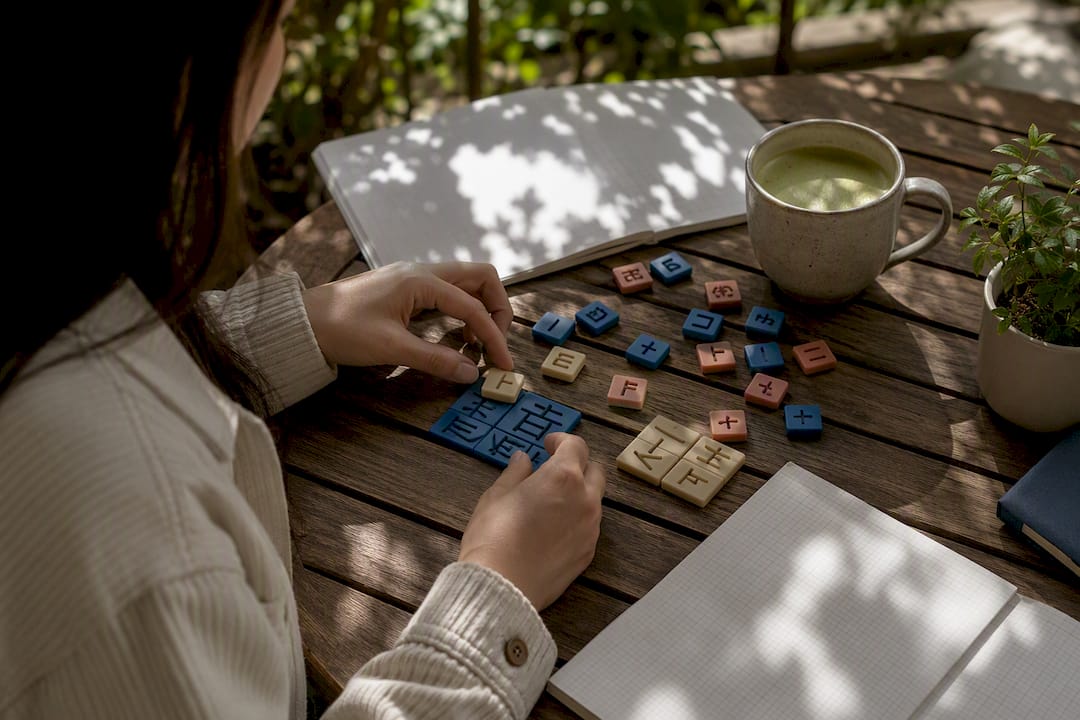
Reading and grammar drills only get you halfway. Listening and speaking need deliberate, repeatable practice, or you’ll hit the classic plateau where you can read but freeze in conversation.
- Shadow short audio clips. Pick a one-minute clip slightly above your level, listen once for meaning, then play it again and speak along in real time, matching rhythm and pitch before worrying about every word.
- Build a daily immersion habit. Switch your phone’s language, queue up a podcast during your commute, or watch a subtitled show. Fifteen to twenty minutes of comprehensible input daily compounds faster than one long weekend binge.
- Get real conversation practice weekly. A tutor, a language exchange partner, or a moderated community like r/LearnJapanese gives you low-stakes speaking reps. Once or twice a week is enough to keep skills from going stale; three times moves you faster.
Comprehensible input, meaning material just slightly above your current level, is a genuine engine of progress once your basics are solid, per Shinobi Japanese. Don’t wait for “fluent enough” to start speaking. Early discomfort is part of the process.
Which Apps and Tools Actually Work for Studying Japanese?
The right tool depends on what you’re missing, not what’s trending. Here’s how the major options actually function:
- Anki: General-purpose spaced repetition for vocabulary and sentences. Free, flexible, and the backbone of most serious self-study plans.
- WaniKani: Kanji-focused SRS using radicals to build character recognition faster than rote memorization.
- Bunpro: Grammar-specific SRS that drills sentence patterns instead of vocabulary, useful once you have kana down.
- NHK World Learn Japanese: Structured lessons with a level chart, ideal for mapping your progress against a real curriculum.
- Nihongo-e-na: Beginner-friendly exercises good for reinforcing early grammar and vocabulary.
- Duolingo: A solid habit builder for daily consistency, but thin on grammar explanation and speaking practice, so pair it with something deeper.
- r/LearnJapanese: A high-traffic community for quick questions, motivation, and crowdsourced troubleshooting.
A workable weekly routine might combine 10 minutes of SRS review, 20 minutes of graded reading, and 15 minutes of grammar study, adjusted to your schedule. You can also use scheduling apps to confirm study sessions and stay consistent if accountability is your weak spot.
The biggest red flag is relying on one app alone, or jumping into native anime and novels before you have the vocabulary to understand more than a few words per sentence. Neither habit builds the depth fluency actually requires.
Why Do Some Study Methods Work Better Than Others?
Not all study time is equal. Five methods consistently show up in effective adult learning plans: comprehensible input, spaced repetition, retrieval practice, real interaction, and shadowing, according to research on adult Japanese acquisition.
- Comprehensible input works because your brain absorbs grammar patterns naturally when material sits just above your current level, known as i+1.
- Spaced repetition schedules reviews right before you’d forget a word, which is far more efficient than cramming.
- Retrieval practice (actively recalling an answer instead of rereading it) cements memory better than passive review.
- Interaction with a real person forces you to produce language under time pressure, which accelerates speaking far faster than solo study.
Adults bring genuine advantages here: stronger metacognition and pattern recognition than younger learners, which is why explicit grammar study pays off so well for adult brains, per GaijinPot.
Pro Tip: Use your SRS deck to lock in high-frequency vocabulary, then deliberately use those same words in your next one or two speaking sessions. Locking a word in isolation and never speaking it wastes half its value.
Self-Study, Apps, Tutors, or Classroom: Which Fits You?
Match the path to your schedule and goals, not to whatever’s trending online.
| Learner Profile | Recommended Path |
|---|---|
| Disciplined beginner with flexible time | Self-study: SRS plus daily comprehensible input |
| Busy professional wanting steady habits | App-driven routine (Duolingo or Anki) plus one weekly grammar session |
| Learner stuck on speaking despite good reading skills | Tutor-focused practice or private lessons |
| Relocating to Japan or pursuing business use | Structured classroom course for accountability and progression |
If you’re plateauing in speaking, reviewing inconsistently, or avoiding graded input altogether, that’s the signal to add structure rather than another app.
How Do You Practice Writing Kana and Kanji Effectively?
Handwriting still matters, even in a typing-first world, because tracing stroke order builds muscle memory that pure recognition never does. Start with kana: write each character multiple times while saying it aloud, since combining the visual and auditory channels speeds up recall.
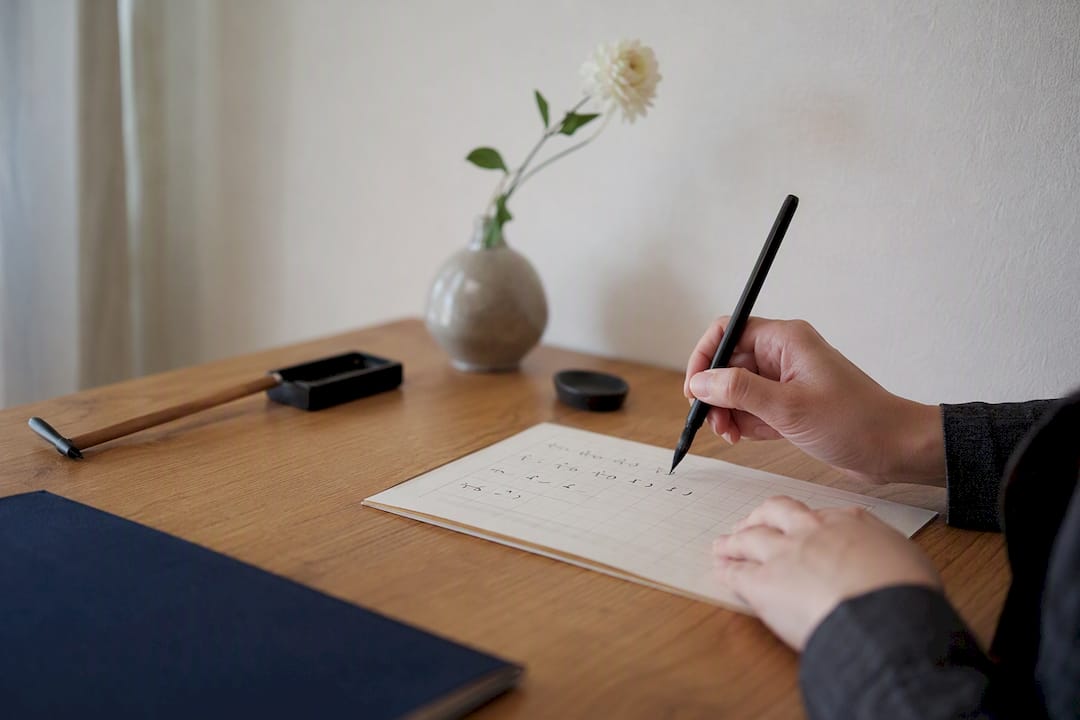
For kanji, stroke order isn’t decorative. Characters are built from consistent radicals, and learning the correct sequence makes similar-looking kanji far easier to distinguish later. Grab a grid notebook (genkouyoushi paper if you can find it) and write new kanji in the context of a word, not as an isolated shape. A character like 食 means little on its own, but 食べる (to eat) sticks because you’re writing something you’ll actually use.
Keep a running error log of characters you consistently mix up. Reviewing your own mistakes, rather than a generic character list, targets exactly the gaps that are slowing you down, a method that shows up repeatedly in practical beginner guidance.
Set a modest daily target, five to ten new characters, rather than binging twenty in one sitting and forgetting half by the weekend. Pair handwriting practice with your SRS reviews so the character you wrote on paper this morning is the same one testing your recall tonight. That overlap between the physical and digital practice is what actually cements the character, not the total hours logged.
What Mistakes Do Most Beginners Make?
Most beginners don’t fail from lack of effort. They fail from a handful of predictable, fixable habits.
The most common mistake is skipping kana to jump straight into kanji or romanized text. Romanization feels comfortable, but it delays real reading ability and creates pronunciation habits that are hard to unlearn later.
A close second is treating one app as a complete curriculum. Duolingo and similar tools build a great daily habit, but they don’t explain grammar deeply enough or provide the volume of listening practice fluency requires, a gap worth pairing with structured Japanese lessons.
Other frequent pitfalls include:
- Avoiding speaking until “ready.” Readiness never arrives on its own. Early, awkward conversation practice teaches more than another month of silent study.
- Studying vocabulary lists instead of high-frequency words. Random word lists waste review time on words you’ll rarely use.
- Memorizing kanji in isolation. Characters stick far better learned inside real vocabulary and sentences.
- Inconsistent review schedules. Sporadic SRS use undercuts the entire point of spaced repetition.
- No error tracking. Without a record of recurring mistakes, you repeat the same ones for months.
An honest note on what adult learning actually feels like
Adults bring real advantages to this: strong metacognition, the ability to set structured goals, and patience most teenagers don’t have. But none of that substitutes for consistent input and speaking early, even when it’s uncomfortable. Progress feels slow around month two, then noticeably faster by month four. Try this week: record a three-minute voice memo in Japanese every other day, just talking about your day. It’s a small, low-pressure way to build speaking reps.
Ready for Guided Structure? Here’s How Japanese Explorer Fits In
Self-study covers a lot of ground, but a curriculum built around a real level chart closes gaps that apps and solo review can’t. Japanese Explorer offers adult-focused courses, including small-group classes, private lessons, and online Zoom courses, all taught by bilingual, certified instructors who structure lessons around real conversation rather than isolated drills.
This fits particularly well for busy professionals who need consistency without commuting, learners aiming for genuine conversational confidence, and companies exploring corporate Japanese training for teams working with Japanese clients or offices. Classes run from the school’s location at 10 Anson Road, Level 22, International Plaza, right above Tanjong Pagar MRT, for anyone who prefers in-person sessions, alongside flexible online options for everyone else. If your solo study has plateaued or you want feedback a spaced repetition app simply can’t give you, book a trial session through the Japanese language courses page and see how a structured class compares to going it alone.
Sources
- How to Learn Japanese in 2026: A Complete Beginner’s Guide · Shinobi Japanese
- How to Learn Japanese as an Adult — 5 Science-Backed Methods · GaijinPot
- Learn Japanese: A Ridiculously Detailed Guide · Tofugu
- Learn Japanese – Reliable and practical language learning programs | NHK WORLD-JAPAN
FAQ
How can I learn Japanese by myself?
Combine an SRS deck for vocabulary, a grammar resource for structure, and daily graded listening or reading, then add weekly speaking practice through a language exchange or tutor to avoid the common plateau.
What are the numbers 1 through 10 in Japanese?
They are ichi, ni, san, shi (or yon), go, roku, shichi (or nana), hachi, kyuu, and juu, though several numbers have two common readings depending on context.
How long does it take to become fluent in Japanese?
Timelines vary widely by study intensity, but consistent daily practice over one to two years typically gets learners to conversational fluency, with structured courses often accelerating that timeline through regular feedback.
How can I learn Japanese more easily?
Prioritize kana first, focus vocabulary study on the roughly 1,000 highest-frequency words, and lean on comprehensible input rather than rote memorization, since material slightly above your level builds grammar intuition faster than drills alone.