TL;DR:
- Japanese business communication relies on hierarchy, indirect language, and protocols like Ho-Ren-So and keigo to maintain harmony and trust. Mastering these elements is essential for effective collaboration with Japanese partners and demonstrates cultural respect and understanding.
Japanese business communication is a structured system built on hierarchy, indirect language, and specific protocols like Ho-Ren-So and keigo, which govern every interaction to maintain harmony and build trust. Unlike Western communication styles that often favor directness, the structure of Japanese business communication operates through layered signals: who sits where, how you phrase a request, and whether you consult before deciding. Mastering this system is not optional for professionals working with Japanese partners or companies. It is the foundation of every successful business relationship in Japan. This guide breaks down each component so you can apply it with confidence.
What is Ho-Ren-So and how does it structure internal communication?
Ho-Ren-So structures internal communication around three core actions: report (Hou), inform (Ren), and consult (So). The term comes from the Japanese words for spinach, but its meaning in business is anything but casual. It is the backbone of how Japanese teams stay aligned and avoid surprise decisions that could disrupt workflow.
Here is how each component works in practice:
- Report (Hou): You report the status of a task or project to your supervisor regularly, even when nothing has changed. Silence is not assumed to mean progress.
- Inform (Ren): You share relevant updates with colleagues and other departments who need to know. This keeps the whole team on the same page.
- Consult (So): Before making a decision, you seek input from your manager or senior colleagues. Acting alone on a significant matter is seen as disrespectful.
A practical example: if you are managing a client project and hit a delay, you do not wait for the weekly meeting to mention it. You report the issue to your supervisor immediately (Hou), inform the relevant team members (Ren), and consult your manager on the best course of action before responding to the client (So). This sequence signals reliability and respect for the chain of command.
Pro Tip: Apply Ho-Ren-So even when you think an update is minor. In Japanese corporate culture, over-communicating upward is always safer than under-communicating. Your manager should never hear news about your project from someone else first.
How does hierarchy shape Japanese business meeting etiquette?
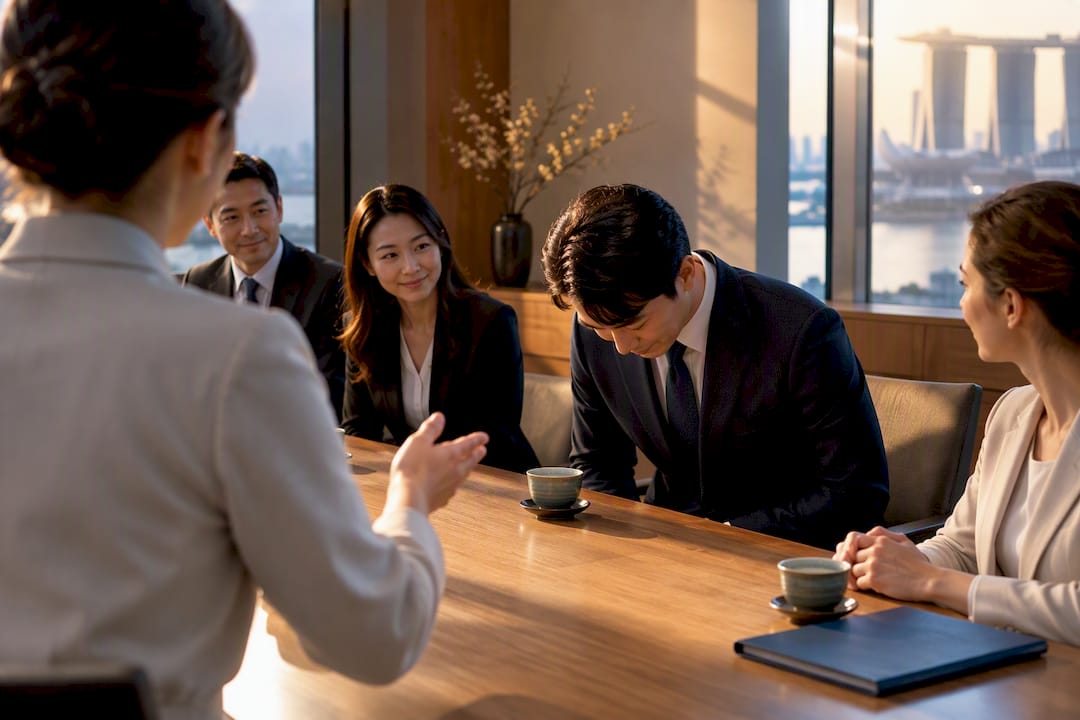
Hierarchy is the invisible architecture of every Japanese business interaction. Seating reflects status in a direct and deliberate way, and getting it wrong signals a lack of preparation.
The two key seating positions are:
- Kamiza (seat of honor): The seat farthest from the door, reserved for the most senior person in the room. In a client meeting, the senior client representative sits here.
- Shimoza (lower seat): The seat closest to the door, occupied by the most junior person present. This person often handles practical tasks like pouring tea.
Beyond seating, hierarchy shapes the entire flow of a meeting:
- The most senior person speaks first or is addressed first.
- Junior staff do not contradict senior colleagues in front of clients.
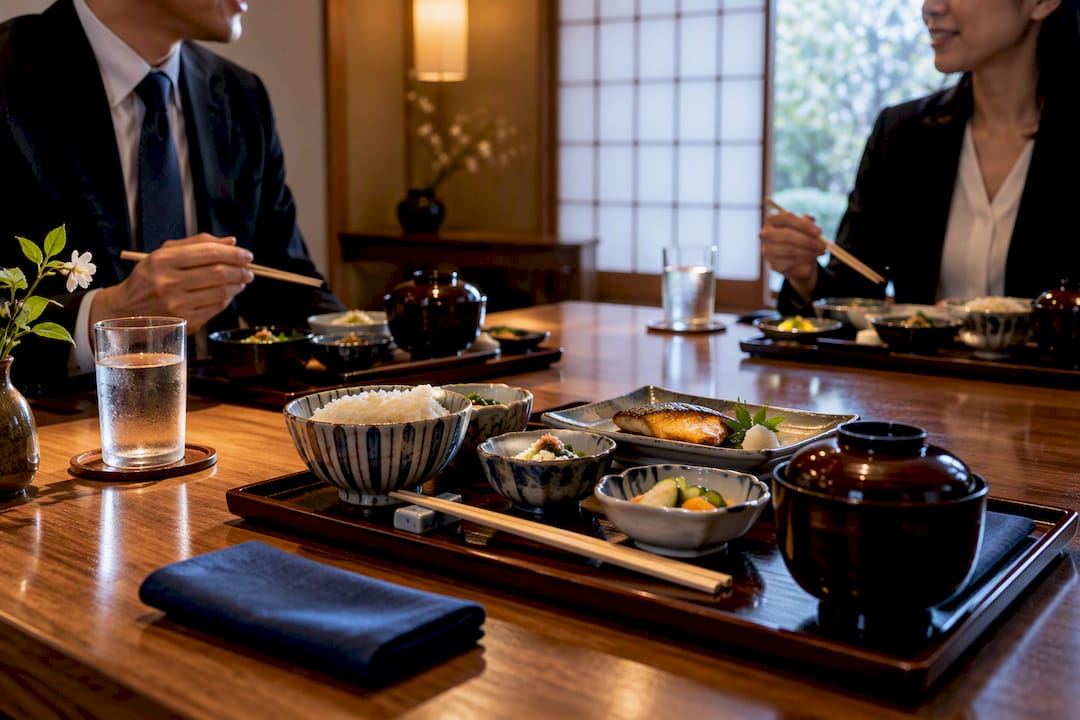
- Tea is poured and served in order of seniority, starting with the highest-ranking guest.
- Business cards are exchanged in hierarchical order, senior to senior first.
Operational signals like seating and role cues convey decision responsibility beyond spoken words. A foreign professional who sits in the wrong seat or speaks before a senior Japanese counterpart can create friction that no amount of polished language will fix.
| Protocol | What it signals |
|---|---|
| Kamiza seating | Respect for the highest-ranking person |
| Speaking order | Deference to seniority and authority |
| Tea pouring sequence | Awareness of group hierarchy |
| Business card exchange order | Recognition of rank and role |
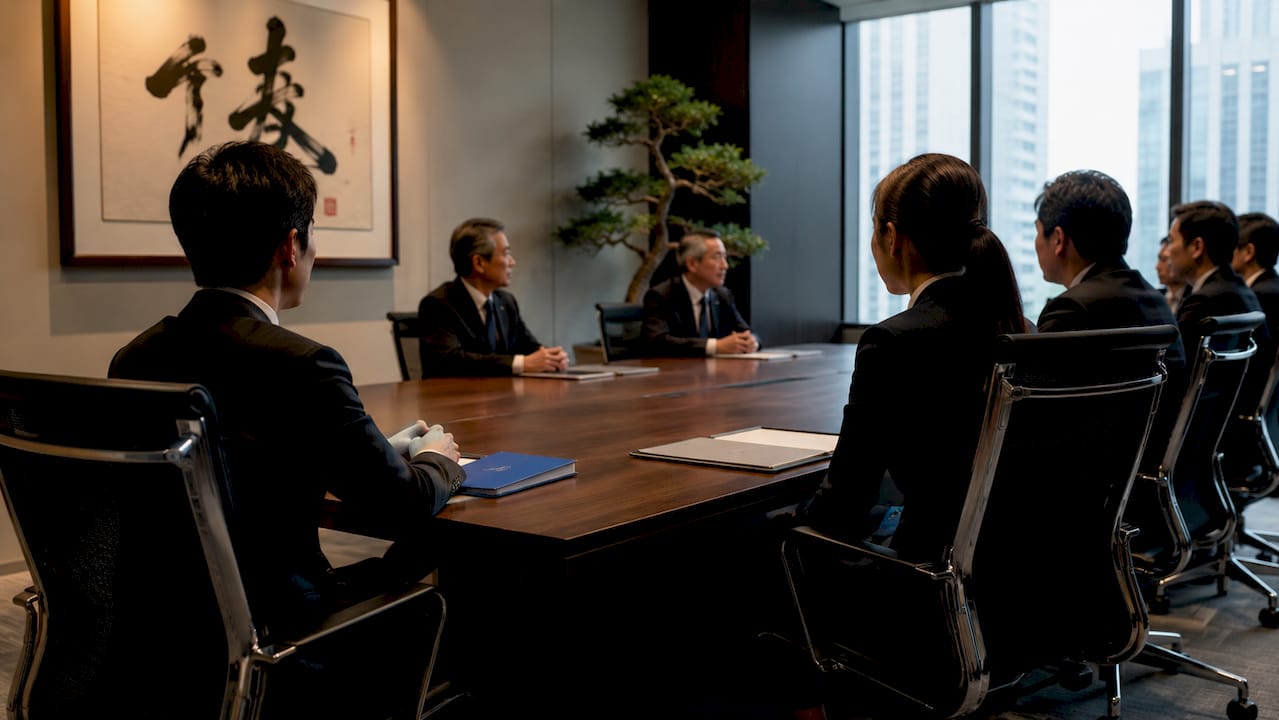
Pro Tip: When you enter a Japanese meeting room and are unsure where to sit, wait. A Japanese host will almost always guide you to the correct seat. Waiting shows cultural awareness, not hesitation.
What role does keigo play in Japanese business communication?
Keigo is the honorific language system that encodes social relationships into every sentence you speak or write. Keigo categories divide into three types, each serving a distinct social function:
- Teineigo (polite language): The baseline level of politeness used in most professional settings. It uses verb endings like “masu” and “desu.”
- Sonkeigo (respectful language): Used when referring to the actions of someone senior to you, such as a client or manager. You elevate their actions with special verb forms.
- Kenjogo (humble language): Used when referring to your own actions in the presence of someone senior. You lower your own status to show deference.
The concept of uchi-soto, meaning in-group versus out-group, drives keigo choices. When speaking about your own company to an outsider, you use humble language even when referring to your senior colleagues. When speaking about the client’s company, you use respectful language even for their junior staff. This distinction trips up many non-Japanese professionals who apply keigo inconsistently.
Incorrect keigo use does not just sound awkward. It can genuinely offend. Using sonkeigo to describe your own actions, for example, comes across as arrogant. Using casual speech with a client signals disrespect. Learning keigo is one of the most direct ways to build credibility in a Japanese professional setting. Resources like polite language in business can help you understand which forms to use and when.
How does indirectness shape Japanese business interactions?
Japanese business communication is high-context. Much meaning is implied, and participants are expected to read the atmosphere, a skill called kuuki wo yomu, which translates literally as “reading the air.” Direct confrontation is avoided because it threatens group harmony, known as wa.
Key features of indirect communication in Japanese business settings include:
- Softened refusals: A direct “no” is rare. Phrases like “chotto muzukashii kamoshirenai” (that might be a little difficult) or “we will consider it” signal a polite refusal without damaging the relationship.
- Silence as reflection: A pause after your proposal does not mean disagreement. It often means the other party is thinking carefully. Rushing to fill the silence with more talking is a common mistake.
- Tone and facial expression: These carry as much weight as words. A slight hesitation or a tightening of the expression can signal discomfort that will never be stated aloud.
- Nemawashi: Before a formal meeting, Japanese professionals quietly consult stakeholders to build consensus. By the time a decision reaches the meeting room, it has often already been agreed upon informally.
“Reading the air is not a soft skill in Japan. It is a core professional competency that determines whether you are trusted with important decisions.”
Understanding these signals protects you from misreading a “yes” that actually means “we will think about it” and from pushing too hard when the other party has already decided.
What practical strategies help non-Japanese professionals succeed?
Applying the structure of Japanese business communication in a real workplace takes deliberate practice. These steps give you a solid starting point:
- Use Ho-Ren-So from day one. Do not wait to be asked for updates. Report progress, inform relevant colleagues, and consult before making decisions. This habit alone builds significant trust quickly.
- Respect seating and speaking order. Arrive early enough to observe the room setup. Let your Japanese counterparts guide seating if you are unsure. Address the most senior person first.
- Structure your emails correctly. Japanese business emails follow a structured format that includes a formal greeting, a clear statement of purpose, supporting details, and a respectful closing. Clarity and conciseness are valued because Japanese business messaging is judged on ease of response.
- Master the business card exchange. Punctuality, preparation, and correct card exchange rituals signal respect before a single word is spoken. Receive cards with both hands, read them carefully, and place them respectfully on the table in front of you.
- Learn basic keigo phrases. You do not need to be fluent to show effort. Using even simple honorific forms correctly demonstrates cultural respect and earns goodwill. Check out Japanese meeting phrases for practical language you can use right away.
Pro Tip: Before a major meeting with a Japanese partner, do your own version of nemawashi. Reach out to your Japanese contact informally beforehand to gauge their position. Walking into the meeting already knowing the likely outcome shows you understand how decisions are actually made.
Key takeaways
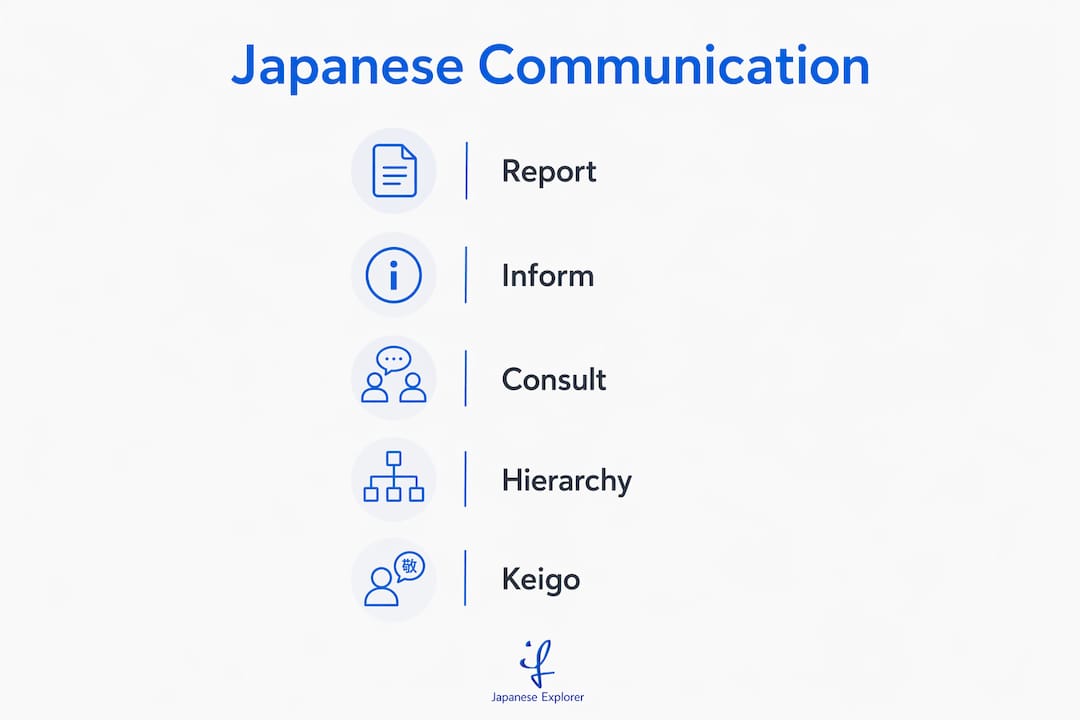
Effective Japanese business communication requires mastering hierarchy, indirect language, and structured protocols before any negotiation or collaboration can succeed.
| Point | Details |
|---|---|
| Ho-Ren-So is the foundation | Report, inform, and consult regularly to signal reliability and respect hierarchy. |
| Hierarchy governs every interaction | Seating, speaking order, and tea service all reflect status and must be observed carefully. |
| Keigo encodes social relationships | Use teineigo, sonkeigo, and kenjogo correctly based on who you are addressing and their rank. |
| Indirectness is intentional | Silence, softened refusals, and nemawashi are deliberate tools for maintaining harmony. |
| Etiquette signals trust | Correct protocols signal reliability before results are ever discussed. |
What I have learned from watching professionals navigate this system
Working with professionals who interact with Japanese companies, I have noticed one consistent pattern. The people who struggle most are not the ones with poor language skills. They are the ones who treat Japanese business communication as a set of rules to memorize rather than a system to understand.
The indirectness is not evasion. It is a form of respect. When a Japanese colleague says “that might be difficult,” they are giving you a graceful exit. They are protecting your face as much as their own. Professionals who push past that signal and demand a direct answer almost always damage the relationship permanently.
The hierarchy signals are not bureaucracy. They are a map of who carries responsibility. Once you learn to read that map, meetings become much clearer. You know who the real decision-maker is, even if they speak the least.
The single most underrated investment a professional can make before working with Japanese partners is time spent learning the language. Even basic Japanese shows a level of commitment that no business card or gift can replicate. It tells your counterpart that you took this relationship seriously enough to do the hard work. That signal lands before you say a single word in a meeting room.
— Paul
Build your Japanese business communication skills with Japanese Explorer
Japanese Explorer offers business Japanese courses designed specifically for working professionals who need practical communication skills, not just textbook grammar. The curriculum covers keigo, Ho-Ren-So, meeting protocols, and email structure in a format built for real workplace use.

Classes are available in small groups, private sessions, and online via Zoom, so you can fit learning around a full work schedule. Courses are taught by certified bilingual instructors with real experience in Japanese corporate environments. Whether you are preparing for your first meeting with a Japanese client or building toward fluency for a long-term role, Japanese Explorer’s online Japanese courses give you the structure and support to get there. The school is located at 10 Anson Road, Level 22, International Plaza, Singapore 079903, right above Tanjong Pagar MRT.
FAQ
What is Ho-Ren-So in Japanese business communication?
Ho-Ren-So stands for report, inform, and consult. It is the core internal communication method Japanese teams use to stay aligned, respect hierarchy, and avoid surprise decisions.
What are the main types of keigo used in business Japanese?
The three main types are teineigo (polite), sonkeigo (respectful, used for seniors), and kenjogo (humble, used for yourself). Each type changes verb forms and vocabulary based on the social relationship between speaker and listener.
How do you politely say no in Japanese business settings?
Direct refusals are avoided. Phrases like “chotto muzukashii kamoshirenai” (that might be a little difficult) or “we will consider it” serve as polite ways to decline without damaging the relationship or causing loss of face.
What is the kamiza and shimoza seating rule?
Kamiza is the seat of honor, farthest from the door, reserved for the most senior person. Shimoza is the seat closest to the door, occupied by the most junior person. Following this protocol shows awareness of hierarchy and professional preparation.
How does Japanese business email etiquette differ from Western email?
Japanese business emails follow a structured seven-part format that includes a formal greeting, a clear statement of purpose, supporting details, and a respectful closing. The goal is to make the email easy to respond to, which is treated as a sign of professionalism.