Causing trouble or mistakes for others is something every person has done at some point in their lives. Whether it be an accident or something you did on purpose, knowing how to say sorry is very important. Apologizing in the right way can make all the difference between forgiveness and resentment.
When you are learning a new language, one of the first phrases you should learn is how to express a genuine apology. Since cultures are different, what may occasion someone to apologize in Japanese may be different from Singapore or any other part of the world. Also, the phrases to use may vary with the situation.
For instance, we can say “I’m sorry” when you inconvenience a person or hurt them. But, we say “Sorry for your loss” to express sympathy. In both cases, the primary word is sorry, but the expression varies with the situation. You don’t want to be tongue-tied or use the wrong phrase when it comes to apologizing. Not only is it embarrassing, but it can also be deemed rude.
There are many ways to apologize in Japanese for differing situations, and we will learn all about them here!
When Is It Appropriate to Apologise in Japan?
Being apologetic is a sign of respect and appreciation in Japanese culture. It is considered rude not to express your regret when you have done mistakes.
Various scenarios can call for an apology. These examples illustrate different situations. You can ask your tutor to help you to role-play the scenarios during your Japanese language classes.
- When you inconvenience a person or hurt a person unintentionally.
- When a person goes out of their way to do you a favour, the apology is an outside gesture of your gratitude.
- When you cause a minor accident or want to interrupt someone. For instance, if you accidentally bump into someone or stop a person on the street to ask for directions.
Different Ways to Apologise in Japanese Culture
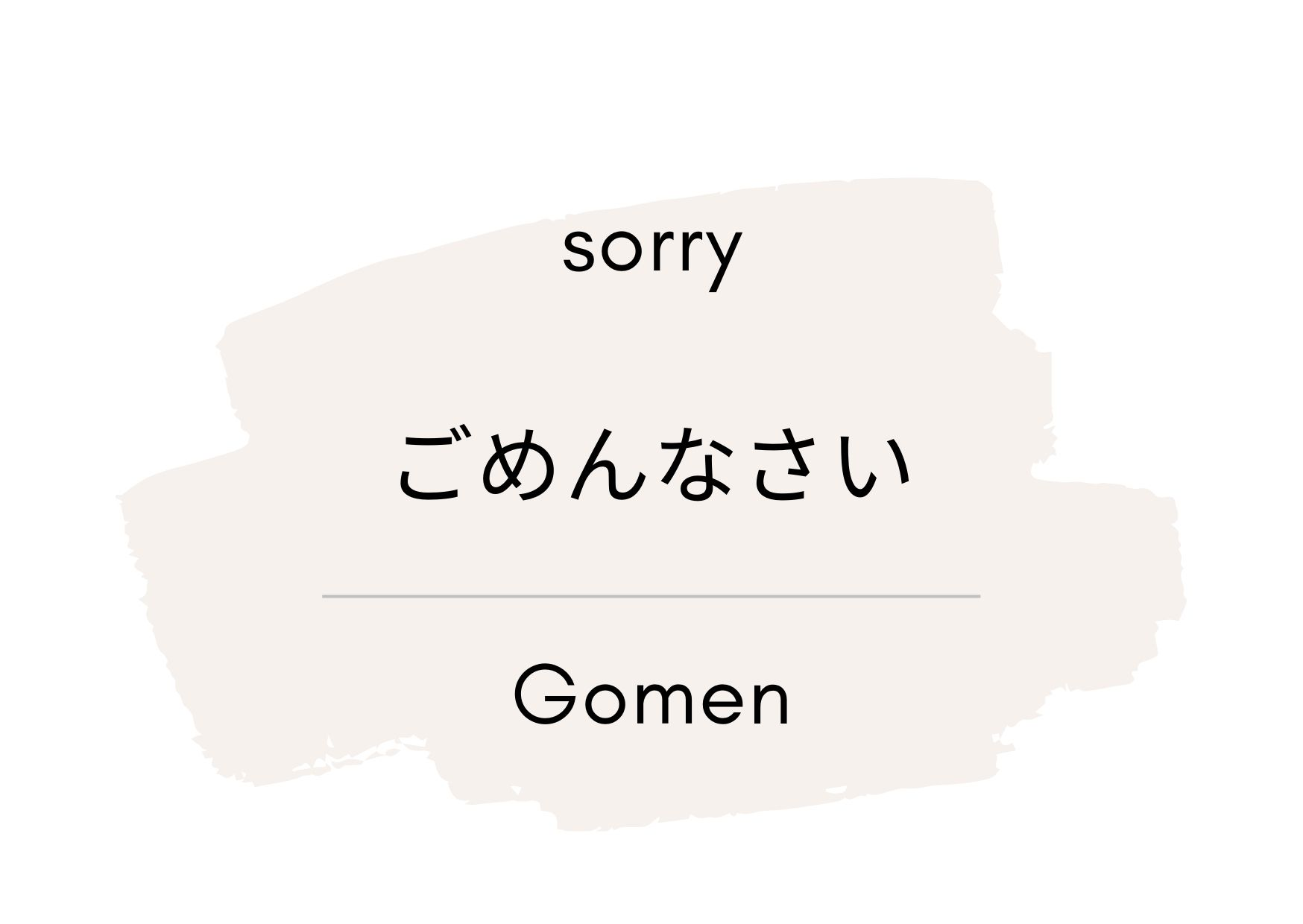
Sorry — ごめんなさい — Gomen / Gomen ne / Gomen-nasai
ごめんなさい (gomen nasai) expresses an apology. ごめん and ごめんね are shorter, casual forms. The appropriate choice depends on the relationship and situation; age alone does not determine the wording.

Excuse me —すみません — Sumimasen
すみません (sumimasen) can apologise for an inconvenience or get someone’s attention before a question. It can also acknowledge the trouble someone took to help you. Context distinguishes apologising, requesting attention and thanking.
I’m sorry for the trouble — ご面倒をお掛けして、すみません — Gomendō o okake shite, sumimasen
This expression acknowledges trouble caused to another person. The Japanese phrase and romanisation should match: ご面倒 is gomendō, while ご迷惑 is gomeiwaku. A shorter すみません may be enough for a minor interruption; a longer expression is not automatically better.
Excuse me for bothering you — 邪魔します — Ojama Shimasu
お邪魔します (ojama shimasu) acknowledges intruding, for example when entering someone’s home. It is not a general rule about a speaker’s official rank. For an ordinary request for directions, すみません is a useful opening.
Excuse me, please — 失礼します — Shitsurei / Shitsurei-shimasu
失礼します (shitsurei shimasu) can acknowledge entering, leaving or interrupting. The past form 失礼しました (shitsurei shimashita) can apologise for something already done. Choose the form that matches the situation.
Forgive me / Please forgive me — 許してください — Yurushite Kudasai
許してください (yurushite kudasai) asks for forgiveness. 許して (yurushite) is the shorter form; removing ください does not make it more polite. Asking for forgiveness and making an everyday apology are different acts.
Show me mercy / Please show me mercy — 勘弁してください — Kanben Shite Kudasai
勘弁してください (kanben shite kudasai) asks someone to let a matter go or spare you. It is not a universal substitute for an apology. Beginners can start with the apology expressions above rather than treating it as a required last step.
I apologise — お詫びします — Owabi shimasu
お詫びします (owabi shimasu) states an apology for a mistake or inconvenience. It is not a general thank-you expression. NINJAL’s dictionary describes 詫びる in terms of acknowledging a fault and apologising.
My bad — 悪い。— warui
悪い (warui) literally means bad and can function as a casual apology in context. It is not a polite default for unfamiliar people or a formal work situation.
Apologising to show appreciation
ありがとうございます (arigatō gozaimasu) means thank you. It expresses appreciation rather than, by itself, admitting a mistake. すみません can acknowledge the trouble someone took to help you. The Japan Foundation gives examples where thanking and acknowledging inconvenience occur together.
In Conclusion
You can always find the right phrase to say sorry in Japanese for whatever reason you have done a mistake towards someone. There are many ways of saying sorry in Japanese that will surely help you express yourself better next time. Just make sure you sincerely apologize and they will be more willing to accept your apology.
Finding the proper way to show your heartfelt apology or to say “I’m sorry” in another language is tough, but anyone can master this phrase with enough practice. Even if it may take several tries for some people to properly say sorry in Japanese, learning how to apologize is not impossible.
If you want to learn Japanese apologies and how or when to say these Japanese terms, our teachers at Japanese Explorer are more than ready to teach you. You can enroll in our classes or schedule lessons online with us anytime!
Which Apology Should You Use? A Quick Chooser
With so many expressions, picking the right one depends on the situation, your relationship with the other person and how serious the matter is. This list helps you compare possible expressions for common situations. These are illustrative guidelines, not rigid rules; tone and body language also matter.
- A small accident with a stranger: すみません (sumimasen) can acknowledge the inconvenience.
- An apology to someone close: ごめんなさい (gomen nasai) is one option; choose a level of politeness appropriate to your relationship.
- A formal apology for a work mistake: 申し訳ありません (mōshiwake arimasen) is a more formal option.
- Entering or interrupting a conversation: 失礼します (shitsurei shimasu) can acknowledge the interruption. Its past form has different uses.
- Someone has helped you: ありがとうございます thanks them. Depending on context, すみません can acknowledge the trouble you caused as well.
These examples are starting points, not fixed rules or a ranking of sincerity. The situation, relationship, and what happened affect the choice. The Japan Foundation distinguishes thanking from apologising; CARLA shows that the same expression can serve different functions.
Practice: Pick the Right Apology
Read each scenario and choose which expression you would use. Suggested answers are below.
- You accidentally step on a stranger’s foot on the MRT.
- You forgot to reply to your close friend’s message for three days.
- Your project report contained a mistake that your manager pointed out.
- You arrive at a colleague’s office to ask a quick question.
- A coworker stayed an extra hour to help you meet a deadline.
Suggested answers:
- すみません (Sumimasen) — a brief, sincere apology for a minor accident with a stranger.
- ごめんね (Gomen ne) — a casual apology between friends. ごめんなさい (Gomen-nasai) is another option; sincerity is not determined by the phrase alone.
- 申し訳ございません (Mōshiwake gozaimasen) — a formal apology to a superior about a work mistake.
- 失礼します (Shitsurei shimasu) — politely acknowledging that you are entering someone’s space.
- すみません、ありがとうございます — apologising for the inconvenience while thanking them. This apology-as-gratitude pattern is common in Japanese workplace culture.
Reference: Japan Foundation Irodori: greetings, thanks and apologies; University of Minnesota CARLA: apology expressions in context. The practice scenarios above are original illustrations, not school assessment results.