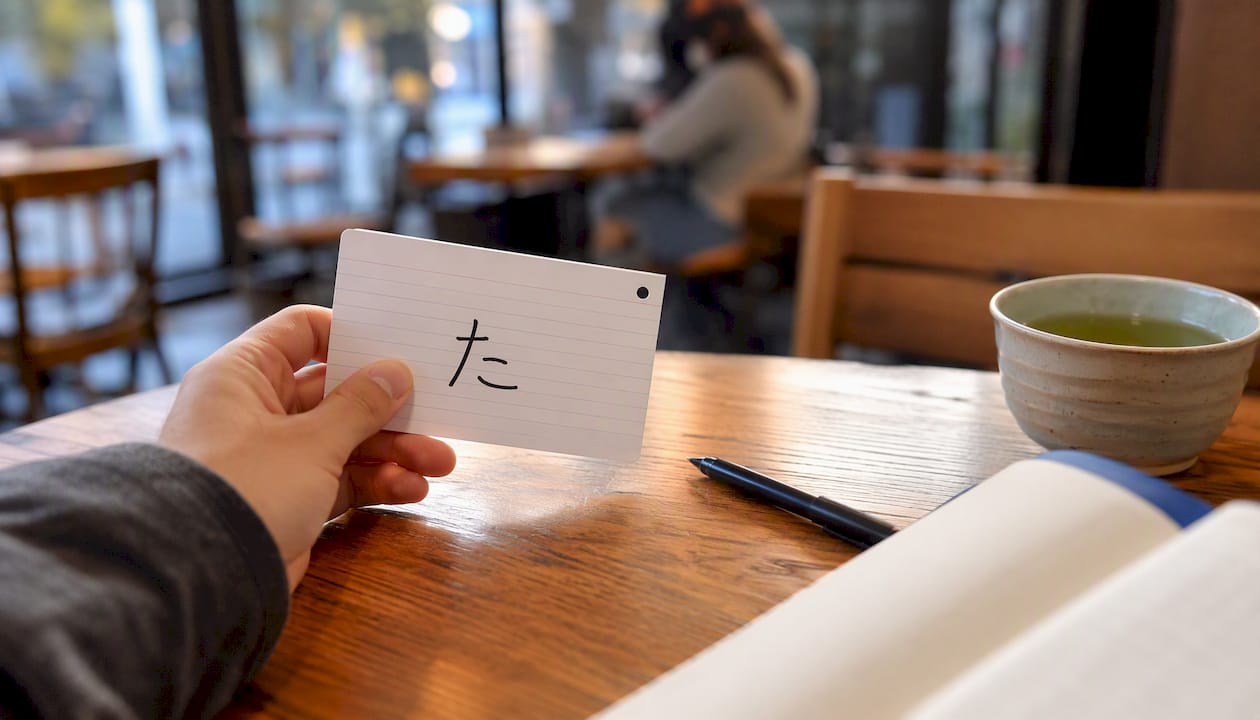
The Japanese language is enjoying improved interest across the world. In fact, the number of people who wish to learn Japanese is rising sharply, judging from the high number of students enrolling for Japanese language lessons. Moreover, several others are possibly engaged in either private or self-study.
For most students, the journey to learning Japanese starts with a similar elation associated with one’s inaugural visit to Japan. However, the initial enthusiasm soon fades away. This charming language, which seemed doable at the start, suddenly turns out to be difficult and wearisome. The course ahead seems endless, chaotic and uncertain. Your initial confidence fades, progress slows, classroom attendance becomes rare and the drop-out rate gets higher.
So what are the challenges associated with learning the Japanese language? Let’s have a look at a number of these.
The Complex Writing System
The Japanese writing system is formidable, to an extent that it takes a lifetime for the Japanese themselves to get it down pat. It does not use an alphabet as you know it. Instead, it employs a very complex writing system known as Kanji. Rather than using different words and phrases to show meanings and structure, Kanji depends on various strokes on intricate character sets that display their meaning based on stroke placement, their position and various other ways of decoding each.
Japanese has 3 writing scripts namely, Hiragana, Katakana and Kanji. Hiragana and Katakana are a bit easier to learn. However, the main challenge is Kanji that is made up of thousands and thousands of characters. In fact, you would require knowledge of around 1000 Kanji characters for you read and understand a Japanese newspaper. Therefore, reading and writing in Japanese is rather difficult because of Kanji.
Grammar
The Japanese language has some major grammatical differences when compared to other languages. First, the Japanese language does not have any definite or indefinite articles. Moreover, no plurals are used in Japanese. This means that the way of counting numbers in written Japanese could change in every case based on what is being measured. Another key challenge to overcome is the fact that the majority of the meaning in written Japanese, especially when it comes to verb addition, originates from structural particles, which are important for incorporating a bit of nuance to Japanese sentences.
Same pronunciation of each Japanese syllable
Japanese is one of the syllabic languages and is comprised of 45 basic syllables. Of course, the 45 syllables sound a lot more complex compared to the 26 letters forming the English alphabet. Moreover, each Japanese syllable is pronounced in one particular way. Therefore, the sounds are bit more limited. Choose a particular Japanese Kana, and regardless in which context it’s used, the pronunciation will remain the same whether the syllable appears at the start, middle or end of the word.
Difficult sounds
There are two Japanese sounds that new students in Japanese classes in Singapore will find challenging in the beginning. The Japanese ‘R’ sound. It’s pronounced with a quick roll of the tongue akin to the flipped ‘R’ in Spanish. Another difficult sound is the Japanese ‘TSU’.
Levels of politeness
Japanese language is also difficult to master because of the varying levels of politeness that use unique vocabulary and grammar. Each person you talk to demands a particular level of formality depending on age, status, relationship and so on. Switching between the different levels of politeness is quite difficult.
Vagueness
Honestly, besides the Japanese writing system, the vagueness of Japanese is the most difficult aspect of learning Japanese in Singapore. The vagueness can leave you utterly confused. Generally, Japanese people do not speak too directly because it is considered somewhat impolite or aggressive. Moreover, it’s a highly contextual language which means the essential information you need to grasp something isn’t just found in the sentence, but from the situation of your conversation.
That being said, motivation is key to overcoming the abovementioned challenges encountered in Japanese language courses. Also, everybody learns a new language differently so what may appear difficult for some people is actually easy for other people. With the right motivation, the entire process of learning Japanese turns out to be enjoyable rather than difficult.