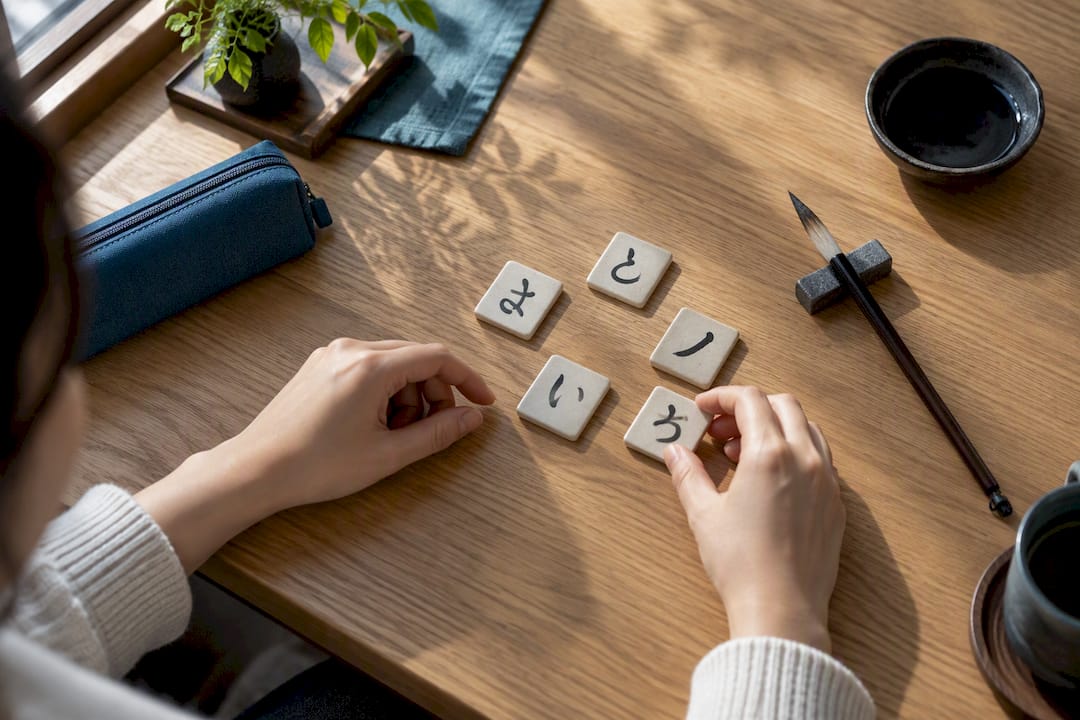
The Japanese are fond of abbreviating words so much that once a word gets popular enough, you can expect its abbreviated equivalent will soon make the rounds in the Japanese online space. That is how supermarket became suupaa (スーパー) and McDonald’s became makku (マック).
While English loan words are the ones that usually get this treatment and become Japanese-English abbreviations, Japanese people also often convert from one language to another, leading to words and entire concepts being represented by a few English letters.
This practice is commonly associated with popular internet forums like 2-chan, but in recent years, it has taken on a life of its own and is now used in the real world, like in text messages and sometimes in face-to-face conversations. If you want to keep up with the times, here are some fun and often rude abbreviations you need to learn.
1. W/WKTK
The letter “w” is as close as you can get to the equivalent of “lol” in Japanese. It represents the first letter of the Japanese word to laugh (warau; 笑う) and has become one of the most popular slang terms you can encounter online.
Meanwhile, its more interesting and related term, “wktk”, is an abbreviation comprised of the strong sounds of the repeating phrases for excited (wakuwaku; わくわく) and shiny (tekateka; テカテカ). This combination conveys the feeling of becoming completely overwhelmed by excitement and is often seen in live streams or the comment section of trending posts.
2. KY
Many of us have encountered at least one person who cannot read the air. For instance, you could have hung out with a friend who missed all your subtle signs that you’d like them to go home or expressed through body language that you would really like to put an end to an awkward conversation with a stranger or new acquaintance.
If you have experienced these situations before, you have most likely encountered the KY personality, which stands for kuki yomenai or unable to read the air.
3. KWSK/GGR
Kuwashiku (くわしく; 詳しく) is often shortened to just “kwsk”, meaning tell me more or give me more details about a particular subject. Meanwhile, to “Google” something or look it up online has also made it to Japanese netspeak, which is essentially just the katakanised version of the term “gugure” and further shortened to simply “ggr”. Do note that the -れ (re) ending connotes an order or command, and when combined with the anglicised abbreviation of kasu (かす), meaning trash or scum, you may often see its not-so-nice version of “ggrks” or “Google it, scum.”
4. Orz
This slang term shows the playfulness of the Japanese youth when it comes to their language and their ability to create unique words and phrases for a new medium. As you may have guessed by now, the Japanese are constantly reinventing their language in new and colourful ways, and “orz” is one of many funny abbreviations that young people have invented for their communication purposes. In fact, “orz” is not actually an abbreviation of a real word, but rather, it is meant to represent someone on his hands and knees, banging his head in defeat. If you haven’t seen it yet, the “o” represents the head, “r” the arms and hands, and “z” for the legs.
Conclusion
When learning Japanese, learning the basics and building a strong foundation always takes priority. However, when you want a change of pace to reinvigorate your motivation to keep learning, consider branching out your studies by exploring other interesting aspects of the language, such as their ever-evolving netspeak.
If you want to get on the fast track towards mastering Japanese, consider signing up for a Japanese class in Singapore with Japanese Explorer! We offer comprehensive, AJALT-accredited Japanese classes suitable for all skill levels, beginner to advanced. From personalised teaching methods to native Japanese tutors, we have all the resources you need to attain your fluency goals sooner rather than later.
Feel free to contact us anytime if you would like to enrol in a Japanese lesson in Singapore.