There is much debate in the Japanese language learning community regarding the definition of specific proficiency levels, as the guidelines themselves can be quite vague. For one, some say that passing N2 of the Japanese Language Proficiency Test means you are intermediate in fluency, while others say that passing at least N3 is enough to be at this level.
But for the most part, the best way to figure out where you truly stand in your Japanese language skills is by interacting with native Japanese speakers and seeing how your fluency stacks up. That said, if you still consider yourself a beginner despite being enrolled in a Japanese class in Singapore for some time already, here are a few essential tips on how to leap to intermediate Japanese.
1. Assess your Japanese skill level
While you may feel like your overall fluency is at the beginner level, that does not mean it applies to all your four main competencies: listening, reading, speaking, and writing. Evaluate how well you do in each and determine whether you are more skilled in one than another.
The best way to do this is by going to the JLPT website and using its many interactive tools that help Japanese learners determine their strengths and areas for improvement. One such tool is the “Can-Do Self Evaluation”, which presents several statements on whether you can do something in each of the four competencies. Once you reach your breaking point, you will have more or less determined your JLPT level for that skill.
2. Create and stick to a study plan
Making a new study plan comes next after figuring out which of your skills needs improvement. No matter which of the four competencies you need to work on, opt for methods that are both fun and effective for your learning style. Otherwise, you may find it difficult to stick with the study plan.
Also, balance out the skills you are working on by planning which skill to tackle on which days and for how long. Think of it as exercising at the gym; you will not make much progress if you solely work on a single muscle group every day, and you may even come to dislike it. Thus, having a routine that incorporates improving your other competencies helps you better meet your current and overall learning goals.
3. Include speaking into your listening practice
Although many resources are available to help sharpen your Japanese listening comprehension, improving your speaking is a different story. A great strategy to address this problem is to include speaking elements in the other facets of your learning routine.
For instance, whenever you practice your listening by tuning into podcasts, songs, or TV shows, why not try “shadowing” along to some parts of the audio? Shadowing is a learning strategy where you repeat what you listen to and try to match the speakers’ pronunciation and intonation. Shadowing not only helps turn input from listening into an output but also improves your fluency and accuracy.
4. Break free from romaji
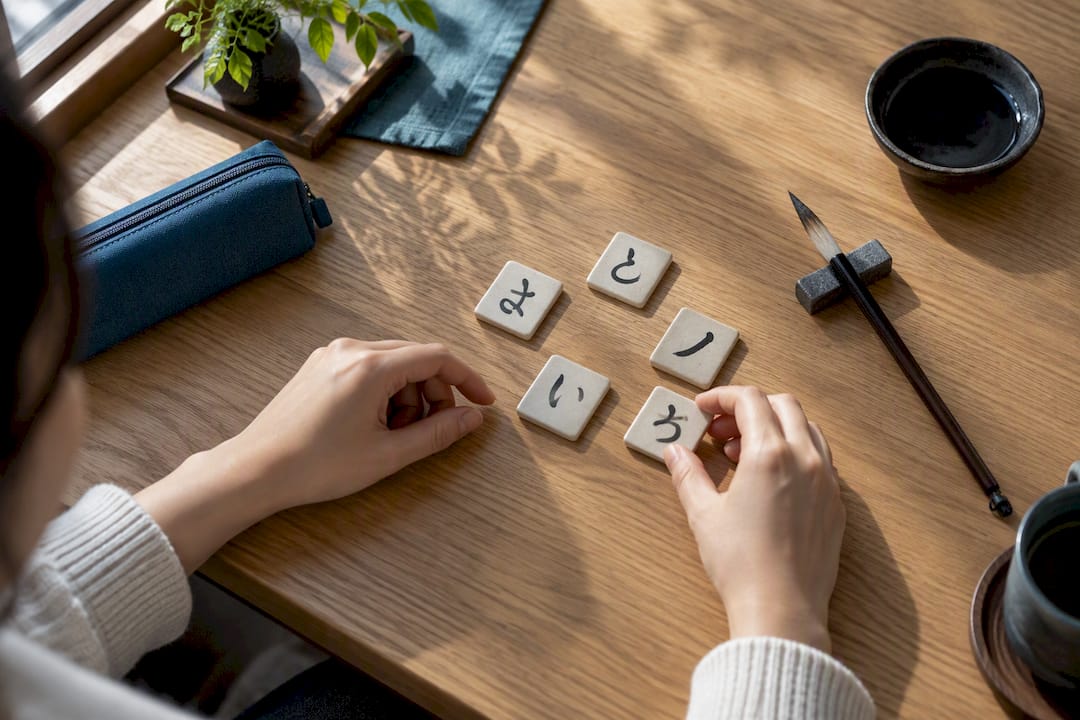
Many beginner-level Japanese textbooks use romaji (Japanese written in the Roman alphabet) to ease students into the language. However, it is best to ditch romaji textbooks once you learn hiragana and katakana since it becomes harder to read and write in full-on Japanese the longer you cling to romaji. Furthermore, romaji is detrimental to your Japanese pronunciation as you tend to visualise Japanese as romaji, causing you to “Anglocise” your Japanese speech.
Conclusion
Taking your Japanese skills from beginner to intermediate takes time and effort. However, by avoiding certain pitfalls and following the best practices, you can reach your fluency goals in no time. And while the beginner-to-intermediate hurdle may seem high initially, you will eventually clear it by staying focused and being positive.
If you want to reach intermediate Japanese fluency and beyond, sign up for our Japanese course in Singapore today! At Japanese Explorer, we provide top-class yet affordable Japanese language lessons that cater to all ages and learning styles. Learn from native Japanese teachers dedicated to honing your skills and levelling up your fluency, whether you are just a beginner or already an advanced learner.
Feel free to contact us for more details or get started with your Japanese lesson in Singapore today!