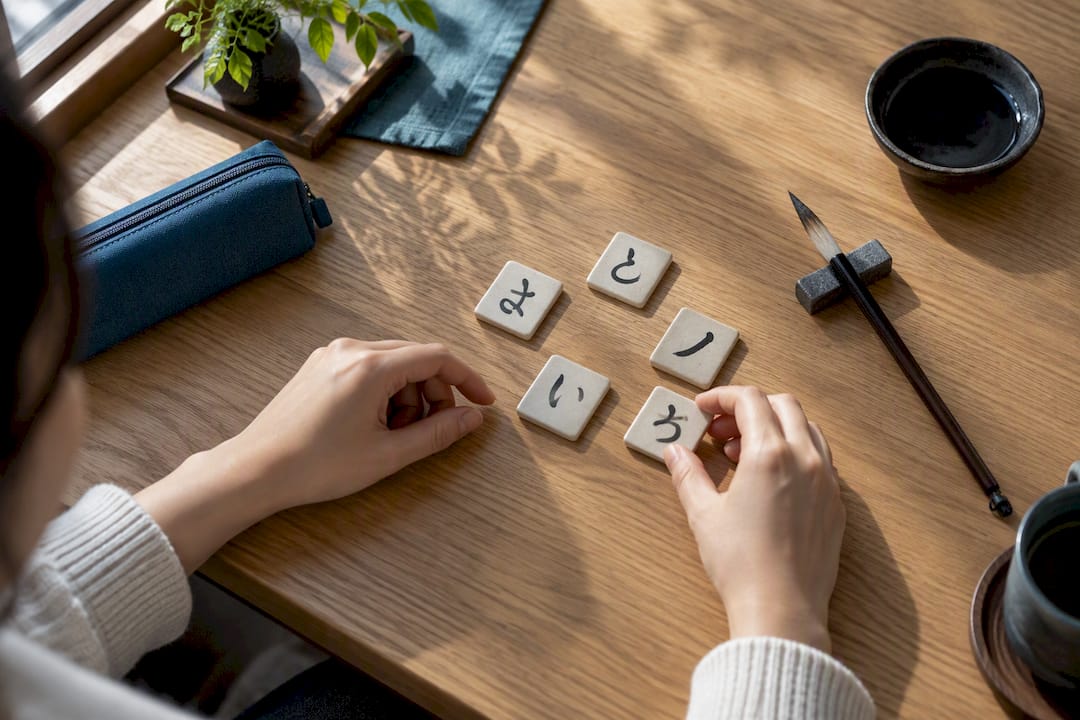
Ironically, the Japanese words that even advanced learners of the language have a hard time pronouncing are those borrowed from their native tongue. Loan words that come from English and are turned into Japanese via katakana almost always throw off native English speakers. This is because it is inherently difficult to unlearn the phonology of our native tongue or the sound system we subconsciously follow since childhood. Modifying the original sound to match Japanese phonology simply does not come easily to anyone.
This process is known as katakanization since foreign words that are turned into Japanese are generally spelled in katakana, giving them the name of katakana words or katakana-go. With the prevalence of loanwords in modern Japanese, understanding how katakanization works is now a vital practical skill for anyone studying Japanese. Knowing the right way to pronounce these words facilitates seamless understanding with Japanese speakers and helps expand your vocabulary almost instantaneously.
Below, we briefly go over why the need to katakanize words and the basic rules to do so properly.
Why Katakanize?
Japanese speakers use plenty of English loanwords
According to a 2010 book about Japan-made English or wasei eigo, the Japanese use 3,000 to 5,000 loanwords in everyday conversations, with 94% having English origins. Today, there are probably even more katakana words in use than before. The point is that most native speakers will have a hard time conversing in Japanese without using a single Western loanword. Fun fact: the Japanese have even created a drinking game where you must take a shot whenever you use a loanword!
Thus, while it may be extremely challenging to Japanize words from the English language, practicing this skill will help you become more approachable when talking with native Japanese speakers.
Avoid intimidating Japanese speakers
Most native Japanese speakers will hardly understand the proper pronunciation of English words, hence the need to katakanize them to avoid compromising intelligibility during a conversation. For instance, asking for directions to the nearest McDonald’s or Seven-Eleven without katakanizing them will more often than not intimidate the everyday Japanese person who typically avoids conversing in English.
For katakanized words that are rather long and trippy to pronounce, it is perfectly fine to shorten them, which is what many Japanese people already do. For example, the katakana of McDonald’s (マクドナルド) can be shortened to just マクド (ma-ku-do) or マック (ma-ku).
All in all, katakanization does not occur because of Japan’s writing system but rather their phonology that governs how to pronounce words in the language.
Basic of Katakanizing English
There are plenty of rules to properly katakanize English and other foreign words that this article cannot fully cover, so we shall only touch on the basics below.
1. Add vowels
The first rule is adding a vowel after a consonant if it is not immediately followed by one. Let us try this out with an easy word like risk. The letter’ r’ is already followed by a vowel, which only leaves ‘s’ and ‘k.’
The fundamental rules involve adding the following:
the vowel’ i’ after ‘j’ or ‘ch’
the vowel ‘o’ after d or t, and
the vowel’ u’ everywhere else.
Since these two letters do not belong in the first or second rules, they both get appended with the letter u. This results in リスク(ri-su-ku).
2. Replace illegitimate English sounds with similar ones in Japanese
Japanese has fewer sounds than English, so the sounds from words like ‘mouth,’ ‘lease,’ and ‘very’ must be replaced with their closest sounding equivalent using katakana, resulting in マウス (ma-u-su), リース (rīsu), and ベリー (berī), respectively.
3. Duplicate consonants
The quick ‘pause’ between the sounds of certain words like bit, look, and dip are due to their ‘stop’ consonants, which mainly include b, ch, d, g, k, and so on. These are sounds you make by blocking the airflow when pronouncing them.
One can represent these sounds in romaji by duplicating consonants (bitto, for example), but in katakana, we use the small tsu ッ to represent these pauses. In this case, ‘bit’ is katakanized into ビット, which is read in the romaji version. Note that this rule only applies to the last syllable only and if its consonant is not followed by long vowels. Thus, words like picnic get the treatment, but others like deep or beat do not.
Conclusion
For English-speaking learners, katakanization can prove to be challenging, even for those already fluent in Japanese. Nonetheless, mastering it certainly helps you better acclimate to Japanese phonology and make your spoken Japanese more comprehensible to native speakers.
To better understand the intricacies of katakanization and many other challenging concepts of Japanese, consider signing up for a Japanese lesson in Singapore today at Japanese Explorer! With the help of our tailored teaching methods taught by native Japanese teachers, you can count on us to polish your Japanese skills via private, group, and online lessons.
Sign up for a Japanese course in Singapore with us today!