The Japanese language follows a Subject-Object-Verb word order, while English uses Subject-Verb-Object. Japanese also has three writing systems (hiragana, katakana and kanji) and uses multiple levels of politeness depending on context. These differences make Japanese rewarding to learn but require consistent, deliberate practice rather than memorisation alone.
Here are five practical areas to focus on when you learn Japanese in Singapore.
1. Practise the writing system with correct stroke order from the start
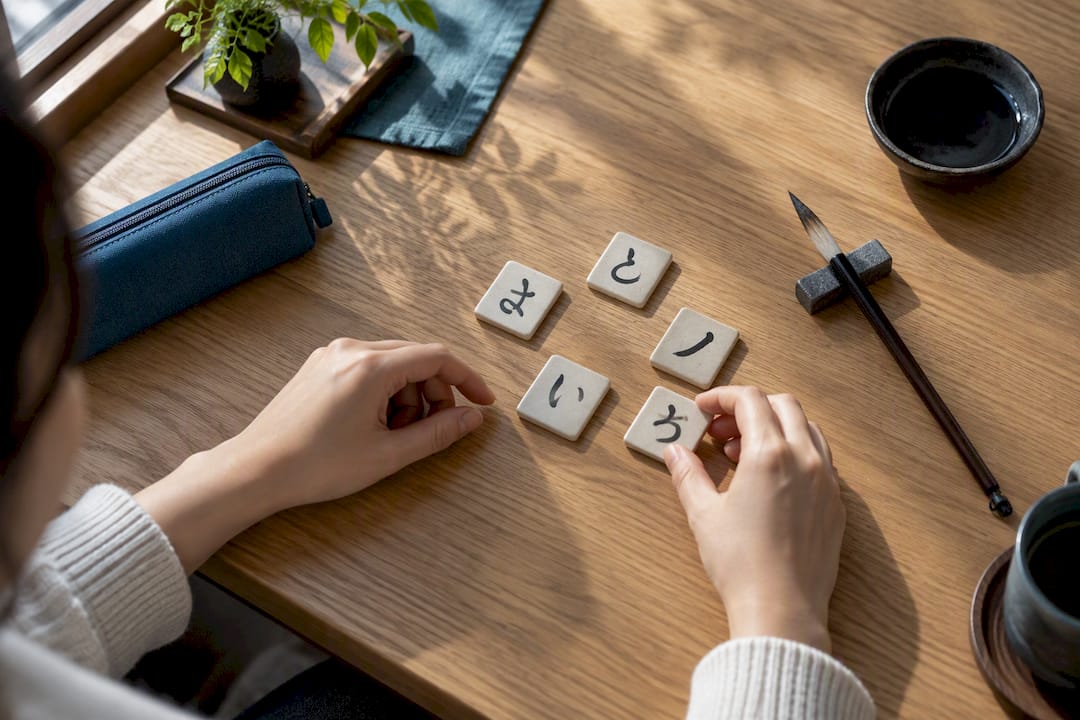
Hiragana and katakana are the foundation of Japanese reading and writing. Each character has a specific stroke order that affects its shape and legibility. Use a reliable character model to check the strokes and the shape of what you write. Free resources such as the Japan Foundation’s Irodori platform include writing exercises alongside real-life tasks, so you practise the script in context rather than in isolation. Set aside 10 to 15 minutes a day to write each new character set, and review the previous set before starting the next.
2. Choose a practical task and review the language it uses
Choose something you want to do, such as introducing yourself or asking a price. Try the task, then check the words and sentence patterns you need. The Marugoto teaching Q&A explains that topics can be selected to match learning goals; the material does not always require starting at lesson one. Follow your course’s guidance and ask for help with a pattern you cannot yet use.
3. Choose materials that match your current level
An outdated or poorly structured textbook can create confusion, especially for beginners. Look for materials that include audio, hiragana readings alongside kanji, and clear English definitions. The Marugoto Starter resources include vocabulary and phrase indexes and a kanji word list. Use them with the relevant learning material to check a word in context. A good dictionary that shows both the kanji and the hiragana reading for each entry is also worth keeping beside your main textbook.
4. Listen to real Japanese through varied media
Japanese music, television dramas and animation (anime) each expose you to different registers and vocabulary. Manga (Japanese comics), by contrast, is a reading activity and builds familiarity with written speech patterns. Both are useful, but neither alone covers everyday conversation. If you can follow a favourite show without subtitles for short scenes, or pick out station announcements and shop greetings, you are transferring classroom knowledge to real listening. The Irodori starter guide (PDF) includes task-based listening activities tied to situations such as ordering food and asking for directions.
5. Sing along with lyrics to build reading speed
If you enjoy music, try following a short section of lyrics while listening. Pause to check an unfamiliar word or reading. Songs are an optional practice activity and are not a substitute for practising everyday conversation. Start with slower songs and display the lyrics on screen so you can point to each word as you hear it. Over time this becomes a low-pressure way to review grammar patterns and vocabulary you have already studied.
A five-step study session you can repeat daily (20 to 30 minutes)
- Small task (5 min) – Complete one real-life task in Japanese: write a short shopping list, describe your lunch or read a menu screenshot.
- Listening (5 min) – Listen to one clip (a podcast segment, a song or a textbook dialogue) and note two words or phrases you recognise.
- Vocabulary and kana (5 min) – Write five new words in hiragana or katakana from memory, then check.
- Retrieval (5 min) – Cover your notes and write or say aloud three things you learned in the last two days.
- Reflect (2 min) – In one sentence, note what felt easier today and what to revisit tomorrow.
This is a suggested personal study routine, not a school syllabus. Adjust the timing and tasks to suit your own pace and schedule.
Practice log
Print or copy this list and fill in one line after each session:
- Date: ___ | Task completed: ___ | New words practised: ___ | What to revisit: ___
- Date: ___ | Task completed: ___ | New words practised: ___ | What to revisit: ___
- Date: ___ | Task completed: ___ | New words practised: ___ | What to revisit: ___
- Date: ___ | Task completed: ___ | New words practised: ___ | What to revisit: ___
- Date: ___ | Task completed: ___ | New words practised: ___ | What to revisit: ___
- Date: ___ | Task completed: ___ | New words practised: ___ | What to revisit: ___
- Date: ___ | Task completed: ___ | New words practised: ___ | What to revisit: ___
To study the writing system and basic language in a class, compare the structured beginner course outline and current intake information alongside this guide. You can also attend a trial class to see whether group or private lessons suit your learning style.