TL;DR:
- Japanese cultural lessons are hands-on classes teaching traditional arts and etiquette rooted in Japan’s heritage. They range from short workshops to multi-week courses, offering immersive experiences that deepen cultural understanding. Participants learn skills like tea ceremony, calligraphy, and dance while embracing Japan’s philosophy of discipline, respect, and beauty.
Japanese cultural lessons are structured, hands-on classes that teach traditional arts, etiquette, and crafts rooted in Japan’s centuries-old heritage. The types of Japanese cultural lessons available today range from tea ceremony and calligraphy to martial arts, ikebana, and incense blending. Each format offers something distinct. Some last 30 minutes; others run for weeks. Whether you are visiting Japan, living in Singapore, or learning online, these experiences go far beyond sightseeing. They put you inside the culture, not just in front of it.
1. What are the types of Japanese cultural lessons?
Japanese cultural lessons, also called traditional arts experiences or cultural workshops, cover a wide spectrum of disciplines. The most popular lesson types include tea ceremony, calligraphy (shodō), ikebana flower arrangement, Nihon Buyo dance, koto and shamisen music, kendo martial arts, and incense blending. Each discipline carries its own philosophy, etiquette, and physical practice. You are not just learning a skill. You are learning how Japan thinks about beauty, discipline, and respect.
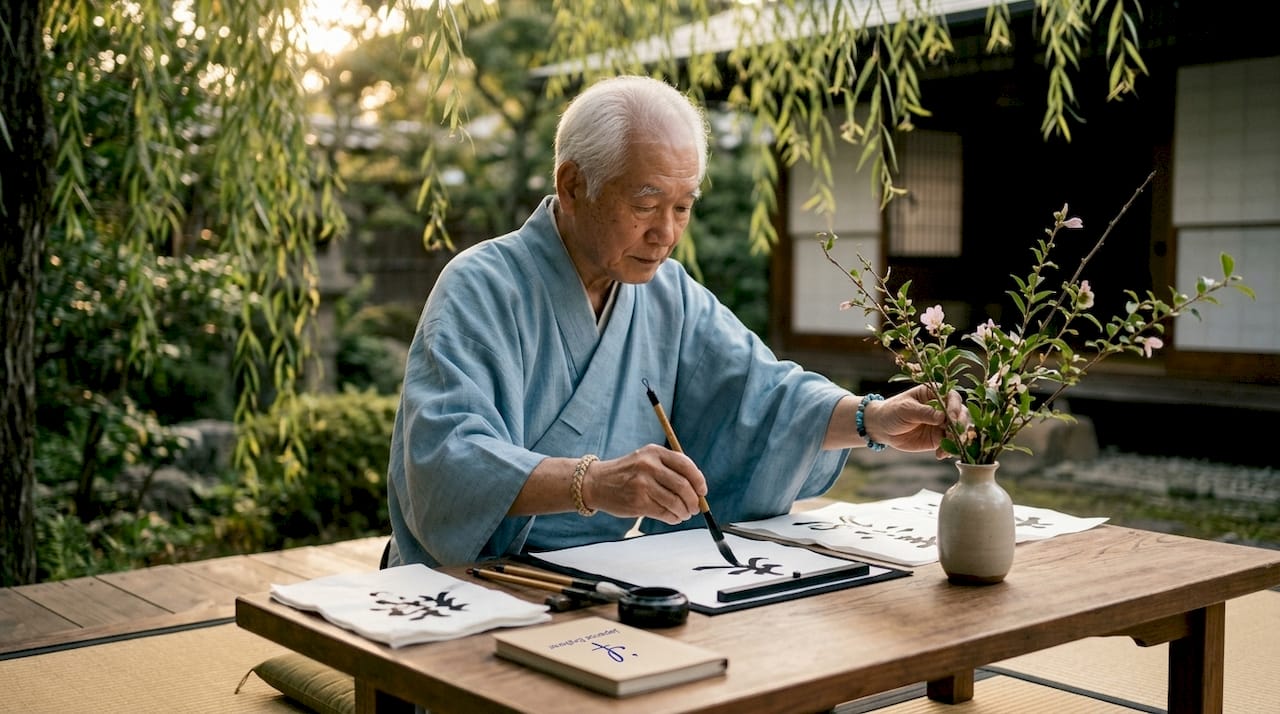
These lessons are offered in several formats: one-time workshops, multi-week courses, and immersive full-day experiences. The format you choose shapes how much you actually absorb. A single session gives you a taste; a six-week course gives you a foundation.
2. What can you expect in a tea ceremony lesson?
Tea ceremony, known as chado or “the way of tea,” is one of the most recognized forms of Japanese customs education. A short tourist-format session typically lasts 30–45 minutes, while a full chaji ceremony can run up to 4 hours. Most beginner classes follow the shorter format and focus on the core ritual: entering the tea room, bowing, receiving the bowl, and drinking matcha correctly.
Your host guides you through every step. Beginner tea ceremony experiences are designed so that not knowing every rule is completely fine. Hosts explain seating options, including seiza (kneeling) or ryurei (chair seating) for those who need it. You will learn how to hold the bowl, how to turn it before drinking, and how to bow at the right moments.
The tea room has its own rules. You remove your watch and avoid wearing strong perfume. Electronics stay outside. These details are not arbitrary. They reflect the Japanese concept of ma, the idea that empty space and quiet attention are part of the experience itself.
- Typical session length: 30–45 minutes for beginners, up to 4 hours for a full chaji
- Seating: seiza (kneeling on the floor) or ryurei (chair), with accommodations available
- Etiquette basics: bow upon entering, handle the bowl with both hands, turn it before drinking
- What to wear: comfortable clothing; remove watches and jewelry
- Electronics: leave phones and cameras outside the tea room
Pro Tip: Do not worry about memorizing every rule before your first tea ceremony class. The host expects beginners and will walk you through each step. Your job is to be present and attentive, not perfect.
3. How do calligraphy and ikebana lessons teach traditional Japanese arts?
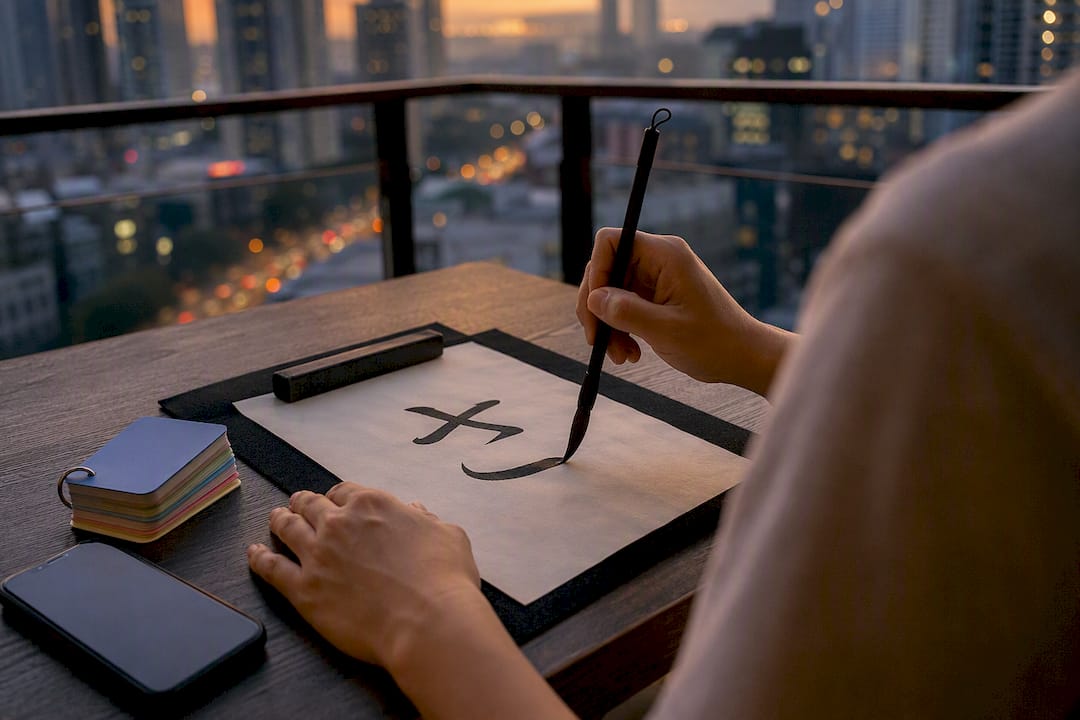
Calligraphy, called shodō or “the way of writing,” teaches you that a single brushstroke carries intention. Classes typically begin with block-style characters (kaisho) before progressing to semi-cursive (gyosho) and cursive (sosho) styles. The progression is deliberate. You build muscle memory and mental stillness at the same time. Most learners find that shodō slows them down in a way that feels genuinely restorative.
Ikebana, translated as “the way of flowers,” is the Japanese art of flower arrangement. Unlike Western floral design, ikebana emphasizes minimalism, asymmetry, and the relationship between empty space and form. You are not filling a vase. You are composing a statement. The Japanese Culture Center offers a structured 6-week introductory ikebana course with all flowers and tools included in the fee. That kind of multi-session format gives you enough repetition to actually develop technique.
Both shodō and ikebana carry a philosophical dimension that single-session workshops cannot fully convey. The philosophy is part of the practice. You learn it by doing it repeatedly, not by reading about it.
- Start with block characters in shodō. Kaisho style builds the foundation before you attempt flowing cursive forms.
- Practice with the right tools. A quality brush, ink stone, and rice paper make a real difference in how the strokes feel and look.
- Choose a multi-week ikebana course. A 6-week structured program with included materials gives you the repetition needed to internalize the principles.
- Study the three main lines. Ikebana compositions are built around three primary lines representing heaven, earth, and humanity.
- Treat mistakes as part of the process. Both arts reward patience over perfection.
Pro Tip: When choosing between a one-day calligraphy workshop and a multi-week course, pick the course if you want to retain the skill. One session teaches you what shodō looks like. Six sessions teach you how it feels.
4. What traditional Japanese dance and music lessons are available?
Nihon Buyo is Japan’s classical dance tradition, and it is one of the most immersive forms of learning traditional Japanese arts available. A Nihon Buyo lesson covers far more than choreography. You learn posture, the controlled use of stillness, sliding footwork, and how to handle a folding fan and kimono as expressive tools. Certified instructors, often accredited masters within recognized Nihon Buyo schools, teach the cultural context alongside the physical movements.
Koto and shamisen music lessons offer a different kind of immersion. The koto is a 13-string zither played on the floor; the shamisen is a three-string lute with a sharp, percussive tone. Both instruments appear in classical Japanese theater and court music. Learning either one connects you directly to Japan’s performing arts heritage.
- Nihon Buyo: Covers sliding steps, controlled stillness, fan use, and kimono handling; taught by certified masters
- Koto: A 13-string floor zither; beginner lessons focus on plucking technique and basic classical pieces
- Shamisen: A three-string lute; lessons often include an introduction to traditional song styles
- What makes these lessons different: You absorb aesthetic sensibility, not just technique. The way you hold your body, your fan, or your plectrum carries cultural meaning.
These lessons work best when you commit to at least a short series. A single Nihon Buyo session shows you the surface. A month of weekly classes starts to show you the depth.
5. What other unique cultural lessons can you explore?
Japanese incense workshops, called kodo or “the way of fragrance,” are among the least known but most rewarding Japanese cultural activities available. A typical incense workshop runs at a small capacity of around 10 participants and costs approximately 2,000 yen. You blend your own scent sachets to take home. The experience is more technical than it sounds.
Incense workshops require participants to avoid wearing perfume and to bring water or coffee to reset their sense of smell between blends. This is not a casual craft activity. Managing olfactory fatigue is a real skill, and instructors guide you through it. The sensory discipline involved mirrors the same focused attention you find in tea ceremony and calligraphy.
Kendo, “the way of the sword,” introduces you to Japanese martial arts through bamboo practice swords (shinai) and protective armor (bogu). Introductory kendo lessons focus on basic strikes, footwork, and the etiquette of the dojo. The physical and mental discipline of kendo reflects the same values running through every other form of Japanese customs education: respect, focus, and continuous improvement.
- Incense workshops: Capacity around 10 participants; no perfume allowed; participants make scent sachets to take home
- Kendo introductions: Use bamboo swords and protective armor; cover basic strikes, footwork, and dojo etiquette
- What connects them: Both disciplines teach discipline and sensory awareness as cultural values, not just practical skills
6. How to choose the right Japanese cultural lesson for you
The right lesson depends on two things: your goal and your schedule. If you want a memorable experience during a trip to Japan, a 30-minute tea ceremony or a single calligraphy workshop fits perfectly. If you want to actually build a skill, multi-session courses with structured dates, included materials, and a minimum participant requirement give you the best return.
Language accessibility matters too. Most beginner-friendly cultural workshops in Japan and Singapore offer English-language instruction or bilingual guides. Check this before booking, especially for more technical disciplines like shodō or Nihon Buyo. When choosing a Japanese language school or cultural program, look for certified instructors and a clear course structure.
| Lesson type | Best for | Format | Key consideration |
|---|---|---|---|
| Tea ceremony | First-time visitors | Single session (30–45 min) | Etiquette guidance included |
| Calligraphy (shodō) | Mindful learners | Workshop or multi-week | Tool quality affects experience |
| Ikebana | Creative learners | 6-week course | Materials often included |
| Nihon Buyo | Immersive learners | Multi-week series | Certified instructor required |
| Incense workshop | Sensory explorers | Single session | Avoid perfume; small group |
| Kendo | Active learners | Introductory series | Dojo etiquette is part of the lesson |
Pro Tip: Look for programs that bundle etiquette, craft handling, and cultural context into every session. Repeatable practice formats build genuine skill far more effectively than one-off cultural exposures.
Key takeaways
The most effective Japanese cultural lessons combine hands-on practice, structured etiquette, and multi-session formats to build real skill and cultural understanding.
| Point | Details |
|---|---|
| Format determines depth | Multi-week courses build technique; single sessions provide exposure only. |
| Etiquette is the lesson | Rules around posture, scent, and handling are cultural content, not just formalities. |
| Small groups work best | Incense workshops cap at around 10 participants to maintain quality and sensory focus. |
| Certified instructors matter | Nihon Buyo and shodō require teachers trained within recognized schools or traditions. |
| Language access is key | Confirm English instruction availability before booking technical or etiquette-heavy classes. |
Why cultural lessons changed how I think about learning Japanese
The first time I sat in a tea ceremony, I was focused on not making a mistake. I held the bowl too tightly. I bowed at the wrong moment. And none of it mattered, because the host simply guided me through it again. That experience taught me something I have carried into every language class since: the goal is not to perform correctly on the first try. The goal is to be present enough to absorb what is happening around you.
Japanese cultural lessons teach embodied heritage. You are not reading about how Japan values discipline and attention. You are practicing it with your hands, your posture, and your breath. That is a completely different kind of learning. It is also why I think learners who combine cultural workshops with formal language study progress faster. The culture gives the language its texture. Without it, you are just memorizing vocabulary.
The anxiety beginners feel about getting things wrong in a tea ceremony or a kendo dojo is real, but it dissolves quickly. Every instructor I have encountered in these settings expects beginners to be beginners. The etiquette exists to guide you, not to trip you up. Show up, pay attention, and let the practice do its work.
— Paul
Japanese Explorer: language and culture, together
Japanese language and cultural understanding go hand in hand. At Japanese Explorer, our adult group and online Japanese courses are built around real communication and cultural context, not just grammar drills. Whether you are preparing for a trip to Japan, working with Japanese colleagues, or simply passionate about the culture, our small group Japanese classes give you the structure and community to make real progress.

Our courses run on a recurring schedule at our Singapore city centre location at 10 Anson Road, International Plaza, right above Tanjong Pagar MRT, and online via Zoom. Bilingual certified instructors guide every session with a focus on practical, real-world Japanese. If you want to pair your cultural exploration with genuine language fluency, our online Japanese course is a flexible and effective place to start.
FAQ
What are Japanese cultural lessons?
Japanese cultural lessons are structured, hands-on classes teaching traditional arts, etiquette, and crafts such as tea ceremony, calligraphy, ikebana, and kendo. They combine skill practice with cultural philosophy and etiquette in every session.
How long does a typical tea ceremony lesson last?
A beginner tea ceremony session lasts 30–45 minutes, while a full chaji format can run up to 4 hours. Most tourist and introductory experiences follow the shorter format.
Do I need prior experience for Japanese cultural workshops?
No prior experience is needed for most beginner workshops. Hosts and instructors guide participants through etiquette and technique from the very first session.
Which Japanese cultural lesson is best for building a real skill?
Multi-session courses like a 6-week ikebana program or a recurring shodō class build the most durable skill. Single workshops are better suited for cultural exposure than long-term technique development.
Can I learn about Japanese culture through language classes?
Yes. Quality Japanese language courses integrate cultural context, etiquette, and real-world communication into every lesson, making language study and cultural understanding mutually reinforcing.