TL;DR:
- Casual Japanese is the informal speech style used among close friends and family, characterized by plain verb forms and dropped particles. It signals social intimacy and is essential for real-life understanding but should be reserved for inner-circle relationships. Learning and using casual speech gradually strengthens listening skills and cultural insight while avoiding social missteps.
Casual Japanese, known formally as tameguchi or futsuutai, is the informal speech style Japanese people use with close friends, family, and peers. It strips away the polite desu and masu verb endings that most textbooks teach first, replacing them with plain forms, dropped particles, and shortened expressions. Understanding what is casual Japanese matters because it is the version of the language you will actually hear in daily life, in anime, at izakayas, and in any genuine friendship with a Japanese speaker.
What is casual Japanese and how does it differ from polite speech?
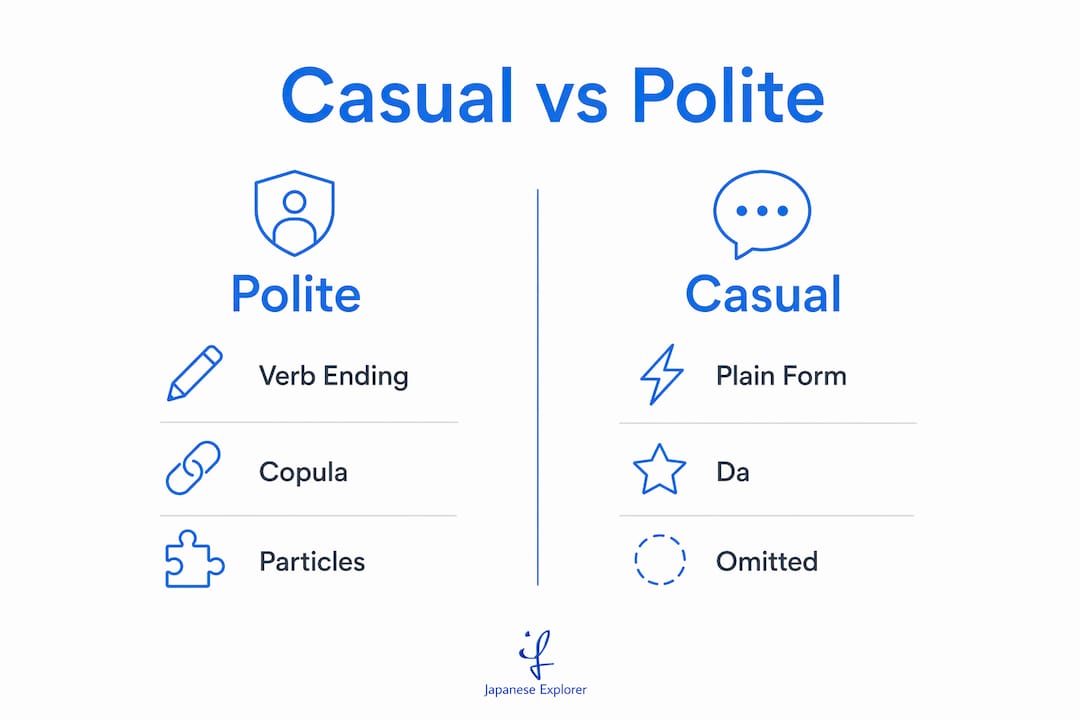
Casual Japanese is defined by its use of plain verb forms instead of the polite conjugations taught in most beginner courses. Where polite Japanese uses ikimasu (to go), casual speech uses iku. That single change signals a completely different social register.

The copula shift is equally telling. Polite Japanese ends statements with desu. Casual Japanese replaces it with da, or drops it entirely. A sentence like “It is interesting” becomes omoshiroi in casual speech, with no copula at all. This is not laziness. It is a deliberate social signal.
Particles also disappear in casual conversation. The subject marker wa and the object marker o are frequently omitted when context makes meaning clear. Questions no longer need the formal ka particle at the end. Rising intonation does the same job. These changes make casual Japanese sound faster, warmer, and more natural to native ears.
Key grammatical differences at a glance
| Feature | Polite Japanese | Casual Japanese |
|---|---|---|
| Verb ending | ikimasu | iku |
| Copula | desu | da or dropped |
| Question marker | ka | Rising intonation |
| Particles | Consistently used | Frequently dropped |
| Contractions | Rare | Common (ている → てる) |
The table above shows that the differences are systematic, not random. Every change follows a pattern, which means you can learn the rules and apply them consistently.
When and with whom is casual Japanese appropriate?
Casual speech belongs inside uchi relationships, meaning your inner circle of family and close friends. The uchi-soto concept divides all social relationships into “inside” and “outside” groups. Polite speech governs soto relationships: strangers, colleagues, superiors, and anyone you have just met.
This distinction matters more than age. Many learners assume that speaking to someone younger automatically permits casual speech. Age alone does not justify switching to informal forms. Social status, context, and the depth of your relationship all factor into the decision.
Situations where casual Japanese is clearly inappropriate include:
- Business meetings and professional settings of any kind
- First encounters with anyone, regardless of their age
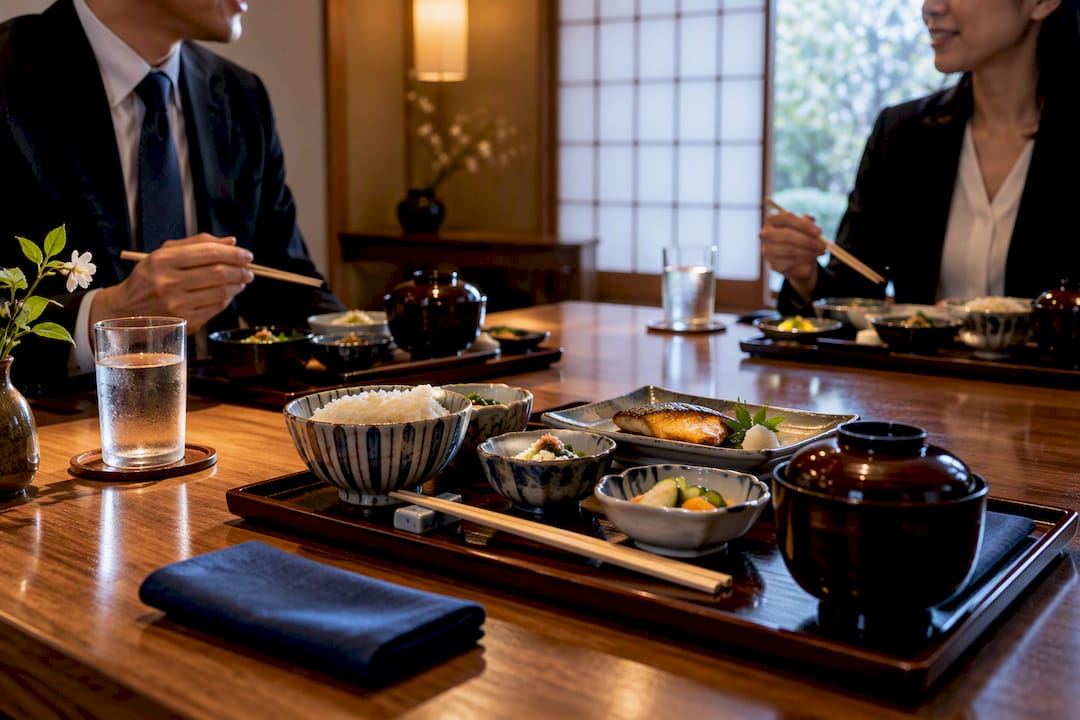
- Service interactions such as shops, restaurants, or offices
- Speaking to teachers, managers, or senior colleagues
- Group settings where you do not know everyone well
The safest rule is to start with polite speech and wait for the other person to invite a shift. In Japanese, a friend might say tameguchi de ii yo, which translates roughly as “you can speak casually with me.” That explicit invitation is your green light.
Pro Tip: If you are unsure whether casual speech is welcome, mix polite sentence endings with casual vocabulary. This softens the formality without crossing a social boundary.

What are common examples of casual Japanese phrases?
Casual Japanese phrases show up constantly in spoken conversation and media. Recognizing them builds your listening comprehension far faster than studying polite forms alone. Exposure to casual expressions in anime and manga accelerates this process because the speech is natural and contextually rich.
One of the most useful patterns to learn is i-dropping, called inuki kotoba in Japanese. This is where the i sound is dropped from the te iru verb form. ている contracts to てる in casual speech, so tabete iru (eating) becomes tabeteru. Native speakers use this constantly, and not hearing it will leave you confused in real conversations.
Common casual phrases and contractions you will encounter include:
- Nani shiteru? (What are you doing?) instead of the polite nani wo shite imasu ka?
- Yappari shortened to yappa (as expected, or I knew it)
- Daijoubu? with rising intonation instead of daijoubu desu ka? (Are you okay?)
- Iku? instead of ikimasu ka? (Are you going? / Want to go?)
- Chotto matte instead of chotto matte kudasai (Wait a moment)
These contractions are not slang in the negative sense. They are standard features of natural spoken Japanese. You will hear them from every age group in informal settings.
Pro Tip: Watch Japanese variety shows or slice-of-life anime with subtitles. Pause when you hear a contraction and identify which polite form it replaces. This trains your ear faster than any textbook drill.
Practicing basic Japanese phrases in both polite and casual forms side by side is one of the most effective ways to internalize the difference. If you are planning a trip, learning casual phrases for restaurant conversations will make your interactions feel far more natural. For travelers heading to Japan, pairing language study with cultural immersion deepens your understanding of when and how these phrases actually get used.
What are the benefits and risks of learning casual Japanese?
Casual speech signals social intimacy and trust in Japanese culture. When a Japanese friend switches to casual speech with you, or invites you to do the same, it marks a real milestone in the relationship. This is not a small thing. It means you have moved from soto to uchi in their social world.
The practical benefits for learners are significant:
- Better listening comprehension in real-life settings, since native speakers almost never use polite forms among friends
- Stronger social bonds with Japanese speakers who feel more comfortable when you match their register
- Richer media access, because anime, drama, and casual YouTube content all use informal speech
- Deeper cultural understanding of how Japanese people actually communicate day to day
The risks are equally real. Misusing casual speech can sound rude, even offensive. Politeness markers like desu and masu do not change the basic meaning of a sentence, but they change everything about how the speaker is perceived. Using casual forms with a superior or a stranger signals either ignorance or disrespect.
The right learning strategy is to build polite Japanese first, then layer in casual forms as your social circle and confidence grow. Many learners use casual language too early, creating awkward moments that set back their social progress. Patience here is not timidity. It is cultural intelligence.
Casual Japanese complements polite forms. It does not replace them. A fluent speaker moves between registers fluidly, reading the room and adjusting accordingly. That flexibility is the real goal. If you want to progress beyond beginner Japanese, understanding both registers is the clearest path forward.
Key Takeaways
Mastering casual Japanese requires understanding its grammar, social rules, and cultural context before using it with native speakers.
| Point | Details |
|---|---|
| Plain form replaces polite endings | Ikimasu becomes iku; desu becomes da or is dropped entirely. |
| Social context governs usage | Use casual speech only with close friends and family, never with strangers or superiors. |
| Inuki kotoba is key | I-dropping contractions like ている → てる appear constantly in natural speech. |
| Start polite, wait for invitation | Begin every new relationship with polite forms and switch only when explicitly invited. |
| Media accelerates recognition | Anime, drama, and variety shows expose you to casual patterns in authentic context. |
Why casual Japanese is the real test of fluency
Reaching genuine comfort with casual Japanese took me longer than I expected, and I think most learners underestimate why. The grammar is actually the easy part. You can memorize the plain form conjugations in a weekend. What takes real time is developing the social instinct to know when to use them.
I have seen learners who spoke beautiful polite Japanese freeze up the moment a Japanese friend switched to casual speech. The words were familiar, but the register shift felt disorienting. That gap between classroom Japanese and living-room Japanese is where most people stall.
The insight that changed my approach was treating casual Japanese not as a grammar level but as a relationship level. You do not earn the right to use it by studying harder. You earn it by building trust, showing up consistently, and reading social cues accurately. Native teacher guidance accelerates this process enormously because a native speaker can model the exact moment a register shift feels natural.
My honest recommendation: do not rush casual Japanese. Let it arrive as a byproduct of real relationships and genuine immersion. When it does arrive, you will know, because the conversation will feel completely different.
— Paul
Build real conversational skills with Japanese Explorer
Casual Japanese comes alive in conversation, and the fastest way to get there is structured practice with experienced teachers.

Japanese Explorer offers small group classes in Singapore that focus on practical, real-world communication, including the informal speech patterns you need for genuine social interaction. If you prefer to study from home, the online Japanese course covers conversational Japanese through live Zoom sessions with certified bilingual instructors. Both options follow a curriculum guided by the Association for Japanese-Language Teaching, so your progress is structured and measurable. Whether your goal is travel, friendship, or cultural connection, Japanese Explorer gives you the tools to speak Japanese the way it is actually spoken.
FAQ
What is the Japanese term for casual speech?
Casual Japanese is called tameguchi or futsuutai in Japanese. Both terms refer to the informal plain-form speech style used among close friends and family.
How is casual Japanese different from polite Japanese?
Casual Japanese uses plain verb forms, drops the desu copula, omits particles, and replaces the question particle ka with rising intonation. Polite Japanese consistently uses desu and masu endings.
Can I use casual Japanese with someone I just met?
No. Casual speech is reserved for established close relationships. Starting with polite forms and waiting for an explicit invitation to switch is the culturally correct approach.
Why do learners struggle with casual Japanese?
Most classroom instruction focuses on polite Japanese, so casual forms feel unfamiliar even when learners know the grammar. Social timing, not vocabulary, is the main challenge.
Does learning casual Japanese help with JLPT preparation?
Casual Japanese improves listening comprehension, which is tested at every JLPT level. Understanding plain forms also helps with reading tasks, since written Japanese often uses plain-form grammar in informal texts and literature.