TL;DR:
- Passing the JLPT requires demonstrating skills in vocabulary, kanji, grammar, reading, and listening through structured study and practice. It has five levels, each testing core language areas with no speaking or writing components, and scores map to the CEFR framework; the certificate is valid indefinitely. Effective preparation involves contextual vocabulary study, early listening practice, timed mock exams, and honest self-assessment, with guidance from official resources and structured courses.
Passing Japanese certificate exams means demonstrating measurable proficiency across vocabulary, kanji, grammar, reading, and listening. The Japanese Language Proficiency Test, known as the JLPT, is the world’s most recognized Japanese certification and the standard benchmark for learners, employers, and universities globally. Knowing how to pass Japanese certificate exams requires more than memorizing vocabulary lists. You need a structured study plan, the right materials, and a clear understanding of how the exam scores you. This guide covers every element you need to prepare with confidence and walk into the test room ready.
How are Japanese certificate exams structured and scored?
The JLPT is the primary Japanese proficiency certification most learners target. It runs across five levels, from N5 (beginner) to N1 (advanced), and each level tests a progressively larger range of language knowledge. You can take any JLPT level without passing a lower level first. That means you can register for N3 without ever sitting N4 or N5.
Every level tests three core areas: Language Knowledge (which covers vocabulary and grammar), Reading, and Listening. Each section carries its own minimum passing score, and you must clear all three to pass. Failing one section fails the entire exam, even if your total score looks strong. The JLPT scores each section separately with no partial credit between sections.
The JLPT also maps to the Common European Framework of Reference for Languages (CEFR). N3 corresponds roughly between CEFR A2 and B1, while N2 spans B1 to B2. This context matters when you are using your certificate for job applications or university admissions. The JLPT certificate does not expire, making it a permanent credential you can use for school or work applications worldwide.
Here is a quick overview of each level:
| Level | Proficiency | Approximate Vocabulary | Kanji Count |
|---|---|---|---|
| N5 | Basic | ~800 words | ~100 |
| N4 | Elementary | ~1,500 words | ~300 |
| N3 | Intermediate | ~3,750 words | ~650 |
| N2 | Upper Intermediate | ~6,000 words | ~1,000 |
| N1 | Advanced | ~10,000+ words | ~2,000 |
Key facts every test taker should know:
- The exam has no speaking or writing sections at any level.
- Wrong answers carry no penalty, so always fill in every answer.
- Time pressure is real. Pacing yourself through each section is a skill you must practice.
What study components matter most for passing?
Kanji and vocabulary studied together in context produce better results than studying them separately. Grouping vocabulary and kanji by theme or usage pattern builds the kind of contextual understanding the exam actually tests. Flashcard apps like Anki use a spaced repetition system (SRS) to schedule reviews at the right intervals, which makes retention far more efficient than rereading word lists.
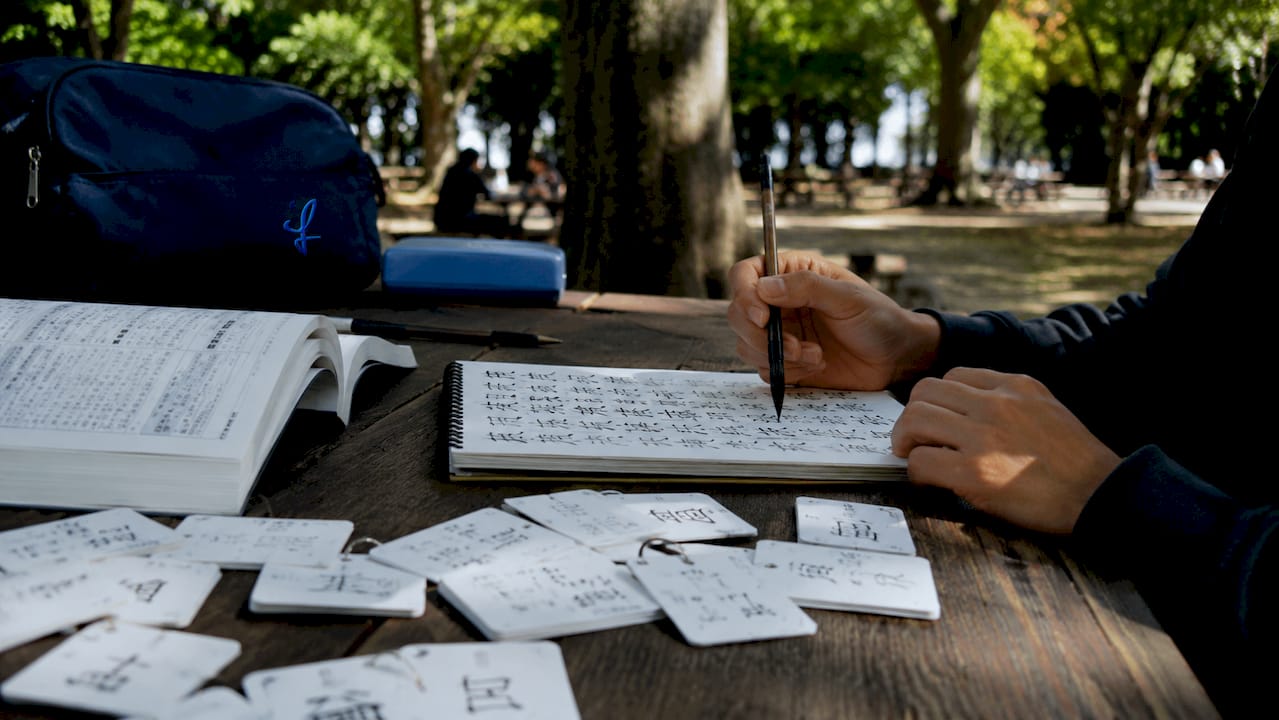
Grammar study works the same way. Use grammar reference books written specifically for your target JLPT level, such as the Nihongo So-Matome series or the Shin Kanzen Master series. These books organize grammar points by exam level and include practice questions formatted to match the real test. Reading grammar explanations alone is not enough. You need to see each pattern used in sentences and then practice identifying it under timed conditions.
Listening is the section most learners underestimate. Students who neglect listening practice early in their preparation consistently struggle on exam day. Start listening practice from week one, not the final month. Use official JLPT audio materials and practice with native-speed recordings at your target level.
Pro Tip: Build your vocabulary study habits around full sentences, not isolated words. When you learn a new word, write one example sentence using it. This trains your brain to recall the word in context, which is exactly how the exam tests you.
- Use exam-level drill books, not general Japanese textbooks.
- Study vocabulary and kanji together, grouped by topic or grammar pattern.
- Practice listening every day, even for 15 minutes.
- Take official JLPT practice exams using 2–4 mock tests spaced through your preparation period.
- Review every wrong answer to understand why it was wrong, not just what the right answer was.
How do you build a study plan for Japanese certification success?
Study time requirements vary significantly by level. Reaching N5 takes roughly 150–300 hours of study, while N1 demands approximately 1,700–2,500 hours for learners starting from zero. These numbers reflect total cumulative study, not hours per week. That scale means realistic timeline planning is non-negotiable.
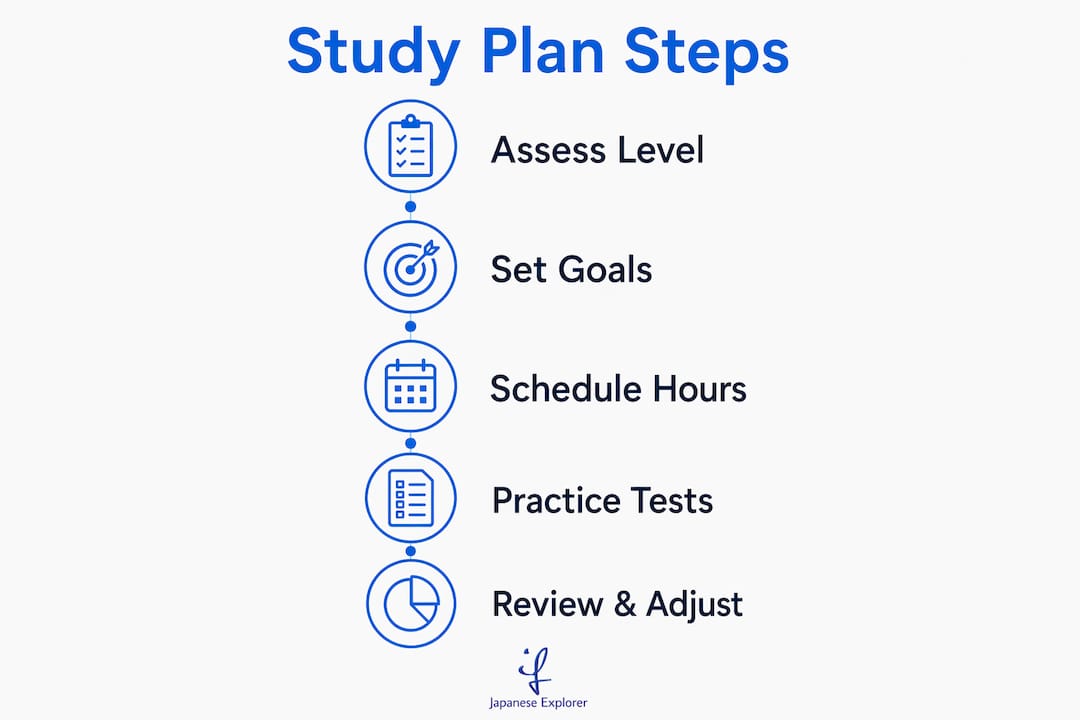
A practical approach is to work backward from your exam date. If you are targeting N3 and have six months, calculate how many hours per week you need to hit your target total. Then divide that time across vocabulary, grammar, reading, and listening based on your current weak points. A customized Japanese study plan that reflects your actual schedule beats any generic template.
Here is a simple framework for organizing your weekly study time:
- Assess your starting point. Take a diagnostic practice test at your target level before you begin. This tells you which sections need the most attention.
- Allocate time by weakness. If listening is your weakest section, give it 30–40% of your weekly study time until it improves.
- Schedule new learning and review separately. Spend the first half of each session reviewing previous material using SRS, then introduce new content.
- Run timed practice sessions weekly. Simulate real exam conditions at least once a week to build speed and reduce test-day anxiety.
- Stop learning new material one week before the exam. Use the final week for review, light practice, and rest.
Pro Tip: Track your study efficiency by logging your hours and section scores from each practice test. Patterns in your data will show you exactly where to focus next, saving weeks of unfocused study.
What are the most common mistakes in Japanese exam preparation?
The biggest mistake learners make is studying kanji in isolation. Memorizing the shape and reading of a character without connecting it to vocabulary and meaning creates a fragile knowledge base. When kanji blur together under exam pressure, isolated memorization fails. Always learn kanji as part of a word you will actually use.
Neglecting listening is the second most damaging mistake. Many learners treat listening as something to address in the final weeks. By then, there is not enough time to build the processing speed the exam demands. Listening comprehension requires months of consistent exposure, not a last-minute sprint.
“The exam rewards preparation, not performance. If you have done the work systematically, the test is just a formality.”
Time management during the exam itself is a skill. Spending about 1–2 minutes per question and skipping difficult questions to return to them later prevents you from losing easy points to hard ones. Since there is no penalty for wrong answers, never leave a question blank.
Common mistakes to avoid:
- Cramming new vocabulary in the final week instead of reviewing known material.
- Skipping practice tests because they feel discouraging.
- Studying only the sections you enjoy rather than the ones you need.
- Ignoring the clock during practice sessions, then panicking during the real exam.
What are the best resources for Japanese proficiency exam prep?
The right tools make a measurable difference in how efficiently you prepare. Official JLPT materials are the gold standard because they reflect the exact format, difficulty, and question style of the real exam. The Japan Foundation publishes official practice workbooks for each level, and previous exam questions are available through the JLPT official website.
Here is a comparison of common study resource types:
| Resource Type | Best For | Examples |
|---|---|---|
| Official JLPT workbooks | Format familiarity and realistic practice | Japan Foundation practice tests |
| Grammar drill books | Structured grammar study by level | Shin Kanzen Master, Nihongo So-Matome |
| SRS flashcard apps | Vocabulary and kanji retention | Anki, WaniKani |
| Online courses and tutors | Guided learning with feedback | Japanese Explorer online courses |
| Study groups | Motivation, accountability, and peer review | Local language exchange groups |
Structured courses give you something self-study cannot: real-time feedback on your understanding. A qualified instructor spots gaps in your grammar logic or pronunciation that you would never catch on your own. For learners targeting N2 or N1, guided instruction is often the difference between passing and falling short.
Additional tools worth using:
- The JLPT official website for registration dates, sample questions, and score reports.
- YouTube channels dedicated to JLPT preparation for free listening and grammar content.
- Language exchange apps like HelloTalk or Tandem for supplementary listening and reading practice.
- Learning milestones guides to track your progress against recognized proficiency benchmarks.
Key Takeaways
Passing Japanese certificate exams requires consistent, structured study across vocabulary, grammar, reading, and listening, combined with timed practice tests and honest self-assessment throughout your preparation.
| Point | Details |
|---|---|
| Know the scoring rules | You must clear minimum scores in every section, not just the total, to pass. |
| Study vocabulary and kanji together | Contextual grouping builds the recall the exam actually tests. |
| Start listening practice early | Listening comprehension takes months to build and cannot be crammed. |
| Use timed practice tests | Run 2–4 mock exams spaced through your preparation to build speed and identify weak spots. |
| Stop new learning one week out | Use the final week for review and rest, not new material. |
What I have learned from watching learners prepare for the JLPT
After working with Japanese language learners across many levels, one pattern stands out clearly. The learners who pass are not always the most naturally gifted. They are the most disciplined. They show up consistently, they track their weak points honestly, and they treat the exam as a process rather than a single event.
The advice I give every learner is this: do not wait until you feel ready to take a practice test. Take one in your first week of preparation, even if the results are humbling. That score is your baseline, and every week of focused study should move it. Learners who avoid practice tests because they are discouraging are the same ones who get surprised on exam day.
One more thing worth saying directly. If you fail a level, that is not a signal to give up. The JLPT is designed to be challenging, and many successful learners pass on their second or third attempt. Each attempt gives you real exam data about where your preparation fell short. Use it. Adjust your plan. Sit the exam again. The certificate does not expire once you earn it, so the investment is permanent.
The learners I have seen struggle most are those who study in isolation without any external feedback. A good teacher or a structured course does not just teach content. It holds you accountable, corrects your blind spots, and keeps your motivation alive through the long preparation period.
— Paul
Structured support for your Japanese exam preparation
Japanese Explorer offers focused preparation for learners targeting JLPT certification at every level. Whether you prefer small group classes, private instruction, or the flexibility of online Zoom sessions, the courses are built around the language skills the exam actually tests.

The curriculum follows the Association for Japanese-Language Teaching framework, covering grammar, vocabulary, reading, and listening in every lesson. Instructors are bilingual and certified, with direct experience preparing learners for Japanese proficiency tests. If you are ready to move from self-study to guided preparation, explore the small group Japanese classes or check out the online Japanese course options to find the format that fits your schedule. Japanese Explorer is located at 10 Anson Road, Level 22, International Plaza, Singapore 079903, right above Tanjong Pagar MRT.
FAQ
What is the JLPT and who should take it?
The JLPT is the Japanese Language Proficiency Test, a globally recognized certification covering five levels from N5 to N1. It is the standard credential for learners who want to prove their Japanese proficiency for work, study, or personal achievement.
How long does it take to prepare for the JLPT?
Preparation time ranges from roughly 150–300 hours for N5 to 1,700–2,500 hours for N1, depending on your starting level and daily study commitment.
Do I need to pass lower JLPT levels before taking a higher one?
No. You can register for any JLPT level without having passed a lower level first. Many learners skip levels based on their current proficiency.
What is the best way to prepare for JLPT listening?
Start listening practice from the beginning of your preparation using official JLPT audio materials at your target level. Consistent daily exposure builds the processing speed the exam demands.
Does the JLPT certificate expire?
The JLPT certificate does not expire. Once earned, it serves as permanent proof of proficiency for school and work applications worldwide.