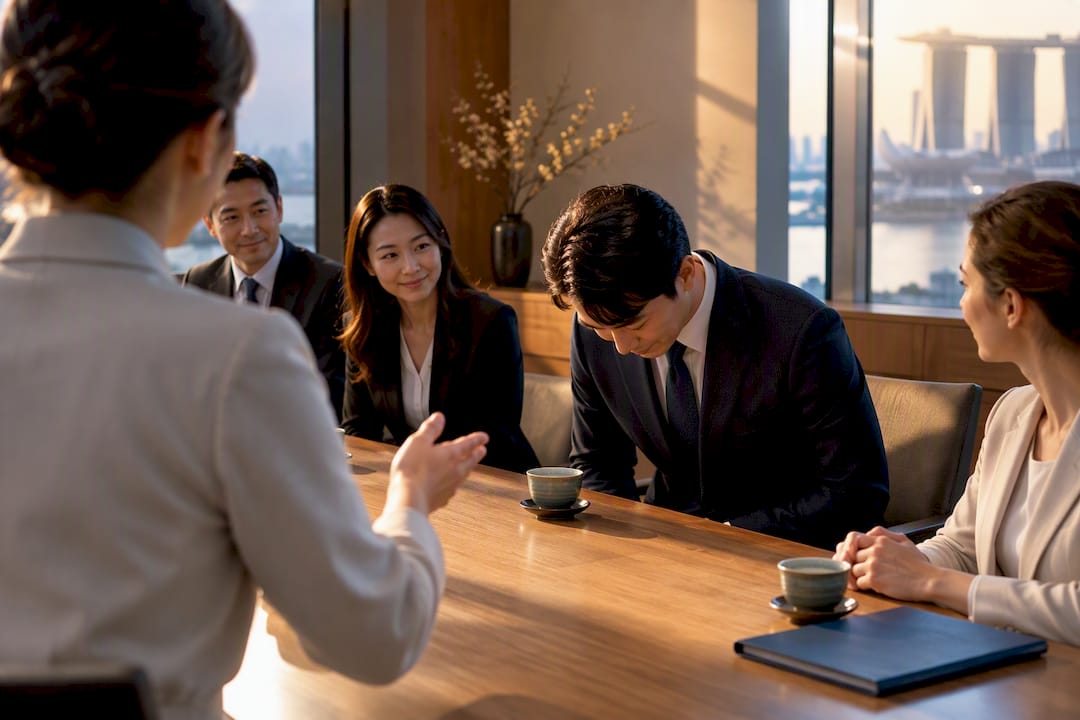
TL;DR:
- Japanese group discussions rely on informal pre-meetings like Nemawashi to build consensus before formal approval processes such as Ringi. Formal meetings, Kaigi, confirm decisions made through layered, hierarchical approval, emphasizing harmony and face-saving. Understanding the cultural cues like silence and indirect language is essential for effective participation in Japanese communication.
Japanese group discussions are defined by five core formats: Nemawashi, Ringi, Kaigi, Chōrei, and Circle Dialogue. Each format serves a distinct role in Japanese communication, and all five are shaped by the cultural value of Wa, which means harmony. Understanding the types of Japanese group discussions gives you a real advantage, whether you are learning the language, working with Japanese colleagues, or simply curious about how decisions get made in Japan. These formats prioritize consensus and respect for hierarchy over open debate, making them fundamentally different from Western discussion styles.
1. Types of Japanese group discussions: an overview
Japanese group conversation methods are not interchangeable. Each type fits a specific stage of communication, from early informal alignment to final documented approval. Japanese group discussions prioritize consensus over individual argument strength, which is a sharp contrast to Western debate cultures where the strongest argument often wins. This means the real work of decision-making often happens before anyone enters a formal meeting room. Recognizing this layered structure is the first step to understanding how Japanese groups communicate.
The five main formats sit on a spectrum from informal to formal. Nemawashi and Uchiaiwase occupy the informal end. Kaigi and Ringi represent the formal end. Chōrei and Circle Dialogue serve daily alignment and egalitarian participation. Together, they form a complete system built around face-saving, group cohesion, and shared responsibility.
2. Nemawashi: the informal root-binding discussion method
Nemawashi means root-binding, a term borrowed from gardening that describes carefully loosening the roots of a tree before transplanting it. In a group discussion context, it refers to the informal, one-on-one consultations that happen before any formal proposal is presented. The goal is to build consensus quietly, identify resistance early, and avoid surprises in the formal meeting.
Nemawashi conversations typically follow this pattern:
- The proposal originator meets individually with each key stakeholder.
- Concerns and objections are surfaced and addressed privately.
- Adjustments are made to the proposal based on feedback.
- By the time the formal meeting happens, most participants already agree.
- The formal meeting becomes a confirmation, not a debate.
Nemawashi identifies resistance early, which prevents open conflict and keeps the formal process smooth. This is why Japanese formal meetings can feel surprisingly short and conflict-free to outsiders. The real negotiation already happened.
Pro Tip: If you are preparing to present an idea to a Japanese team, speak to each key person individually before the group meeting. Ask for their input and adjust your proposal accordingly. Arriving at the meeting with prior alignment signals respect and cultural awareness.
3. Ringi: the formal documented approval circulation
Ringi is the formal, written approval process that follows Nemawashi. A ringi-sho, which is the official proposal document, is prepared by the originator and then circulated sequentially through the organization for review and approval. The Ringi process circulates through hierarchy from the originator up to the managing director, with each level adding their personal seal, called a hanko, as formal acknowledgment.
The typical Ringi workflow moves through these steps:
- The originator drafts the ringi-sho with full details of the proposal.
- The document goes to the originator’s direct supervisor for review.
- It moves through department heads and relevant managers.
- Senior leadership reviews and approves or returns for revision.
- The managing director or equivalent gives final approval.
| Stage | Role | Action |
|---|---|---|
| Drafting | Originator | Prepares the ringi-sho document |
| Section review | Direct supervisor | Reviews and stamps with hanko |
| Department review | Department head | Approves or requests changes |
| Senior review | Senior management | Confirms alignment with strategy |
| Final approval | Managing director | Gives final authorization |
Ringi formalizes decisions with collective responsibility across all hierarchical levels. No single person carries the full weight of a decision. This distributes accountability and reinforces the group-first culture that defines Japanese organizations.
4. Kaigi and Uchiaiwase: formal and informal group meetings
Kaigi is the standard Japanese word for a formal meeting, and it carries specific cultural protocols that shape how participants behave. Uchiaiwase is a less formal pre-meeting or coordination session. Both are common types of group dialogues in Japan, and understanding the difference helps you read the room correctly.
Key features of Kaigi include:
- Seating follows hierarchy, with the most senior person seated farthest from the door.
- Speaking order generally follows rank, with junior members speaking last or not at all.
- Japanese meetings formalize decisions shaped beforehand through Nemawashi, minimizing direct conflict and face-loss.
- Silence is common and respected. It signals reflection, not disengagement.
- Aizuchi, which are small verbal acknowledgments like “hai” or “naruhodo,” signal active listening throughout.
Uchiaiwase is more relaxed. It functions as a coordination check between colleagues before a larger Kaigi. Topics are discussed informally, roles are clarified, and any last-minute concerns are aired. Think of it as a final alignment conversation before the official record begins. Knowing when you are in a Kaigi versus an Uchiaiwase helps you calibrate your communication style and expectations.
5. Chōrei and Circle Dialogue: daily alignment and egalitarian discussions
Chōrei and Circle Dialogue represent two very different approaches to group communication, yet both serve the cultural value of Wa.
Chōrei are semi-formal daily morning briefings used for alignment and announcements in Japanese organizations. They typically last 10–20 minutes and cover updates, goals for the day, and brief motivational messages. Chōrei are not debate forums. They reinforce shared direction and group cohesion at the start of each workday.
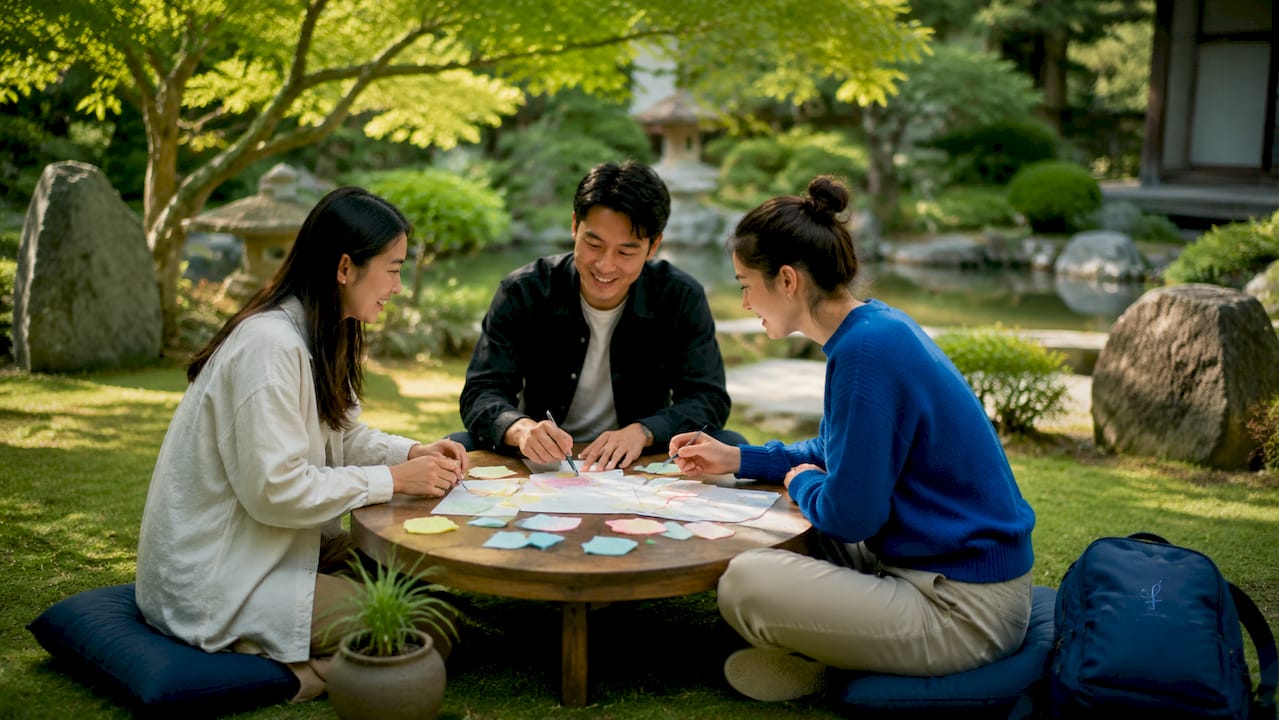
Circle Dialogue is a non-hierarchical, egalitarian discussion structure that promotes harmony and democratic participation. Participants sit in a circle with no designated head position, and every voice carries equal weight. This format contrasts sharply with the top-down structure of Kaigi.
| Feature | Chōrei | Circle Dialogue |
|---|---|---|
| Formality | Semi-formal | Informal |
| Frequency | Daily | As needed |
| Hierarchy | Present | Absent |
| Primary purpose | Alignment and announcements | Collaborative problem-solving |
| Speaking order | Led by senior member | Equal and open |
Circle Dialogue is increasingly used in educational and creative settings where democratic engagement and harmony in discussion are the primary goals. Both formats reflect the Japanese preference for structured participation over spontaneous debate.
Pro Tip: If you attend a Chōrei as a guest or new team member, listen more than you speak. Observing the rhythm and tone of the briefing tells you a great deal about the team’s culture and priorities.
6. How Japanese communication styles shape group discussions
Japanese communication is high-context, meaning a large portion of meaning is conveyed through tone, silence, body language, and shared cultural understanding rather than explicit words. Japanese communication relies on kuuki wo yomu, which literally means “reading the air,” and on the distinction between honne (true feelings) and tatemae (public stance). These concepts directly shape how group discussions unfold.
Practical cultural dynamics to understand:
- Kuuki wo yomu: Reading the atmosphere tells you when to speak, when to stay silent, and when a “yes” actually means “I heard you” rather than “I agree.”
- Honne and tatemae: Public statements in meetings often reflect tatemae. True opinions may only surface in private Nemawashi conversations.
- Aizuchi: These are not interruptions. They are active listening signals that show you are engaged. Using them correctly builds rapport.
- Silence: Silence in Japanese meetings reflects respect and reflection, not a lack of interest. Rushing to fill silence is seen as impatience.
- Uchi/soto distinctions: Japanese communication shifts depending on whether you are an insider (uchi) or outsider (soto). Outsiders receive more formal, guarded communication until trust is established.
For learners of Japanese, understanding these dynamics is just as important as vocabulary and grammar. You can learn the right phrases for communicating in Japanese meetings and still miss the mark if you misread the cultural signals around you. Language and culture are inseparable in this context.
Patience and skill in reading non-verbal cues are the most practical tools a foreigner can develop for effective participation in Japanese group discussions. No textbook replaces the experience of sitting in a real meeting and observing how meaning moves through the room.
Key takeaways
Japanese group discussions follow a layered system of informal and formal formats, all anchored in the cultural value of Wa, where consensus and face-saving take priority over open debate.
| Point | Details |
|---|---|
| Nemawashi builds consensus first | Informal one-on-one consultations happen before any formal meeting to align stakeholders. |
| Ringi documents formal approval | A written proposal circulates sequentially through hierarchy, with each level stamping approval. |
| Kaigi formalizes prior consensus | Formal meetings confirm decisions already shaped through Nemawashi, minimizing open conflict. |
| Chōrei aligns teams daily | Short morning briefings reinforce shared direction and group cohesion every workday. |
| High-context cues drive meaning | Silence, aizuchi, and kuuki wo yomu carry as much meaning as spoken words in Japanese discussions. |
Why patience is the real skill in Japanese group discussions
What surprised me most when I first studied Japanese communication was how much happens before the meeting. Westerners are trained to bring their best arguments into the room and win the debate. Japanese group discussion methods work in reverse. By the time you sit down in a Kaigi, the outcome is largely settled. The formal meeting is almost ceremonial.
That realization changed how I approached learning Japanese entirely. Grammar and vocabulary matter, of course. But if you walk into a Japanese meeting without understanding Nemawashi, you will misread the whole situation. You might think your idea was rejected in the meeting when it was actually rejected two weeks earlier in a hallway conversation you were not part of.
Interrupting silence to add value is viewed as arrogance in Japanese group settings. That is a hard lesson for people from cultures that reward quick, confident responses. Sitting with silence, nodding, and waiting your turn is not passive. It is the correct behavior, and it signals cultural intelligence.
The other thing I would tell any learner is to take honne and tatemae seriously. A Japanese colleague who says “that might be difficult” in a meeting is almost certainly saying no. Learning to decode that kind of indirect language is a skill, and it takes time. The best way to build it is through real conversation practice, not just textbook study. Seek out group learning environments where you can practice reading the room, not just reciting phrases.
— Paul
Japanese Explorer: learn the language behind the discussions
Understanding Japanese group communication goes far beyond vocabulary lists. You need to practice the real rhythms of Japanese conversation, including how to listen, when to speak, and how to read the room.

Japanese Explorer offers small group Japanese classes in Singapore designed for adult learners who want practical communication skills, not just textbook knowledge. The school’s business Japanese courses cover formal meeting language, professional etiquette, and the cultural context behind discussions like Kaigi and Ringi. Classes are taught by certified bilingual instructors at 10 Anson Road, level 22, International Plaza, right above Tanjong Pagar MRT. Online Zoom options are also available for flexible learning. If you want to communicate with confidence in Japanese group settings, Japanese Explorer is where that skill gets built.
FAQ
What are the main types of Japanese group discussions?
The five main types are Nemawashi, Ringi, Kaigi, Chōrei, and Circle Dialogue. Each serves a distinct role, from informal pre-meeting consensus building to formal documented approval.
What does Nemawashi mean in Japanese communication?
Nemawashi means root-binding and refers to informal one-on-one consultations held before a formal meeting. It builds consensus quietly and prevents open conflict during official discussions.
How is silence used in Japanese group meetings?
Silence in Japanese meetings signals reflection and respect, not disengagement. Interrupting silence to fill the gap is considered impatient and culturally inappropriate.
What is the difference between Kaigi and Uchiaiwase?
Kaigi is a formal meeting with hierarchical seating and speaking order. Uchiaiwase is an informal coordination session used to align participants before a larger formal meeting.
How do Japanese group conversation methods differ from Western styles?
Japanese group discussions prioritize harmony and consensus over debate. Decisions are typically shaped through informal Nemawashi before formal meetings, whereas Western styles often rely on open argument and real-time persuasion.