TL;DR:
- Mastery of four key Japanese phrases covers most routine professional interactions for expats.
- Using proper keigo and observing etiquette like exchanging business cards with respect builds trust quickly.
Japanese networking phrases are the foundation of every productive professional relationship in Japan. Knowing what to say, when to say it, and how to say it separates expats who build lasting connections from those who stay stuck at surface-level small talk. This guide covers the essential phrases for meetings, self-introductions, and follow-ups, alongside the cultural customs that give those phrases their real power. Whether you are attending a business mixer in Tokyo or joining a Japanese corporate team in Singapore, mastering these phrases covers the majority of interactions you will face.
What are the essential Japanese networking phrases every professional should know?
Mastering four key phrases covers around 80% of routine Japanese professional interactions. That is not a small claim. It means you can walk into most networking situations with a tight set of memorized expressions and handle them with confidence.
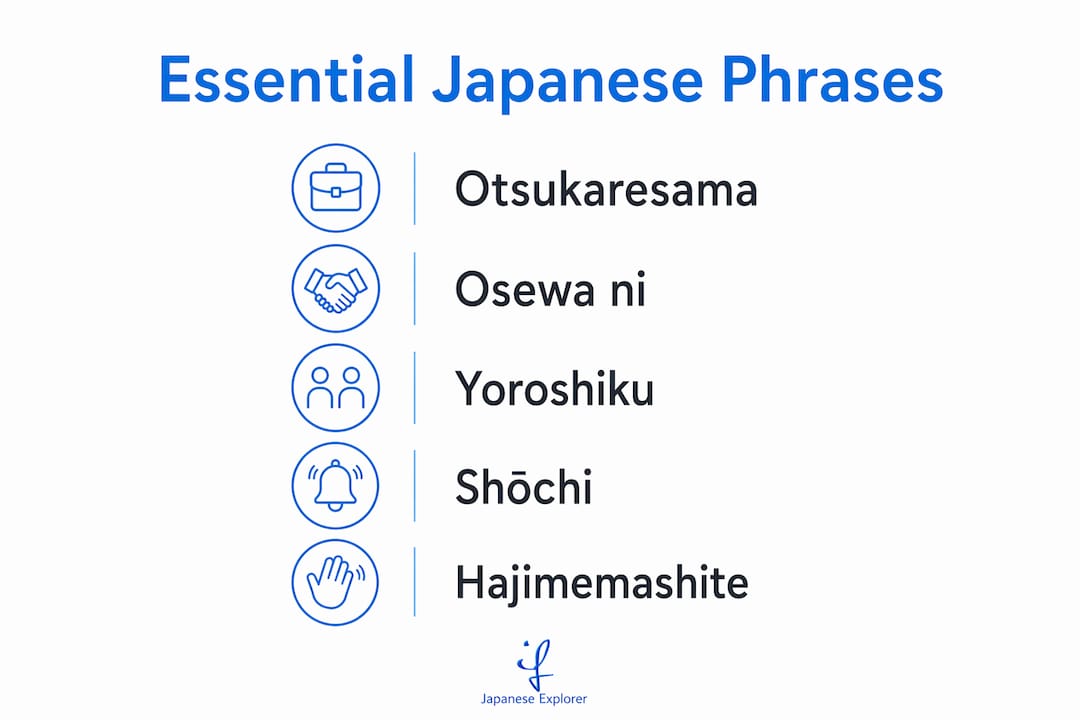
The four phrases every professional needs are:
- Otsukaresama desu (“You must be tired from your hard work”): Used to greet colleagues and contacts at the end of a workday or meeting. It signals mutual respect and shared effort.
- Osewa ni natte orimasu (“Thank you for your continued support”): The standard opening for emails and phone calls with existing contacts. Skipping it reads as abrupt.
- Yoroshiku onegai shimasu (“I look forward to working with you”): Said at the end of introductions and requests. It carries warmth, sincerity, and a forward-looking commitment.
- Shōchi shimashita (“Understood” or “I have received your message”): The professional way to confirm you have heard and accepted information.
Here is a quick reference for using these phrases in context:
| Phrase | Meaning | When to Use |
|---|---|---|
| Otsukaresama desu | Acknowledgment of effort | Greeting colleagues, closing meetings |
| Osewa ni natte orimasu | Thanks for ongoing support | Opening emails, calls with existing contacts |
| Yoroshiku onegai shimasu | Looking forward to working together | End of introductions, requests |
| Shōchi shimashita | Understood, confirmed | Confirming instructions or information |
For self-introductions, a clean template works best. State your name, your company, and your role in that order. For example: “Watashi wa [name] to moushimasu. [Company name] de hataraite imasu.” This translates to “My name is [name]. I work at [company].” Keep it short and polished.
Relying on memorized set phrases is safer than attempting complex original sentences. Improvised Japanese risks unintentional informality or a tone that reads as disrespectful. Stick to what you have practiced until the relationship deepens.
Pro Tip: Practice these four phrases out loud daily until they feel automatic. Fluency in delivery matters as much as accuracy in meaning.
How do Japanese business etiquette and customs influence networking language?
The words you use only work when the surrounding behavior matches. Japanese business etiquette and networking language are inseparable. Getting the phrases right while mishandling a business card or bowing at the wrong moment sends a contradictory signal.
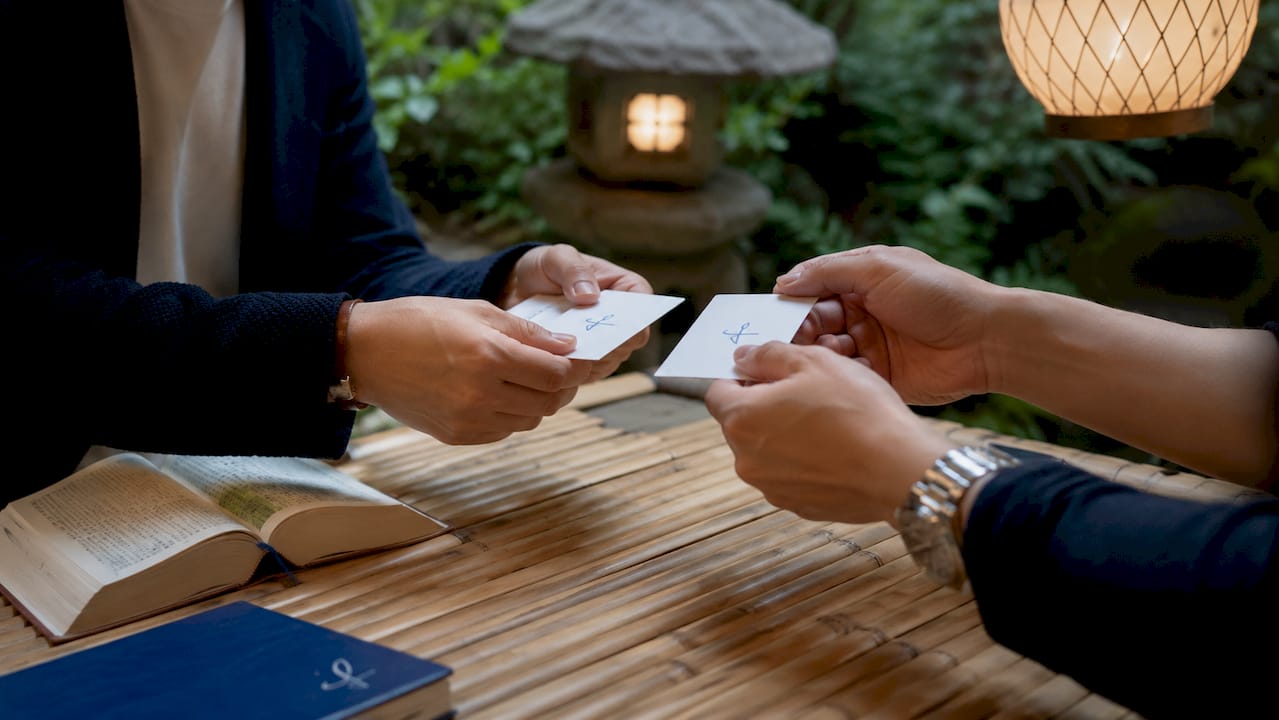
Meishi exchange remains a mandatory and highly ritualized practice in Japanese business networking. Present your card with both hands, text facing the recipient. Receive the other person’s card with both hands and take a moment to read it. Writing on or folding a received card is a serious breach of etiquette.
Japanese business language operates on three keigo levels. The three keigo levels are sonkeigo (respectful language used for others), kenjougo (humble language used for yourself), and teineigo (standard polite form). Teineigo, the everyday polite form using the “masu” verb ending, is your baseline for all networking. Default to it until someone explicitly invites a more casual register.
Etiquette do’s and don’ts for Japanese networking events:
- Do bow slightly when greeting and receiving cards
- Do use last names with the honorific “san” until invited to use first names
- Do arrive 5–10 minutes early to every meeting or event
- Don’t use casual speech or first names without an explicit invitation
- Don’t interrupt or speak over someone, even during a pause
- Don’t hand over your business card with one hand or toss it across a table
Warmth in professional Japanese communication is shown through attentiveness, correct keigo use, and consistent follow-through. Casual familiarity early in a relationship reads as presumptuous, not friendly.
Pro Tip: Treat a received business card as an extension of the person. Keep it on the table in front of you during the meeting rather than pocketing it immediately. This signals that you are focused on the person, not just the transaction.
What cultural nuances should expats understand when networking in Japan?
Cultural nuance in Japanese networking goes well beyond vocabulary. The concept of “kuuki wo yomu,” which translates literally as “reading the air,” is central to how Japanese professionals communicate. Understanding non-verbal cues like silence or vague answers is crucial. Pressing for a direct answer can be seen as aggressive.
A vague reply like “sore wa chotto…” (“that is a little…”) is often a polite refusal. Recognizing it as such and gracefully changing the subject preserves the relationship. Pushing for clarity in that moment damages trust.
Here are the key cultural subtleties every expat should monitor:
- Silence is not awkward. Pauses in conversation signal reflection, not discomfort. Let them breathe.
- Hierarchy shapes language. Always identify the most senior person in a group and address them first.
- Indirectness is the norm. A non-committal answer is rarely neutral. It usually signals hesitation or a soft no.
- Patience builds credibility. Japanese networking values patience and gradual trust-building far more than rapid deal-making.
- Punctuality signals respect. Arriving late, even by a few minutes, communicates that you do not value the other person’s time.
Pacing matters too. Do not rush to exchange contact details or propose a follow-up meeting in the first five minutes. Let the conversation develop naturally. Japanese professionals read the quality of your attention as a signal of your reliability as a future partner.
How can you introduce yourself and follow up using Japanese networking phrases?
A strong self-introduction in Japanese follows a clear structure. Start with your name, then your company, then your role, and close with “yoroshiku onegai shimasu.” This sequence is so standard that deviating from it can actually confuse your listener. Simple, clear sentences at networking events reduce psychological distance and build trust faster, especially for foreigners connecting with Japanese professionals.
For a formal self-introduction in Japanese, use humble language (kenjougo) to describe your own actions and respectful language (sonkeigo) when referring to the other person. For example, say “Watashi wa [company] ni tsutomete orimasu” (“I am employed at [company]”) rather than the more casual “Watashi wa [company] de hataraite imasu.”
Effective follow-up phrases and behaviors after a first meeting:
- Send a brief email within 24 hours using “Osewa ni natte orimasu” as your opening
- Reference a specific detail from your conversation to show genuine attention
- Use “Mata yoroshiku onegai shimasu” (“I look forward to working with you again”) to close
- Suggest a next meeting with “Kondo, gohanでも ikaga deshou ka?” (“Would you like to grab a meal sometime?”) only after a warm first exchange
- Keep follow-up messages concise. Long emails signal that you do not respect the reader’s time.
Sincerity carries more weight than vocabulary range in Japanese follow-up. A short, well-phrased message that references your conversation outperforms a long, generic one every time. You can find a deeper breakdown of essential phrases for meetings to strengthen your follow-up toolkit.
Key takeaways
Mastering a core set of Japanese networking phrases, combined with keigo awareness and cultural sensitivity, is the most direct path to building trusted professional relationships in Japan.
| Point | Details |
|---|---|
| Four phrases cover most interactions | Otsukaresama desu, osewa ni natte orimasu, yoroshiku onegai shimasu, and shōchi shimashita handle around 80% of routine networking. |
| Teineigo is your baseline | Default to the standard polite masu form until a contact explicitly invites a more casual register. |
| Meishi exchange is non-negotiable | Present and receive business cards with both hands, read them carefully, and keep them visible during meetings. |
| Read the air, not just the words | Silence and vague replies carry meaning. Pressing for directness damages relationships in Japanese professional culture. |
| Follow up fast and specifically | Send a brief, sincere email within 24 hours and reference a real detail from your conversation. |
What I’ve learned from watching expats succeed and fail at Japanese networking
The professionals who build real relationships in Japan are almost never the ones with the most Japanese vocabulary. They are the ones who mastered a small set of phrases so thoroughly that delivery felt natural, not rehearsed.
The most common mistake I see is expats trying to be impressive too early. They attempt complex sentences, drop casual expressions they picked up from anime, or skip the meishi ritual because it feels formal. Every one of those choices signals that they have not done the work to understand the culture. Japanese professionals notice, and they remember.
The second mistake is confusing patience with passivity. Building trust in Japan takes time, but that does not mean you wait and hope. It means you show up on time, follow through on every small commitment, and send that follow-up email the same evening. Consistency is the currency of trust in Japanese business culture.
My honest advice: start with polite language in Japanese business and get it right before you try anything else. Teineigo done well opens more doors than advanced keigo done poorly. And if you are unsure whether a phrase is appropriate, default to the more formal option. You will never offend someone by being too polite in Japan.
— Paul
Build your Japanese networking confidence with Japanese Explorer
Knowing the phrases is one thing. Using them naturally under pressure is another skill entirely.

Japanese Explorer offers business Japanese courses designed specifically for professionals and expats who need practical communication skills, not just textbook grammar. Classes cover keigo, self-introductions, meeting phrases, and the cultural context that makes language land correctly. For organizations preparing teams for Japan-facing roles, corporate Japanese training is available with flexible scheduling and real-world scenarios built into every session. Classes are held at 10 Anson Road, Level 22, International Plaza, Singapore 079903, right above Tanjong Pagar MRT, with online options available for learners anywhere.
FAQ
What are the most important Japanese phrases for business networking?
The four highest-priority phrases are otsukaresama desu, osewa ni natte orimasu, yoroshiku onegai shimasu, and shōchi shimashita. Together, these four phrases cover around 80% of routine professional interactions.
What is keigo and why does it matter for networking in Japan?
Keigo is the formal honorific language system in Japanese, divided into sonkeigo, kenjougo, and teineigo. Teineigo, the standard polite form, is the correct baseline for all networking until a contact invites a more casual register.
How should I handle a business card at a Japanese networking event?
Receive the card with both hands, read it carefully, and keep it on the table in front of you during the meeting. Putting a card away immediately or writing on it signals disrespect.
What does “kuuki wo yomu” mean in a networking context?
“Kuuki wo yomu” means “reading the air,” or picking up on unspoken signals. In networking, it means recognizing that a vague or hesitant reply often signals a polite refusal rather than genuine uncertainty.
How soon should I follow up after a Japanese networking event?
Send a brief, sincere email within 24 hours. Reference a specific detail from your conversation and close with “Mata yoroshiku onegai shimasu” to reinforce the connection professionally.